The Head and Muzzle a Shorthair Judge Wants
When you’re looking at German Shorthaired Pointers, whether it's for a potential hunting companion, a show dog, or just a beloved family member, there's often a lot of focus on their athletic build, their keen expression, and that famously enthusiastic tail. But for anyone serious about the breed standard, especially those considering showing their dog, the head and muzzle are absolutely critical. It’s not just about what looks pretty; these features speak volumes about the dog's heritage, its functional ability, and its adherence to the specific traits that define a true German Shorthaired Pointer. This guide is going to walk you through exactly what a judge is looking for in a Shorthair's head and muzzle, helping you understand the nuances that make a difference in the ring and reflect the breed's storied past.
Beyond Aesthetics: The Purpose Behind the German Shorthaired Pointer Head Standard
It might seem overly focused to talk so much about a dog's head, but for a breed like the German Shorthaired Pointer, every physical trait has a historical purpose. These dogs weren't just bred to look a certain way; they were meticulously developed over generations in The German Kennels the Shorthair Was Built In to perform a very specific set of tasks. The head and muzzle are intrinsically linked to their ability to scent, retrieve, and carry game. A judge isn't just looking for beauty; they're evaluating functional correctness, ensuring the dog embodies the spirit and working capacity of its ancestors.
The Legacy of the Versatile Hunter
Think about what a Shorthair was created for: pointing upland birds, tracking game through various terrains, and retrieving waterfowl, often from icy waters. This demanded a dog that was robust, intelligent, and equipped with the right tools. The head, in particular, houses the sensory organs – eyes, ears, and nose – that are paramount to this work. A head that deviates too far from the standard might compromise these abilities, making the dog less effective in the field. This isn't a fluffy show ring preference; it's about preserving the essence of the breed. When the German Shorthaired Pointer made its entry into the AKC around The 1930 AKC Entry of the German Shorthaired Pointer, these functional characteristics were already deeply ingrained in the standard, reflecting their working heritage.
First Impressions and Breed Type
The head is often the first thing a judge notices, and it immediately conveys breed type. A German Shorthaired Pointer's head should instantly be recognizable as such, distinct from other pointing breeds or even other German versatile breeds. It's about a harmonious balance – not too heavy, not too refined, but always strong and noble. When you look at a truly excellent specimen, its head should project intelligence, alertness, and a keen, purposeful expression. It ties into the overall picture of The Size and Build the Shorthair Standard Asks For, contributing to the powerful yet agile impression the breed is meant to give. Judges are trained to spot these subtleties, understanding that the head is a cornerstone of breed identification.
The Cranium's Curves and Proportions: Understanding the GSP Skull
Moving beyond the general impression, let's get into the specifics of the skull, which forms the back part of the head. It's not just a box; it has distinct contours and proportions that are vital to the German Shorthaired Pointer standard.
Skull Shape and Width
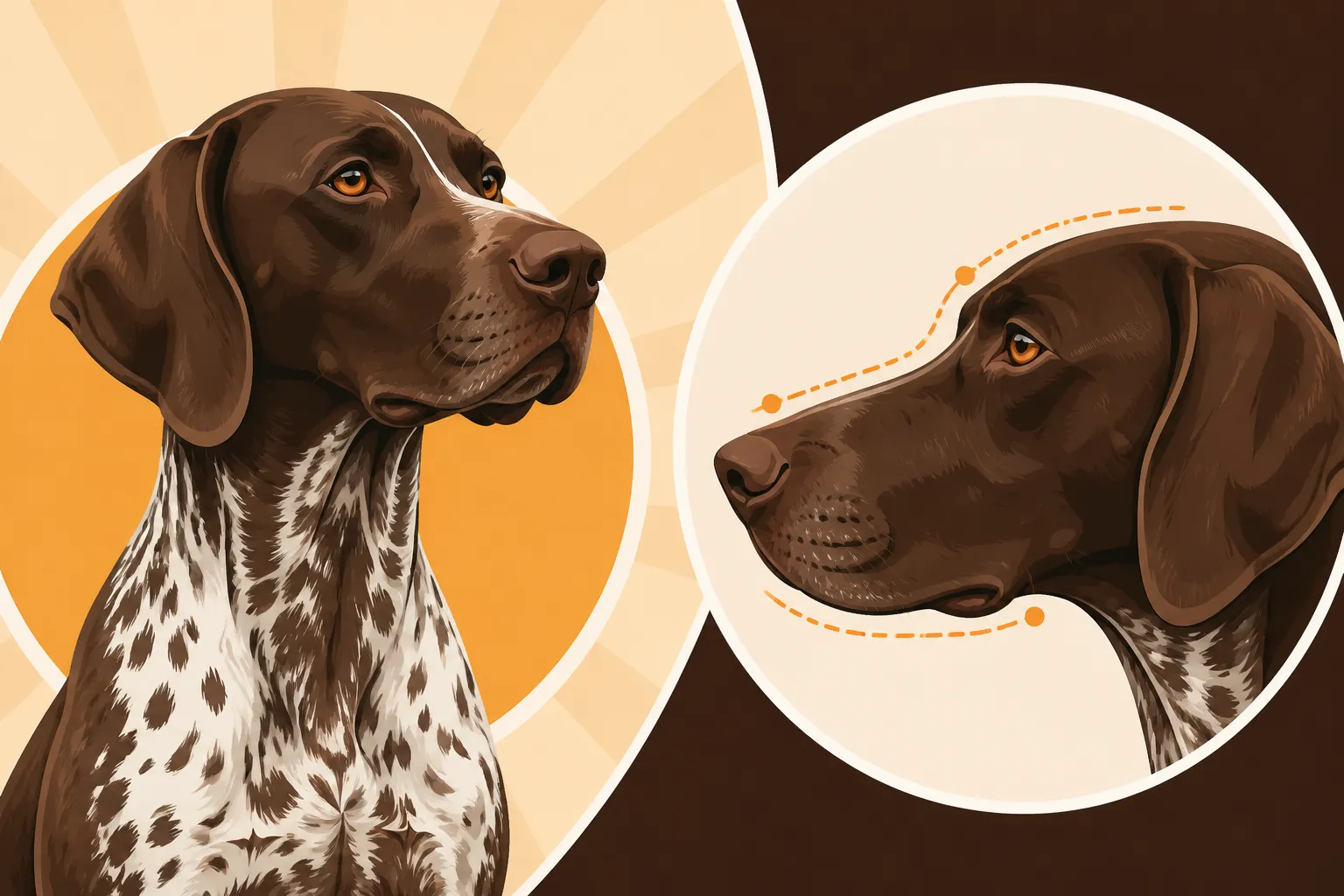
The ideal German Shorthaired Pointer skull should be broad enough to house a good brain (which these clever dogs certainly possess!) but never so broad as to look coarse or disproportionate to the rest of the body. It should be slightly rounded on top, not flat, and should gradually taper towards the muzzle. When viewed from the top, you want to see a moderate width between the ears, not a narrow, snipey head, nor one that's overly blocky like some mastiff-type breeds. This moderate width contributes to a balanced, athletic appearance, indicating both strength and agility. Imagine a head that can withstand brushing through thick cover without getting stuck, but is also refined enough for quick, precise movements.
The Critical Stop
The "stop" is that indentation where the muzzle meets the skull, right between the eyes. For a German Shorthaired Pointer, the stop should be moderate – clearly defined but not abrupt or exaggerated. Too much stop can make the dog look "dished" or like its face is pushed in, while too little stop (a flat line from skull to nose) can give a primitive, harsh appearance. A moderate stop provides the ideal angle for scenting, allowing the eyes to be set correctly and giving that intelligent, expressive look the breed is known for. It’s one of those subtle features that drastically changes the overall impression of the head, and judges pay very close attention to it.
The Business End: Ideal Muzzle Shape, Length, and Jaw Strength
Now we come to the muzzle, often referred to as the "business end" for a hunting dog. This part of the head is where a GSP's working abilities truly shine, and its construction is paramount.
Muzzle Length and Depth
The German Shorthaired Pointer's muzzle should be long enough to allow for good scenting and efficient retrieving, without being excessively long or snipey. Think of it as proportional to the skull – usually, the muzzle length is slightly less than, or about equal to, the length of the skull from the stop to the occiput (the bump at the back of the head). More importantly, the muzzle needs to have good depth and width throughout its length. It shouldn't look weak or pinched, but rather strong and powerful, especially under the eyes. This depth and strength are crucial for firmly grasping and carrying game without damaging it. A deep, strong muzzle is a clear indicator of a working dog.
The Nasal Bridge and Lips
The nasal bridge, the top line of the muzzle, should be straight, not dished or roman-nosed (a convex curve). A straight nasal bridge contributes to the classic GSP profile. The lips should be full enough to cover the teeth but not pendulous or droopy, which can create a "wet" or sloppy look. They should be clean-cut and fit relatively tightly around the jaw, enhancing the breed's elegant yet powerful appearance. Excessively loose flews are considered a fault as they can collect debris and hinder performance in dense cover. A neat, clean lip line is essential for a judge to appreciate the muzzle's overall strength and form.
Strong Jaws and a Correct Bite
Underneath those well-fitting lips lie the jaws, which must be strong and well-developed. A weak jaw translates to a weak hold on game. The teeth should be sound, strong, and meet in a scissor bite, where the outside of the lower incisors just touches the inside of the upper incisors. Any deviation from this, such as an overshot (upper jaw extends too far) or undershot (lower jaw extends too far) bite, is a serious fault. Level bites (incisors meet edge-to-edge) are also generally considered less desirable as they can lead to premature tooth wear. A correct bite is not just for aesthetics; it's fundamental to the dog's ability to pick up and hold game effectively. This is where a proper diet and good chewing habits come into play, even if indirectly. While Chewy offers a vast array of chew toys, choosing durable, appropriate ones can support jaw health. Remember that The Bite a German Shorthaired Pointer Should Have is a non-negotiable aspect of the breed standard.
Those Piercing Eyes and Powerful Nose: Key Facial Features
The eyes and nose aren't just for seeing and smelling; they significantly contribute to the overall expression and functionality of the German Shorthaired Pointer's head.
Eye Color, Shape, and Expression
A German Shorthaired Pointer's eyes should ideally be dark brown, contributing to that intense, intelligent, and keen expression. Lighter eyes, particularly yellow or "bird of prey" eyes, are considered a fault as they detract from the desired soft yet alert gaze. The eyes should be medium-sized, neither bulging nor sunken, and set slightly obliquely, not perfectly round or too close together. The eyelids should fit tightly, without showing any red haw (the inner lining of the lid). Most importantly, the eyes should convey intelligence, alertness, and a friendly but determined spirit – the hallmarks of a good hunting companion. An expression that seems dull, vacant, or overly aggressive is certainly not what a judge is looking for. Issues like What a China Eye Is on a German Shorthaired Pointer would be considered a serious deviation from the standard.
The Nose: Color, Size, and Nostrils
The nose is a German Shorthaired Pointer's primary tool for its work, and its appearance is very specific. It should be large, broad, and always solid brown (liver) in color. A pink or flesh-colored nose, often called a "dudley nose," is a disqualifying fault because it indicates a lack of pigment crucial to the standard. Even a small unpigmented area can be a fault, depending on its size. The nostrils should be wide and open, allowing for maximum scent intake. Remember, this is a scenting machine! The nose should also be somewhat fleshy and prominent, not small or pinched. Why a Flesh Colored Nose Disqualifies a Shorthair directly relates to the importance of consistent pigmentation within the breed. The standard is quite clear on these color requirements, extending even to Liver, Black and the Colors That Disqualify a Shorthair in the coat.
The Frame for the Face: Correct Ear Set and Carriage
The ears, while not strictly part of the "muzzle," certainly frame the face and complete the picture of the German Shorthaired Pointer's head. Their placement, size, and texture are all evaluated by a judge.
Ear Set and Placement
The ears should be set high on the head, meaning their attachment point to the skull should be roughly level with the eye or slightly above. They should hang close to the head without any tendency to "fly" out. Low-set ears can make the head look heavy or hound-like, which is not characteristic of the GSP. Correctly set ears contribute to the breed's alert and intelligent expression, framing the face beautifully. A properly set ear is also less likely to interfere with the dog's movement through brush or when retrieving. This specific detail of how they sit is described in The Ear Set on a German Shorthaired Pointer.
Ear Length and Texture
In terms of length, the ears should be moderately long, reaching approximately to the corner of the lip when gently pulled forward. They should not be excessively long like a Basset Hound's, nor too short like a Labrador Retriever's. The texture of the ear leather is also important; it should be thin and soft, not thick or coarse. A thin, soft ear is generally more pliable and less prone to injury in the field. Judges will often gently feel the ears to assess their texture, ensuring they meet the standard. This softness and pliability also relate to comfort for the dog, for example, when cleaning them with ear solution, which you can easily find on platforms like Chewy.
What a Judge Doesn't Want to See: Common Head and Muzzle Faults
Understanding the ideal is one thing, but knowing what constitutes a fault or even a disqualification is equally important for anyone interested in the German Shorthaired Pointer standard. Judges are looking for perfection, or at least the closest approximation to it.
Deviations in Skull and Muzzle
Any significant deviation from the described skull and muzzle proportions will be considered a fault. This includes a skull that is too narrow, too broad, too flat, or too domed. An abrupt or absent stop is also a fault. For the muzzle, a snipey (pinched, too narrow) muzzle, one that lacks depth, or one that is excessively long or short will be penalized. A dished or roman nose on the nasal bridge would also be considered incorrect. These structural faults can directly impact a dog's ability to perform its historical tasks, making them more than just cosmetic issues. A weak jaw or underdeveloped muscles in the muzzle area would similarly be noted by a judge.
Incorrect Eyes, Nose, and Ears
Beyond structural shape, pigment faults are often severe. As mentioned earlier, light eyes (yellow or "bird of prey") are a fault, and a "china eye" (a blue or partially blue eye) is a distinct fault. A flesh-colored nose or any significant unpigmented area on the nose is a disqualification. Ears that are set too low, too short, too long, too thick, or that "fly" out from the head rather than lying flat are all considered faults. Essentially, anything that takes away from the harmonious, intelligent, and functional appearance of the German Shorthaired Pointer's head, as envisioned by the breed standard, will count against the dog in the show ring. Judges are looking for the complete package, where every feature contributes to the overall picture of a noble, athletic, and capable hunting dog. While ensuring your dog's health with quality food and supplements from Chewy, remember that conformation standards are very precise.
Table: Key GSP Head and Muzzle Features for Judging
| Feature | Ideal Standard | Common Faults | Severity in Judging |
|---|---|---|---|
| Skull | Moderately broad, slightly rounded, tapering | Too narrow, too broad, flat, domed, coarse | Moderate to Serious |
| Stop | Moderate, clearly defined but not abrupt | Too abrupt, too shallow, non-existent | Moderate |
| Muzzle Length | Slightly less than/equal to skull, proportionate | Too short, too long, snipey, pinched | Moderate to Serious |
| Muzzle Depth | Strong, deep, especially under eyes | Lacks depth, weak jaw, pinched under eyes | Moderate to Serious |
| Nasal Bridge | Straight | Dished, roman nose (convex) | Moderate |
| Lips | Clean-cut, close-fitting, covering teeth | Pendulous, droopy, loose flews | Minor to Moderate |
| Bite | Scissor bite (incisors just overlap) | Overshot, undershot, level bite | Serious |
| Eyes | Dark brown, medium size, intelligent expression | Light (yellow), round, bulging, sunken, china eye | Moderate to Serious |
| Nose | Large, broad, solid liver (brown) with open nostrils | Flesh-colored, pink spots, small, pinched nostrils | Disqualification |
| Ears | High set, moderately long, thin & soft leather | Low set, too short, too long, thick, "flying" | Moderate |
Disclaimer
This article is for general informational purposes only and does not constitute professional advice. Laws, prices and regulations vary by location and change over time. Consult a qualified professional for guidance on your specific situation.