Whether Dewclaws Are Removed on Shorthair Puppies
A new Shorthair puppy may come home with dewclaws already removed, while another breeder leaves them intact. That difference can feel unsettling when no one has explained the choice. This guide covers what dewclaws are, why removal is sometimes considered, what to ask a breeder or veterinarian, and how to care for a puppy either way.
What dewclaws are and what they do
The small claws on the inside of the leg
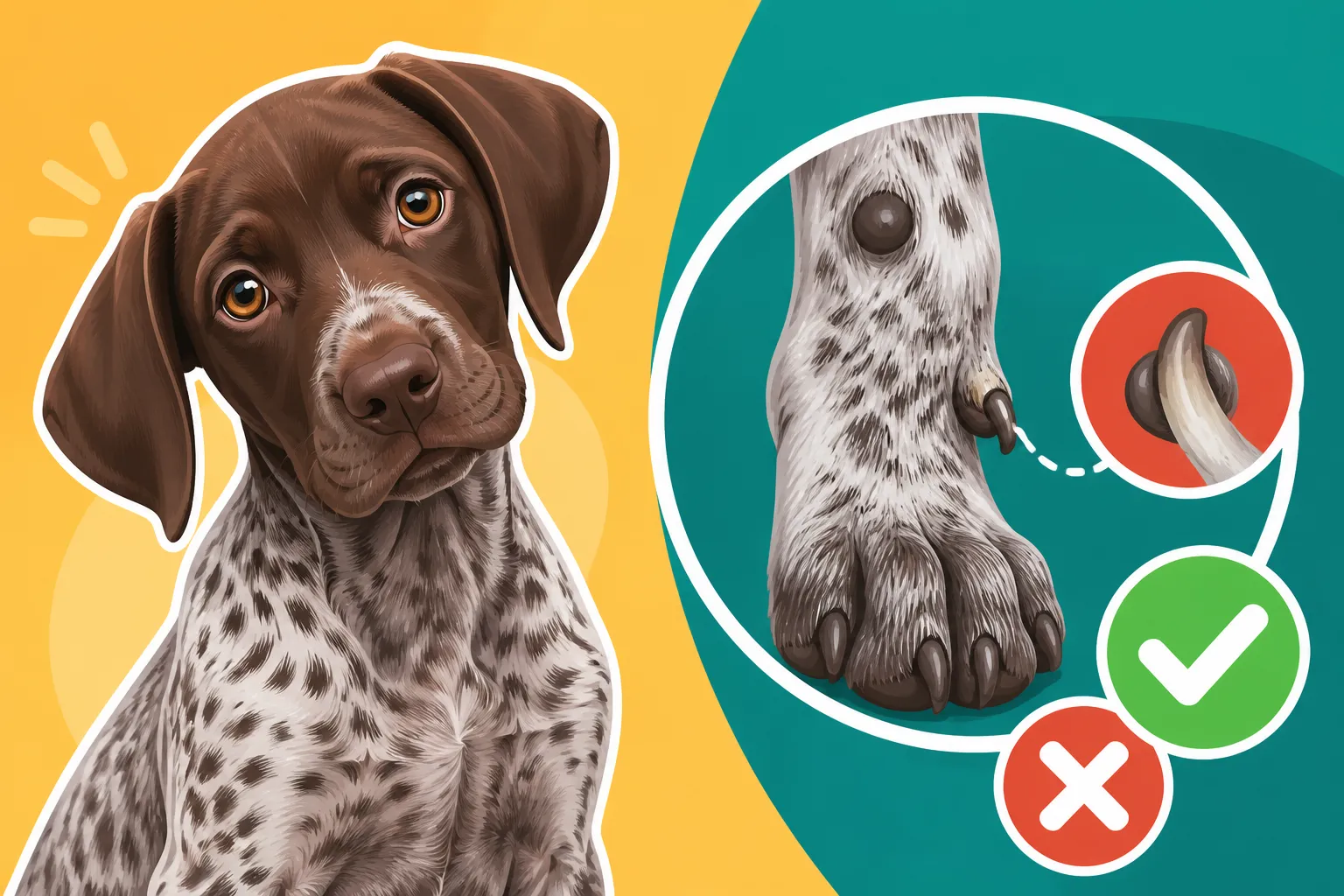
Dewclaws are the claws set higher on the inside of a dog’s legs, apart from the toes that touch the ground. Many German Shorthaired Pointers have dewclaws on their front legs. Rear dewclaws may be present too, but their number and attachment can vary from dog to dog.
A dewclaw can be attached to the leg by bone, or it may be held mainly by skin and soft tissue. That difference matters when a veterinarian assesses whether a claw is likely to snag or whether removal is worth discussing. It isn’t always obvious just by looking at the claw; a vet can examine the puppy and explain its attachment.
Dewclaws are not necessarily useless. A dog may use its front dewclaws for grip when turning, climbing, or holding an object. The claw may also help stabilize the foot during movement. That doesn’t mean every dog needs every dewclaw, but it does mean removal is not automatically beneficial for every puppy.
The breed’s athletic lifestyle can make the question feel especially urgent. Shorthairs run through cover, brush, and uneven ground, and owners naturally worry about a claw catching on something. For broader context on the breed’s build and working style, see What Versatile Actually Means for a Shorthair and The German Shorthaired Pointer Against Its German Cousins.
Front and rear dewclaws are not always treated the same
Front dewclaws are often more firmly attached than rear ones, though an individual dog’s anatomy can differ. Because they may contribute to grip and foot stability, front dewclaws are commonly left in place unless there is a specific medical reason to remove them.
Rear dewclaws are more variable. Some are loosely attached and may be more prone to catching; others are firmly attached. Breeders and veterinarians may have different practices, and removal decisions can depend on the puppy’s anatomy, the breeder’s approach, veterinary advice, and local rules.
There is no simple rule that every German Shorthaired Pointer should have all dewclaws removed, or that every dewclaw must always be kept. Ask which legs were affected and why. A clear answer should refer to the puppy’s situation or the breeder’s consistent practice, not just a vague claim that “all hunting dogs have them removed.”
Dewclaws still need ordinary nail care
If your dog keeps its dewclaws, include them in regular nail checks. Because they may not touch the ground as much as the other nails, they may not wear down naturally. A dewclaw that grows too long can curve toward the skin or catch on fabric, even in a dog that is not hunting.
Check the claws when you handle your Shorthair’s feet, especially after a run in brush or a muddy walk. If your dog resists having its paws handled, practice briefly and gently when it is relaxed, rewarding calm behavior rather than forcing a long grooming session. The same steady handling will make it easier to inspect pads, toes, and nails after field outings. The Forty Percent Tail a Shorthair Is Left With covers another piece of the breed’s body that often prompts practical care questions.
Why dewclaws may be removed
A breeder or veterinarian may recommend removal for a specific reason
Dewclaw removal is sometimes chosen when a claw is unusually loose, repeatedly injured, or likely to snag. A veterinarian may also recommend removal as part of treatment for an injury or a problem with the claw or surrounding tissue. Those are different situations from removing healthy dewclaws simply because the puppy belongs to a particular breed.
Breeders may arrange removal when puppies are very young, before they go to their new homes. Practices vary, so one litter’s experience does not establish what is best for every Shorthair. If you are choosing a puppy, ask whether removal is planned, who will perform it, which dewclaws are involved, and how the puppies will be monitored afterward.
A good breeder should be willing to discuss the decision without dismissing your questions. If you are unsure about a planned procedure, ask your own veterinarian to explain the likely benefits and drawbacks for that puppy. For a general perspective on responsible breeding choices, see The Parent Club That Sets Shorthair Health Rules.
Routine removal is not a guarantee against field injuries
Removing a dewclaw cannot prevent all foot injuries. A dog can still tear a nail, cut a pad, pick up a thorn, or develop a problem between the toes. Shorthair owners who hunt or run their dogs in rough cover should still inspect the feet after activity and contact a veterinarian if a claw is damaged or the dog is limping.
It’s also worth separating a possible risk from a certainty. A dewclaw that has never caused trouble may not need to be removed just because it could snag someday. On the other hand, a particular claw that has been injured repeatedly deserves a veterinary discussion. The decision is more useful when it responds to the dog in front of you rather than a general assumption about the breed.
A dog with intact dewclaws can still work and play, but the claws need to be checked like the rest of the feet. The practical question is not simply “Are dewclaws good or bad?” It’s “What are these dewclaws like, and what is the safest choice for this puppy or adult dog?”
Timing and local requirements can differ
When breeders choose removal for very young puppies, the procedure is generally handled early in life by a veterinary professional. The timing, method, and circumstances can differ, and local regulations may apply. If a puppy is older, or if removal is being considered later because of injury or repeated problems, a veterinarian can discuss the appropriate options and recovery.
Do not try to remove, tie off, or cut a dewclaw at home. It contains living tissue and can bleed, become infected, or cause significant pain if handled improperly. Even if a claw looks loosely attached, a veterinarian should assess it before anyone makes a decision about removal.
Rules and professional standards can vary by location. If a breeder says a procedure is required, ask which local rule they mean and where to confirm it. A veterinarian familiar with the area can help clarify what is permitted and what care is appropriate.
How to decide what is right for your puppy
Questions to ask the breeder before bringing a puppy home
Ask the breeder about the dewclaws directly rather than waiting until pickup day. Find out whether the puppy has front dewclaws, rear dewclaws, or both; whether any have been removed; and what the reason was. If removal is planned, ask who will perform it and what follow-up care the puppies receive.
It is also reasonable to ask whether the breeder has had dewclaw injuries in related dogs, while remembering that family history cannot predict every individual outcome. The breeder should be able to describe their practice in a straightforward way. If the answer is only “it’s what we always do,” you can still ask your veterinarian to help you understand whether that approach makes sense for your puppy.
When comparing litters, dewclaw practice is one small part of a larger conversation about health and care. You may also want to review screening information and ask how the breeder handles health questions after puppies go home. How to Read a Shorthair Pedigree for Hunting Ability and The Five Tests Behind a German Shorthaired Pointer CHIC Number offer context on other questions buyers may want to explore.
A practical decision guide
| Situation | A sensible next step |
|---|---|
| A healthy puppy has intact dewclaws | Ask your veterinarian to check their attachment and include them in routine nail care |
| A breeder plans to remove dewclaws | Ask which claws, why, who will perform the procedure, and what follow-up is provided |
| A dewclaw is loose or repeatedly catches | Arrange a veterinary assessment rather than trying to manage or remove it yourself |
| A dewclaw is torn, bleeding, swollen, or painful | Contact a veterinarian promptly for advice and treatment |
| You are unsure whether local rules apply | Ask a local veterinarian or relevant animal-welfare authority |
The table is a starting point, not a substitute for examining the puppy. Two Shorthairs can have different dewclaw anatomy, and the right choice for one may not apply to the other.
What to do if the puppy comes home with dewclaws intact
Make nail checks part of your normal routine, not a special event that happens only when a claw looks overgrown. Start by gently touching your puppy’s paws for a few seconds, then reward calm behavior. Over time, you can build up to looking at each nail and getting the puppy comfortable with a nail trimmer or grinder.
If you are buying basic grooming supplies, Chewy may be one place to look for nail-care tools, but ask your veterinarian or groomer what style is suitable for your dog and your comfort level. A tool that feels manageable in your hand is more helpful than a complicated kit you avoid using.
Keep an eye out for a dewclaw that is curling toward the skin, split, unusually tender, or caught on something. If the nail needs trimming and you are nervous about the quick, ask a veterinary clinic or experienced groomer to show you how to do it safely. For a working dog, routine foot checks also belong in the after-hunt inspection described in Checking a German Shorthaired Pointer Over After a Hunt.
If your Shorthair has a damaged claw, avoid pulling at it or cutting tissue that may be attached. Contact the veterinary clinic for guidance, especially if there is ongoing bleeding, swelling, discharge, or pain. Chewy and other pet-supply retailers may carry general first-aid items, but supplies do not replace veterinary evaluation when a nail is torn or the toe appears injured.
Caring for a Shorthair after removal or injury
Follow the veterinarian’s aftercare instructions
If your puppy has had dewclaws removed, follow the instructions provided by the veterinarian or breeder’s veterinary team. They can tell you what the area should look like as it heals, how to keep it clean, and when a recheck is needed. Do not apply ointments, wraps, or medications unless the veterinary team recommends them.
Watch for changes that seem concerning, such as increasing redness, swelling, discharge, a bad smell, persistent bleeding, or a puppy that appears unusually uncomfortable. Puppies may be active and hard to keep settled, so ask the clinic how to limit rough play and what level of activity is appropriate during healing.
A recovery collar or other barrier may be recommended if a puppy keeps licking or chewing the area. If the veterinarian suggests a particular type, Chewy may be a place to compare general pet-care options, but confirm the fit and suitability with the clinic. A poorly fitting collar can create its own problems, and a product should not interfere with eating, drinking, or comfortable movement.
Keep the decision proportionate
For most owners, dewclaws are a manageable part of routine foot care. Intact claws need checking and occasional trimming; removed claws need appropriate healing care; and injured claws need veterinary attention. Neither choice makes a Shorthair automatically more or less suitable for hunting, running, or life as a companion.
If you are planning field work, your larger prevention routine matters too: build activity gradually, keep nails at a comfortable length, check the feet after outings, and pay attention to limping or persistent licking. Shorthairs can hide discomfort when they are excited to keep moving, so a change in gait deserves attention rather than a “wait and see” approach through repeated hard exercise. How Long a Working German Shorthaired Pointer Stays Sound discusses the broader question of keeping a working dog healthy over time.
The best choice is an informed one made for the individual dog. Ask clear questions, get a veterinary opinion when the anatomy or history raises concern, and avoid treating a breed-wide custom as a universal medical rule.
Disclaimer
This article is for general informational purposes only and does not constitute professional advice. Laws, prices and regulations vary by location and change over time. Consult a qualified professional for guidance on your specific situation.