The German Shorthaired Pointer Against the Pudelpointer
Choosing between a German Shorthaired Pointer and a Pudelpointer can be tricky because both are versatile hunting dogs with plenty of drive. But their coats, typical working style, and availability differ, and neither breed is automatically the better fit for every home. This guide compares the practical differences so you can weigh your hunting plans, lifestyle, and tolerance for grooming before deciding.
How the German Shorthaired Pointer and Pudelpointer Differ
Origins and the work each breed was developed to do
The German Shorthaired Pointer, often called a GSP or Shorthair, was developed as a versatile hunting dog. The goal was a dog able to search for game, point birds, retrieve, and track wounded animals. That broad purpose still shows in the breed: a GSP may be eager to range ahead, switch between land and water work, and stay intensely focused on scent and movement.
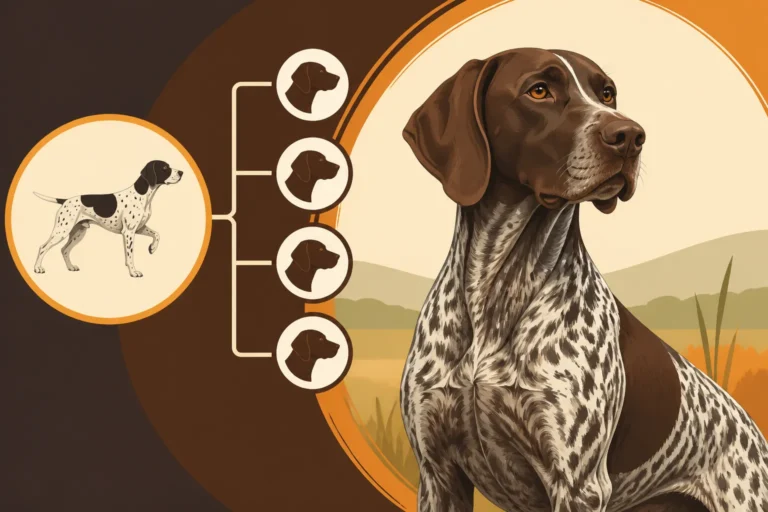
The Pudelpointer also comes from German hunting-dog development. Its name reflects its roots in the German hunting Poodle, or Pudel, and the English Pointer. Breeders sought a dog combining the Poodle’s useful coat and water-working qualities with the Pointer’s bird-finding ability. Like the GSP, the Pudelpointer was intended to be a practical, versatile hunting companion, not simply a specialist for one kind of game.
That shared purpose can make the breeds seem interchangeable at first. In practice, individual dogs differ, and working lines can vary substantially. A breeder’s goals, the parents’ temperaments, and the dog’s early training matter at least as much as the broad breed label. If you are learning what versatility means in the GSP, What Versatile Actually Means for a Shorthair offers useful context.
Recognition, breeding goals, and finding a puppy
GSPs are widely established in North America, with a larger pool of breeders and owners than the Pudelpointer. That can make it easier to meet dogs, compare lines, and find a breeder whose priorities match yours. It does not guarantee that every available litter is a good fit, of course. Ask what the parents do in the field, how they behave at home, and what health screening and support the breeder provides.
Pudelpointers are less common in many parts of North America. That smaller population can mean a longer search and fewer nearby opportunities to meet adult dogs. It also makes it especially important to look beyond a puppy’s appearance or a breeder’s claims. Ask about the parents’ hunting work, temperament, coat, health history, and the kind of homes the breeder thinks suit the litter.
Registration and testing systems are not identical across breeds or organizations. If a title or registration matters to you, confirm what it means and which organization issued it rather than assuming that the same letters represent the same requirements everywhere. Comparing The German Bird Dog Behind the Modern Shorthair with the history of the Pudelpointer can also help explain why two related-purpose hunting breeds developed distinct identities.
Coat, Grooming, and Life Outdoors
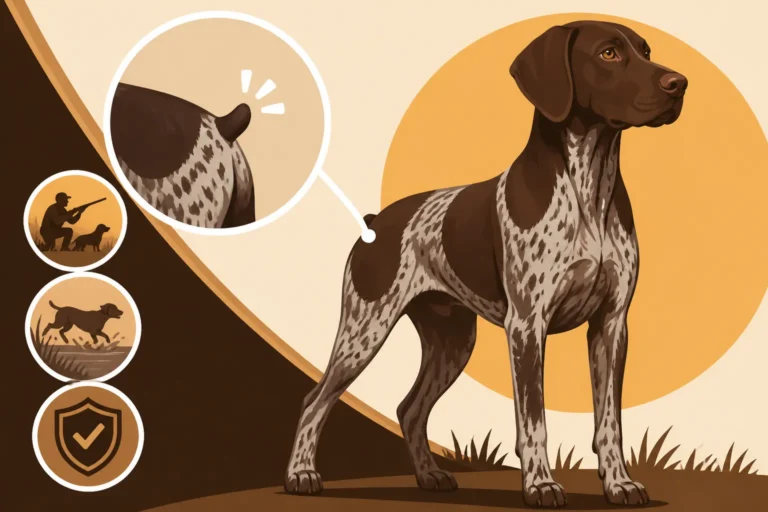
The short coat of a German Shorthaired Pointer
A GSP has a short, dense coat that is relatively straightforward to maintain. A grooming mitt or soft brush can help lift loose hair, and a rinse or bath may be useful after a muddy day, depending on the dog and its skin. “Short-haired” does not mean “no shedding,” though. Fine hairs can work their way into upholstery, blankets, and car interiors, where they may be surprisingly stubborn.
The coat offers some protection outdoors, but it is not heavy insulation. A GSP working in cold water, wind, or frigid weather may need careful management, a dry resting place, and gear suited to the conditions. Check the dog after work for burrs, cuts, ticks, and seeds, especially around the feet, ears, and underside. For a closer look at this trade-off, see The Water Resistant Coat a Shorthair Carries.
The Pudelpointer’s harsher coat
The Pudelpointer generally has a rougher, more protective coat than a GSP. The coat is often wire-haired, though texture and density can vary. That can be an advantage for a dog working through brush or in water, but it still needs routine checking. Burrs and plant material can catch in furnishings or under the coat, and damp hair should not be left matted against the skin.
Grooming needs depend on the individual dog’s coat. Some owners find that occasional hand-stripping or trimming helps maintain texture, while others may need less involved upkeep. Ask the breeder to demonstrate the routine for the particular line and coat type you are considering. A useful question is not simply “How much grooming does the breed need?” but “What will this dog’s coat need after a week in the cover or a cold-water retrieve?”
For either breed, keep basic grooming items where you can actually use them after an outing: a towel, comb or brush suited to the coat, tick-check supplies, and a way to dry the dog comfortably. Whether you buy from a local shop, your veterinarian, or a retailer such as Chewy, choose products based on coat type and your vet’s advice rather than assuming one brush or shampoo suits every sporting dog. Routine checks also matter more than a fancy grooming kit; Checking a German Shorthaired Pointer Over After a Hunt covers the kind of post-field once-over owners should build into the day.
| Feature | German Shorthaired Pointer | Pudelpointer |
|---|---|---|
| Coat | Short and dense | Usually rougher and often wire-haired |
| Coat care | Regular brushing and checks for debris | Regular checks; grooming needs vary with coat texture |
| Typical working background | Versatile hunting, including pointing and retrieving | Versatile hunting, including pointing and retrieving |
| Availability in North America | More commonly encountered | Less commonly encountered in many areas |
| Main decision point | High activity needs and a lighter coat | Coat upkeep, breeder availability, and working temperament |
| Best next step | Meet adult dogs from the line you are considering | Meet adult dogs and learn the line’s coat and training needs |
Energy, Temperament, and Training Needs
Both are working dogs, not automatic weekend companions
Both breeds can be energetic, athletic, and highly responsive to outdoor activity. A long stroll around the block may be pleasant, but it may not meet the needs of an individual dog bred for sustained hunting work. A dog who still has unused energy after exercise may invent a job indoors: stealing laundry, pestering family members, digging, or turning the yard into a racetrack.
The amount and type of activity needed varies by age, health, temperament, and training. Young dogs need careful, age-appropriate exercise rather than being pushed into repetitive distance running. Adults may benefit from a blend of physical activity, scent work, retrieving games, training sessions, and structured field time. A full day outside does not automatically teach a dog to settle in the house afterward; calm behavior is also something to practice.
A GSP owner considering a non-hunting life should think honestly about how to provide meaningful work and routine. The same question applies to a Pudelpointer: a rugged coat or steadier impression should not be mistaken for low energy. The Two Hours a Day a German Shorthaired Pointer Needs can help frame the commitment, while Whether a German Shorthaired Pointer Needs to Hunt to Be Happy explores the broader question of meeting a working dog’s needs without regular hunting.
Training style and the dog in front of you
A GSP’s drive can make training rewarding, but it can also make distractions powerful. A young dog that spots a bird, rabbit, or deer may appear to forget that you exist. Reliable recall, leash manners, calm handling, and a clear way to interrupt unsafe behavior should be developed before relying on off-leash freedom. The natural desire to hunt is not the same as a trained response.
A Pudelpointer also needs patient, consistent training. Its breed reputation cannot replace assessing the actual puppy or adult. Some dogs may be more independent, intense, or sensitive than an owner expects. Ask the breeder how the line responds to pressure, how the dogs behave around unfamiliar people and dogs, and what training approaches have worked well with related dogs.
For both breeds, early exposure should be thoughtful rather than overwhelming. Introduce new surfaces, sounds, people, water, and environments at a pace the dog can handle. If the goal includes hunting, work with an experienced trainer or club when possible. Rushing a bird introduction or gun exposure can create problems that take far longer to address than a careful foundation would have taken. The GSP-specific guide Introducing a German Shorthaired Pointer to Birds offers a starting point for thinking through that process.
Which Breed May Suit Your Home and Hunting Plans
Match the dog to your real routine
A GSP may make sense if you want a widely available, versatile sporting dog and are prepared for regular exercise, training, and a short coat that still sheds. Meeting adult dogs can tell you more than browsing puppy photos. Notice whether they can settle after activity, how they respond to handling, and how their energy compares with what your household can provide.
A Pudelpointer may appeal if you want a versatile hunting dog with a typically rougher coat and you are willing to put time into finding a responsible breeder. Ask to see how the coat behaves in the field and what maintenance it takes afterward. Since the breed is less common in many places, you may need to travel or wait for a litter that suits your needs. Avoid choosing one simply because it seems like a rarer or more rugged alternative.
In either case, consider the ordinary Tuesday, not only opening weekend. Who exercises the dog when weather is poor? Where will it stay when you work? Can you provide training and supervision during adolescence, when a bright, powerful dog may test boundaries? If you are considering a first sporting breed, Whether a First Time Owner Can Handle a Shorthair can help you assess the level of preparation involved.
A practical checklist before choosing
Before putting down a deposit or committing to an adult dog, work through these questions:
- What will the dog do most weeks? Be specific about hunting, hiking, running, training, swimming, and time spent alone.
- Have you met adult dogs from the line? Puppies change as they mature, so ask to meet the parents or related adults if possible.
- What does the breeder prioritize? Look for clear answers about health, temperament, working ability, and placement—not just a list of titles.
- Can you handle the coat and cleanup? Consider both shedding and the routine needed after brush, water, mud, or cold-weather work.
- What training support is available? A local pointing-dog club, experienced trainer, or knowledgeable mentor can be valuable, especially for first-time handlers.
- Does the dog fit your household? Think about children, small pets, fencing, work schedules, and whether you can safely manage a strong, driven dog.
If you are comparing either breed with another wire-coated German hunting dog, The German Shorthaired Pointer Against the Wirehair can help put the differences in perspective. The best choice is not the breed with the most appealing reputation; it is the individual dog whose needs you can meet consistently. A thoughtful match gives both dog and owner a better chance of enjoying the work, the training, and the quieter hours at home.
Disclaimer
This article is for general informational purposes only and does not constitute professional advice. Laws, prices and regulations vary by location and change over time. Consult a qualified professional for guidance on your specific situation.