Whether a German Shorthaired Pointer Needs to Hunt to Be Happy
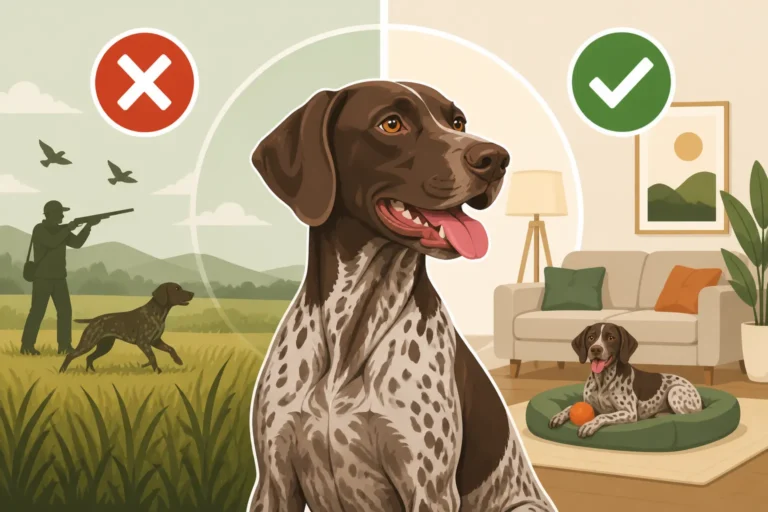
A German Shorthaired Pointer does not have to hunt to be happy, but a quiet life with only a short neighborhood walk often leaves this energetic, bird-minded dog frustrated. The key is giving them safe, regular ways to move, sniff, learn, and work with you. This guide explains what hunting instincts mean at home and how to meet those needs without carrying a shotgun.
Does a German Shorthaired Pointer Need to Hunt?
Hunting is a job, not the only route to a good life
German Shorthaired Pointers were developed as versatile hunting dogs, and many still show strong instincts to search, point, retrieve, and follow scent. Those traits can be a joy to live with: a Shorthair might freeze when it catches a scent on a walk, proudly carry a toy back to you, or spend ages investigating a patch of grass another dog would pass by.
But an instinct is not the same thing as a requirement to hunt live game. Plenty of Shorthairs live contentedly in non-hunting homes when their physical and mental needs are met. They can get meaningful outlets through structured exercise, scent games, retrieving, tracking, training, and outdoor exploration. The question is less “Does my dog hunt?” and more “Does my dog have regular chances to use the abilities this breed was shaped for?”
A dog’s needs also depend on the individual. Some Shorthairs are driven, tireless workers; others are more moderate, especially as they mature or if they come from less intense lines. Age, health, temperament, and the amount of training and activity in daily life all matter. A family should judge its own dog rather than assume every German Shorthaired Pointer needs the same schedule or the same kind of work.
For a broader look at whether this breed fits a home without hunting, see Whether a German Shorthaired Pointer Suits a Non Hunting Home. The practical answer is yes, provided “non-hunting home” does not mean “nothing to do.”
What “happy” looks like in a working breed
A fulfilled Shorthair is not necessarily exhausted or motionless. Many remain alert and energetic even after a good day. Look instead for a dog who can engage in activity, settle afterward, sleep comfortably, and cope with ordinary quiet periods without constantly inventing their own entertainment.
By contrast, an under-stimulated dog may pace, bark for attention, chew household items, dig, steal food, or become difficult to settle. Those behaviors do not automatically prove that the dog needs to hunt. They can have several causes, including inadequate exercise, anxiety, lack of training, pain, or a routine that changes unpredictably. Still, repeated restlessness is a useful prompt to look at the dog’s daily balance of activity, training, and rest.
A Shorthair can also be physically tired but mentally unsatisfied. Repeating the same route at the same pace may burn energy, yet offer little opportunity to sniff, solve problems, or make choices. Think about the difference between walking briskly through a familiar parking lot and exploring a new woodland trail at a safe pace. Both involve movement, but the second gives a dog much more information to process.
Ways to Meet Hunting Instincts Without Hunting
Build a routine around movement and sniffing
Many adult Shorthairs need substantial daily activity, but there is no single exercise prescription that suits every dog. A combination is often more useful than trying to solve everything with one marathon run. For example, a day might include a purposeful walk, short training sessions, a sniff-focused outing, and relaxed time with the family. Adjust the workload for age, fitness, weather, and veterinary advice.
Sniffing is not wasted time. Letting a dog investigate scents gives them a safe way to explore and can make a walk more enriching. You can also scatter a portion of their usual food in grass or hide a few treats around a room and invite them to find them. Start easy enough that the dog succeeds, then gradually make the search more challenging.
If you are trying to work out how much structure and activity should fit into a typical day, The Two Hours a Day a German Shorthaired Pointer Needs and The Structure a German Shorthaired Pointer Needs Daily offer related guidance. Use any general routine as a starting point, not a rule to push through when your dog is sore, overheated, or still growing.
Give the nose a job
Scent games can bring a satisfying “work” element into an ordinary home. Ask your dog to wait briefly while you hide a toy or a few pieces of kibble in an easy spot, then release them to search. As they get the idea, hide the reward in more places or ask them to search a small area outdoors. Keep early sessions short and cheerful. The aim is to let the dog succeed, not to frustrate them with a puzzle that is too hard.
You can also try beginner nose-work activities, tracking games, or organized classes where available. These give a Shorthair a clear task and help build focus with a handler. If you use food rewards, count them as part of the dog’s daily ration so training treats do not quietly become extra meals. Retailers such as Chewy can be one place owners look for basic food-dispensing toys or training supplies, but a few treats hidden in a towel or cardboard box can work just as well when supervised.
For more ideas that make a dog think as well as move, see Mental Work That Tires a Shorthair Out. Puzzle feeders and scent games should complement exercise, not replace every walk or social outing.
Use retrieving, tracking, and field-style games thoughtfully
A retrieve can be a satisfying activity for a Shorthair, especially when it involves a clear cue to wait, go, and return. Use a safe space and a suitable toy, and keep repetitions moderate. Endless high-speed chasing can be hard on joints and may wind some dogs up rather than help them settle. If your dog is not reliable off leash, use a fenced area or a long line instead of taking chances near roads, wildlife, or other people.
Some owners enjoy field training, hunt tests, or other dog sports even if they do not plan to hunt. These activities can provide structure, skilled instruction, and a shared goal. They are optional, though—not a requirement for being a responsible Shorthair owner. Choose activities that suit your dog’s temperament and your own interests, and make sure any training is safe, gradual, and humane.
| Activity | What it offers | A sensible starting point |
|---|---|---|
| Sniff-focused walks | Exploration and scent information | Let the dog investigate safe areas at an unhurried pace |
| Hidden-food searches | Nose work and simple problem-solving | Hide a few pieces of the dog’s normal food in easy spots |
| Retrieving | Movement, interaction, and carrying | Use short sessions in a secure area with breaks |
| Obedience or trick training | Attention, communication, and learning | Practice for a few minutes at a time |
| Tracking or nose-work classes | A more structured scent task | Find a class suited to the dog’s age and experience |
| Hiking or trail exploration | Varied movement and new scents | Build fitness gradually and check for hazards afterward |
A Chewy-bought puzzle toy is not inherently more enriching than a homemade search game; what matters is whether the activity is safe, appropriate, and engaging for your particular dog. If a toy frustrates your dog or encourages chewing and swallowing pieces, put it away and try a simpler option.
Creating a Non-Hunting Routine That Works
Combine exercise with training and recovery
A useful routine does not need to be elaborate. It needs to be repeatable. A morning walk with time to sniff, a brief training session later, and an evening game or outing may suit one household better than a single long workout. On busy days, short activities can still count: practice a few recalls in a secure space, ask for a settle on a mat, or play a simple find-it game indoors.
It is tempting to keep adding exercise when a young Shorthair seems unstoppable. But more intensity is not always the answer. Puppies and adolescent dogs are still developing, and hard repetitive running or jumping may not be appropriate for them. Build activity gradually, offer rest, and ask your veterinarian for advice about age-appropriate exercise, especially if you notice limping, stiffness, or reluctance to move.
One walk alone may not meet the needs of a high-energy dog, particularly if the walk is short, hurried, and always the same. Why One Walk a Day Fails a German Shorthaired Pointer explains why variety and engagement can matter as much as simply getting outside. If you work away from home, it can help to plan a midday break, a dog walker, or a safe enrichment activity rather than expecting the dog to entertain themselves all day. For additional routine ideas, see Exercise a Shorthair Needs Before a Work Day.
Make home life easier as well as more active
A Shorthair needs to learn how to switch off. If every burst of energy is answered with a more exciting game, the dog may learn to demand constant activity and struggle with calm time. After exercise or training, provide a quiet place to rest and reward relaxed behavior. A predictable rhythm—activity, food, rest, and companionship—can help a dog understand when work is over.
Management matters, too. Use gates, a crate if your dog is comfortable with one, and secure storage for food and tempting household items. These tools do not replace exercise or training, but they prevent predictable trouble while you teach safer habits. If you use food toys or other supplies from a retailer such as Chewy, select items suited to your dog’s size and chewing style and supervise their first few uses.
Some Shorthairs are especially attached to their people and may struggle when left alone. More exercise will not necessarily resolve separation-related distress. If your dog panics, damages doors, or vocalizes persistently when you leave, consider discussing the behavior with a veterinarian or qualified behavior professional. A gradual alone-time plan is often more helpful than simply adding another run.
Read the dog in front of you
Keep an informal note of what your dog does on days that go well and days that are difficult. You might notice that a sniff-heavy walk followed by a food search helps your dog nap, while a long session of frantic ball chasing leaves them overstimulated. That observation is more useful than comparing your Shorthair to a neighbor’s dog or a social-media video.
Watch for changes in appetite, sleep, mood, mobility, and ability to settle. A dog that suddenly becomes restless or less willing to exercise may be uncomfortable or unwell, not merely bored. On the other hand, if a healthy dog remains unsettled, explore whether the routine includes enough safe movement, novelty, training, and companionship. The Velcro Side of a German Shorthaired Pointer is also worth reading if your dog’s need for closeness seems to be part of the challenge.
The goal is not to make every day a field day. It is to provide outlets that fit your dog and household, then help your dog practice relaxing between them. One owner may enjoy weekend tracking classes; another may build a satisfying routine from daily walks, recall games, and hide-and-seek with a favorite toy. Both can be good lives for a Shorthair.
Signs Your Shorthair May Need a Different Outlet
Look for patterns, not one difficult afternoon
A dog who has a restless evening after an unusually quiet day may simply need a better outlet tomorrow. More concerning is a repeated pattern: constant pacing, persistent nuisance barking, destructive behavior, frantic attention-seeking, or an inability to settle even after ordinary activity. Track when it happens and what came before it. Was the dog alone for a long stretch? Did the outing involve only fast running? Was there a change in household routine?
Consider whether the dog is getting both physical activity and mental engagement. A young Shorthair who spends the day in a yard may still be bored if there is no interaction or task. Conversely, a dog who gets hours of intense play may be overtired and overstimulated, not under-exercised. Rest is part of a healthy routine, and it can take practice for an energetic dog to learn to relax.
Do not assume that hunting is the missing piece just because your dog points at birds or charges after a scent. Those behaviors are clues about instinct, not a diagnosis. Try offering a safe, structured version of the behavior—such as scent work, a controlled retrieve, or a training class—and see how your dog responds.
Know when professional help is the right next step
If your dog’s behavior changes suddenly, or if you see signs of pain, limping, unusual fatigue, or reluctance to move, start with a veterinarian. Physical discomfort can affect behavior and exercise tolerance. For persistent fear, separation distress, reactivity, or destructive behavior, a qualified behavior professional can help identify the cause and create a plan that does not rely on punishment or simply tiring the dog out.
A trainer can also help you build practical skills such as recall, loose-leash walking, settling, and calm greetings. Those skills make non-hunting activities safer and more enjoyable. If you want an activity with a more formal structure, look for an instructor who welcomes beginners and adapts exercises to the dog in front of them rather than pushing every dog through the same routine.
A German Shorthaired Pointer can be happy without ever hunting. The most reliable approach is to provide regular movement, meaningful chances to use the nose and brain, time with their people, and enough rest to recover. Hunting is one way to meet a working dog’s needs, but it is not the only way.
Disclaimer
This article is for general informational purposes only and does not constitute professional advice. Laws, prices and regulations vary by location and change over time. Consult a qualified professional for guidance on your specific situation.