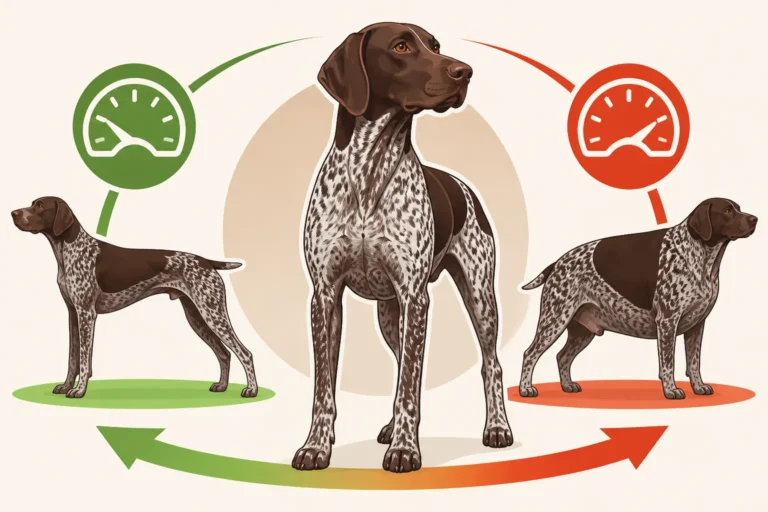
Whether a Field Line Shorthair Is Harder to Live With
A field-line German Shorthaired Pointer can feel like a lot of dog in an ordinary home: fast, curious, vocal, and ready to turn a quiet afternoon into a search for something to do. But “field line” does not automatically mean unmanageable. This guide explains what may make these dogs more demanding, what daily life can look like, and how to judge whether the fit is right for your household.
What field line means in everyday life
Field bred describes priorities, not a guaranteed personality
“Field line” usually refers to breeding that emphasizes hunting ability and performance in the field. Breeders may select for traits such as stamina, drive, bird awareness, range, and willingness to work with a handler. Those priorities can influence what a dog is like at home, but they do not tell you everything about an individual dog’s temperament, training, or ability to settle.
Two dogs from field pedigrees can be quite different. One may be intense outdoors but easy to live with after an appropriate run and a predictable routine. Another may stay restless, vocal, or demanding unless its physical and mental needs are consistently met. Family history, early experiences, health, age, and the owner’s skills all matter too.
That is why a pedigree label is best treated as useful context rather than a verdict. Ask what the parents are like in the house, not just how they hunt or perform. A breeder who can describe both sides of the dogs’ lives—how they respond to visitors, recover after exercise, and spend quiet time indoors—can help you picture a more realistic match. For a broader look at the differences, see How Shorthair Field Lines and Show Lines Diverged.
Why some field bred Shorthairs feel especially demanding
A field-bred German Shorthaired Pointer may notice movement, scent, and activity that other dogs ignore. A rabbit crossing the path, birds lifting from a hedge, or a scent trail beside a walking route can quickly become the most interesting thing in the world. This instinct can make ordinary walks feel less casual, especially if the dog is young or has not learned reliable leash manners and recall.
The other challenge is stamina. A dog bred to cover ground may not be satisfied by a short stroll around the block, even if it returns home panting. Exercise needs to be appropriate for the individual dog and its age, and it usually works best alongside training and sniffing opportunities rather than as a frantic attempt to exhaust the dog. The Two Hours a Day a German Shorthaired Pointer Needs offers more detail on balancing activity with other needs.
Owners sometimes expect a large yard to solve the problem. A yard can be helpful, but it does not automatically provide meaningful exercise or mental engagement. A dog may run the fence line, bark at passersby, or dig a new feature into the lawn and still be ready to pester the household afterward. Field-line energy is easier to manage when the dog has a job to do with a person, not just open space.
What living with one can look like
The house is often the real test
A field-bred Shorthair’s hardest moments may happen after the walk is over. If the dog has not learned how to settle, it may carry a toy from room to room, bring you a leash, paw at the door, bark at outdoor sounds, or invent its own projects. A bored adolescent might counter-surf, chew household items, or repeatedly demand attention. These behaviors are tiring, but they do not mean the dog is being deliberately difficult.
A calm home routine is a skill that needs to be taught. Short periods of resting on a bed or mat, rewarding quiet behavior, and offering appropriate chew or food-puzzle activities can help a dog practice switching off. Keep expectations realistic: a young, athletic dog may need more help settling than an older dog with years of routine. If you are building a daily plan, The Structure a German Shorthaired Pointer Needs Daily is a useful related topic.
Some owners use food-dispensing toys or other enrichment supplies to give the dog an appropriate outlet while the household is busy. Chewy is one place owners may browse for toys and feeding gear, but the important part is choosing an item suited to the dog’s chewing style and supervising its use. An enrichment toy can occupy a dog for a while; it cannot replace interaction, training, exercise, or a gradual plan for being alone.
Alone time, visitors, and neighborhood distractions
A dog that follows its people from room to room may struggle when left alone, particularly if it has not been taught to tolerate separation gradually. That is not exclusive to field lines, but a highly social, active Shorthair can make the issue more visible. Start with brief, low-stress absences and build slowly. If the dog panics, damages doors, or cannot settle, simply increasing the time away may make matters worse; a veterinarian or qualified behavior professional can help assess the situation. See Building a Shorthair's Tolerance for Being Alone for more on this process.
Visitors can bring another set of challenges. A big, enthusiastic dog may greet people by bouncing, leaning, or carrying a toy around the entryway. Practicing a predictable routine—such as going to a bed, waiting behind a gate, or greeting only when calm—can make arrivals more manageable. This takes repetition, so it is helpful to practice when you are not already juggling groceries, a ringing doorbell, and a dog who has just spotted a squirrel.
Outdoor distractions matter too. A secure fence, leash skills, and a practiced recall are important because prey interest can override an unreliable cue. Do not assume that a friendly dog will stay close simply because it is bonded to you. For help with that common frustration, Recall on a German Shorthaired Pointer That Is Locked On explores why recall can fall apart when the dog is intensely focused.
Field line versus show line in a home
Differences you may notice, and what you cannot assume
Some field-bred Shorthairs are leaner, more athletic, and more driven to work than dogs bred primarily toward show-ring goals. But those are broad tendencies, not guarantees. Show-line dogs can be energetic and birdy, while field-line dogs can be affectionate house companions who relax well after activity. Individual breeding programs vary, and labels can be used loosely.
The comparison is most useful when it leads to better questions. Rather than asking only whether a dog is field bred, ask how the specific dog responds to everyday situations. Does it settle indoors after exercise? How does it handle a crate or a quiet room? What happens around cats, children, visitors, or unfamiliar dogs? How much training has it had, and what does the breeder or foster caregiver see as its biggest challenge?
| Question to ask | Why it matters at home |
|---|---|
| How do the parents behave indoors? | Gives a more useful picture than hunting ability alone |
| What kind of daily activity do they need? | Helps you assess whether your schedule is realistic |
| How do they respond to birds and wildlife? | Signals how much management may be needed outdoors |
| Can they settle after activity? | Offers clues about household life and rest habits |
| What training or social experiences have they had? | Helps distinguish temperament from missing skills |
| What support is available if a match becomes difficult? | Shows whether you can get guidance after bringing the dog home |
If you are comparing a field dog with a show-bred dog, focus on the dog in front of you and the breeder’s goals. Whether a Show Bred Shorthair Can Still Hunt discusses the other side of that comparison, while Whether a Field Line Shorthair Is Harder to Live With is a question best answered by looking beyond the line label.
A field dog can still be a companion
Hunting is not the only way to give a Shorthair purposeful activity. Scent games, retrieve practice, obedience, hiking, swimming when safe, and structured play can all provide useful outlets. Some dogs enjoy formal field training; others thrive with a mix of activities that fits their household. The key is to give the dog regular chances to use its body and mind without turning every day into an exhausting workout.
Training for ordinary life is just as valuable as sport or field skills. Teach the dog to walk on a loose leash, wait at doors, come away from distractions, settle on a mat, and accept handling. Keep sessions short and consistent. If your dog seems to understand a cue at home but ignores it near wildlife, that usually means the behavior needs practice in gradually more distracting settings—not that the dog is stubborn or incapable.
For enrichment, rotate activities rather than relying on one favorite toy. A sniffing walk, a brief training session, and a meal served in a puzzle feeder may be more useful than tossing a ball until the dog is overexcited. Chewy is one option for browsing food puzzles and other supplies, but choose durable, appropriately sized items and remove anything that becomes damaged. If the dog’s activity needs are the main concern, Ninety Minutes of Real Exercise for a Shorthair offers ideas for making movement more purposeful.
How to decide whether a field line fits your household
Match the dog’s needs to your actual week
Picture a normal Tuesday, not an ideal weekend. How much time can you reliably give the dog before and after work? Who handles exercise when the weather is miserable, someone is sick, or plans change? Is there a safe place to train, and can you provide supervision around roads, wildlife, and other animals? Honest answers matter more than good intentions.
A field-line dog may be a poor fit if the household expects a low-energy pet that can entertain itself in a yard or manage long stretches alone without preparation. That does not make the dog or the household wrong; it may simply be a mismatch. Conversely, an active home that enjoys training, outdoor time, and consistent routines may find that the same qualities are rewarding rather than burdensome.
Think about the whole household, too. A dog’s size and excitement can be difficult around very young children, older relatives, or anyone unsteady on their feet. Cats and small pets need careful introductions and ongoing management because prey interest can be strong. For a realistic view of family compatibility, read Whether a German Shorthaired Pointer Suits a Family With Kids.
Questions to ask before choosing a puppy or adult dog
Ask the breeder, rescue, or current caregiver for concrete examples rather than broad assurances. “Good in the house” can mean many things. Ask what the dog does during a quiet evening, how it behaves after exercise, whether it can rest in a crate or behind a gate, and what situations make it overly excited. If possible, spend time with the dog in more than one setting.
For a puppy, remember that adult behavior is not fully visible yet. Ask about the parents and close relatives, but also look at how the puppy responds to new sounds, people, handling, and brief frustration. For an adult dog, request a candid account of training, separation tolerance, prey drive, and any behavior concerns. A dog’s current behavior may improve with support, but it is better to know what help may be needed before making a commitment.
Finally, make a practical plan for the first months: training support, exercise options, safe confinement, enrichment, and veterinary care. Chewy may be useful for comparing basic supplies such as food puzzles or bedding, but supplies are only one small piece of preparation. The more important question is whether you can consistently provide structure, supervision, companionship, and appropriate outlets. For a broader household-fit discussion, see Whether a First Time Owner Can Handle a Shorthair and Whether a German Shorthaired Pointer Needs to Hunt to Be Happy.
A field-line Shorthair can be harder to live with when its energy, instincts, and need for guidance do not match the household’s routine. But field breeding alone does not make a dog impossible at home. Learn about the individual dog, be honest about the time and training you can provide, and choose for everyday compatibility as carefully as you choose for athletic ability.
Disclaimer
This article is for general informational purposes only and does not constitute professional advice. Laws, prices and regulations vary by location and change over time. Consult a qualified professional for guidance on your specific situation.