The Difference Between Ticked and Roan on a Shorthair
It’s a common moment for German Shorthaired Pointer owners, especially those new to the breed: you’re admiring your pup’s gorgeous coat, maybe chatting with another GSP enthusiast, and suddenly the words "ticked" and "roan" are thrown around, leaving you wondering if you truly understand the nuances of your dog's stunning markings. Many people mistakenly use these terms interchangeably, or just aren't sure what the precise difference is according to breed standards and genetics. This guide will walk you through the distinct characteristics of ticked and roan coats in German Shorthaired Pointers, helping you appreciate the unique beauty of these patterns and speak confidently about your dog's coloration.
Understanding German Shorthaired Pointer Coat Patterns
Before we dive into the specifics of ticking and roaning, it’s important to understand the basic palette upon which these patterns are painted. German Shorthaired Pointers, or GSPs as we affectionately call them, have a relatively limited range of accepted base colors, but the way these colors manifest in patterns is where the true artistry lies. Their short, dense coats are truly a marvel, designed for both protection in the field and striking good looks.
The Basic Coat Colors Liver and Black
At their core, German Shorthaired Pointers primarily come in liver (a deep, rich brown) or black. These are the two foundational pigments that determine the overall hue of the dog. All the other variations you see, like roan or ticked, are essentially modifications or patterns laid over these base colors. You won't find a true "red" or "blue" GSP, for instance, in the same way you might in other breeds. Liver, Black and the Colors That Disqualify a Shorthair outlines more about the standard and non-standard colors. The depth of the liver can vary, from a very dark, almost chocolate shade to a lighter, more golden brown, but it’s still fundamentally liver. Similarly, black can be a true jet black or have a slight faded quality. These base colors are genetically determined and are present from birth, even if the eventual pattern isn't immediately obvious.
It’s worth noting that while liver is historically the most common and widely recognized color for GSPs, black has gained considerable popularity over the years. Both are equally valid and beautiful in the breed standard, though sometimes people have strong preferences for one over the other. Regardless of the base color, the health and temperament of the dog are paramount, but understanding the genetics behind these colors can be fascinating for any GSP enthusiast.
The Importance of White Markings
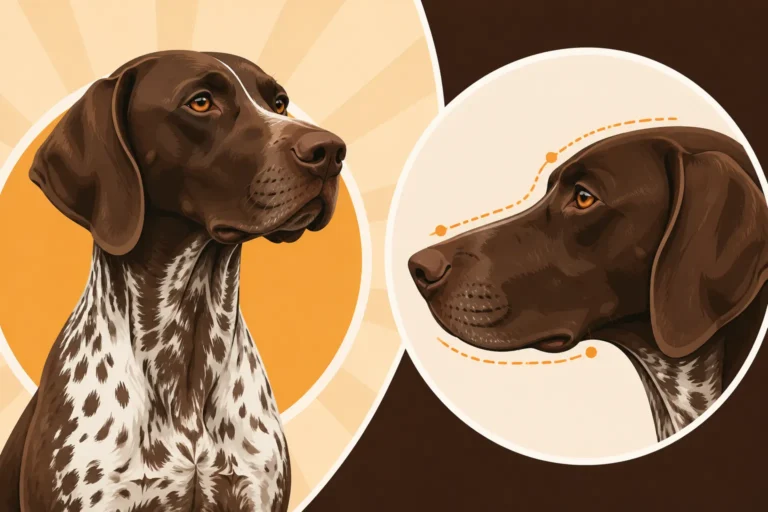
Almost all German Shorthaired Pointers will have some degree of white on their bodies. This white isn't just a blank canvas; it’s the area where the ticking or roaning will become apparent. Without white, there's no visible pattern beyond the solid base color. Think of it like a beautiful painting: the base color is the background, the white is where the details emerge. These white markings often appear on the chest, muzzle, feet, and sometimes a blaze up the face. The extent of white can vary wildly, from a tiny patch on the chest to large areas covering much of the body.
The placement and amount of white can also influence how pronounced the ticking or roaning appears. A dog with extensive white, for example, will show off their intricate patterns more dramatically than a dog with only minimal white. This variability in white distribution is part of what makes each GSP's coat so unique, even within the same litter. Breeders often pay close attention to these markings when evaluating puppies, not just for aesthetics but also for adherence to breed standards. Liver and White Patterns on a Shorthair further explores these variations.
What "Ticked" Really Means on a Shorthair
When we talk about "ticking" in a German Shorthaired Pointer, we're referring to a very specific type of pattern. It's often misunderstood, so let's break down what ticking truly looks like and how it develops.
The Appearance of Ticking
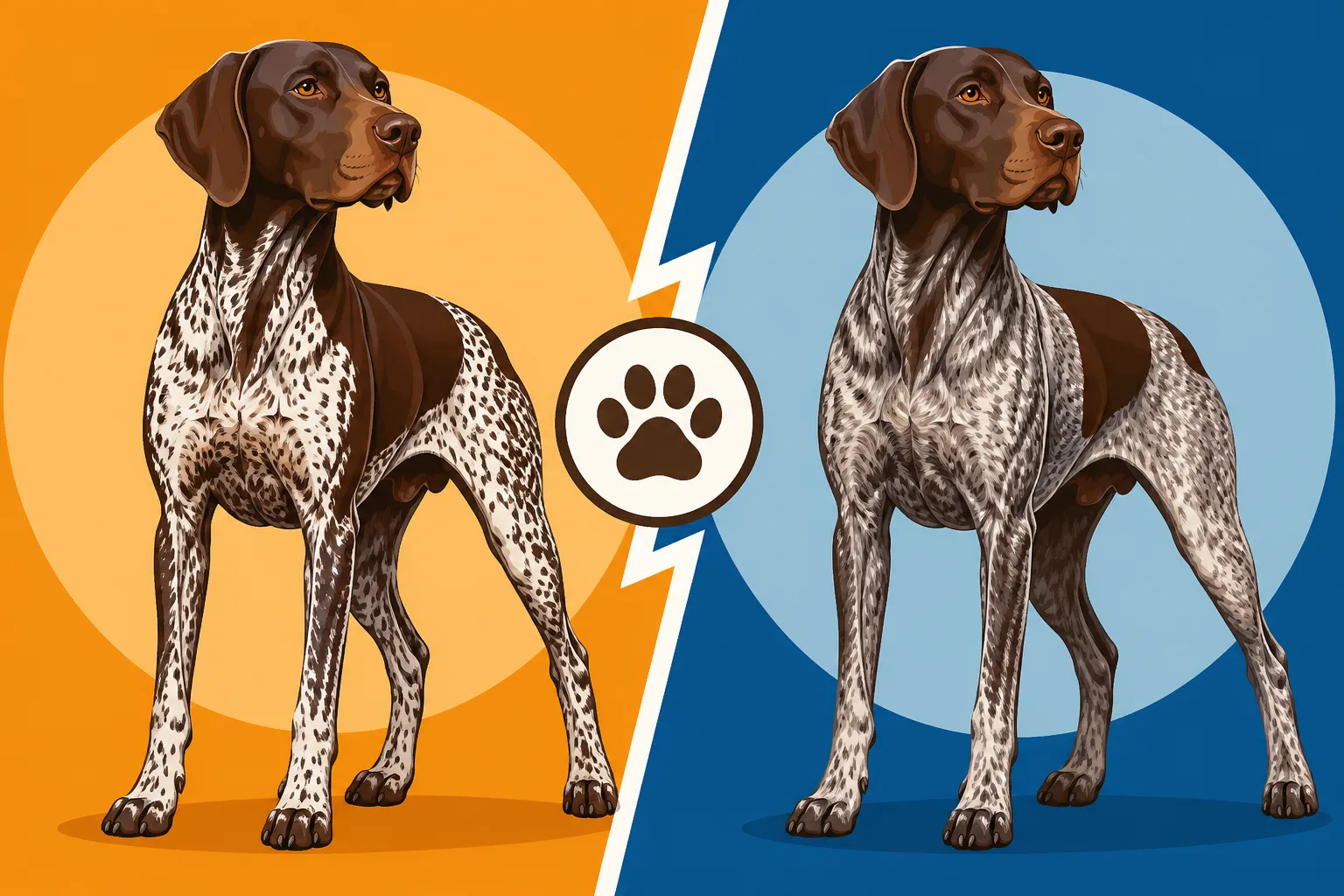
Imagine your GSP has a white patch, say on their chest or legs. Ticking appears as small, isolated specks or spots of the dog's base color (liver or black) sprinkled across that white area. Think of it like a fine dusting of pepper on a white tablecloth, or tiny paint splatters. These spots are typically distinct and separate, not merging into a solid color. They can vary in density, from just a few sparse spots to a heavier concentration that gives the white area a freckled appearance. However, even when heavy, the individual spots usually remain discernible.
The size of these spots can also differ; some GSPs might have very fine, almost microscopic ticking, while others display slightly larger, more prominent flecks. The overall effect is one of a patterned white rather than a solid white. It's a hallmark trait for many GSPs and is highly desirable in the breed. A beautifully ticked GSP can be quite striking, with the contrast between the white and the colored flecks adding depth to their coat.
How Ticking Develops
Ticking isn't something a GSP puppy is born with in its final form. Instead, it develops over the first few weeks and months of life. A newborn GSP puppy with white markings will typically have pure, unticked white areas. As the puppy matures, these tiny colored hairs start to emerge within the white patches. This is why you might get a puppy that looks almost entirely white in certain areas at eight weeks, but by six months, those same areas are beautifully freckled.
The extent and density of ticking can continue to develop even past puppyhood, though the most significant changes usually occur within the first year. This gradual appearance of the ticking pattern is due to the way the genes responsible for ticking express themselves. It's a fascinating process to watch as a puppy's coat transforms. The genetic trait for ticking is dominant, meaning only one copy of the gene is needed for a dog to display ticking. Whether Shorthair Puppies Change Color as They Grow offers more insight into how GSP coats evolve.
Ticking in Different Breeds
While we're focusing on German Shorthaired Pointers, ticking isn't unique to them. Many sporting breeds, particularly other pointers and setters, exhibit ticking. For instance, English Setters are famous for their heavily ticked coats, often described as "belton" patterns. English Pointers also commonly display ticking. However, the appearance can vary slightly between breeds in terms of density, size of spots, and overall presentation.
Understanding this broader context helps to solidify what ticking is conceptually. It’s always about those distinct, individual specks of color on a white background. This differentiation becomes especially important when distinguishing ticking from its close cousin, roaning, which we'll discuss next. Even within the same breed, like the GSP, the expression of ticking can be quite individual, making each dog truly one-of-a-kind.
Deciphering "Roan" in the German Shorthaired Pointer
Now, let's turn our attention to roan. This is where the confusion often lies, as roan can sometimes appear quite similar to heavy ticking, but there's a fundamental difference in how it looks and develops.
The Distinct Look of Roan
Roan, in contrast to ticking's distinct spots, refers to an even mixture of colored hairs (liver or black) and white hairs throughout the coat. Instead of individual specks, the colored hairs are so densely interspersed with the white hairs that the overall effect is a blended, mottled appearance. It's not distinct spots, but rather a uniform dilution of the white area with the base color. Imagine taking that white tablecloth and instead of sprinkling pepper, you've mixed in fine coffee grounds or soot, creating a consistent, muted shade rather than individual flecks.
The result is a grayish or brownish cast to what would otherwise be a white area. A liver roan GSP, for instance, might have areas that look like a dilute, dusty liver color, while a black roan would appear as a smoky gray or charcoal. The key is that the individual colored hairs are so finely distributed and numerous that they create an almost solid, yet muted, color rather than a clear white with distinct spots. Solid Black and Black Roan German Shorthaired Pointers discusses how these specific patterns present.
Roan vs. Heavy Ticking: A Key Distinction
This is the critical point where many people get tripped up. A GSP can have very heavy ticking, so much so that the spots are close together and the white areas appear quite dark. However, if you look closely, you can usually still discern the individual spots. With roan, that distinction is blurred. The hairs are blended, not spotted. Think of it this way: if you can still pick out individual freckles, it's ticking. If the white area looks like it's been painted with a diluted, muted version of the base color, it's roan.
Another way to think about it is texture. Ticking is like pointillism, made up of many small dots. Roan is more like a watercolor wash, where colors blend seamlessly. While the genetic mechanisms behind roaning and ticking are related and can be confusing, the visual outcome is distinct once you know what to look for. Sometimes, a GSP may have both ticking and roaning in different areas of its coat, adding another layer of complexity and beauty to their pattern.
How Roan Presents and Changes Over Time
Like ticking, roan patterns also typically develop as a GSP puppy matures, though the initial blending may be visible earlier or seem more consistent from the start. A roan puppy might be born with areas that appear largely white, but as they grow, the colored hairs fill in, creating that distinctive blended appearance. The intensity of the roaning can also deepen with age.
What makes roan especially interesting is how it interacts with the base color. A liver roan can range from a light, almost café-au-lait shade to a rich, dark liver roan that looks quite solid from a distance. Similarly, black roan can be a light silver-gray or a deep charcoal. The overall impression is one of a sophisticated, almost faded elegance. These patterns are highly valued and contribute significantly to the German Shorthaired Pointer's classic appearance. The Colors Two Liver Shorthairs Can Produce shows how these patterns can occur in litters.
Why These Distinctions Matter
Understanding the difference between ticked and roan patterns isn't just about winning a trivia contest. These distinctions have real implications for breed standards, genetic understanding, and even for GSP owners who want to fully appreciate their dog's unique traits.
Impact on Show Ring and Breed Standards
For those involved in the show circuit, precise terminology and adherence to the breed standard are paramount. The American Kennel Club (AKC) standard for the German Shorthaired Pointer specifically mentions "solid liver or black, or liver and white, or black and white, or liver roan, or black roan." It also states, "Any area of the body that is white may be either clear white or ticked." This phrasing confirms that ticking and roaning are distinct patterns. While both are acceptable, judges are trained to identify these differences. Mislabeling a coat pattern could potentially impact a dog's evaluation in the ring.
Knowing if your GSP is ticked, roan, or a combination allows you to accurately describe them and correctly interpret pedigrees and show results. It speaks to a deeper understanding and appreciation of the breed's characteristics, which is always valued in the competitive world of dog shows. The Shorthair's Move Into the AKC Sporting Group highlights the importance of these standards in the breed's history.
Understanding Pedigrees and Genetics
Beyond the show ring, distinguishing between ticked and roan is crucial for breeders and anyone interested in GSP genetics. These patterns are inherited traits, and understanding them helps in predicting litter outcomes and making informed breeding decisions. While the exact genetic pathways can be complex, different genes and modifiers are responsible for producing ticking versus roaning. Knowledge of these patterns in a dog's pedigree can offer insights into its genetic makeup.
For example, if you're looking at a puppy from a litter, knowing the parents' patterns (and sometimes grandparents') can give you a better idea of what the puppy’s coat might look like as it matures. This is also important for health clearances, as breeders often share this kind of detailed information about their lines. Reading a Shorthair's OFA and Eye Results Before Paying often includes coat patterns, too, among other critical health clearances. Responsible breeders strive for transparency and accuracy in all aspects of their dogs' descriptions, including coat patterns.
Practical Implications for Owners
For the everyday GSP owner, while it might not seem critical, understanding these nuances fosters a deeper connection and appreciation for your dog. It allows you to speak confidently about your GSP's unique appearance and recognize the subtle changes in their coat as they grow. It's part of the rich tapestry of owning one of these incredible dogs.
Furthermore, knowing your dog’s coat type can sometimes have practical, albeit minor, implications for grooming or general care. For instance, heavily roan or ticked areas might sometimes appear denser or slightly different in texture than pure white, although this is usually subtle. When purchasing supplies, such as dog beds from Chewy or specialized brushes, understanding your dog’s coat type might influence your choices for keeping their coat in top condition. Ultimately, it’s about being a well-informed and proud German Shorthaired Pointer parent.
Here’s a quick overview to help you differentiate:
| Feature | Ticked | Roan |
|---|---|---|
| Appearance | Small, distinct, individual colored spots | Even mixture of colored and white hairs |
| Pattern Detail | Freckled, peppered | Blended, mottled, diluted color |
| Hairs | Individual colored hairs on white ground | Interspersed colored and white hairs blend |
| Density | Can be sparse or very heavy | Consistent, uniform distribution |
| Color Effect | White with visible colored flecks | Muted, diluted version of base color |
| Development | Spots emerge and darken over time | Blending typically fills in over time |
Disclaimer
This article is for general informational purposes only and does not constitute professional advice. Laws, prices and regulations vary by location and change over time. Consult a qualified professional for guidance on your specific situation.