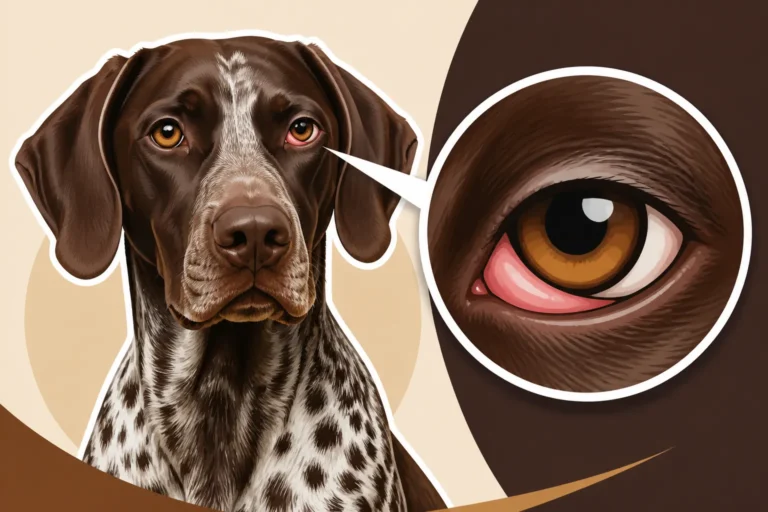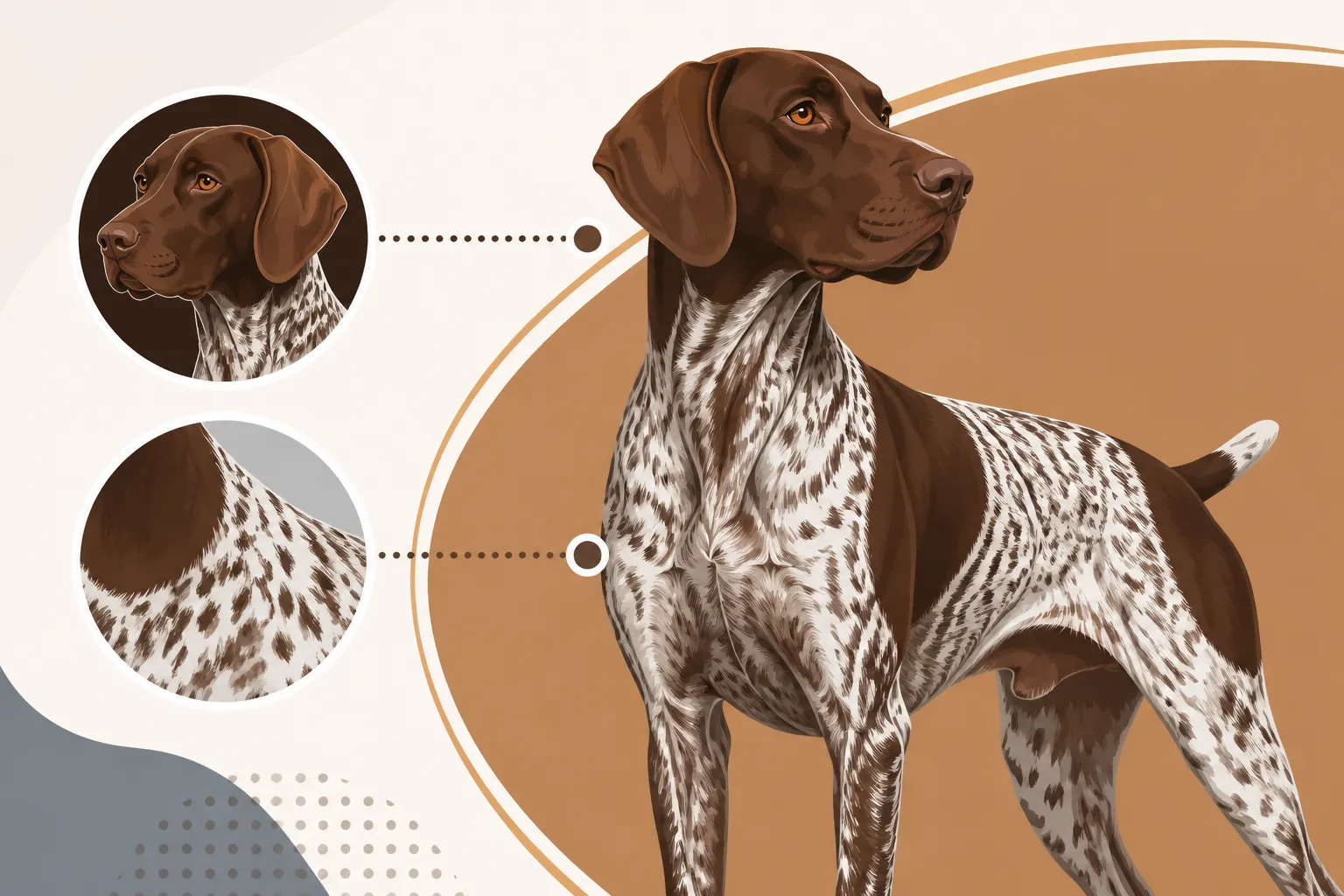
Liver and White Patterns on a Shorthair
Many German Shorthaired Pointer owners, especially those new to the breed, often feel a bit overwhelmed by the sheer variety of liver and white patterns that can appear on their beloved companions. It's not just "liver and white" – there's a whole spectrum, and understanding what those patterns are, and where they come from, can truly deepen your appreciation for this magnificent breed, making you feel more connected to its rich heritage and unique aesthetics.
Understanding the German Shorthaired Pointer Coat Standard
The German Shorthaired Pointer's coat is one of its most defining features, not just for its practical, hard-wearing nature in the field, but also for its distinctive color patterns. While some breeds boast a rainbow of colors, the GSP palette is beautifully specific, centered around liver and, to a lesser extent, black. This focused color scheme reflects the breed's working origins, where function and specific breed type were paramount.
The Historical Significance of Liver
Historically, liver was the quintessential color for the German Shorthaired Pointer. When the breed was first being developed in Germany, breeders sought a versatile hunting dog that could point, retrieve on land and water, and even track. The liver coloration wasn't just a preference; it was deeply ingrained in the breed's foundation, a hallmark of the desired type. Early breeders emphasized utility and conformity to a specific working ideal, and the liver coat became synonymous with this vision.
You see, the initial aim was to create a dog that excelled in all aspects of the hunt, from tracking wounded game to holding a steady point. The breeders weren't just thinking about aesthetics; they were developing a functional partner for the hunter. The predominance of liver in those foundational dogs meant that it naturally became the standard, a recognizable trait that communicated "German Shorthaired Pointer" to those familiar with the emerging breed.
AKC and FCI Standards for Coat Color
Both the American Kennel Club (AKC) and the Fédération Cynologique Internationale (FCI), which often guides European breed standards, are quite clear on acceptable GSP colors. For the AKC, acceptable colors are solid liver, liver and white, liver roan, and liver and white ticked. Black and black variations are also accepted, but liver is truly the foundation color. Faults might include yellow markings, or distinct black and tan points which are not typical for the breed.
The FCI standard echoes this, often emphasizing the importance of liver, liver and white, or liver roan. They outline specific requirements for pigmentation, such as nose color matching the coat (liver nose for liver dogs, black nose for black dogs), and eye color that harmonizes with the coat. These standards aren't just arbitrary rules; they are designed to preserve the breed's distinct appearance and ensure that dogs conform to the historical type. When you look at The Size and Build the Shorthair Standard Asks For, you'll see how every physical trait, including coat, contributes to the overall picture of a correct GSP.
Beyond "Solid Liver": A Spectrum of Patterns
While solid liver GSPs are stunning and perfectly acceptable within the standard, the true artistry of the breed's coat often lies in its liver and white patterns. Many people unfamiliar with the breed might assume "liver and white" means just one look, but it's far more diverse. These patterns arise from different genetic factors that control the distribution of pigment and white markings across the dog's body.
From bold, distinct patches to finely speckled roan, each pattern adds a unique character to the dog's appearance. These variations are what make each GSP a truly individual work of art, even within the strict confines of breed standards. Understanding these nuances helps us appreciate the depth of the breed's genetic heritage and the thoughtful breeding that went into creating such a visually striking and functionally effective hunting companion.
Decoding Liver and White Patterns
When you say "liver and white," it's like saying "chocolate chip cookie." There are so many variations! For German Shorthaired Pointers, the liver and white comes in a few distinct, and equally beautiful, patterns that are worth getting to know. These aren't just random occurrences; they're predictable expressions of their genetics.
Liver and White Patched
The "liver and white patched" pattern is perhaps one of the most straightforward to recognize. Imagine a mostly white dog with large, clearly defined areas of solid liver color. These patches can vary in size and placement, appearing on the head, ears, back, sides, or base of the tail. The white areas are typically clean and bright, without much, if any, ticking or roaning within them.
Think of it like an artist used a big brush to apply solid blocks of color. The edges of the liver patches are usually crisp and distinct against the white. This pattern can be quite striking, with bold contrasts that make the dog stand out. Often, you'll see a solid liver head and ears with a predominantly white body, or larger liver "capes" across the back. It's a classic look that many people associate with the breed.
Liver Roan
Liver roan is where things get a bit more intricate and, frankly, mesmerizing. Instead of distinct patches of color, roan refers to a very fine, even intermingling of liver and white hairs throughout the coat. It often gives the appearance of a dusty or mottled liver color, as if the white hairs are diffused within the liver. The overall effect can be a slightly lighter or softened version of liver, but it’s not truly solid.
This pattern is often mistaken for heavy ticking, but there's a key difference. With roan, the individual hairs are typically two-toned or so closely mixed that it creates a uniform effect, almost like a grey or salt-and-pepper blend for liver. The density of the roaning can vary, leading to lighter or darker roan areas, but the defining characteristic is that even blend of color and white hairs. Understanding The Difference Between Ticked and Roan on a Shorthair can really help you appreciate these subtle variations.
Liver Ticked
Ticking is another beautiful and very common pattern in German Shorthaired Pointers. Unlike roan, where the colors blend, ticking presents as small, individual flecks or spots of liver color sprinkled across the white areas of the coat. These flecks are distinct and can range in density from light speckles to very heavy, almost solid-looking areas, particularly on the legs and lower body.
Imagine throwing tiny dots of paint onto a white canvas. Each dot is a tick. These ticks typically appear on the white portions of the dog's coat, often intensifying on the legs, muzzle, and tail. Many GSPs that are described as "liver and white" will, in fact, have some degree of ticking in their white areas, even if they also have large solid patches. It's a hallmark of the breed's coat and adds a lovely texture to their appearance.
Liver and White Patched and Ticked
This is arguably the most common and classic liver and white pattern you'll see on a German Shorthaired Pointer. It's exactly what it sounds like: a combination of the distinct, solid liver patches we discussed, along with ticking scattered throughout the white areas of the coat. So, a dog might have a solid liver head, a large liver saddle on its back, and then the rest of its white body and legs are covered in liver flecks or spots.
This combination offers the best of both worlds – the bold statements of the patches and the intricate detail of the ticking. The density of the ticking can vary greatly, with some dogs having just a few scattered flecks, while others are so heavily ticked in their white areas that they appear almost roan. This versatility in patterning ensures that while GSPs adhere to a specific color palette, each dog still possesses a unique and captivating coat.
Genetics Behind the Liver and White Coat
It's pretty fascinating to think about how a simple set of genes can create such a beautiful array of patterns on our German Shorthaired Pointers. Understanding the basics of coat color genetics isn't just for breeders; it helps every owner appreciate the biological blueprint behind their dog's unique look. It's like peeking behind the curtain to see the magic at work.
The Liver Gene (b/b)
The liver coloration in German Shorthaired Pointers, and many other breeds, is determined by a recessive gene. In dog genetics, this is often referred to as the 'b' allele at the B locus. A dog needs to inherit two copies of this recessive 'b' gene (making its genotype 'b/b') to express the liver color. If a dog has at least one dominant 'B' allele (genotypes 'B/B' or 'B/b'), it will have black pigment instead of liver.
So, when you see a beautiful liver GSP, you know that both of its parents contributed a 'b' gene. This recessive nature means that two black-pigmented dogs can actually produce liver puppies if both carry the recessive 'b' gene. It's a fundamental piece of the puzzle that explains why liver is so common and integral to the breed's identity.
The White Markings and Ticking Genes
The white markings and ticking patterns are governed by different genes than the base color. White spotting, for example, is primarily controlled by the S locus. A range of alleles at this locus determines how much white appears on a dog, from minimal white on the chest and toes to extensive white markings that cover much of the body. German Shorthaired Pointers typically have alleles that result in moderate to extensive white patterning.
Then there's the T locus, which is responsible for ticking and roaning. This gene essentially allows pigment to "leak" into the white areas. The 'T' allele for ticking is dominant, meaning a dog only needs one copy to express ticking or roaning. The amount and density of the ticking can be influenced by other modifying genes, which is why some dogs have just a few flecks, and others are heavily speckled. It's this interplay of genes that creates the rich tapestry of liver and white patterns we cherish in our GSPs.
Predicting Puppy Coat Patterns
For breeders, understanding these genetic principles is crucial for predicting the coat patterns of a future litter. By knowing the genotypes of the parent dogs for the B, S, and T loci, a breeder can make educated guesses about the probability of certain colors and patterns appearing in their puppies. For instance, if both parents are liver (b/b) and carry the gene for ticking, you can expect liver and white ticked or patched and ticked puppies.
However, predicting the exact distribution and density of ticking or the size of patches can be more complex due to the influence of multiple genes and environmental factors. Still, knowing the basic genetics helps ensure that breeders are producing dogs that conform to breed standards and meet the aesthetic expectations of prospective owners. This is why reputable breeders carefully study pedigrees and sometimes even use genetic testing to understand their dogs' genetic makeup when planning The Colors Two Liver Shorthairs Can Produce.
What These Patterns Mean for the German Shorthaired Pointer Owner
When you bring a German Shorthaired Pointer into your home, whether they're liver roan, patched and ticked, or solid liver, you're getting an incredible companion. While the patterns are undeniably beautiful, it's important to understand that they're primarily an aesthetic feature. The dog underneath all that gorgeous coat is what truly matters, but there are a few practical considerations related to their appearance.
Aesthetics vs. Function
Let's be real: whether your GSP has bold liver patches or a delicate roan pattern, it doesn't change their drive to hunt, their loyalty, or their boundless energy. A dog with heavy ticking will point just as fiercely as one with clean white markings. The coat pattern is a matter of personal preference and breed type, not an indicator of performance or temperament. Some people adore the striking contrast of patches, while others prefer the subtle blend of roan.
Ultimately, your GSP's ability to be a fantastic hunting partner, a dedicated family member, or a lively running buddy is entirely separate from the specifics of their liver and white pattern. Reputable breeders will always prioritize health, temperament, and working ability over specific coat patterns when making breeding decisions, ensuring that the GSP remains the versatile dog it was bred to be. The beauty is a bonus!
Health Considerations Related to Pigment
Generally speaking, the liver and white patterns in German Shorthaired Pointers are not associated with specific health issues. Unlike some breeds where extensive white can correlate with deafness, GSPs with white markings rarely experience this. Their white areas are typically well-pigmented enough around the inner ear structure to avoid such problems.
However, any dog with significant white markings, particularly on areas like the nose, eyelids, or sparsely haired bellies, can be more susceptible to sun exposure. Just like fair-skinned people, these areas can burn. If your GSP loves to lounge in the sun or spends long hours afield in bright conditions, it's wise to consider sun protection for those vulnerable areas. You can find dog-specific sunscreens at pet retailers, including online stores like Chewy. This little bit of extra care is well worth it to keep your companion comfortable and healthy. Sun Protection for a White Marked Shorthair is something every owner should consider.
Grooming and Coat Maintenance
The good news is that your GSP's specific liver and white pattern has virtually no impact on their grooming needs. Whether they're heavily ticked or mostly patched, the short, dense coat characteristic of the breed remains the same. German Shorthaired Pointers are relatively low-maintenance when it comes to grooming, which is a huge plus for active owners.
Regular brushing, perhaps once or twice a week, is usually sufficient to remove loose hair and keep their coat healthy and shiny. During shedding season, you might increase the frequency. A simple rubber curry brush or a grooming mitt works wonders, and you can easily find these tools on sites like Chewy. Beyond that, occasional baths, nail trims, and ear cleaning are the main components of their care routine. The ease of care for their coat allows you more time to focus on the exercise and training they truly need. The Grooming Mitt That Suits a Shorthair Coat can make quick work of shedding.
Common Misconceptions and Variations
The world of dog coat colors can be confusing, and German Shorthaired Pointers are no exception. There are some common questions and variations that often pop up, especially for new owners trying to understand their dog's unique appearance. Let's clear up some of those frequently asked questions and dive a little deeper into the less common, but equally interesting, variations.
Is a Solid Liver GSP Different?
No, a solid liver German Shorthaired Pointer is not fundamentally "different" from its liver and white counterparts. Solid liver is a perfectly acceptable color according to breed standards and carries the same genetic makeup for the base liver pigment. Some people prefer the sleek, uniform look of a solid liver coat, finding it particularly elegant or striking.
These dogs are liver all over, with no white markings at all, not even a tiny chest patch or white toes. While perhaps less common than the various liver and white patterns, solid liver GSPs are equally purebred and possess all the same characteristics, temperament, and hunting drive as any other German Shorthaired Pointer. They simply express the liver gene without the additional genes for white spotting. How Common a Solid Liver German Shorthaired Pointer Is depends a lot on breeding choices, but they are certainly out there and cherished by their owners.
The "Rare" Black and White Shorthair
While liver is undeniably the traditional and most common color for German Shorthaired Pointers, black and white patterns do exist and are recognized by the AKC. However, they are often perceived as "rarer" by some because liver has historically been the dominant color in breeding programs, particularly in Germany where the breed originated. For a long time, black was not considered standard in some European lines, and some older breeders viewed it with suspicion.
A black and white GSP will have a black nose and darker eyes, with black patches, roaning, or ticking instead of liver. These dogs are genetically identical in every other way to their liver-colored cousins and are just as capable and wonderful. Their "rarity" is more about historical breeding preferences than any inherent genetic scarcity. If you're looking for gear for your black and white GSP, retailers like Chewy carry everything you need, regardless of color! Why Black German Shorthaired Pointers Were Once Refused delves more into the history of this color variation.
Changes in Pattern Over Time
It’s truly amazing how a puppy’s coat can develop and change as they grow. When German Shorthaired Pointer puppies are first born, their white areas often appear much cleaner and less patterned than they will be in adulthood. If a puppy carries the gene for ticking or roaning, those small flecks or intermingled hairs will gradually emerge over the first few weeks and months of their life. What looks like a pristine white patch on a newborn might soon become speckled.
This development means that the full extent of a dog’s ticking or roaning may not be apparent until they are several months old, or even approaching a year. So, if you pick out a little liver and white pup, be prepared for its white areas to become more "decorated" as it matures. This natural process is just part of the charm of the breed and one of the many ways your GSP will evolve before your eyes. Whether Shorthair Puppies Change Color as They Grow is a common question, and the answer is definitely yes!
Liver and White Pattern Comparison
Here's a quick overview of the primary liver and white patterns you'll encounter in German Shorthaired Pointers:
| Pattern Type | Description | Appearance Notes | Example Areas |
|---|---|---|---|
| Liver and White Patched | Large, distinct areas of solid liver color on a clean white background. | Clear, sharp edges between liver and white. White areas usually free of flecks. | Head, ears, large body patches, saddle markings. |
| Liver Roan | Fine, even intermingling of liver and white hairs. | Mottled, "dusty" liver appearance. Color appears diffused, not sharply defined. | Often covers large body sections, giving a uniform muted liver tone. |
| Liver Ticked | Small, individual flecks or spots of liver pigment scattered over white areas. | Distinct dots on a white background. Density can vary from sparse to heavy. | Legs, muzzle, belly, tail, white portions of body. |
| Liver and White Patched & Ticked | Combination of large solid liver patches with ticking in the white areas. | Bold patches alongside speckled white sections. Very common and often striking. | Solid head/ears, body patches, with ticking on legs, chest, and flanks. |
This article is for general informational purposes only and does not constitute professional advice. Laws, prices and regulations vary by location and change over time. Consult a qualified professional for guidance on your specific situation.