Whether a Shorthair’s Coat Was Bred for Water Work
A German Shorthaired Pointer’s short coat can look surprisingly light when the dog splashes into a pond or works through wet cover. That can leave owners wondering whether the breed was designed for water, and whether a Shorthair is protected enough for cold swims. The short answer is that the coat helps with versatile field work, including retrieving, but it is not waterproof or a substitute for sensible cold-water precautions.
Was a German Shorthaired Pointer’s coat bred for water work
The coat is part of a versatile working design
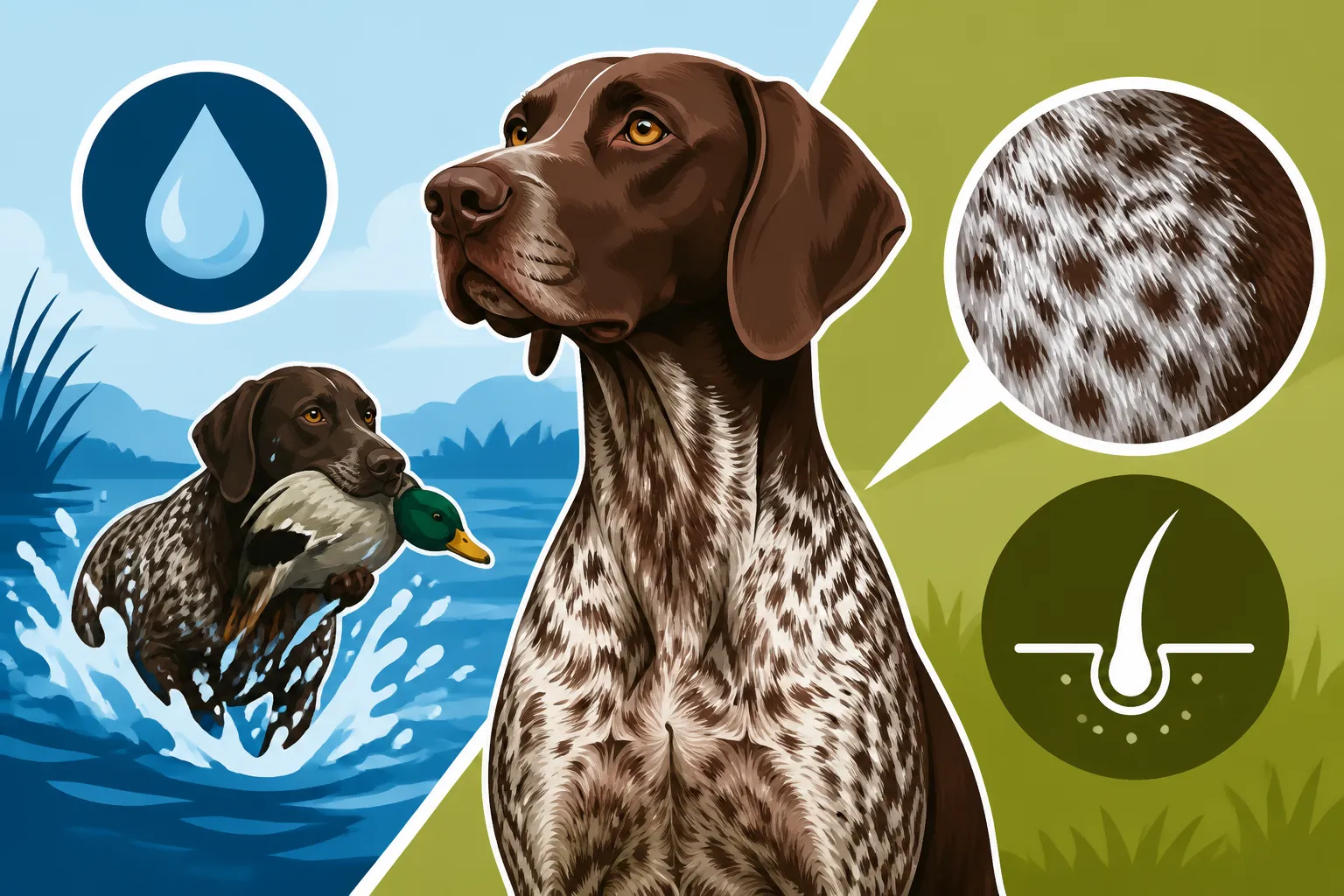
German Shorthaired Pointers were developed as versatile hunting dogs, expected to work across different kinds of country and tasks rather than specialize in only one setting. That versatility includes finding game, pointing, retrieving, and working on land and around water. Their coat is short and close-fitting, with a dense texture that offers some everyday protection from brush, weather, and wet conditions.
That does not mean the coat was made solely for swimming. A Shorthair might hunt upland birds in grass and stubble, then retrieve from a pond or marsh. The coat needs to be practical across those jobs, not optimized for long exposure to icy water. It is better to think of it as a functional field coat that can handle brief wet work than as a heavy insulating layer.
A useful contrast is a thick-coated retriever built for extended water retrieves in cold conditions. The Shorthair’s coat is much lighter. It may shed water and dry more readily than a long, dense coat, but it provides less insulation when the dog stays wet and exposed. A brisk retrieve on a mild day and a prolonged swim in cold water are very different demands.
The breed’s water ability also involves more than coat. Confidence, conditioning, training, body condition, and the individual dog’s comfort all matter. Some Shorthairs take to swimming readily; others need patient introduction. Their webbed feet can help them paddle, but they do not make every dog a natural or safe swimmer. For more on that physical trait, see Why a Shorthair Has Webbed Feet.
Water resistance is not waterproofing
A close coat can offer some resistance to water, but it does not keep a dog dry. After a swim, a Shorthair’s skin and coat can be wet, and wind can chill the dog quickly—especially if the animal is standing still, riding in an exposed truck bed, or waiting beside a marsh. The short coat may make drying easier than it is for a heavily feathered breed, but it also means there is not much insulation between the skin and the weather.
This distinction matters during hunting season. A dog that looks energetic and eager may still be getting cold. Watch for persistent shivering, a hunched posture, reluctance to move, unusual quietness, or repeated attempts to get out of the water. Get the dog dry and warm, and end the water work if the conditions are becoming unsafe. If the dog seems weak, confused, or does not improve after being warmed, contact a veterinarian promptly.
The coat also does not protect every part of the dog equally. Ears can stay damp, paws can be cut or irritated by rough ground, and the belly may be exposed to cold water and vegetation. A quick post-swim check should include the ears, feet, skin, and any area where burrs or seeds could be caught. Advice on preventing lingering moisture in the ears is covered in Drying a Shorthair’s Ears After Every Swim.
| Coat or body feature | What it can help with | What it does not guarantee |
|---|---|---|
| Short, close coat | Practical care after ordinary field work and less coat to manage | Staying dry or warm during long, cold swims |
| Dense coat texture | Some everyday protection from brush and weather | Full insulation in wind, cold water, or prolonged exposure |
| Webbed feet | Support for paddling | Swimming confidence, stamina, or safety in every current |
| Lean, athletic build | Efficient movement during active work | Protection from chilling when wet and inactive |
How to judge whether conditions are safe for a Shorthair
Consider water temperature, wind, and time
There is no single temperature that is safe for every German Shorthaired Pointer. Water temperature is important, but so are air temperature, wind, the dog’s fitness, how long it is swimming, and whether it can get out easily. A short retrieve in calm, mild weather is not comparable to repeated entries into cold water on a windy day.
Think about the whole outing rather than one number. A dog that repeatedly swims, retrieves, and then waits in the wind can lose warmth over time. The same dog might be comfortable during a brief swim on a warm afternoon and struggle during a longer session in cold, choppy water. Build in breaks, keep the dog moving gently between retrieves, and provide a dry, sheltered place to rest.
The dog’s behavior is often more useful than a calendar or a general rule. If your Shorthair hesitates at the water, shivers afterward, or seems less coordinated than usual, do not pressure it to continue. Strong enthusiasm is not a reliable safety measure either; many working dogs will keep going past the point when they should stop.
For a dog learning water work, use a calm, shallow entry with an easy exit. Avoid forcing a puppy or inexperienced dog into deep or fast-moving water. Keep the first sessions brief, praise relaxed exploration, and increase the challenge gradually. If you are unsure whether your dog is physically ready for swimming, especially if it has a health condition or is recovering from an injury, ask your veterinarian.
Use a vest as an extra layer, not a cure-all
A well-fitted canine flotation vest can add buoyancy and make a dog easier to assist in some water settings. It does not replace supervision, a safe exit, or good judgment about water conditions. Fit matters: a vest should allow normal movement without rubbing, slipping, or interfering with the dog’s breathing. Introduce it on dry land first so your dog can get used to the feel before entering water.
A vest may also provide a modest layer between the dog and the environment, but it should not be treated as a cold-water coat. The dog can still become chilled, and the vest itself can become wet. Take it off after the water work when appropriate, and dry both the dog and the gear before storing them. If your dog hunts in cold water regularly, discuss suitable equipment and limits with a veterinarian or experienced field trainer.
When choosing a vest or other field gear, compare the fit and intended use rather than assuming one design suits every dog. A broad-chested Shorthair and a narrow, lightly built one may need different adjustments. The practical guide Fitting a Neoprene Vest on a German Shorthaired Pointer can help you think through fit and comfort.
Caring for the coat after swimming
Rinse, inspect, and dry with care
After swimming in a pond, marsh, or lake, rinse off mud, plant matter, and any residue that may irritate the skin. Pay attention to the underside, armpits, groin, and feet, where debris can be easy to miss. A quick rinse is especially useful after a dog has been in stagnant or visibly dirty water. If the water looks or smells concerning, keep the dog out and ask a veterinarian what to watch for after exposure.
Dry the dog with a towel and move it somewhere sheltered from wind. A towel can be more useful than a complicated grooming routine for a short-coated dog: remove surface water, check the skin, and let the dog rest in a warm, dry spot. Avoid directing hot air close to the skin. If you keep towels, a brush, and basic cleanup supplies in your vehicle, you can manage the damp ride home more comfortably. Chewy is one place owners may look for general pet towels and grooming supplies; choose items based on your dog’s size and needs, not the label alone.
Check the ears and paws before you put the dog away for the day. A strong odor, redness, persistent head shaking, or obvious discomfort may signal an ear problem rather than ordinary dampness. Repeated irritation deserves veterinary attention. For a broader post-outing routine, see Checking a German Shorthaired Pointer Over After a Hunt.
Brush only as much as the coat needs
A German Shorthaired Pointer does not usually need elaborate grooming after every swim. Once the coat is dry, a grooming mitt or soft brush can lift loose hair and help you check for seeds, burrs, or small scrapes. Frequent bathing is not automatically beneficial; too much shampooing can dry or irritate the skin. Use a dog-appropriate product when a bath is genuinely needed, and follow veterinary advice if your dog has recurring skin trouble.
If you shop for a grooming mitt, shampoo, or a drying towel, Chewy may be a convenient source to compare basic supplies. The important part is choosing a product that suits your dog’s skin and coat rather than bathing on a fixed schedule. Owners dealing with scaling, itching, or recurring infection should have the skin checked instead of trying several products in succession. More routine coat advice appears in How Rarely a Shorthair Actually Needs a Bath and Whether a Shorthair’s Coat Needs Brushing at All.
A short coat can make burrs and small cuts easier to spot, but it does not prevent them. Run your hands gently over the dog after field work and look closely at the paws, chest, belly, and ears. If a seed seems embedded, or a sore is painful, swollen, or worsening, do not dig at it blindly. A veterinarian can assess whether it needs treatment.
What the Shorthair coat means for everyday water work
Match the activity to the individual dog
Some German Shorthaired Pointers happily retrieve from water; some are more comfortable staying on shore. Neither response means the dog is failing to live up to the breed. A dog’s interest, experience, age, health, and confidence all shape what it can safely do. Keep early swims positive and brief, and never assume that a dog who swims well in a warm pond will be equally comfortable in cold, deep, or moving water.
For a hunting dog, practice should build gradually. Start with an easy entry and a short retrieve, then watch how your dog moves and recovers. If it exits willingly, stays coordinated, and warms up comfortably, that is reassuring—but keep monitoring throughout the session. If water work is part of regular hunting, plan rest breaks and carry a towel and dry place to settle. Gear for colder conditions is discussed in Cold and Heat on a Shorthair With Almost No Coat.
Read the coat realistically
The Shorthair’s coat is suited to a versatile working dog that may encounter water, but it is not a waterproof shell or heavy insulation. It can cope with ordinary wet field work when conditions are appropriate, and it is relatively straightforward to clean and inspect afterward. Its limits become important in cold water, strong wind, long exposure, or repeated swims with little time to dry and warm up.
That realistic view helps owners avoid two common mistakes: keeping a dog out of all water because its coat looks thin, or assuming it can handle any swim because it is a hunting breed. Check the conditions, introduce water at the dog’s pace, supervise closely, and respond when the dog shows discomfort. If you need a towel or basic cleanup supplies for the car, Chewy can be one option to browse, but good preparation and close observation matter more than any particular product.
Disclaimer
This article is for general informational purposes only and does not constitute professional advice. Laws, prices and regulations vary by location and change over time. Consult a qualified professional for guidance on your specific situation.