Why a Shorthair’s Thin Coat Shows Every Scrape
A German Shorthaired Pointer can come home from an ordinary romp with pink lines, tiny scabs, or scratches that look surprisingly dramatic. That can be unsettling, especially when the dog seems perfectly happy. This guide explains why a Shorthair’s close coat makes marks easy to see, how to check them safely, and when a scrape needs veterinary attention.
Why scratches stand out on a German Shorthaired Pointer
A close coat leaves little coverage between skin and the world
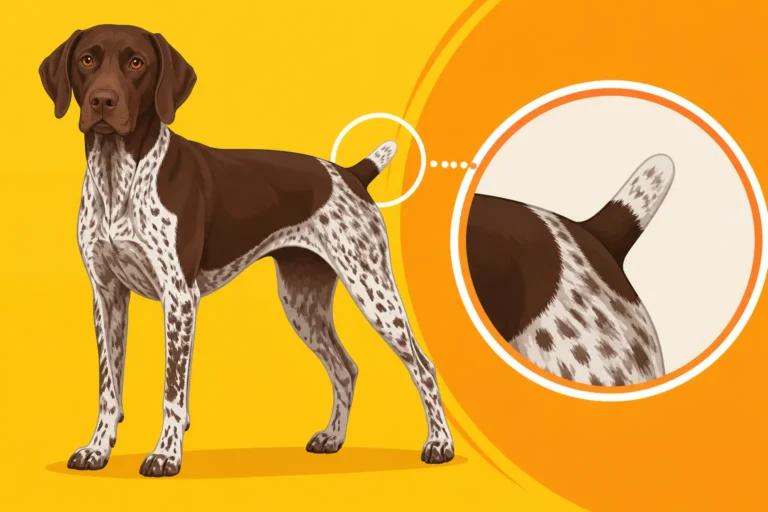
A German Shorthaired Pointer’s coat is short and close-fitting, not a thick layer of fur that hides the skin. When a dog brushes through brush, scrambles over rough ground, or squeezes past a fence, a small mark can remain visible on the surface. On a fluffier-coated dog, a similar scrape might be concealed by longer hair.
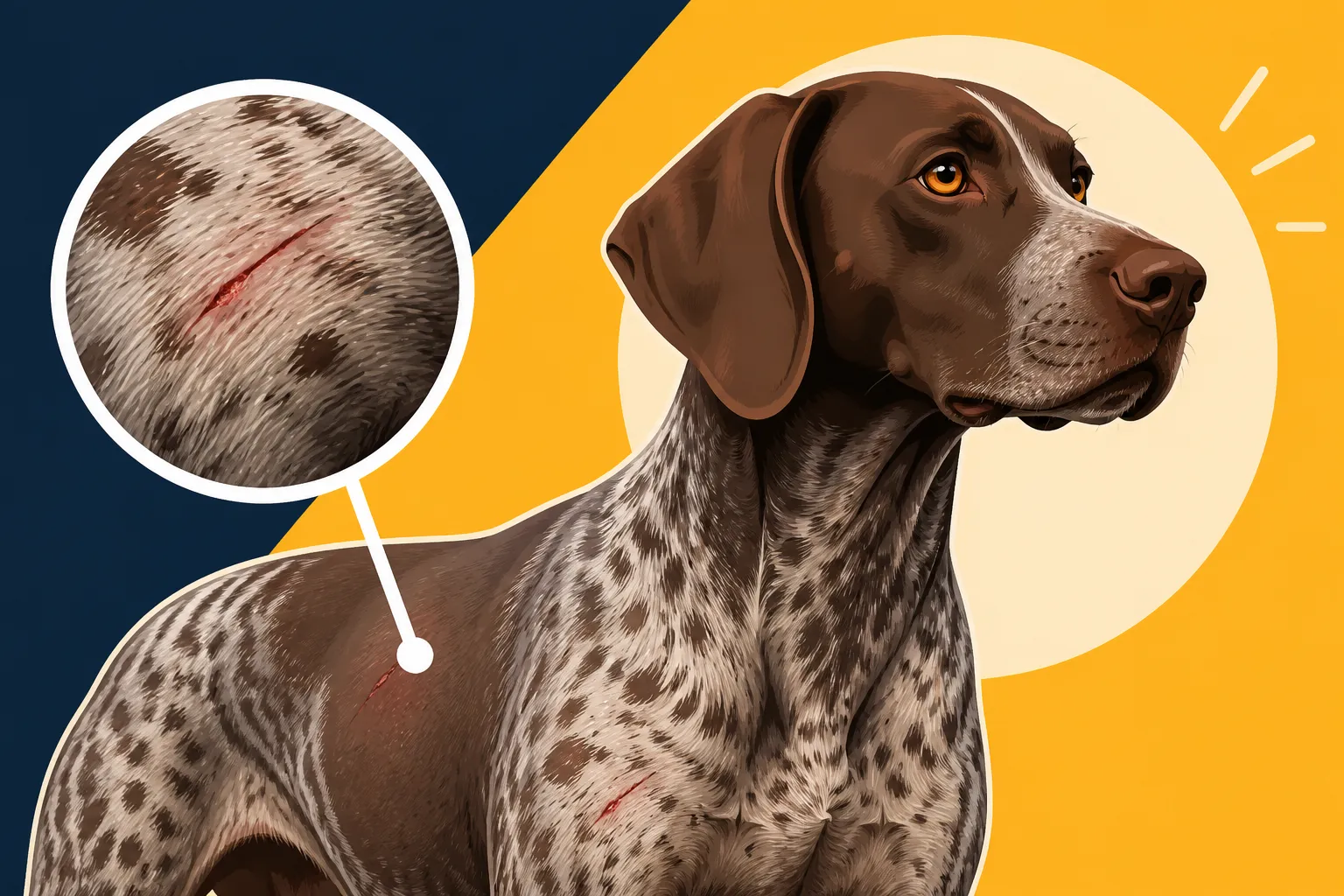
The coat’s shortness doesn’t mean every Shorthair has unusually delicate skin or that every scratch is serious. It simply makes the evidence easier to spot. A shallow pink streak across the shoulder, for example, may look prominent because there is no long fur covering it, even if the dog is not bothered by it.
Color and pattern can make a difference, too. A pale patch of skin or light-colored coat may show redness more clearly, while a darker coat can make flakes or pale scabs stand out. What you see depends on the location, lighting, coat pattern, and how recently the mark appeared—not just on the size of the injury.
Active dogs collect small marks in ordinary places
Shorthairs are often busy dogs: they run, turn sharply, investigate cover, and follow interesting scents close to the ground. A dog doesn’t need to be hunting to pick up minor marks. Tall grass, low branches, rough play with another dog, gravel, and the edge of a crate or car door can all leave a trace.
The spots worth checking regularly include the muzzle, ears, chest, belly, legs, and paws. Those areas can brush against vegetation or ground as a dog moves. A scratch on the belly after a walk through dense cover may have an obvious explanation; a sore spot that appears repeatedly in the same place may need a closer look.
It also helps to distinguish a visible mark from a wound that is actually painful. A Shorthair might have a small, dry surface scratch and carry on as usual, while a deeper injury can be hidden under the coat or obscured by mud. A cheerful dog is not automatically injury-free, so a brief hands-on check after outdoor activity is more reliable than appearance alone. For a broader post-outing routine, see Checking a German Shorthaired Pointer Over After a Hunt.
How to check a scrape without making it worse
Start with a calm, careful once-over
Choose a quiet place with good light. Let your dog settle, then look and feel gently rather than immediately scrubbing or pulling at the area. Part the coat with your fingers if needed, and compare the mark with the skin around it. Check whether it is a surface line, a scab, a puncture, a swollen spot, or a patch of irritated skin.
If the dog flinches, turns to mouth your hand, or becomes tense, stop and give them a moment. Painful dogs may react unexpectedly, even when they are usually easygoing. Do not force a close inspection if the wound is severe or your dog is distressed; contact a veterinarian for advice about how to handle the situation safely.
A simple post-walk check can become part of the same routine as wiping muddy paws and checking between the toes. If your dog has been through tall grass or dense cover, look over the coat for burrs, seeds, and scratches before they settle in for the evening. The guide Grass Awns in a Shorthair's Coat and How to Find Them covers another common reason to inspect the skin and coat after outdoor adventures.
Clean small surface scrapes gently
For a minor scrape that is not bleeding heavily, visibly deep, or especially painful, you can gently rinse away surface dirt with clean water or sterile saline. Pat the area dry with clean gauze or a soft, clean cloth. Avoid vigorous rubbing: friction can irritate the skin and make a small injury more uncomfortable.
Don’t apply human pain-relief creams, essential oils, or leftover prescription products unless your veterinarian has specifically told you to use them. Dogs lick their skin, and some ingredients that seem harmless on a person may be unsafe if swallowed or unsuitable for an animal’s wound. If you’re unsure whether a product is appropriate, ask your veterinary clinic before putting it on the scrape.
A basic pet first-aid kit can make minor cleanup less stressful. If you’re gathering supplies through a retailer such as Chewy, focus on simple items such as sterile gauze and saline, and check that anything applied to the skin is labeled for appropriate use around pets. A kit is useful for preparation, but it doesn’t replace veterinary care when a wound is deep, contaminated, or worsening.
Scrape, skin irritation, or a more serious injury
Use the pattern and progression as clues
A single, straight mark that appears after a walk through brush may be consistent with a small scrape. But repeated spots, spreading redness, scaly patches, or sores that keep returning deserve more attention. Skin problems can have causes beyond outdoor friction, including infection, allergy, parasites, or an underlying skin condition. A short coat makes these changes easier to notice, but it can’t tell you what caused them.
Pay attention to how the area changes over time. Is it drying and looking calmer, or getting redder, warmer, more swollen, or more painful? Is your dog licking or scratching it persistently? Does the mark seem to be spreading, or are new patches appearing elsewhere? Those details can help your veterinarian assess the problem.
If a sore keeps coming back, appears without an obvious scrape, or develops scaling or hair loss, don’t treat each episode as a new little scratch. A persistent skin problem may need examination and a treatment plan. For more on recurring irritation and changes beneath a Shorthair’s short coat, see Skin Infections Under a Shorthair's Short Coat and Skin Care on a Shorthair With an Inherited Skin Disease.
| What you notice | What to do |
|---|---|
| A small, shallow mark with no ongoing bleeding and no obvious pain | Gently rinse, pat dry, and monitor for changes |
| A mark that is worsening, repeatedly licked, swollen, or uncomfortable | Contact your veterinarian for guidance |
| A deep or gaping wound, heavy bleeding, or a suspected puncture | Seek prompt veterinary care |
| A sore near the eye, a damaged paw pad, or an injury that affects walking | Contact a veterinarian rather than relying on home care |
| Repeated scabs, scaling, hair loss, or multiple new irritated areas | Arrange a veterinary assessment to look for an underlying cause |
Know when to call the veterinarian
A shallow scrape is different from a puncture or a wound with separated edges. Punctures can be difficult to judge from the surface, and contamination may be hidden. Contact a veterinarian promptly if the injury is deep, bleeding heavily, contaminated with debris, or located near an eye or another sensitive area. A wound that affects your dog’s ability to walk also deserves professional attention.
Call your clinic if the scrape becomes increasingly red or swollen, develops discharge or an unpleasant odor, or seems more painful rather than less. It’s also sensible to seek advice if you cannot remove debris easily or your dog won’t let you inspect the area. Don’t keep probing the wound to see how deep it is.
Some field injuries need more than cleaning at home. A cut from wire or sharp debris, for instance, may need assessment even if it initially looks small. Field Injuries a Hunting German Shorthaired Pointer Comes Home With and Barbed Wire Cuts on a Running Shorthair offer related guidance on injuries that can happen outdoors. For a paw-pad injury, Cut Pads on a German Shorthaired Pointer After a Long Day is a useful companion topic.
Reducing scrapes while keeping your Shorthair active
Match prevention to the places your dog goes
You can’t prevent every nick without keeping an energetic dog indoors, and that isn’t the goal. Instead, notice where your Shorthair tends to pick up marks. If scratches appear after walks through one particular stretch of brambles, adjust the route when possible or keep your dog out of the densest patch. In the yard, look for exposed wire, broken branches, rough edges, and damaged fencing.
After a run or hunt, take a few minutes to check the areas most likely to meet vegetation or ground. Look at the face and ears, along the chest and belly, down each leg, and between the toes. Remove loose burrs carefully, and avoid yanking at anything embedded in the skin. If a seed or thorn appears stuck, or removal causes pain or bleeding, ask a veterinarian for help.
Protective gear can be useful in specific conditions, but it needs to fit and suit the activity. A vest may help protect parts of the body in rough cover, while boots can be considered when terrain is especially hard on the paws. Neither is a substitute for checking the dog after activity. If you’re comparing gear through a retailer such as Chewy, use the manufacturer’s fitting instructions and consider whether the item interferes with normal movement or creates rubbing of its own.
Keep skin and coat care simple and consistent
A short coat usually makes visual checks straightforward, but avoid over-grooming irritated skin. A gentle grooming mitt or soft brush can help lift loose hair and surface debris, provided your dog finds it comfortable. If the skin is already sore, skip brushing over the affected area and ask your veterinarian what care is appropriate.
When shopping for basic grooming supplies, including through Chewy, read product labels and choose items intended for dogs rather than assuming a human product is suitable. A bathing product should also match your dog’s needs; frequent washing or harsh products can aggravate some skin problems. If your Shorthair develops recurring flakes, redness, itching, or sores, the more useful next step is a veterinary evaluation than trying a succession of products.
Finally, keep a simple note of when marks appear and where they are located. “A thin scratch on the chest after the park” is helpful information; “the same red patch comes back every few weeks” is a different pattern. Note recent activities, new grooming products, and whether the dog has been licking or scratching. That small record can help you explain the problem clearly at an appointment and avoid overlooking a pattern.
Disclaimer
This article is for general informational purposes only and does not constitute professional advice. Laws, prices and regulations vary by location and change over time. Consult a qualified professional for guidance on your specific situation.