The Inches at the Withers a Shorthair Is Judged On
It’s easy to look at a German Shorthaired Pointer and just see that boundless energy, that intelligent gaze, and that sleek coat. But for anyone involved in showing, breeding, or even just appreciating the finer points of the breed, the exact physical dimensions, particularly height, are crucial. This guide is here to demystify what "the inches at the withers" truly mean for a Shorthair, both in the show ring and in everyday life, helping you understand why these measurements are so important and how they impact everything from conformation to athletic performance.
Understanding the GSP Breed Standard for Height
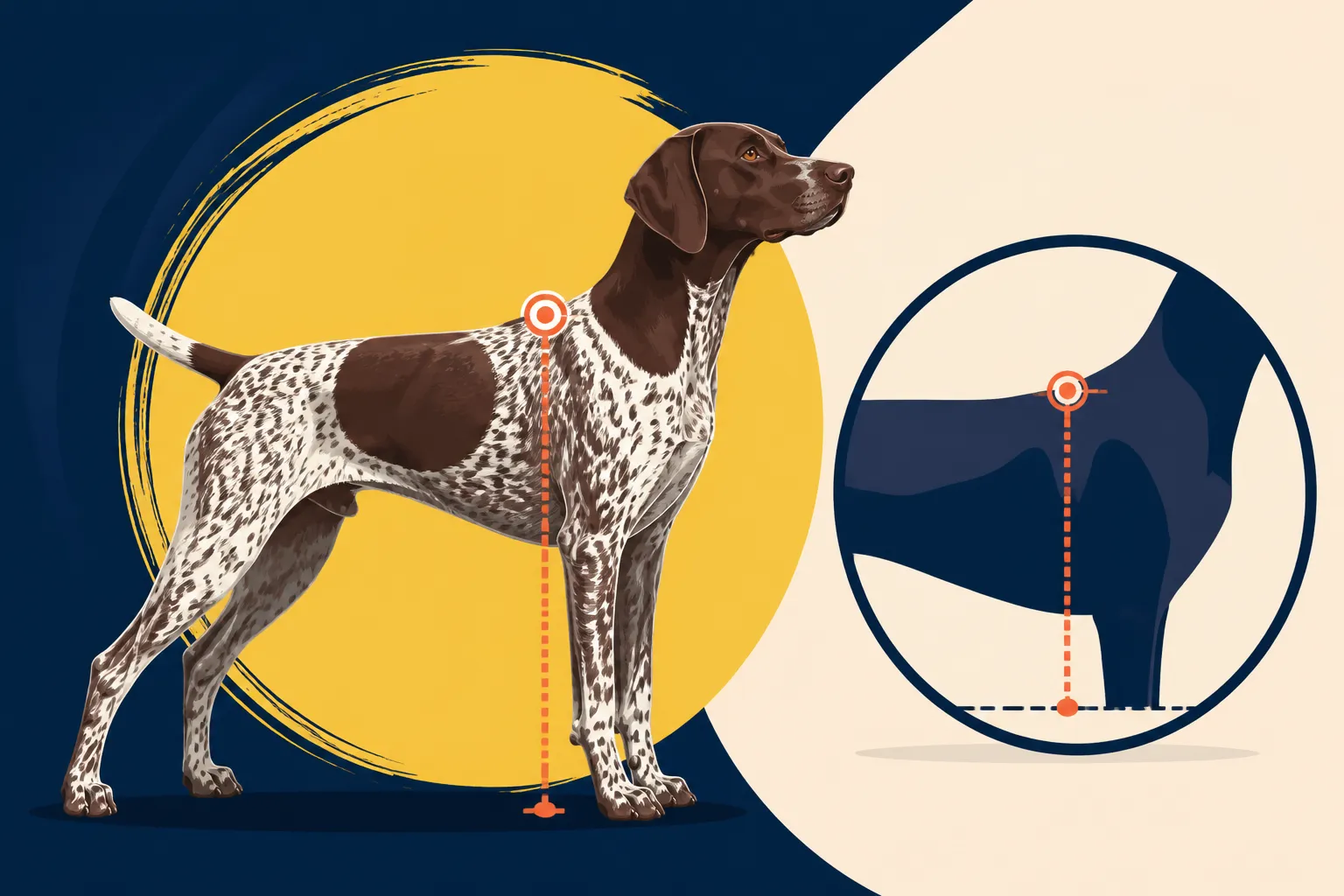
When we talk about a German Shorthaired Pointer's height, we're almost always referring to its measurement at the withers. The withers are the highest point of the shoulder blades, where the neck meets the back. This is the universally accepted point for measuring a dog's height, as it provides a consistent, non-moving landmark. For a breed like the GSP, developed for versatility and endurance in the field, these measurements aren't just arbitrary numbers; they reflect the careful breeding that went into creating a dog capable of long days of hunting.
AKC and FCI Guidelines for Height
Different kennel clubs around the world maintain their own breed standards, and while generally similar, there can be subtle variations. The American Kennel Club (AKC) and the Fédération Cynologique Internationale (FCI), which represents many international kennel clubs, both specify height ranges for German Shorthaired Pointers. These ranges are established to ensure that the breed maintains its functional characteristics and distinctive silhouette. Deviations outside these ranges are considered faults, and in some cases, can even lead to disqualification from the show ring.
The AKC standard, for instance, calls for males to stand between 23 and 25 inches at the withers, and females between 21 and 23 inches. The FCI standard, originating from Germany where the breed truly took shape, provides similar guidelines, often expressed in centimeters. These standards are the blueprint against which every show dog is judged, ensuring that the breed as a whole continues to embody the desired traits. It's not just about hitting a number, it's about preserving the physical integrity of the GSP.
Male vs. Female Height Differences
Just like in many other dog breeds, there's a distinct difference in size between male and female German Shorthaired Pointers. Males are typically taller and more substantial in bone and muscle. This sexual dimorphism isn't just about appearance; it's often linked to the historical roles of the sexes in hunting. While both are powerful and athletic, males tend to carry a bit more heft and stature. Understanding these distinctions is crucial for anyone assessing a GSP, whether it's a new puppy or an adult dog.
A male GSP, standing at the upper end of the 25-inch range, presents a truly imposing figure, full of lean muscle and athletic grace. A female, while smaller, is no less capable or powerful, often exhibiting an incredible agility and stamina in the field. This difference means that judging a female by a male's standard, or vice versa, would be a mistake. Each sex has its ideal range, carefully outlined to ensure that individuals of both sexes can perform their duties effectively and move with the characteristic GSP gait. The standards aim for a harmonious balance, not just absolute height.
The Importance of Proportion Over Exact Inches
While the exact inches at the withers are indeed a critical part of the breed standard, experienced breeders and judges will tell you that overall proportion and balance are equally, if not more, important. A dog that is technically within the height range but appears leggy and shallow-chested, or conversely, too short-coupled for its height, would not be considered ideal. The height must be in harmony with the dog's length of body, depth of chest, and length of leg, all contributing to that "square" yet elegant appearance that is the hallmark of the GSP.
Think of it like this: a truly great athlete isn't just fast; they have the right combination of strength, agility, and stamina. For a German Shorthaired Pointer, being proportional ensures they can gallop tirelessly, point staunchly, and retrieve gracefully. A dog that is too tall might lack the compact power for quick turns in dense cover, while one that is too short might struggle to cover ground efficiently. The standard guides towards an athletic ideal, where every part of the dog's structure contributes to its function as a versatile hunting machine. The Size and Build the Shorthair Standard Asks For delves further into these critical proportions.
Measuring a German Shorthaired Pointer's Withers Accurately
Getting an accurate measurement of your GSP's height can feel a bit like wrestling a lively bag of springs, especially if they’re a young, excitable pup. But with the right approach and a little patience, it's definitely achievable. Accuracy is key, not just for show purposes, but also for tracking growth and ensuring your dog is developing as expected.
Tools and Techniques for Proper Measurement
The most reliable way to measure a dog's height is with a wicke stick, also known as a dog measuring stick. This specialized tool has a horizontal bar that slides down to rest gently on the dog's withers, perpendicular to the vertical stand. If you don't have a wicke stick, you can improvise with a carpenter's level or a flat ruler placed across the dog's shoulders, with the dog standing squarely against a wall. Then, measure from the floor to the bottom of the level/ruler. Always ensure your dog is standing on a perfectly flat, level surface, with all four feet squarely beneath them, not stretched out or hunched.
The key is consistency. Make sure your GSP is standing naturally, not leaning or stretching. It helps to have someone gently hold a treat at nose level to keep their head up and still. Take a few measurements and average them out to ensure you have the most accurate reading. Even small movements can throw off your results, so patience truly is a virtue here. For those looking to invest in proper gear, you can often find measuring sticks and other specialized equipment on online pet supply retailers like Chewy.
Common Mistakes When Measuring
One of the most frequent errors people make is measuring from the top of the head or the highest point of the neck, rather than the withers. The head and neck can move, giving you a falsely inflated or deflated number. Another common mistake is having the dog stand on an uneven surface, or allowing them to slouch or arch their back. An excited dog that's constantly shifting its weight or trying to lick your face will be nearly impossible to measure correctly.
It's also important not to press down hard on the dog’s withers with the measuring tool. The goal is to gently rest the bar or level on the highest point without compressing their fur or muscle. Remember, we're measuring the skeletal height. Taking the measurement too quickly, without ensuring the dog is settled, can also lead to inaccuracies. Always aim for a relaxed, natural stance for the most truthful reading.
Professional vs. Home Measurement
While a home measurement can give you a good idea of where your GSP stands, nothing truly compares to a professional measurement. Show judges, veterinarians, and experienced breeders often have specialized wicke sticks and a practiced eye for discerning a dog's natural stance. They can often get a more precise measurement because they're used to handling dogs in a way that encourages them to stand correctly and calmly.
If you're seriously considering showing your GSP, having a professional confirm their height is a wise step. They can also offer insights into your dog's overall conformation and how well they meet other aspects of the breed standard. For the average pet owner, a home measurement is usually sufficient for curiosity or general tracking, but for high-stakes evaluations, a pro's touch is invaluable. They can even provide advice on The Vet Schedule a Working Shorthair Should Keep, which might include periodic growth measurements for younger dogs.
Why Height Matters in the Show Ring and Field
The breed standard isn't just a suggestion; it's the blueprint for the ideal German Shorthaired Pointer. And height plays a significant role in determining how a GSP is perceived, not only in the highly competitive show ring but also in their functional capabilities as a hunting dog.
Show Ring Penalties for Disqualifying Heights
In the world of dog shows, meeting the breed standard for height is paramount. Dogs that fall outside the specified range, either too tall or too short, are often penalized. Minor deviations might result in a fault, leading to a lower placement, but significant departures can result in outright disqualification. A disqualification means the dog cannot earn championship points and is, in essence, deemed not representative of the breed standard's ideal.
This strict adherence to height is to prevent extreme variations from entering the gene pool and to preserve the characteristic look and function of the German Shorthaired Pointer. Judges are meticulously trained to observe these details, and a dog that stands even a fraction of an inch outside the acceptable range can find its show career cut short. It's a tough reality for some owners, but it underscores the commitment to maintaining breed integrity. The German Shorthaired Pointer Against the English Pointer often highlights how subtle differences in build and height are critical distinctions between breeds.
Practical Implications for Hunting and Performance
Beyond the aesthetics of the show ring, a GSP's height has very real, practical implications for its performance in the field. A dog that is too large might struggle with agility and maneuverability in dense cover, making it harder to navigate brush and retrieve birds efficiently. Conversely, a dog that is too small might have difficulty covering large expanses of ground, especially in taller grass or heavy snow, and could fatigue more quickly trying to keep up with a hunting partner.
The ideal GSP height is a balance that allows for both power and agility, enabling them to work tirelessly and effectively across varied terrains. A dog that is too gangly can be awkward, while one that is too compact might lack the stride needed for long distances. Breeders aim for a dog that is both fast and enduring, and the prescribed height range contributes directly to this functional athleticism. A dog of appropriate size is better equipped for How Long a Working German Shorthaired Pointer Stays Sound over many seasons.
Health Considerations Related to Extreme Size
While not explicitly a "disqualification" in the same way as being outside the height standard, extreme size, whether too large or too small, can sometimes correlate with health concerns. Oversized dogs may be prone to certain orthopedic issues, such as hip or elbow dysplasia, due to the increased stress on their joints. Their growth plates might close later, leaving them vulnerable to injury during their formative months if over-exercised. Conversely, undersized dogs, while perhaps more agile, might lack the robust bone structure needed for rigorous field work.
Breeders strive to produce dogs within the healthy middle ground of the standard, as this range has been historically proven to support longevity and soundness. When selecting a puppy, looking at the parents' size and structure, as well as their health clearances, can provide insight into the potential size and health of your future hunting companion. This consideration is vital for the long-term well-being of the dog, ensuring they can enjoy The Twelve to Fourteen Years a German Shorthaired Pointer Gets with minimal physical ailments.
The Impact of Nutrition and Genetics on Shorthair Growth
A German Shorthaired Pointer's final height isn't just a roll of the genetic dice; it's a complex interplay between the genes they inherit and the environment they grow up in. Understanding this relationship is crucial for anyone raising a GSP puppy.
How Diet Influences Puppy Growth
Proper nutrition during a German Shorthaired Pointer puppy's rapid growth phase is absolutely critical. Feeding a high-quality, balanced large-breed puppy food is often recommended, as these formulas are specifically designed to promote slow, steady growth. Over-feeding or feeding a diet too high in calories or certain nutrients (like calcium) can lead to excessively rapid growth, which can put undue stress on developing joints and increase the risk of orthopedic problems like hip dysplasia.
Conversely, under-feeding or feeding a poor-quality diet can stunt a puppy's growth, preventing them from reaching their full genetic potential in terms of height and bone development. It's a delicate balance. Always consult with your veterinarian about the best diet for your growing GSP, and monitor their weight and body condition closely. Good nutrition from brands often found on platforms like Chewy is an investment in your puppy's future health and soundness. The Growth Year of a German Shorthaired Pointer Puppy discusses this in more detail.
Genetics: What Breeders Aim For
The primary determinant of a GSP's potential height is its genetics. Responsible breeders carefully select breeding pairs whose sizes are within the breed standard, and whose pedigrees show consistent, healthy growth. They are looking to perpetuate the ideal size and structure that ensures both beauty and function. A puppy's parents, grandparents, and even great-grandparents give a strong indication of what kind of adult height to expect.
However, even within a litter, there can be some variation. Just like human siblings, some GSP pups might be a bit taller or shorter than their littermates, even if they share the same parents. What breeders aim for is a consistent range within the standard, avoiding extremes. They track growth, observe conformation, and use their knowledge of genetic lines to make informed breeding decisions. Whether a Field Bred Shorthair Lives as Long often depends on these careful breeding choices impacting overall health and soundness.
The Role of Exercise in Skeletal Development
While it might seem counterintuitive, too much strenuous exercise, especially high-impact activities like jumping or long-distance running, can actually be detrimental to a GSP puppy's developing skeletal system. Their growth plates, the areas of cartilage at the ends of long bones, are still soft and vulnerable until they close, typically around 12-18 months of age. Excessive stress on these plates can lead to damage, potentially affecting bone growth and leading to permanent structural issues, including abnormal height or lameness.
During puppyhood, appropriate exercise should focus on free play, short walks, and swimming rather than forced running or intense training sessions. Allowing a puppy to self-regulate their activity is generally best. As they mature and their growth plates close, they can gradually be introduced to more strenuous activities. A proper exercise regimen supports strong, healthy bone development, which is essential for reaching their genetically predetermined height and maintaining long-term soundness. Whether Running a Shorthair Puppy Damages Its Joints is a common concern among new owners.
When a Shorthair Falls Outside the Standard
It's a fact of life that not every German Shorthaired Pointer will precisely fit the breed standard, especially concerning height. This doesn't mean they aren't wonderful dogs or fantastic companions, but it does have implications, particularly if you had aspirations for the show ring or specific performance goals.
Understanding Minor vs. Disqualifying Faults
When a GSP's height deviates from the breed standard, it's categorized as either a minor fault or a disqualifying fault. A minor fault might be a dog that is an inch over or under the ideal range; while it might prevent them from winning against perfectly standard dogs, it doesn't preclude them from showing entirely. Judges might note it, but it's not a deal-breaker. However, once a dog crosses a certain threshold, usually determined by specific inches outside the acceptable range (e.g., more than one inch over or under), it becomes a disqualifying fault.
Disqualifying faults are serious. A dog with a disqualifying fault cannot be awarded points in conformation shows. This is to maintain the purity and functional integrity of the breed. It ensures that breeders are always striving for the ideal, preventing the breed from drifting too far from its original purpose and appearance. While frustrating for owners, these rules are in place for the long-term health and character of the German Shorthaired Pointer.
Life with an Oversized or Undersized GSP
If your German Shorthaired Pointer turns out to be a bit taller or shorter than the breed standard, rest assured, they can still live a full, happy, and incredibly active life! An oversized GSP might need a slightly larger crate or dog bed, and perhaps a bit more food to maintain their condition, but their spirit and drive remain undiminished. They might even find certain activities, like jumping or reaching, a bit easier.
Conversely, an undersized GSP might be more agile in tight spaces and require slightly less food. Their slightly smaller stature rarely impacts their ability to be a phenomenal hunting partner or an energetic family pet. The main difference will be in the show ring, where these deviations matter most. In the everyday home or field, a well-cared-for GSP, regardless of exact inches, will provide endless joy and companionship. Many owners find their slightly outside-the-standard dog is perfect just the way they are. What a German Shorthaired Pointer Puppy's First Shots Cost and other basic care expenses remain the same, regardless of final height.
The Impact on Breeding Programs
For breeders, height deviations are a significant consideration. Dogs that fall outside the breed standard, especially those with disqualifying faults, are generally not used in breeding programs. The goal of responsible breeding is to improve the breed, or at least maintain its excellent qualities, and that means selecting individuals that closely adhere to the standard, both in temperament and physical conformation. Breeding dogs with known disqualifying faults for height risks perpetuating those traits in future generations.
This is why meticulous record-keeping and careful evaluation of potential breeding stock are so important. Breeders track not only the height of the parents but also that of their progeny to identify lines that consistently produce dogs within the desired range. It's a commitment to the future of the breed, ensuring that the German Shorthaired Pointer continues to be the versatile, athletic, and beautiful dog we all love. The Five Tests Behind a German Shorthaired Pointer CHIC Number are part of these efforts to promote responsible breeding practices.
Here's a quick reference on GSP Height Standards:
| Characteristic | Male German Shorthaired Pointer | Female German Shorthaired Pointer | Notes |
|---|---|---|---|
| AKC Standard | 23-25 inches at withers | 21-23 inches at withers | Measured from top of shoulder blades to ground. |
| FCI Standard | 62-66 cm (24.4-26 inches) | 58-63 cm (22.8-24.8 inches) | Slight variations compared to AKC. |
| Ideal Stance | Standing squarely, head up, not leaning | Standing squarely, head up, not leaning | Ensures accurate measurement. |
| Proportion | Height should be balanced with length and substance | Height should be balanced with length and substance | Overall balance is crucial for function and form. |
Disclaimer
This article is for general informational purposes only and does not constitute professional advice. Laws, prices and regulations vary by location and change over time. Consult a qualified professional for guidance on your specific situation.