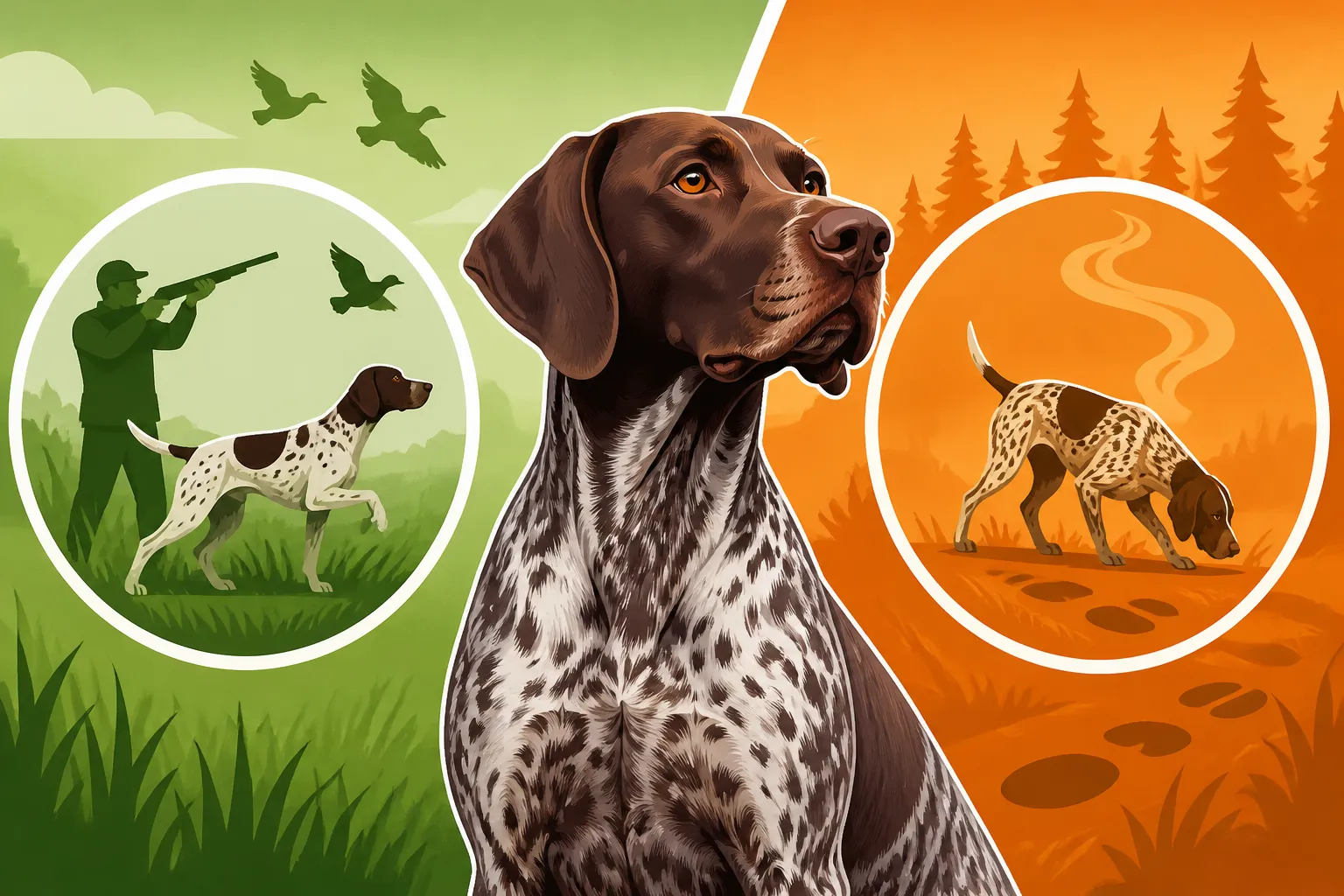
Whether a German Shorthaired Pointer Is a Gun Dog or a Hound
A German Shorthaired Pointer can follow scent, search cover, point birds, and retrieve game, so it is easy to wonder whether the breed is a gun dog or a hound. The short answer: it is a versatile gun dog, specifically a pointing breed—not a hound. Here’s what those labels mean, where the confusion comes from, and what the distinction tells you about life with one.
Is a German Shorthaired Pointer a gun dog or a hound
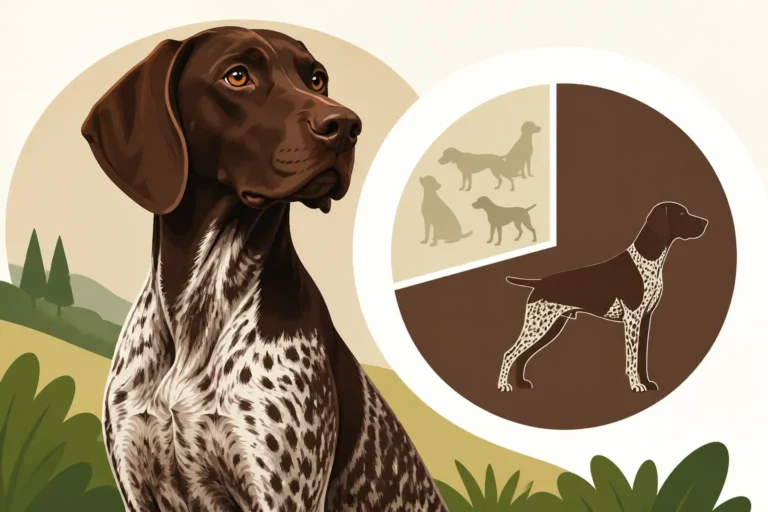
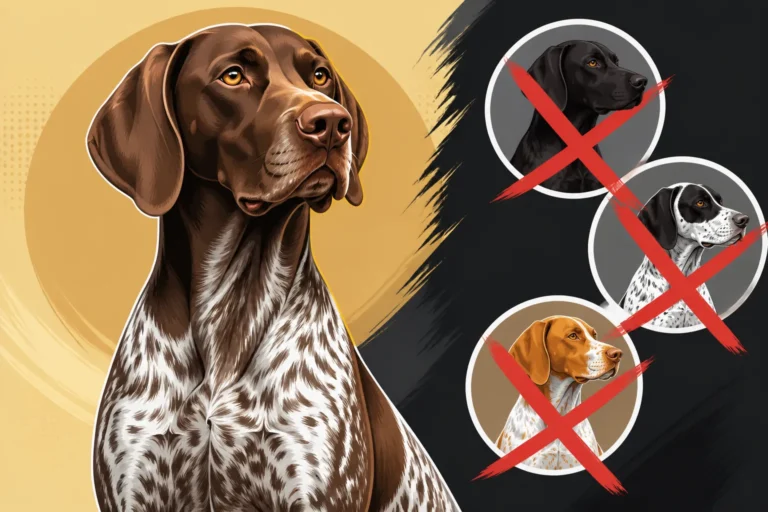
A German Shorthaired Pointer is a gun dog, also called a sporting dog in some breed and competition settings. The label describes the kind of work the dog was developed to do alongside a hunter: find game, indicate its location, and help retrieve it after a shot.
A hound is generally bred for a different style of hunting. Scent hounds follow a trail, often over distance, while sighthounds use their vision and speed to pursue quarry. These broad categories describe working roles, not whether a dog can smell well. German Shorthaired Pointers have capable noses, but their primary historic role is that of an all-purpose hunting partner, not a specialized hound.
What the gun dog label means
“Gun dog” does not mean a dog is trained to handle or respond to firearms automatically. It refers to dogs that work in partnership with people who hunt with guns. Depending on the breed, a gun dog may locate and point game, flush it from cover, retrieve downed birds, or perform several of these tasks.
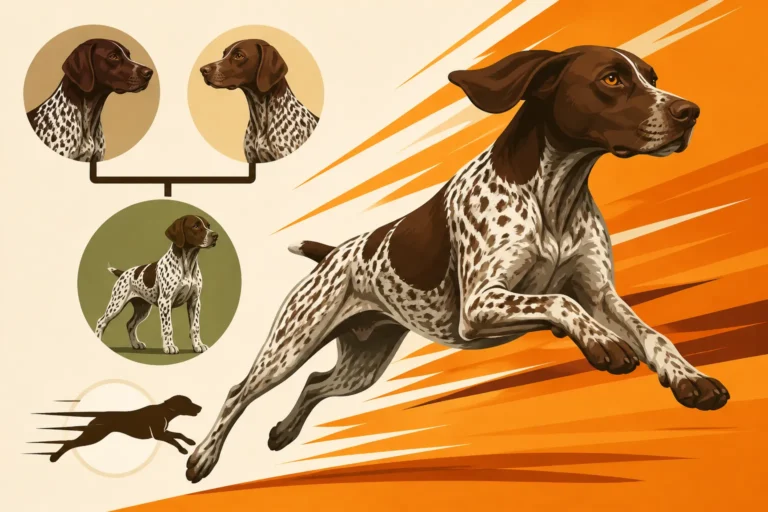
German Shorthaired Pointers are known as versatile pointing dogs. In practical terms, a trained dog may search likely cover, pause when it detects a bird, and hold its point while the hunter moves closer. After the bird is flushed and shot, the dog can be sent to retrieve it. The exact sequence depends on the dog’s training, the terrain, the game being hunted, and the hunter’s approach.
This combination is part of what makes the breed different from a dog developed mainly for one job. The German Shorthaired Pointer was intended to work across varied conditions and tasks, rather than specialize only in retrieving or trailing. For a closer look at the word “versatile,” see What Versatile Actually Means for a Shorthair.
Why its scenting ability can make the label confusing
A German Shorthaired Pointer uses its nose extensively. It may search for bird scent, investigate tracks, and follow the scent of a wounded animal. Watching one work can look a lot like watching a hound, especially when its nose is down and it is moving along a trail.
But scent ability alone does not make a dog a hound. Many working dogs rely on scent. The distinction is more about the job they were selected and trained to perform. A hound’s central task often involves following a scent trail or pursuing quarry; a pointing dog’s work commonly includes searching for game and indicating its location by pointing.
A GSP may also be trained for tracking, but that does not erase its identity as a pointing gun dog. The breed’s range of skills is one reason its hunting role can be hard to describe in a single word. Pointing, Retrieving and Tracking in One Shorthair explores how those abilities fit together.
What a German Shorthaired Pointer was bred to do
The breed’s working style comes from its development as a versatile German hunting dog. Hunters wanted a dog that could assist with more than one kind of quarry and work in more than one setting. That history helps explain why a GSP can point in a field, retrieve from water, and use its nose to follow a track without being classified as a hound.
A versatile bird dog with several jobs
In upland bird hunting, a GSP may quarter through an area, using wind and scent to locate birds. When it finds game, the dog may stop and point, giving the hunter time to approach. A steady, well-trained dog can hold that position while the hunter gets close enough to flush the bird.
Retrieving is another part of the breed’s repertoire. A dog may be asked to find and bring back a bird on land or in water. That work depends on training and experience; retrieving does not necessarily appear in a polished, reliable form just because a dog belongs to the breed. Puppies and young dogs need patient introductions to birds, water, and delivery habits.
The breed may also be used to track wounded game. That ability is useful, but it is not the same as saying the GSP was primarily developed as a tracking hound. Its broad skill set reflects its versatile hunting background. For context on the history behind that working style, see The German Bird Dog Behind the Modern Shorthair and The Nose the German Shorthaired Pointer Was Selected For.
How a typical hunt differs from hound work
Imagine a hunter walking through grassland or brush with a GSP ranging ahead. The dog searches the area, often moving in a pattern that lets it cover ground while remaining responsive to its handler. If it catches bird scent, it may point rather than continue chasing. The hunter then approaches, and the dog’s next task depends on what happens: it may remain steady, retrieve after the shot, or be directed to search for a bird that fell out of sight.
A scent hound’s typical work may look different. The dog can follow a trail over a distance, sometimes with its nose close to the ground and with sustained focus on the track. That does not mean every hound behaves identically or every GSP hunts in exactly the same pattern. Individual training, breeding, experience, and conditions all matter.
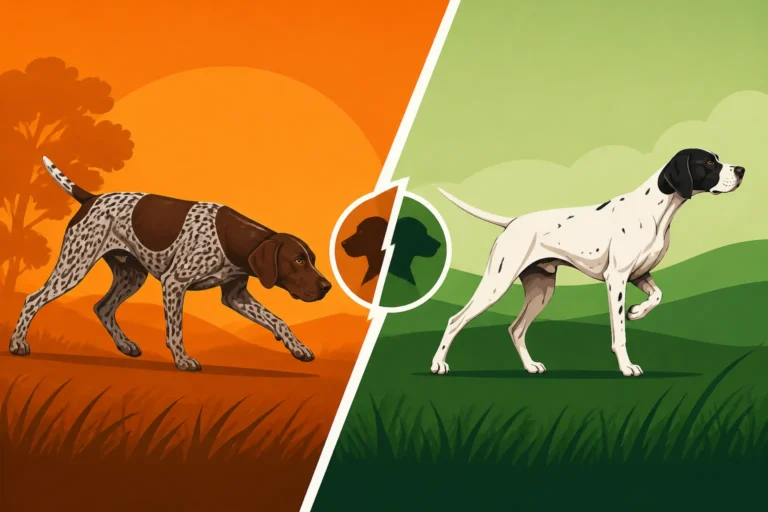
The key distinction is the intended working role, not the position of the dog’s nose at a particular moment. A GSP sniffing a trail is still a pointing breed. A hound using its nose in a field is still a hound. If you are comparing sporting breeds, The German Shorthaired Pointer Against the English Pointer and The German Shorthaired Pointer Against the Brittany can help clarify how different pointing breeds may vary.
| Question | German Shorthaired Pointer | Typical hound role |
|---|---|---|
| Main working category | Versatile gun dog and pointing breed | Scent hound or sighthound, depending on type |
| Common hunting task | Search, point, retrieve, and sometimes track | Follow a scent trail or pursue quarry by sight |
| Does it use scent? | Yes, extensively | Yes for scent hounds; vision is central for sighthounds |
| Does scenting make it a hound? | No | Hound classification reflects its traditional working role |
| Can training broaden its skills? | Yes, within the dog’s ability and suitable training | Yes, though individual roles and instincts vary |
What the distinction means for owners
Knowing that a German Shorthaired Pointer is a gun dog rather than a hound can help set expectations, but it should not be treated as a complete description of the individual dog. Breed labels offer clues about inherited tendencies. They do not replace training, exercise, socialization, or a realistic look at a dog’s temperament and needs.
Expect a dog built to search and work with you
Many GSP owners notice that their dogs are interested in scent, movement, and open space. A walk around the block may not satisfy a dog that has a strong drive to explore and work. The breed often needs a mix of physical activity, structured training, and chances to use its brain and nose.
That does not mean every owner must hunt. Some people provide suitable outlets through field training, scent games, retrieving practice, or other organized activities. The important thing is to give the dog safe, purposeful work rather than expecting a high-energy sporting dog to settle solely because it has a yard. A fenced yard can offer room to move, but it does not automatically teach a dog how to respond to wildlife or return when called.
If you are preparing for bird work, start with age-appropriate foundations and qualified guidance where needed. Keep early experiences controlled and positive. A young dog should not be expected to understand a complex hunt simply because it has inherited pointing instincts. The history behind its working coat and bird-dog role is also discussed in Whether the Shorthair Was Bred for Fur as Well as Feather.
A strong nose does not guarantee reliable off-leash behavior
It is common for an owner to call a dog that has locked onto a scent and feel as if the dog has suddenly forgotten every lesson. That moment can be frustrating and even dangerous near roads, livestock, or wildlife. A GSP’s scenting and hunting instincts can compete with its recall, so reliable off-leash freedom should be earned gradually, not assumed.
Build recall in low-distraction settings before testing it around birds or fresh tracks. Use a long line when you need a safety backup, reward the dog for checking in, and practice turning away from distractions. If a dog repeatedly ignores cues, reduce the difficulty and work with a qualified trainer rather than escalating corrections in the heat of the moment.
For basic enrichment, a food-search activity or a supervised scent game can provide a useful outlet at home. When comparing equipment such as long lines, treat pouches, or scent-work items, Chewy is one place owners may browse, but choose products based on the dog’s size, chewing habits, and the activity you plan to do. No piece of gear replaces supervision or training.
Choose activities that fit the dog you have
Not every German Shorthaired Pointer will have the same level of interest in pointing, retrieving, water, or tracking. Some show a clear inclination early; others need thoughtful introductions and practice. Even dogs from working lines vary as individuals, and a pet dog’s daily life may be quite different from the work its ancestors were selected to perform.
If you are considering a GSP as a companion, think about whether you can offer regular exercise, training, and engagement. A dog that spends most of the day without activity may invent its own projects, such as digging, chewing, or patrolling the fence. Owners often find it helps to plan the dog’s exercise and enrichment around a consistent routine rather than trying to tire it out with occasional marathon outings.
Useful supplies depend on your routine. A well-fitted harness, durable leash, portable water bowl, and washable bedding may matter more to one household than specialized hunting equipment. Chewy can be a convenient place to compare general dog supplies, while the choice of field gear should reflect the terrain, weather, and the dog’s actual work. If the dog will hunt, discuss conditioning, safety, and training with an experienced trainer or veterinarian before the season begins.
The simplest way to remember the difference
A German Shorthaired Pointer is a versatile pointing gun dog, not a hound. It can use scent to find birds and may be trained to track, but its broad working identity is based on cooperating with a hunter through searching, pointing, and retrieving.
That distinction is useful, but it is not a promise that every GSP will perform each task naturally or reliably. Training shapes the dog’s abilities, while individual temperament and experience affect how those abilities show up. If you are choosing a dog, focus on the daily life and training the breed needs—not just whether it is called a gun dog or a hound.
For broader breed context, The Household a German Shorthaired Pointer Actually Fits is a helpful next read. If you are comparing the breed’s history and working role with other dogs, The German Shorthaired Pointer Against the English Pointer offers another point of reference.
Disclaimer
This article is for general informational purposes only and does not constitute professional advice. Laws, prices and regulations vary by location and change over time. Consult a qualified professional for guidance on your specific situation.