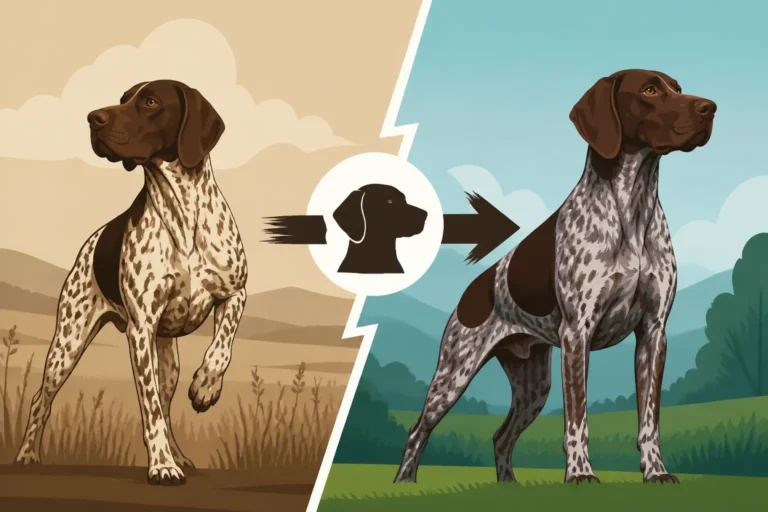
Whether a Black Shorthair Is Accepted in Germany
It’s a truly fascinating point of confusion for many German Shorthaired Pointer enthusiasts: the striking black coat. If you’ve spent any time researching the breed, especially looking at dogs imported from Germany or understanding their original standards, you might have heard that a solid black or black-and-white German Shorthaired Pointer isn't quite "accepted" in their homeland. This can be genuinely puzzling when you see beautiful black Shorthairs thriving in other parts of the world. Let’s dive deep into the history, the standards, and what it all means for this magnificent breed.
The Origins of German Shorthaired Pointer Coat Colors
To understand why there’s a distinction around black German Shorthaired Pointers in Germany, we need to take a quick trip back in time to the breed's development. The German Shorthaired Pointer, or "Deutsch Kurzhaar" as it's known in Germany, was meticulously developed in the 19th century by German hunters who sought a versatile hunting dog. They wanted a dog that could point, retrieve, track, and even work furred game and predators – a true all-around gun dog, replacing the need for several specialist breeds. This versatility was paramount, and every trait, including coat color, was considered through the lens of functionality in the field.
The primary colors seen in the foundation stock were liver and white, often with ticking or patching. These colors were favored because they offered good camouflage in varied terrains, whether it was the dark earth of a plowed field or the snowy landscape of winter. More importantly, these colors also made the dogs easily visible to hunters, preventing accidental shootings during hunts, especially when a dog was locked on point in dense cover.
Early Breeding Goals and Preferred Aesthetics
The early breeders, striving for that perfect versatile hunting dog, weren't just thinking about performance; they also had a strong aesthetic preference that aligned with functionality. Liver, liver and white, liver roan, and solid liver were the predominant and preferred colors. While other colors might have occasionally appeared in the bloodlines due to the diverse genetic pool used in their creation (including Old Spanish Pointers, English Pointers, and local German scent hounds), they weren't actively promoted or selected for. The focus was always on improving hunting ability and physical soundness, within a consistent appearance that often meant shades of liver.
It’s important to remember that dog breeding in Germany, particularly for working breeds, has historically been much more strictly regulated and performance-driven than in some other parts of the world. The Verband Deutsch Kurzhaar (VDD), the official German parent club for the Deutsch Kurzhaar, has always maintained very precise standards that reflect these foundational goals. Their standards aren't just about what looks good in a show ring; they're deeply tied to the dog's historical purpose and ability to perform specific tasks effectively. This dedication to tradition and functionality heavily influences which coat colors are considered acceptable and desirable.
The German Breed Standard: Verband Deutsch Kurzhaar's Stance on Black
Now, let's get to the heart of the matter: what does the Verband Deutsch Kurzhaar (VDD) actually say about black German Shorthaired Pointers? The VDD breed standard is incredibly clear and has remained consistent over the decades. It explicitly states that the acceptable colors for a Deutsch Kurzhaar are brown (liver), brown with white markings, brown roan, or light brown with white markings (often referred to as 'hellschimmel' or lighter roan). You might also see solid brown, which is liver.
The crucial detail here is that black is considered a disqualifying fault in the German standard. This means a dog with a black coat, whether solid black or black and white, cannot be registered as a Deutsch Kurzhaar by the VDD, nor can it be shown in conformation events or participate in official VDD-sanctioned hunting tests. It's a hard and fast rule, steeped in tradition and the historical development of the breed.
Why Black is a Disqualifying Fault in Germany
The rationale behind excluding black isn't just arbitrary. It goes back to those early breeding objectives. While some might argue that a black coat offers good camouflage in certain dark environments, the traditional German perspective saw liver and white variations as more versatile for visibility to the hunter in diverse landscapes and under various lighting conditions, reducing the risk of a hunting accident. There was also a strong historical preference for the liver gene pool, which dominated the initial selective breeding.
Furthermore, the VDD places immense importance on preserving the breed as it was originally intended – a working dog first and foremost, with a very specific look and temperament. Diverging significantly in coat color is seen as a deviation from the core identity of the Deutsch Kurzhaar. This strict adherence helps maintain what they consider the purity and traditional characteristics of the breed. If a black Shorthair is born in Germany, it might still be a fantastic hunting dog, but it won't be officially recognized or allowed to contribute to the VDD's breeding programs. You might find a dog food suitable for active hunting dogs, even a black one, on retailers like Chewy, but its color would still be a barrier to official recognition in Germany.
Contrasting American and German Acceptances of Black Shorthairs
The difference between Germany's strict stance and the acceptance of black German Shorthaired Pointers in other countries, particularly the United States, is where the confusion often arises. The American Kennel Club (AKC) breed standard, while originating from the German one, has evolved to be slightly more inclusive regarding coat colors.
In the United States, black and white German Shorthaired Pointers are indeed recognized and accepted. They can be registered with the AKC, participate in conformation shows, and earn championships. You'll see them in show rings, earning ribbons, and competing in field trials right alongside their liver-colored counterparts. Solid black German Shorthaired Pointers are also seen, though they are less common than black and white or black roan variations.
The Divergence in Standards and What It Means
The divergence largely stems from different philosophies in breed development and preservation. The VDD in Germany maintains a very conservative approach, prioritizing functionality and adherence to the foundational type. They believe that maintaining strict standards, including color, is vital for preserving the breed's historical integrity and working ability. For them, the Deutsch Kurzhaar is a historical artifact, a working tool, and its standard reflects that.
The AKC, while also valuing the breed's working heritage, has been historically more open to minor variations, especially those that don't directly impact health or working ability. When the breed was first established in America, there was perhaps a slightly broader interpretation of "acceptable" colors, or simply a less rigid historical attachment to specific shades of liver. This openness allowed black to become an accepted color variant in the American lines over time, without being seen as a fundamental flaw.
Here's a quick comparison of the primary coat color allowances:
| Feature | German Standard (VDD) | American Standard (AKC) |
|---|---|---|
| Acceptable Colors | Solid liver, liver with white, liver roan, light liver with white. | Solid liver, liver & white, liver roan, solid black, black & white, black roan. (Ticking/patches apply) |
| Black Color | Disqualifying fault | Fully accepted |
| Primary Goal | Preservation of historical working dog, strict adherence to foundation. | Preservation of working heritage, but with more leniency on aesthetics. |
| Registration | Black dogs cannot be registered. | Black dogs can be registered. |
| Conformation | Black dogs cannot compete. | Black dogs can compete. |
This table clearly illustrates the fundamental difference. If you're looking for supplements for your active Shorthair, whether liver or black, you can often find a wide selection of joint supplements for active dogs on Chewy, but the coat color itself will dictate its acceptance in different registries.
Impact of Coat Color on Breeding and Registration for German Shorthaired Pointers
The color standard in Germany has significant practical implications for breeders and owners, especially those interested in registering their dogs with the VDD or participating in their extensive system of tests and titles. If you’re a breeder in Germany, the birth of a black German Shorthaired Pointer puppy in your litter would mean that particular puppy, despite its pedigree or potential working ability, would not be registrable with the VDD. This can be a tough pill to swallow for breeders who are dedicated to upholding the VDD's rigorous standards and contributing to the traditional Deutsch Kurzhaar gene pool.
For an owner in Germany, having a black Shorthair would mean that while you could enjoy your dog as a beloved companion and hunting partner, you wouldn't be able to participate in any official VDD events or have your dog listed in their stud book. This impacts opportunities for breeding, showing, and proving the dog's working capabilities under the specific German framework. It essentially closes off a significant pathway for official recognition and breed contribution within Germany.
Breeding Decisions and Genetic Considerations
For breeders worldwide, understanding these distinctions is crucial. A black coat in a German Shorthaired Pointer is a recessive trait. This means that two liver-colored dogs can produce black puppies if both parents carry the recessive gene for black. If a breeder is aiming for VDD registration, they would want to avoid producing black puppies, which would involve careful genetic screening of breeding stock to ensure neither parent carries the recessive black gene. Conversely, in the US, some breeders might specifically select for the black coat, knowing it's an accepted and often desired color here.
This difference highlights how cultural and historical contexts shape breed standards. In Germany, the emphasis remains on a highly specific historical ideal, where coat color is part of the overall blueprint. Outside of Germany, particularly in the US, the breed has been embraced and developed with a slightly broader interpretation of its aesthetic, while still holding true to its incredible working drive and temperament. So, while your stunning black German Shorthaired Pointer might turn heads and excel in the field here in North America, know that if you were to transport that same dog back to its ancestral home, its color would set it apart from the officially recognized Deutsch Kurzhaar lines. It’s a testament to the breed’s adaptability and the varied paths it has taken in different parts of the world. Remember, whether your German Shorthaired Pointer is liver or black, maintaining their health is paramount, and resources like Chewy offer a range of specialized foods and Joint Supplements for a Hunting German Shorthaired Pointer to keep them in top condition for their active lives.
Beyond the Standard: Performance vs. Appearance in Germany
It's tempting to think that because black is a disqualifying fault, a black Shorthair in Germany would be considered inferior, but that's not necessarily the case, especially when it comes to raw working ability. German breeders and owners, particularly those involved in field work, are primarily concerned with performance. A dog's ability to hunt, point, track, and retrieve effectively is what truly matters in the field. A black coat doesn't inherently diminish a dog's keen nose, powerful drive, or unwavering stamina.
However, the VDD's rigorous testing system and breeding regulations are designed to ensure that only dogs that meet all aspects of the standard—including color—can contribute to the official Deutsch Kurzhaar gene pool. This means that while an individual black dog might be an exceptional hunter, its genes won't be officially passed on within the VDD-sanctioned breeding framework. It's a distinction between individual capability and adherence to a collective, traditional breed identity.
The Value of a Working Dog, Regardless of Color
Many German Shorthaired Pointers, regardless of their specific coat color, share an incredible intensity and drive. If you've ever seen a Shorthair in the field, you know that their focus is unwavering, whether they're working a bird scent or retrieving a downed pheasant. Their enthusiasm for the hunt is unparalleled. For many German hunters, the practical utility of the dog remains paramount, and they value a sound, capable animal above all else. This means that while a black coat won't get you VDD papers, a black German Shorthaired Pointer might still be a beloved and effective hunting partner for a private individual, just not one who adheres to the strict registration and breeding protocols.
It’s a nuanced situation that speaks to the deeper cultural differences in how breeds are managed and perceived. In places like the U.S., owners of black German Shorthaired Pointers enjoy the full spectrum of activities, from competing for show titles to excelling in hunting competitions. They often look for durable equipment, like heavy-duty beds and chew toys, and retailers like Chewy provide a wide range of options suitable for a dog with The Two Hours a Day a German Shorthaired Pointer Needs of exercise. The acceptance of black Shorthairs in the US has broadened the breed's aesthetic appeal for many without compromising its working essence. Conversely, the German perspective holds steadfast to the original vision, emphasizing that the "Deutsch Kurzhaar" identity is tied to a precise set of characteristics, color being one of them. Understanding this helps bridge the gap between what you might see at an AKC Hunt Tests Versus NAVHDA for a Shorthair event versus a traditional German field trial.
Ultimately, whether a black German Shorthaired Pointer is "accepted" depends entirely on which standard you’re consulting and which country's conventions you adhere to. In Germany, by the VDD's rules, they are not. In many other places, including the United States, they absolutely are and are celebrated for their beauty and ability. This contrast highlights the rich and sometimes complex history of the German Shorthaired Pointer, a breed beloved worldwide for its incredible athleticism and devoted companionship, whether their coat is liver or black. For any Shorthair owner, a consistent vet schedule is important, and for working dogs, The Vet Schedule a Working Shorthair Should Keep can be quite demanding. Don't forget that even the toughest dog can have Field Injuries a Hunting German Shorthaired Pointer Comes Home With, so being prepared is key. For more on the breed's origins, you can explore topics like The German Kennels the Shorthair Was Built In or even delve into Whether the Shorthair Was Bred for Fur as Well as Feather. If you're pondering the future, you might wonder How Long a Working German Shorthaired Pointer Stays Sound, and of course, understanding The Bloat Risk a Shorthair Carries Into Every Season is essential for any GSP owner.
Disclaimer
This article is for general informational purposes only and does not constitute professional advice. Laws, prices and regulations vary by location and change over time. Consult a qualified professional for guidance on your specific situation.