Whether a Tricolor German Shorthaired Pointer Exists
It's an age-old question that pops up in conversations among German Shorthaired Pointer enthusiasts and curious dog lovers alike: "Have you ever seen a tricolor GSP?" Many people see a variety of beautiful dogs out in the field or at the park and wonder if the striking black, tan, and white patterns they witness are, in fact, part of the German Shorthaired Pointer's coat color repertoire. The reality can be a bit more nuanced than a simple yes or no, especially when you consider the vast world of dog genetics and the occasional optical illusion. This guide will dive deep into the official standards, genetic truths, and common misunderstandings surrounding German Shorthaired Pointer coat colors, helping you understand why a true tricolor GSP, as defined by breed standards, doesn't actually exist.
The Official German Shorthaired Pointer Color Standard
When we talk about what "counts" as a German Shorthaired Pointer, we're really talking about adherence to a breed standard. These standards are developed by kennel clubs, like the American Kennel Club (AKC) in the United States, to define the ideal characteristics of a breed, including temperament, conformation, and, of course, coat color. For the German Shorthaired Pointer, these standards are quite specific, and they don't include a tricolor pattern.
Accepted Colors and Markings
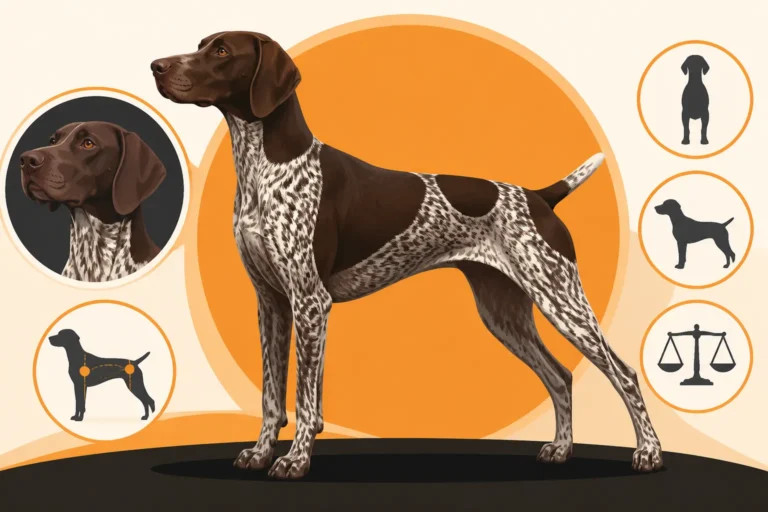
The beauty of the German Shorthaired Pointer lies in its striking, often monochromatic or bicolored coat. The primary colors you'll see in a purebred GSP are liver (a rich reddish-brown) and, less commonly but still accepted, black. These base colors are then expressed in various patterns.
You'll encounter GSPs that are solid liver, meaning they are entirely brown without any white markings. These dogs have a deep, uniform coat that can range from a lighter cinnamon to a very dark, almost black-looking brown. Similarly, solid black GSPs exist, though they are less frequently seen than their liver counterparts.
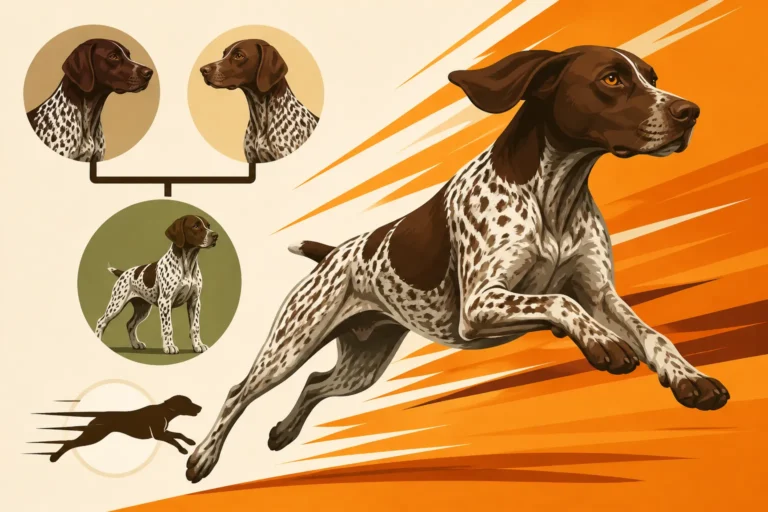
More often, you'll see GSPs with liver and white, or black and white patterns. This is where things can get interesting with ticking and roan patterns, which often lead to confusion. The white areas can be quite extensive, or limited to specific markings like a blaze on the face or a white chest. Sometimes, you'll see a distinct white collar, a beautiful contrast to the darker body color. Solid Black and Black Roan German Shorthaired Pointers and How Common a Solid Liver German Shorthaired Pointer Is delve deeper into the prevalence of these specific solid and roan colors.
What "Ticked" and "Roan" Actually Mean
The terms "ticked" and "roan" are often used interchangeably, but they describe slightly different patterns that contribute to the GSP's unique appearance and can sometimes be mistaken for something else.
Ticking refers to small, isolated spots or flecks of color within the white areas of the coat. Imagine a pure white background, and then someone took a fine-tipped brush and flicked tiny specks of liver or black onto it. These spots can be sparse or so dense that they give the impression of a much darker dog. A liver and white GSP might have liver ticking, making its white patches look speckled.
Roan, on the other hand, describes a much more uniform blending of colored and white hairs throughout the white areas of the coat. Instead of distinct spots, the colored hairs are so finely distributed that the white areas take on a diluted, often grayish or brownish hue. A liver roan GSP, for instance, has white areas where liver hairs are mixed in, creating a light brown, almost frosted appearance. A black roan would have black hairs mixed into the white, giving it a gray or steel-blue look. The Difference Between Ticked and Roan on a Shorthair provides an even more detailed explanation of these fascinating coat patterns. Neither ticking nor roaning introduces a third distinct color in the way a tricolor pattern would. They simply modify how the primary liver or black color interacts with the white.
Genetics and Why "Tricolor" Isn't a GSP Trait
To truly understand why tricolor German Shorthaired Pointers don't exist within the purebred standard, we need to take a peek at the underlying genetics that dictate coat color in dogs. It's a complex world of genes and alleles, but for GSPs, the story is fairly straightforward.
The Base Colors
All dog coat colors stem from two primary pigment types: eumelanin (which produces black and brown shades) and phaeomelanin (which produces red and yellow shades). In German Shorthaired Pointers, the dominant color gene at play typically results in either black or liver (brown) eumelanin. There are modifying genes that can dilute these colors or affect their distribution, leading to the various patterns we discussed – solid, liver and white, black and white, roan, and ticked.
However, the key gene that produces the "tan points" characteristic of a tricolor dog (like a Doberman Pinscher, Rottweiler, or Bernese Mountain Dog) is simply not present in the German Shorthaired Pointer genetic makeup. This gene, often referred to as the "at" allele at the A locus, is responsible for creating those distinctive tan markings above the eyes, on the muzzle, chest, and legs, against a darker body color. Without this specific gene, a GSP cannot express true tan points, and therefore, cannot be a tricolor. This is why you will never see a purebred German Shorthaired Pointer with eyebrows or leg markings in a different shade of tan or copper.
Historical Breeding Practices
The German Shorthaired Pointer was meticulously developed in Germany during the 19th century by breeders who aimed to create a versatile hunting dog capable of pointing game, retrieving on land and water, and tracking. The German Kennels the Shorthair Was Built In goes into the fascinating history of this development. Part of this selective breeding involved establishing a distinct and recognizable appearance, including specific coat colors and patterns.
Early breeders combined various German bird dogs with English Pointers and other breeds to achieve the desired traits. Through generations of careful selection, certain genetic lines were solidified, and others were intentionally excluded. The focus was on utility and performance, but also on a consistent physical type. The liver and white patterns, often with ticking or roaning, became the hallmark. Black was also accepted, though it was historically a more contested color within the breed's development in some regions before becoming fully accepted by major kennel clubs. The absence of the tan point gene in the GSP's genetic lineage is a direct result of these historical breeding choices. Breeders simply weren't selecting for that particular gene, or they bred it out early in the breed's formation.
What People Might Be Seeing: Misidentified Dogs and Variations
So, if a true tricolor German Shorthaired Pointer doesn't exist, what are people seeing when they swear they spotted one? It's usually one of a few common scenarios, all of which are perfectly understandable given how many wonderful dog breeds and mixes are out there.
Mix Breeds
This is by far the most common explanation for a "tricolor GSP." When a German Shorthaired Pointer is bred with another dog breed that does carry the tan point gene, the resulting puppies can absolutely display a tricolor pattern. Imagine a GSP-Rottweiler mix, for example. The Rottweiler is famously black and tan, and if that gene is passed on and combines with the GSP's coat color genes, you could easily end up with a dog that has the athletic build of a GSP, but the black, tan, and white markings of a tricolor.
These mixes can be incredibly handsome and intelligent dogs, inheriting traits from both parents. However, they are not purebred German Shorthaired Pointers, even if they strongly resemble one in build or demeanor. Whether a German Shorthaired Pointer Mix Still Points and What a Shorthair Crossed With a Lab Becomes discuss common mixes and their potential traits. Sometimes, these dogs end up in rescue shelters, and their exact lineage might not be known, leading well-meaning adopters to simply call them "tricolor GSPs." If you're looking for a new leash or a different kind of food for a mixed breed with unique needs, remember that places like Chewy offer a wide selection, no matter the exact genetic makeup of your canine companion.
Other Pointing Breeds with Similar Looks
There are numerous other pointing breeds and versatile hunting dogs around the world, and some of them might have coat patterns that, at a quick glance, could be misinterpreted. For example, some setters (like English Setters or Gordon Setters) can have striking black, white, and tan markings, especially Gordon Setters who are predominantly black with tan points. While their coat texture and overall conformation are quite different from a GSP, in certain lighting or from a distance, the combination of colors could spark the thought of a "tricolor pointer."
Other lesser-known European pointing breeds might also contribute to this confusion. The Bracco Italiano, for instance, typically comes in white, white and orange, or roan and brown, but their overall shape and sometimes patchy markings could conceivably confuse someone unfamiliar with the nuances of all pointing breeds.
Unusual Pigmentation or Health Issues
While extremely rare, sometimes unusual pigmentation or certain health conditions might alter a dog's coat appearance in ways that could be misleading. For instance, some aging dogs develop changes in their coat color, or certain skin conditions could cause discoloration or patches of hair loss that create the illusion of a third color. However, these are not true genetic tricolor patterns. They are anomalies or medical conditions, not recognized breed variations. If you notice any unusual skin or coat changes on your GSP, always consult your veterinarian. For any specialized grooming products or veterinary diets they might recommend, Chewy can be a helpful resource.
The Importance of Understanding Breed Standards
Understanding and respecting breed standards goes beyond mere aesthetics; it's fundamental to responsible breeding, preserving the unique characteristics of a breed, and often, safeguarding its health.
Health and Genetic Responsibility
Breed standards are not arbitrary rules; they are carefully crafted guidelines that reflect generations of knowledge about what constitutes a healthy, functional, and typical example of a breed. When breeders adhere to these standards, they are typically working with established genetic lines, often performing health screenings to minimize the incidence of inherited diseases. For German Shorthaired Pointers, this includes tests for conditions like hip and elbow dysplasia, eye diseases, and cardiac issues. The Five Tests Behind a German Shorthaired Pointer CHIC Number and Hips and the CHIC Panel a German Shorthaired Pointer Needs highlight these important health considerations. Deviating significantly from the standard, particularly in genetic traits like coat color that are tied to specific gene loci, can sometimes introduce unknown genetic factors or dilute efforts to screen for known health problems within the breed. A reputable breeder will always prioritize the health and temperament of their puppies, ensuring they conform to the breed standard.
Maintaining Breed Identity
The German Shorthaired Pointer was developed for a specific purpose: to be an all-around hunting companion. Its physical characteristics, including its sleek, short coat, muscular build, and distinctive colors, are all part of that identity. What Versatile Actually Means for a Shorthair emphasizes the core purpose of this breed. The breed standard serves as a blueprint, ensuring that future generations of GSPs continue to embody the traits that make them exceptional hunting dogs and beloved family members.
When you encounter a dog that truly embodies the GSP standard, from its powerful gait to its intelligent expression and its liver or black and white coat, you are seeing a living testament to centuries of dedicated breeding. It's a connection to their heritage as tenacious hunters and loyal companions. So, while the idea of a tricolor German Shorthaired Pointer might be intriguing, the beauty of the breed lies in its established, recognized forms. And if you're ever in doubt about what's considered typical for the breed, reliable resources such as the AKC website or even a quick search on Chewy for German Shorthaired Pointer specific information can clear things right up!
Disclaimer
This article is for general informational purposes only and does not constitute professional advice. Laws, prices and regulations vary by location and change over time. Consult a qualified professional for guidance on your specific situation.