Torn Cruciates in a Field Bred German Shorthaired Pointer
One of the most heartbreaking things for any German Shorthaired Pointer owner, especially those with field-bred dogs, is seeing their energetic companion suddenly lame and in pain. The culprit, far too often, is a torn cranial cruciate ligament (CCL) – essentially, the canine equivalent of an ACL tear in humans. This comprehensive guide will walk you through what a torn cruciate means for your active Shorthair, from understanding the injury to navigating treatment and rehabilitation, so you can be prepared if this challenge ever arises.
Understanding the Anatomy of a German Shorthaired Pointer's Knee
To truly grasp the impact of a torn cruciate, it helps to know a little about the knee joint itself. Our Shorthairs are athletes, and their bodies are designed for power and agility, but that also means their joints are under immense stress.
The Cruciate Ligaments
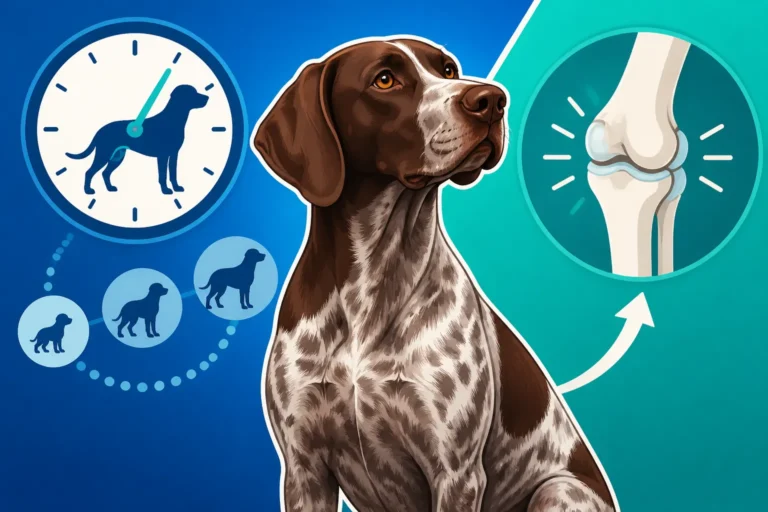
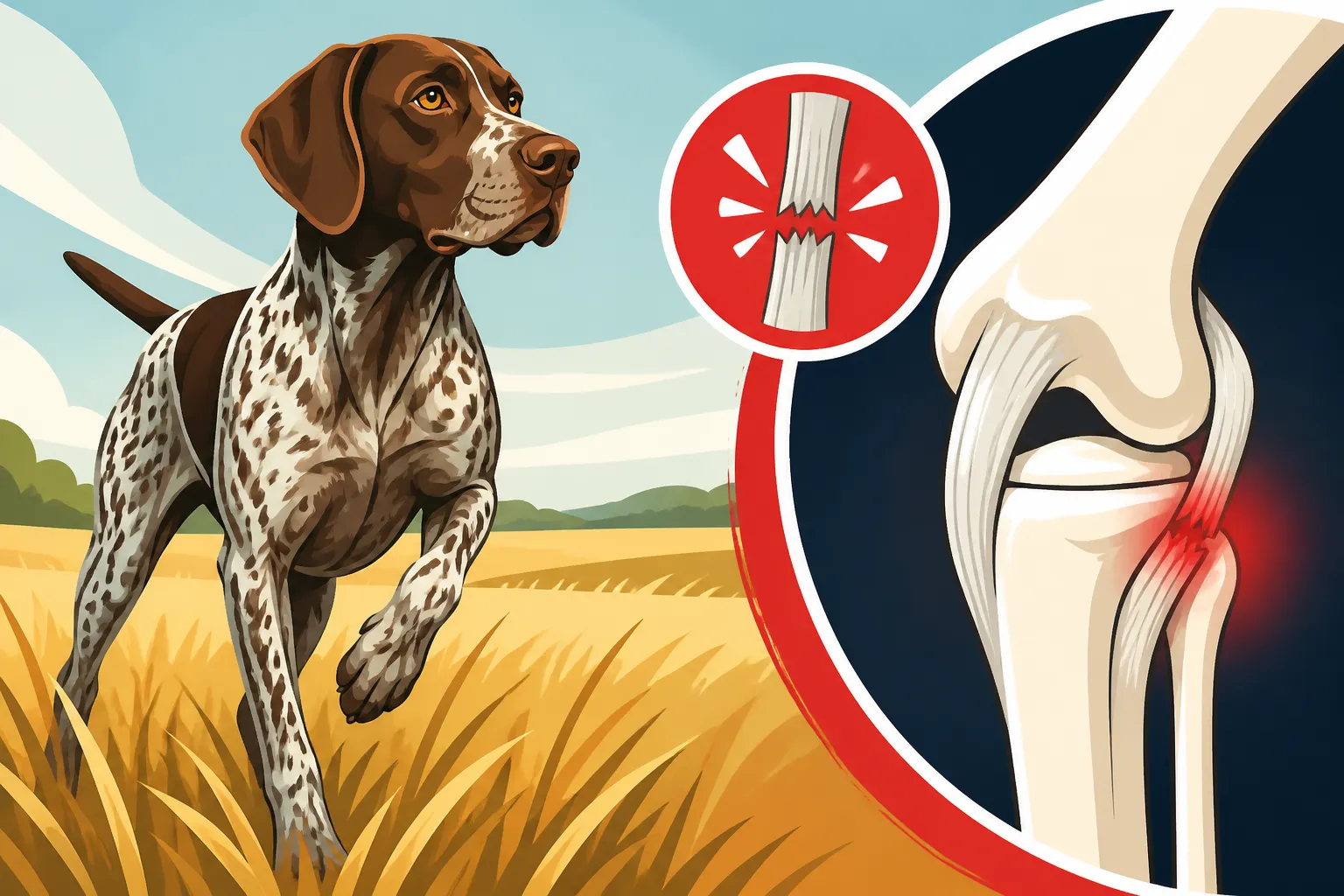
Imagine two strong ropes crossing inside your dog's knee joint, connecting the femur (thigh bone) to the tibia (shin bone). These are the cranial and caudal cruciate ligaments. The cranial cruciate ligament (CCL) is the most commonly injured of the two. Its primary job is to prevent the tibia from sliding forward relative to the femur and to limit excessive internal rotation and hyperextension of the knee. When this ligament tears, that stability is gone, leading to pain and instability. Think of it like a bridge without a key support beam – it might still stand for a bit, but it’s compromised and eventually collapses under pressure.
These ligaments are crucial for the powerful propulsion and abrupt turns that define a German Shorthaired Pointer's movement in the field. When they're healthy, they allow for seamless, dynamic motion. But even minor damage can lead to chronic issues down the road. It's not always a sudden, dramatic snap; sometimes, it's a gradual fraying over time, making it a tricky injury to pinpoint in its early stages. This slow deterioration can sometimes mimic other lameness issues, making a precise diagnosis critical.
The Stifle Joint and Its Role in Performance
The stifle joint, as it’s called in veterinary terms, is your dog’s knee. It’s a complex hinge joint that, along with the hip and hock (ankle), is critical for absorbing impact, providing propulsion, and allowing for quick directional changes. For a German Shorthaired Pointer, whose life often revolves around explosive bursts of speed, sudden stops, and leaping over obstacles, the stifle is constantly working overtime. The way a field-bred Shorthair quarters, points, and retrieves puts unique rotational and shearing forces on this joint.
When the CCL is compromised, the tibia can thrust forward with each step, causing painful bone-on-bone grinding and leading to inflammation and arthritis over time. This instability isn't just uncomfortable; it fundamentally alters the dog's gait and can lead to muscle atrophy and compensatory injuries in other limbs. It's a cascading effect, where one injury can predispose a dog to others, or exacerbate existing conditions like Hip Dysplasia in a Hard Running German Shorthaired Pointer. This is why addressing a cruciate tear promptly and thoroughly is so important for the long-term well-being and athleticism of your GSP.
Why Field-Bred Shorthairs Are Prone to Cruciate Injuries
While any dog can tear a cruciate, field-bred German Shorthaired Pointers face particular risks due to their genetics, intense activity levels, and specific physical demands.
High-Impact Activities and Repetitive Stress
Field-bred Shorthairs are essentially canine endurance athletes. They spend hours covering rugged terrain, leaping over downed logs, crashing through heavy cover, and executing sharp turns at high speeds while chasing game. These actions put immense, repetitive stress on their stifle joints. Imagine the forces on those knees when your Shorthair stops on a dime after a full-speed sprint to go on point, or when they launch themselves over a ditch. It’s not just the big, dramatic incidents; it’s the cumulative effect of hundreds, even thousands, of such movements over a hunting season.
This kind of high-impact, stop-and-start activity, especially across varied and uneven ground, creates micro-traumas within the ligament over time. Eventually, these micro-tears weaken the ligament to a point where even a seemingly minor misstep can lead to a full rupture. It’s a different kind of injury pattern than you might see in a more sedentary dog; for our hunting companions, it’s often a chronic degradation that culminates in an acute event. Owners often report their dog was "just running around" when the tear happened, but the groundwork for the injury was likely laid much earlier through years of demanding work.
Breed-Specific Conformation and Genetics
Beyond their lifestyle, certain aspects of the German Shorthaired Pointer's conformation and genetic predisposition might contribute to cruciate ligament issues. While not as famously known for stifle problems as some other breeds, their athletic build and powerful hindquarters can be a double-edged sword. Some studies suggest that breeds with a steeper tibial plateau angle – the slope of the top of the shin bone – may be at higher risk because it creates more "cranial tibial thrust" even during normal weight-bearing. This means their anatomy inherently places more strain on the CCL.
Furthermore, there’s growing evidence that genetics play a role in cruciate ligament disease. While not a single gene, certain breed lines may have a predisposition to weaker ligaments or conformation that increases risk. Responsible breeders often strive to produce dogs with sound structure, but the demanding nature of field work can still expose latent vulnerabilities. It's a complex interplay of "nature and nurture" – a dog with excellent conformation might still suffer a tear due if pushed too hard, while a dog with a slight conformational fault might manage fine with a less strenuous lifestyle. This is why understanding your dog's pedigree and the health history of their line can sometimes offer clues, though it's never a guarantee.
Recognizing the Signs of a Torn Cruciate in Your Hunting Dog
Spotting a torn cruciate can sometimes be straightforward, but often, especially with partial tears, the signs can be subtle. Our stoic Shorthairs often try to "work through" discomfort, making early detection a challenge.
Sudden Lameness and Non-Weight Bearing
The most obvious sign of a complete cruciate tear is a sudden, often dramatic, lameness. Your dog might be running full tilt, then let out a yelp and come up holding one hind leg completely off the ground. This usually happens during an abrupt turn, a jump, or a sudden stop. In these cases, the knee joint is highly unstable and painful, making it impossible or extremely uncomfortable for them to bear weight on the affected limb. You might observe a characteristic "toe-touching" gait, where they just barely touch their toes to the ground, or they might simply refuse to put any weight down at all.
This acute presentation is often accompanied by swelling around the knee and a clear reluctance to move. When you try to examine the leg, your dog might react with pain or resist manipulation. It's a distressing sight for any owner, and it clearly signals an urgent veterinary visit. Even if the lameness seems to improve slightly after a few hours or a day of rest, don't dismiss it. What might seem like a minor sprain could be a partial tear that could worsen quickly. A prompt evaluation by a veterinarian is crucial to confirm the injury and discuss next steps.
Chronic Instability and Intermittent Limping
Not all cruciate tears happen with a dramatic snap. Many begin as partial tears, which can be much harder to diagnose. In these cases, you might notice an intermittent lameness that seems to come and go. Your German Shorthaired Pointer might be fine after resting, but then starts limping again after a long walk, a training session, or a hunt. They might appear stiff after getting up from a rest, or favor a leg when going up stairs or jumping into the truck. The initial pain might not be severe enough to cause complete non-weight bearing, leading owners to assume it's a minor strain.
Over time, even a partial tear will often progress to a complete rupture due to continued activity and the inherent instability of the joint. You might notice a subtle shift in their posture, a reduced enthusiasm for their usual activities, or a general decrease in their athletic performance. Their hindquarters might appear less muscular on the affected side as they compensate by shifting weight. These subtle, progressive signs are especially insidious in a hard-driving field dog, as their drive to work can mask significant discomfort for an extended period. Paying close attention to any changes in gait, energy levels, or willingness to engage in strenuous activity can be key to catching these partial tears before they become full-blown crises. You might even find yourself reaching out to an insurer like Healthy Paws if costly diagnostics become necessary.
Diagnosis and Treatment Options for Cruciate Ligament Tears
Once you suspect a cruciate tear, getting a definitive diagnosis is the critical next step. Your veterinarian will typically combine a physical examination with imaging to confirm the injury and determine the best course of action.
Veterinary Examination and Imaging
The diagnostic process usually begins with a thorough physical examination. Your vet will palpate the knee joint, looking for swelling, pain, and instability. The hallmark diagnostic test for a CCL tear is the "cranial drawer test" and the "tibial compression test." These tests involve manipulating the tibia and femur to see if there's abnormal forward movement of the tibia, which indicates a torn CCL. However, in larger, muscular dogs like German Shorthaired Pointers, or those in significant pain, these tests might require sedation for an accurate assessment.
Beyond the physical exam, X-rays are commonly used. While X-rays don't directly show the ligaments, they can reveal secondary signs of a cruciate tear, such as joint effusion (fluid buildup), early arthritis, or a cranial tibial thrust. They also help rule out other conditions that might cause lameness, like fractures or bone tumors. In some cases, especially with partial tears, your vet might recommend advanced imaging like an MRI to get a clearer picture of the ligament damage and rule out meniscal injury (a common secondary injury with CCL tears). This diagnostic phase is crucial for formulating an effective treatment plan, and understanding the scope of the injury will dictate the most appropriate next steps.
Surgical Options for Cruciate Ligament Repair
For active, field-bred German Shorthaired Pointers, surgical repair is almost always the recommended course of action for a complete cruciate tear. Non-surgical management rarely provides the long-term stability needed for a high-performance dog. Several surgical techniques are available, each aiming to stabilize the knee, either by replacing the ligament or by changing the biomechanics of the joint.
Tibial Plateau Leveling Osteotomy (TPLO)
The Tibial Plateau Leveling Osteotomy (TPLO) is one of the most common and successful surgical procedures for cranial cruciate ligament rupture, especially in larger, active breeds. Instead of trying to repair or replace the torn ligament itself, the TPLO aims to eliminate the cranial tibial thrust – the forward movement of the tibia – that occurs when the CCL is ruptured. The surgeon achieves this by making a semicircular cut in the top of the tibia (the tibial plateau), rotating it, and then fixing it in a new position with a bone plate and screws. This rotation changes the angle of the tibial plateau, so that during weight-bearing, the forces pushing the tibia forward are neutralized.
This procedure effectively bypasses the need for a functional CCL by redesigning the joint mechanics. TPLO often results in excellent long-term stability and a good return to athletic function for most dogs. However, it's a more invasive procedure, requiring precise bone cuts, and involves a longer initial recovery period compared to some other methods. Many field-bred GSPs undergo TPLO and return to working condition, albeit with diligent post-operative care and rehabilitation. The expertise of the veterinary surgeon performing the TPLO is paramount to its success, as is strict adherence to the post-op activity restrictions.
Tibial Tuberosity Advancement (TTA)
Another popular surgical technique, similar in principle to TPLO, is the Tibial Tuberosity Advancement (TTA). Like TPLO, TTA also addresses the biomechanics of the stifle joint rather than directly repairing the ligament. In a TTA, a cut is made in the front part of the tibia (the tibial tuberosity), which is then advanced forward and stabilized with a cage, bone plate, and screws. This advancement changes the angle of the patellar ligament (the ligament connecting the kneecap to the shin bone) such that it helps to counteract the cranial tibial thrust, providing stability to the knee.
TTA is often considered less invasive than TPLO because it doesn't involve cutting and rotating the joint surface itself, potentially leading to a slightly faster initial recovery for some dogs. However, the choice between TPLO and TTA often comes down to the individual dog's anatomy, the surgeon's preference and experience, and the specific nature of the tear. Both procedures have high success rates for returning active dogs to function. Discussion with your veterinary surgeon, perhaps a board-certified orthopedic specialist, will help you determine which of these advanced techniques is most suitable for your Shorthair.
Lateral Suture (Extracapsular Repair)
The Lateral Suture technique, also known as extracapsular repair, is an older but still viable surgical option, particularly for smaller, less active dogs, or those with partial tears. This procedure involves placing a strong surgical suture (often a heavy monofilament nylon or similar material) outside the joint capsule, mimicking the function of the torn cranial cruciate ligament. The suture is anchored to the fabella bone (a small bone behind the femur) and passed through a drill hole in the tibia, then tightened to stabilize the joint and prevent the tibia from sliding forward.
While generally less expensive and less invasive than TPLO or TTA, the lateral suture technique has a higher risk of the suture stretching or breaking over time, especially in large, highly active breeds like the German Shorthaired Pointer. The goal is for scar tissue to form around the joint, providing long-term stability, but for a dog expected to return to demanding field work, it may not offer the same robust, permanent solution as the osteotomy procedures. Recovery might appear quicker initially, but the long-term success rates for a full return to high-level activity can be lower. Discussing the pros and cons of this approach versus the more advanced osteotomy procedures is crucial when considering your GSP's future in the field.
Non-Surgical Management for Cruciate Injuries
While surgery is typically recommended for active German Shorthaired Pointers with complete CCL tears, non-surgical management can be considered in specific circumstances. This might include very small dogs, dogs with severe other health conditions that make anesthesia risky, or owners who cannot afford surgery. Non-surgical approaches primarily focus on pain management, anti-inflammatory medications, weight management, controlled exercise, and physical therapy. Joint supplements, such as glucosamine and chondroitin, are often included, though their effectiveness in treating an already torn ligament is limited; they are more for joint health maintenance.
For a field-bred Shorthair, non-surgical management usually means a significant reduction in activity and, realistically, an end to their hunting career. The joint will remain unstable, leading to progressive arthritis, chronic pain, and a high likelihood of injuring the meniscus or the contralateral (other) knee due to compensatory stress. While it can improve comfort for a dog with a low-impact lifestyle, it rarely provides the stability necessary for athletic pursuits. Therefore, for most GSP owners hoping to maintain their dog’s quality of life and working ability, non-surgical management is typically a last resort. This decision should always be made in close consultation with your veterinarian, considering all aspects of your dog's health and lifestyle.
Here's a quick comparison of common surgical methods:
| Procedure | Principle | Invasiveness | Cost (Approx.)* | Recovery Time (Full) | Return to High Activity | Common Use Case |
|---|---|---|---|---|---|---|
| TPLO | Changes tibial plateau angle to neutralize thrust | High (bone cut) | $4,000 – $6,000 | 4-6 months | Excellent | Large, active, athletic dogs, including GSPs |
| TTA | Advances tibial tuberosity to stabilize | Moderate | $3,500 – $5,500 | 3-5 months | Excellent | Large, active, athletic dogs, including GSPs |
| Lateral Suture | Extracapsular stabilization with suture | Low | $1,500 – $3,000 | 2-4 months | Fair to Good | Smaller, less active dogs, or palliative care |
*Note: Costs are approximate and can vary widely based on location, vet clinic, and additional services (e.g., rehab, medications). These figures are for reference only.
Recovery, Rehabilitation, and Long-Term Management
The surgery is only the beginning. The success of cruciate repair, especially for a field-bred German Shorthaired Pointer, hinges critically on a meticulous recovery and rehabilitation program. This is a marathon, not a sprint.
Immediate Post-Operative Care
The first few weeks after cruciate surgery are paramount for proper healing and preventing complications. Your dog will come home with strict activity restrictions, usually involving confined rest in a crate or small pen, only venturing out for short, leashed bathroom breaks. This controlled confinement is vital to protect the surgical site and allow bone and soft tissues to heal without excessive stress. You'll need to manage pain with prescribed medications, which may include anti-inflammatories and pain relievers. Keeping the incision site clean and dry, and monitoring for any signs of infection (redness, swelling, discharge), are also critical tasks.
Many owners find this period challenging, especially with a high-energy German Shorthaired Pointer used to constant activity. They don't understand why they can't run and play. Mental stimulation, like puzzle toys or gentle petting, becomes vital to keep their minds engaged without stressing the healing limb. Regular, short leashed walks, gradually increasing in duration as advised by your vet, are usually introduced after the initial weeks to promote controlled weight-bearing and muscle maintenance. This foundational phase sets the stage for everything that follows, and rushing it can lead to setbacks. Having robust pet insurance like Healthy Paws can certainly help alleviate the financial stress of these crucial post-operative medications and follow-up visits.
Structured Rehabilitation Programs
For an optimal recovery and a strong return to the field, a structured rehabilitation program is often recommended, especially after TPLO or TTA surgery. This isn't just about walks; it's a specialized regimen designed to restore strength, flexibility, balance, and proprioception (the body's sense of its position in space). A certified canine rehabilitation therapist or veterinary physiotherapist will design a personalized plan that typically progresses through several stages over several months.
Early rehabilitation might include passive range of motion exercises, gentle massage, and cold/heat therapy to manage swelling and pain. As healing progresses, exercises like controlled leash walks on varied surfaces, balance exercises (e.g., on wobble boards), cavaletti poles, and underwater treadmill therapy are introduced. The underwater treadmill is particularly beneficial as it allows for early, low-impact weight-bearing and muscle strengthening without putting excessive stress on the joint. Later stages focus on building endurance, power, and agility, gradually preparing the dog for a return to higher-impact activities. This specialized care is a major component of getting a German Shorthaired Pointer back to its peak performance, helping to prevent compensatory injuries and reduce the risk of re-injury. You can learn more about this process in articles like Rehabbing a Shorthair After Cruciate Surgery.
Long-Term Joint Health and Preventative Measures
Even after successful surgery and rehabilitation, long-term management of joint health is crucial for a German Shorthaired Pointer that has suffered a cruciate tear. The knee that underwent surgery will always be predisposed to arthritis, and there's an increased risk (30-50%) of the other knee tearing in the future, particularly within the first two years, often due to compensatory strain.
Ongoing strategies for maintaining joint health include:
- Weight Management: Keeping your Shorthair at an ideal, lean body weight is perhaps the single most important factor. Every extra pound puts additional stress on the joints. You can refer to guides like The Monthly Food Bill for a Hard Working Shorthair to ensure your feeding plan supports a lean physique.
- Regular, Controlled Exercise: While intense, high-impact activities need careful management, consistent moderate exercise helps maintain muscle mass, joint flexibility, and overall fitness without excessive strain.
- Joint Supplements: Products containing glucosamine, chondroitin, MSM, and omega-3 fatty acids can support cartilage health and reduce inflammation. Discuss these options with your vet to find the best regimen for your dog. For more details, explore Joint Supplements for a Hunting German Shorthaired Pointer.
- Anti-inflammatory Medications: Your vet might prescribe NSAIDs (non-steroidal anti-inflammatory drugs) on an as-needed basis or as a low-dose daily regimen, especially as your dog ages or during periods of increased activity.
- Physical Therapy/Massage: Continuing some rehabilitation exercises or therapeutic massage at home can help maintain flexibility and muscle tone.
- Regular Vet Check-ups: Consistent veterinary care is essential to monitor joint health, detect early signs of arthritis, and adjust management plans as needed. This ongoing vigilance ensures your Shorthair remains as comfortable and active as possible for as long as possible.
Prevention Strategies for Active German Shorthaired Pointers
While not every cruciate tear can be prevented, especially given the genetic component and high-impact nature of a GSP's life, there are significant steps owners can take to minimize the risk.
Conditioning and Warm-Up Routines
One of the best preventative measures is to ensure your German Shorthaired Pointer is properly conditioned year-round, not just during hunting season. Starting a dog from a sedentary lifestyle straight into intense field work is an invitation for injury. A consistent exercise regimen that builds muscle, endurance, and cardiovascular fitness gradually throughout the off-season is crucial. This includes activities like swimming, controlled running (like roading, once they're old enough, as discussed in The Age a German Shorthaired Pointer Can Start Roadwork), and long hikes on varied terrain.
Equally important are proper warm-up and cool-down routines before and after any strenuous activity. Just like human athletes, dogs benefit from a dynamic warm-up that gets their blood flowing and muscles ready. A 5-10 minute brisk walk or gentle trot before unleashing them into the field can significantly reduce the risk of muscle and ligament strains. After a hunt, a cool-down walk and some gentle stretching can aid recovery and prevent stiffness. These habits are fundamental to keeping your field-bred Shorthair sound for many seasons. For a comprehensive guide, check out Conditioning a Shorthair Before Opening Day.
Maintaining Optimal Weight and Muscle Mass
As mentioned in the recovery section, maintaining an ideal, lean body weight is paramount for cruciate health. Excess weight dramatically increases the load on all joints, including the stifles, and contributes to inflammation. It's not just about avoiding obesity; even a few extra pounds can be detrimental to an athletic dog. Your Shorthair should have easily palpable ribs (without being visible), a clear waistline when viewed from above, and a tuck-up when viewed from the side. Regular weight checks are essential, especially during the off-season when caloric needs might decrease.
Alongside optimal weight, maintaining strong muscle mass around the stifle joint provides natural stability and support. Consistent exercise helps build and maintain these crucial muscles. If a dog loses muscle mass (atrophies) due to injury or inactivity, the joints become more vulnerable. A balanced diet designed for active dogs provides the necessary nutrients to support muscle health and overall vigor. A well-muscled, lean dog is far less likely to suffer a cruciate injury than an overweight, deconditioned one.
Genetic Considerations and Breeding Practices
While activity and conditioning play a huge role, genetics cannot be ignored when it comes to cruciate ligament disease. There's a known hereditary component in many breeds, and while it's not as straightforward as a single gene, some lines may carry a higher predisposition. Responsible breeders strive to produce dogs with sound structure and without a history of early-onset CCL issues in their breeding lines. They typically conduct thorough health screenings for other orthopedic issues like hip and elbow dysplasia, as these conditions can sometimes be correlated or share underlying genetic factors.
When considering a German Shorthaired Pointer puppy, research the breeder and ask about the health history of the sire and dam, as well as their close relatives. Inquire if cruciate ligament tears have appeared in their lines. While there isn't a universally accepted genetic test for CCL disease specifically, understanding the overall orthopedic health of a dog's pedigree can provide valuable insight. By supporting breeders who prioritize health and sound conformation, you contribute to the overall well-being of the breed and potentially reduce the risk of this challenging injury in your future hunting companion.
Disclaimer
The information provided in this article is for general informational purposes only and does not constitute veterinary advice. Always consult with a qualified veterinarian for any health concerns or before making any decisions related to your pet's care and treatment.