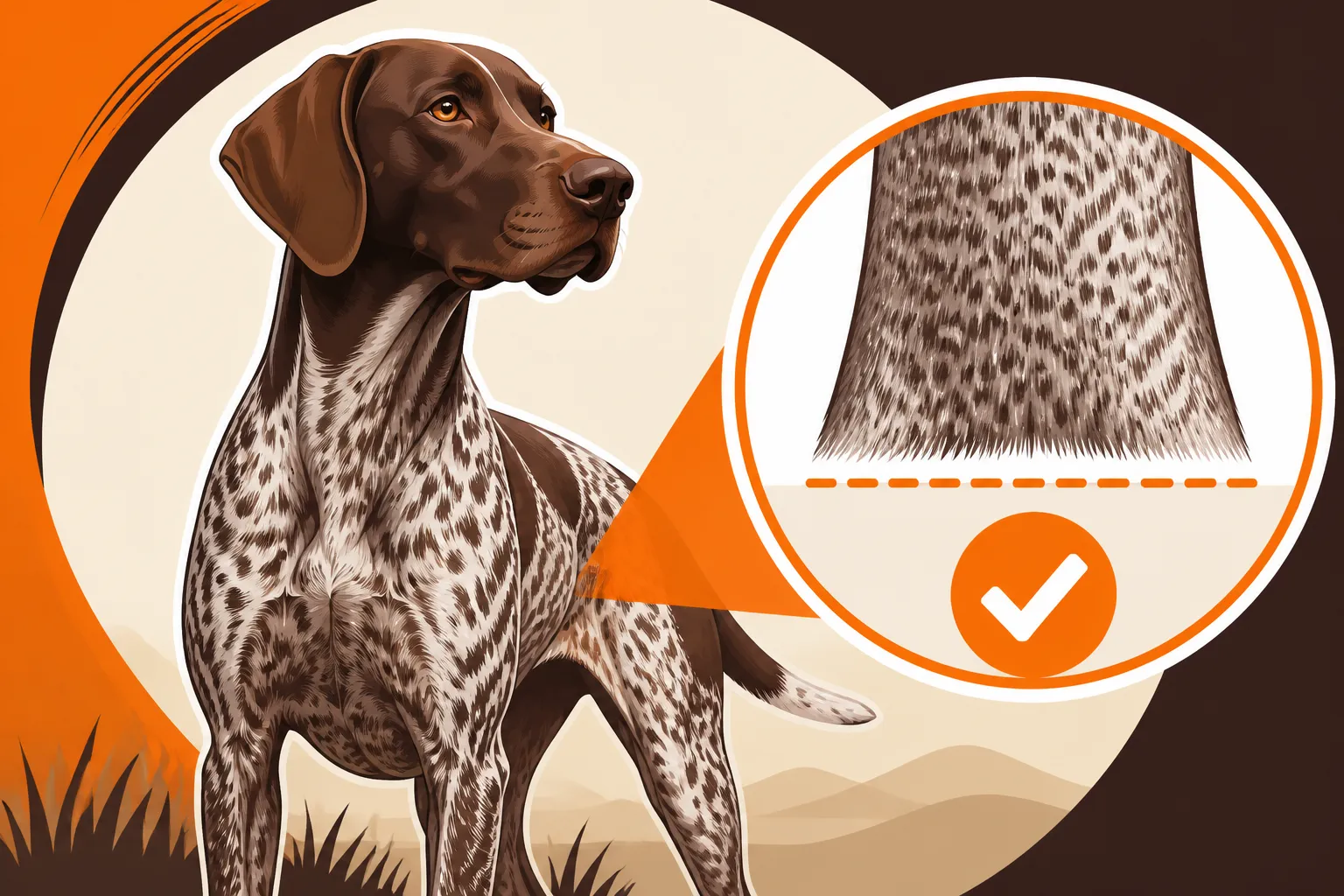
The Coat Length a Shorthair Standard Allows
If you've ever found yourself running your hand over your German Shorthaired Pointer's sleek, almost bristly coat and wondered if it's "right," or if you've seen other GSPs and thought yours looked a little different, you're not alone. There's often a bit of confusion about what the official breed standard truly dictates regarding coat length and texture. This guide is here to unravel those nuances, helping you understand the ideal GSP coat and what slight variations are completely normal.
Understanding the German Shorthaired Pointer's Official Coat Standard
When we talk about a breed standard, we're discussing the ideal blueprint for a dog of that breed, set forth by organizations like the American Kennel Club. For the German Shorthaired Pointer, every detail from nose to tail is considered, and the coat is no exception. It’s not just about aesthetics; the coat's characteristics are deeply rooted in the breed's working purpose.
The Ideal Texture and Feel
The German Shorthaired Pointer's coat is described as short, thick, and tough to the touch. It should feel somewhat coarse, almost like bristles, offering a rugged durability that's essential for a dog that spends its days pushing through dense underbrush, thorny thickets, and cold water. This isn't the soft, plush coat of a retriever, nor is it the fine, silken fur of a sighthound. It’s distinctly GSP.
Think of it as a natural suit of armor. This dense, hard coat repels water and provides a layer of protection against scrapes, scratches, and insect bites when your dog is working hard in the field. It’s a marvel of natural engineering, designed for function above all else. When you pet a GSP, you should feel that underlying strength and resilience in their coat.
The ideal texture isn't uniformly harsh all over. While generally coarse on the body, it tends to be a bit softer and thinner on the ears and head. This subtle difference allows for better hearing and perhaps a bit more comfort around sensitive areas. It's all part of the practical design of this incredible working dog.
Acceptable Deviations from the Ideal
While the standard sets an ideal, Mother Nature and genetics sometimes offer up slight variations, and many of these are perfectly acceptable. For instance, some GSPs might have a coat that feels a little softer than the "tough to the touch" ideal, particularly if they lean more towards companion lines rather than intensely field-bred stock. As long as it retains its short length and protective qualities, it’s usually not considered a fault.
You might also notice subtle differences in coat thickness. Some dogs have an incredibly dense coat, almost like a felted blanket, while others might appear a touch sparser. Environmental factors, like climate, can even play a role; a dog living in a perpetually warm environment might naturally have a slightly less dense undercoat than one in a colder region. These are normal adaptations.
The critical takeaway here is that while the standard guides us, individual dogs will have minor distinctions. The key characteristics—shortness and functional toughness—should always be present. Significant departures, like a truly long or silky coat, are typically considered disqualifying faults in the show ring, but they don't necessarily make a dog any less wonderful as a companion or a hunter, though they might signal a different lineage or a mixed background.
The Functional Importance of the Shorthair Coat
The German Shorthaired Pointer’s coat isn't just for looking good in the show ring; it’s a critical piece of their working machinery. Every aspect of their physical form, including their coat, was meticulously bred for a purpose: to be a versatile hunting dog capable of working in various terrains and weather conditions.
Protection in the Field
Imagine a dog bursting through heavy brush, navigating thorny blackberry patches, or plunging into icy water to retrieve a downed bird. This is the daily reality for many German Shorthaired Pointers. Their short, dense, and water-resistant coat acts as their primary defense against the elements and hazards of the field. Without it, they'd be far more susceptible to scrapes, punctures, and hypothermia. Why a Shorthair's Thin Coat Shows Every Scrape is a testament to how crucial even a "short" coat is for their protection.
The texture itself plays a huge role. A coarse coat allows burrs and seeds to glide over or get caught on the surface rather than penetrating deeply into the skin. This makes it easier for you to brush them out after a long day afield. If the coat were soft and long, it would become matted and pick up far more debris, requiring extensive grooming and increasing the risk of skin irritations or infections. A quick once-over after a hunt is usually all that’s needed to check for foxtails and other nuisances.
Heat and Cold Regulation
A common misconception is that a short-coated dog is always ill-equipped for cold weather. While a GSP certainly isn't a Siberian Husky, their dense coat actually provides a decent amount of insulation. The thickness of the undercoat, particularly in colder climates or during winter months, becomes more pronounced, trapping air and creating a protective thermal layer. This allows them to work effectively in chilly temperatures, though extreme cold certainly warrants protective gear like a neoprene vest. The Water Resistant Coat a Shorthair Carries is a key component here, as a wet dog in cold weather is a dog at risk.
Conversely, in warmer weather, the short coat helps with heat dissipation. Unlike dogs with thick, long coats that can trap heat, the GSP's short fur allows for better airflow over the skin, aiding in cooling. Of course, no coat negates the risks of overheating during intense exercise in hot conditions, so always be mindful of The Temperature a German Shorthaired Pointer Should Not Hunt In. The coat is part of the overall thermal management system, but it’s not foolproof.
Variations in Coat Appearance and Density
Even within the boundaries of the breed standard, you’ll observe some natural variations in the German Shorthaired Pointer’s coat. These aren't necessarily "faults" but rather expressions of genetics, environment, and individual dog physiology. Understanding these differences can help you appreciate your dog’s unique qualities.
Seasonal Changes and Density
Just like many other dog breeds, the German Shorthaired Pointer’s coat isn't static; it changes with the seasons. You'll often notice that their coat thickens and becomes denser in preparation for colder months, developing a more pronounced undercoat to provide extra insulation. As spring rolls around and temperatures rise, they'll "blow" this undercoat, shedding heavily to prepare for warmer weather. This is why you might suddenly find more hair than usual around your house, despite their short coat. The Weeks a Shorthair Drops Its Coat can be a surprising phenomenon for new owners!
During these shedding periods, the coat might appear less dense or even slightly patchy, which is normal as old hair gives way to new. This cyclical change is a natural adaptation to help them regulate their body temperature throughout the year, whether they're tracking birds in a snowy field or enjoying a summer swim. Don't be alarmed if your GSP's coat seems to fluctuate in density; it's simply doing what it's designed to do.
Genetics and Phenotype Differences
Beyond seasonal changes, individual genetic differences can lead to subtle variations in coat length and texture. Some lines of GSPs, perhaps those bred for specific working conditions or with a particular genetic background, might consistently produce dogs with slightly coarser or slightly softer coats. These are usually minor differences that still fall within the acceptable range of the breed standard.
For example, a GSP from a lineage heavily focused on dense cover work might have an exceptionally tough, thick coat, whereas another from a line emphasizing speed and agility might have a marginally finer, though still short and dense, coat. These are phenotypic expressions—how genes are expressed—that reflect the diverse genetic pool within the breed, even when all dogs conform to the standard's core requirements.
The Myth of the "Longhaired" Shorthair
Occasionally, you might hear whispers or even see photos of "longhaired German Shorthaired Pointers." This is usually a misnomer, or indicates a mixed-breed dog. The GSP breed standard is very clear: the coat must be short. If a dog has a significantly longer coat, it is not a purebred German Shorthaired Pointer according to the standard, or it has inherited a long-coat gene which is a disqualifying fault if it is indeed purebred. While long-coat genes exist in many breeds, and can sometimes crop up unexpectedly, a true longhaired GSP would not meet the standard.
It’s important not to confuse a slightly fluffier puppy coat, which can happen, with a genuinely long coat. Puppy coats often look and feel softer and can sometimes appear a bit longer before the adult coat comes in. However, this is a temporary phase, and by adulthood, a purebred GSP will have the characteristic short, dense coat. If you're ever concerned about your GSP puppy's developing coat, discussing it with your breeder or veterinarian can provide clarity. Whether a Longhaired German Shorthaired Pointer Is Purebred often comes down to this distinction.
Grooming and Care for the Standard Shorthair Coat
Even with a "shorthair," proper grooming and care are essential to maintain skin health, manage shedding, and keep your German Shorthaired Pointer comfortable and ready for action. It’s not as demanding as grooming a long-haired breed, but it's far from "maintenance-free."
Everyday Maintenance
The good news is that the GSP’s short coat is relatively low maintenance on a daily basis. A quick once-over with a grooming mitt or a rubber curry brush a few times a week is usually sufficient. This helps to remove loose hair, dirt, and dander, and it also stimulates the skin, promoting healthy coat growth. This routine is especially helpful during seasonal shedding periods to keep hair accumulation in your home more manageable. You can find excellent grooming tools, like deshedding gloves, on sites like Chewy that are perfect for their short coats.
Regular brushing also gives you an opportunity to perform a quick health check on your dog. As you brush, you can look for any skin irritations, bumps, or parasites that might have latched on during outdoor adventures. Their short coat makes it easy to spot these issues early, which is a huge advantage for proactive care. The Grooming Mitt That Suits a Shorthair Coat can make this task a breeze.
Dealing with Shedding Realities
Despite their short coat, German Shorthaired Pointers do shed. And sometimes, they shed a lot. Many new GSP owners are surprised by the amount of hair these dogs can produce, especially during their twice-yearly "coat blows." The hair is short, stiff, and tends to weave its way into carpets, upholstery, and clothing, making it quite persistent.
Regular brushing is your best defense against excessive shedding around the house. Consider investing in a good quality vacuum cleaner designed for pet hair, and perhaps some lint rollers for your clothes. During heavy shedding, you might even consider a more frequent bathing schedule, as bathing can help dislodge loose hair. When purchasing grooming supplies or even specialized shampoos for shedding, online retailers like Chewy offer a wide selection that can be delivered right to your door, making it convenient to stay on top of your GSP's grooming needs.
Table: GSP Coat Characteristics – Ideal vs. Common Observations
| Characteristic | Ideal Breed Standard Description | Common Observations/Variations | Functional Purpose |
|---|---|---|---|
| Length | Short | Uniformly short, may appear slightly longer on ears/head in some. | Minimizes snagging, sheds debris easily. |
| Texture | Thick, tough to the touch, coarse, bristly | Can range from very coarse to slightly softer, still dense. | Protection against thorns, brush, water. |
| Density | Dense, providing good coverage | Varies seasonally (thicker in winter, thinner in summer). | Insulation in cold, heat dissipation in warm weather. |
| Water Resistance | Inherently water-resistant | Excellent, though prolonged saturation can occur in extreme cold. | Keeps skin dry, prevents hypothermia. |
| Shedding | Moderate year-round, heavy seasonally (spring/fall) | Noticeable year-round, can be quite significant during "blows." | Replaces old hair, adapts to seasonal temperatures. |
Skin Care on a Shorthair with an Inherited Skin Disease
While the focus here is on coat length, it's impossible to discuss a GSP's coat without acknowledging the underlying skin health, especially for breeds prone to certain conditions. Some German Shorthaired Pointers can unfortunately be susceptible to inherited skin diseases, which can affect the appearance and health of their coat. One such condition is Lupoid Dermatosis, which can cause scaling and hair loss. If you suspect your GSP has such an issue, prompt veterinary attention is crucial.
For dogs with sensitive skin or diagnosed conditions, choosing the right shampoos and conditioners is paramount. Your vet might recommend a specific medicated shampoo or a hypoallergenic option. Using products designed for sensitive skin can help maintain the integrity of their coat and prevent flare-ups. Be sure to carefully follow your vet's instructions for bathing and topical treatments. Again, online pet supply stores like Chewy are excellent resources for finding specialized skin and coat care products as recommended by your veterinarian. Lupoid Dermatosis and a Shorthair's Scaling Skin can be a serious issue, and proactive care is essential.
Remember, a healthy coat starts from within. A balanced diet, adequate hydration, and regular veterinary check-ups all contribute to a lustrous and healthy coat. Even if your GSP's coat isn't perfectly "standard" in every minute detail, a healthy, well-cared-for coat is always the most beautiful.
Disclaimer
This article is for general informational purposes only and does not constitute professional advice. Laws, prices and regulations vary by location and change over time. Consult a qualified professional for guidance on your specific situation.