Whether a Day Blind German Shorthaired Pointer Can Still Hunt
It's absolutely heartbreaking when you notice something is off with your beloved German Shorthaired Pointer, especially when it concerns their eyes and their ability to do what they love most: hunt. Many GSP owners, myself included, have faced the crushing worry that a diagnosis like day blindness could spell the end of their dog's active, outdoor life. This guide is here to shed some light on what day blindness means for your Shorthair and explore whether a day blind German Shorthaired Pointer can still hunt, offering practical insights and empathetic advice.
Understanding Cone Degeneration and Day Blindness
First off, let's get into the nitty-gritty of what's actually happening when we talk about day blindness in our Shorthairs. It's not just a fancy term; it's a real genetic condition that profoundly impacts their vision, especially when the sun is shining brightly.
What is Cone Degeneration in German Shorthaired Pointers?
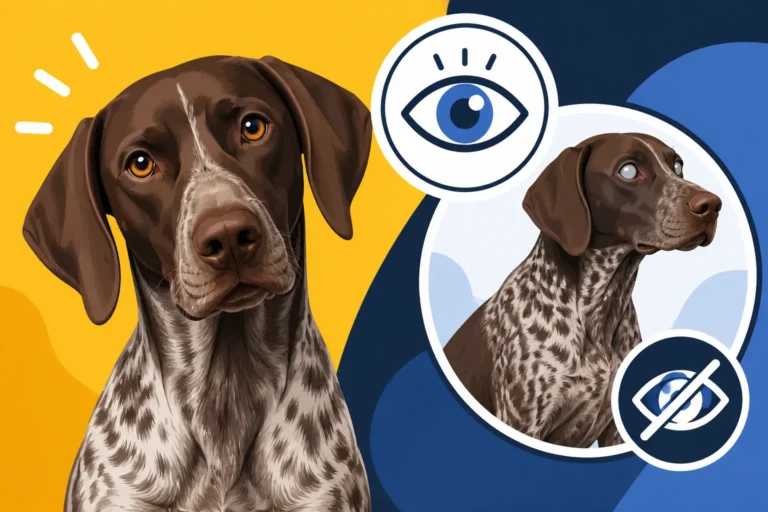
Cone degeneration is a genetic eye disorder, specifically an inherited retinal disease, that primarily affects the cone photoreceptors in a dog's eyes. Think of your dog's retina like a sophisticated camera sensor, and within that sensor, there are two main types of light-sensitive cells: rods and cones. Rods are responsible for vision in low light and detecting motion, essentially giving them their fantastic night vision. Cones, on the other hand, handle vision in bright light, detect color, and give them sharp detail perception.
In German Shorthaired Pointers, cone degeneration means these crucial cone cells start to break down and function improperly. This isn't something that happens overnight; it's a progressive disease. What makes it particularly frustrating for GSP owners is that our dogs are so often bred for their keen eyesight and intense focus in the field, making any impairment devastating. The specific gene behind this condition in German Shorthaired Pointers is well-identified, and breeders can actually order a cone degeneration test on a Shorthair puppy to screen for it, preventing affected dogs from being bred. This is why understanding the genetic component is so important.
The disease typically manifests early in a dog's life, often becoming noticeable when they are still puppies. You might observe changes that start subtly, then become more pronounced as they grow. While the rods remain largely unaffected, allowing them relatively normal night vision, the deterioration of the cones means their world becomes increasingly blurry and difficult to navigate in daylight conditions.
How Day Blindness Impacts a Shorthair's Vision
When a German Shorthaired Pointer is affected by day blindness, their ability to see clearly in bright light is severely compromised. Imagine trying to navigate a sunny field while looking through heavily frosted glass – that's a bit like what they experience. Symptoms typically appear when the dog is quite young, usually by the age of 8-12 weeks, which means the condition often becomes apparent during a crucial developmental stage for hunting dogs. This is often the age day blindness shows in a Shorthair puppy.
The primary signs you'll notice are a marked hesitancy or outright blindness in bright sunlight. They might squint excessively, appear disoriented, or even bump into objects that they would normally see clearly. What's particularly puzzling for many owners is that the dog often seems perfectly fine indoors or during twilight hours, leading to initial confusion about the true nature of their vision problem. This contrast between their daytime struggles and nighttime competence is a hallmark of cone degeneration, distinguishing it from other forms of blindness.
Glare can be an especially debilitating factor, making it almost impossible for them to discern details or navigate safely. Open fields on a sunny day, which are prime hunting grounds, become incredibly challenging environments. They might hesitate to jump over small obstacles, be reluctant to retrieve in bright light, or even refuse to enter brightly lit areas. These are all significant signs a German Shorthaired Pointer's day vision is failing. Understanding these specific impacts is the first step toward figuring out how to support your Shorthair, whether in the field or in daily life.
Assessing a Day Blind Shorthair's Hunting Potential
The immediate gut reaction for many GSP owners facing a day blindness diagnosis is that their dog's hunting career is over. It's a natural and valid concern, especially given how much of a Shorthair's identity is tied to their field prowess. However, it's not always a definitive end. German Shorthaired Pointers are incredible, multi-talented creatures, and their hunting abilities stem from more than just their eyes.
The Role of Scent and Hearing in Hunting
One of the most reassuring facts about German Shorthaired Pointers is their phenomenal sense of smell and hearing. These dogs were literally bred for versatility, to be masters of the hunt in all conditions, and their noses are legendary. While sight is certainly important, particularly for marking fallen birds or ranging in open country, a significant portion of their hunting work—especially finding game—relies on their olfactory senses.
A day blind Shorthair still possesses an incredibly powerful nose, often capable of detecting scent trails that humans can't even fathom. They can pinpoint birds hidden in dense cover, track cripples, and follow scent through varying terrain with remarkable accuracy. Their hearing is equally acute, allowing them to pick up the rustle of a bird's wings, the distant sound of a gunshot, or your whistle commands, even in noisy environments. When their visual input is reduced, dogs naturally compensate by relying more heavily on their other senses. This means a day blind GSP might develop an even more refined sense of smell and hearing, becoming exceptionally good at what's often called "nose work" or "ear work" in the field. Their innate pointing ability, driven by instinct and scent, remains intact. They might adjust their approach, perhaps working closer to the ground to maximize scent detection, but the drive to find game is still very much alive.
Evaluating Severity and Adaptability
It's crucial to remember that day blindness, while progressive, doesn't always manifest at the same severity or progress at the same rate in every German Shorthaired Pointer. Some dogs might have mild impairment, while others might be almost completely blind in bright conditions. This variability means that a blanket statement about their hunting future isn't accurate. Just like people, dogs possess different levels of resilience and adaptability.
When you observe how a day blind Shorthair behaves in bright sun, you'll start to get a sense of their individual challenges. Some dogs, especially if the condition developed slowly and they've had time to learn coping mechanisms, adapt remarkably well. They might learn to navigate familiar terrain by memory, or become incredibly tuned into your commands and body language. Observing your dog in various light conditions and environments is key. Do they hesitate only in direct sunlight, or also on overcast but bright days? How do they handle shadows? Are they confident in wooded areas where the light is dappled?
By carefully evaluating these behaviors, you can gauge their comfort level and capacity for adaptation. It's not about forcing them into a situation that causes distress, but about understanding their limits and strengths. Many Shorthairs with day blindness can continue to live fulfilling lives, and for some, that still includes a modified form of hunting, especially if they are well-loved and their handler is dedicated to making it work. The emotional well-being and confidence of your dog are paramount, and a fearful, frustrated dog is not a happy hunter.
Strategies for Hunting with a Day Blind German Shorthaired Pointer
If you've assessed your Shorthair and believe they still have the drive and capability to hunt despite their day blindness, then it's time to think about strategies. It’s definitely not "business as usual," but with some thoughtful adjustments, you can still share the joy of the field with your dog.
Adjusting Hunting Conditions and Locations
The most straightforward way to help a day blind German Shorthaired Pointer in the field is to modify when and where you hunt. Since bright sunlight is their biggest challenge, avoiding it is the primary goal.
Consider heading out during the early morning hours, just after dawn, or late afternoon, as dusk approaches. These periods offer softer, lower light conditions that are much more manageable for a day blind dog. Overcast or cloudy days can also be ideal, as the diffused light reduces glare and harsh shadows, making navigation easier. In contrast, a crystal-clear, sunny autumn day, which many hunters crave, might be the worst possible scenario for your dog.
Additionally, choose your hunting grounds wisely. Open, stubble-filled fields or vast prairies bathed in sunlight will be incredibly difficult for them. Instead, focus on areas with more natural cover – dense woods, heavy brush, cattail sloughs, or areas with tall grasses. These environments offer natural shade and break up direct sunlight, creating a more visually forgiving landscape. The tighter cover also means birds are likely to be closer, reducing the need for long-range vision. You might find your Shorthair excels in close-quarter pheasant cover or wooded grouse hunting, where their nose and hearing can truly shine, and their visual limitations are minimized.
Enhancing Communication and Handler Support
With reduced vision, your role as a handler becomes even more critical. You are essentially your dog's eyes, guiding them and providing confidence. This means stepping up your communication game and working more closely with your dog than ever before.
Rely heavily on verbal cues and whistle commands. Ensure your dog has a solid foundation in directional commands like "left," "right," "come," and "whoa" and that they respond instantly to your whistle for recalls or turning. Practicing these commands regularly, even when not hunting, will build their confidence and reinforce their trust in your guidance. Instead of allowing them to range widely, you’ll need to work them in tighter patterns, keeping them within a closer visual (or rather, non-visual) proximity. This allows you to give timely verbal cues or use your whistle to direct them around obstacles or towards scent.
A strong bond of trust is paramount. Your dog needs to know that you will not put them in danger and that you are there to support them. Constant encouragement, praise, and a calm demeanor from your side will help them feel secure, even when they're uncertain about their surroundings. Some handlers find that a GPS tracking collar with remote commands can be incredibly helpful for maintaining awareness of their dog's location and for giving subtle, non-verbal cues that supplement verbal and whistle commands, especially if you're working them in thicker cover. Remember to check your German Shorthaired Pointer over after a hunt for any bumps or scrapes they might have acquired.
Specialized Gear and Safety Considerations
While your GSP’s natural senses are incredible, some specialized gear and diligent safety measures can further enhance their ability to hunt safely and effectively.
First and foremost, consider safety for both of you. If you're hunting in dense cover, wearing blaze orange is always a good idea. For your dog, a bright orange vest can increase their visibility to you, especially if they are in thick brush. While it doesn't help them see, it helps you keep track of their general location. When it comes to managing hazards, you'll need to be extra vigilant. Fences, barbed wire, steep drop-offs, and swift water currents pose increased risks for a dog with impaired vision. Thoroughly scout your hunting area beforehand if possible, and stick to familiar terrain.
An e-collar, when used responsibly and as a communication tool (not for punishment), can be invaluable. The gentle vibration or tone can serve as a "tap on the shoulder" to redirect your dog, reinforce a command, or even alert them to an unseen obstacle you've spotted. This is particularly useful in environments where verbal commands might be lost in the wind or thick foliage. Just ensure your dog is properly conditioned to the e-collar and understands it as a guidance tool, not a deterrent.
Finally, always carry a well-stocked first-aid kit. A day blind Shorthair might be more prone to minor bumps, scrapes, or even more serious field injuries a hunting German Shorthaired Pointer comes home with. Regular checks during and after the hunt are essential. Pay close attention to their pads, ears, and any exposed skin for cuts, thorns, or burs. Investing in dog boots can protect their paws on rough terrain. You're not just a hunting partner anymore; you're also their chief safety officer and navigator.
When to Consider Retirement from Hunting
While our love for hunting with our German Shorthaired Pointers runs deep, there comes a point where their well-being and happiness must take precedence over the pursuit of game. Deciding when to retire a day blind GSP from hunting is a deeply personal and often difficult decision.
Recognizing Signs of Stress and Deterioration
It’s vital to be acutely observant and brutally honest with yourself about your dog's experience in the field. What might look like a "toughing it out" attitude could actually be deep stress and frustration. Look for clear signs that hunting is no longer bringing them joy.
Are they hesitant to get out of the truck or kennel when you arrive at the hunting grounds? Do they show reluctance to enter cover, especially in bright conditions? Are they bumping into more objects, tripping, or getting tangled in brush more frequently than before? Increased panting, lip licking, yawning, or averted gazes can all be subtle signs of stress. A loss of confidence is perhaps the most telling sign; a Shorthair known for their bold, enthusiastic drive might become tentative, relying entirely on you and showing little independent initiative. Their pointing might become less staunch, or they might even start bumping birds because they can't accurately gauge distance or position. If you notice a significant decrease in their overall performance combined with these behavioral cues, it's a strong indicator that the activity is causing more distress than enjoyment. Remember, the median age a German Shorthaired Pointer reaches is around 12 to 14 years, and their hunting years should be filled with joy, not anxiety.
Prioritizing Quality of Life
Ultimately, our dogs are more than just hunting machines; they are beloved family members. Their quality of life should always be our top priority. If hunting consistently causes your day blind Shorthair stress, frustration, or puts them at undue risk of injury, it's time to consider retiring them from active field work. This doesn't mean their life ends or that they can't still be active and engaged companions.
Many German Shorthaired Pointers with day blindness thrive in other activities that rely less on acute daylight vision. Scent work, such as nose work classes or even just playing scent games in the backyard, can be incredibly enriching and mentally stimulating. Tracking wounded game, if their nose is still strong, could also be a viable alternative, as tracking often takes place in lower light and focuses entirely on scent. Longer walks during dawn or dusk, swimming in familiar bodies of water, or simply enjoying their role as a cherished family pet can provide immense satisfaction.
The decision to retire a hunting dog is never easy, but it comes from a place of love and respect for their well-being. It's about letting them enjoy their remaining years comfortably and happily, without the pressure or danger of an activity that has become too challenging. Remember, the question of whether a German Shorthaired Pointer needs to hunt to be happy is answered differently for every dog, but their fundamental need for companionship and engagement remains. There are many ways to honor their spirit and keep them active and content. If financial concerns regarding their ongoing care or potential accidents are on your mind, talking to providers like Healthy Paws about pet insurance options can sometimes offer peace of mind, allowing you to focus on your dog's quality of life. Even if hunting is no longer on the table, joint supplements for a hunting German Shorthaired Pointer or other nutritional support might still be beneficial for their overall health. What a Shorthair owner spends on supplements each season can add up, but it's an investment in their comfort.
| Factor | Can Still Hunt | Consider Retirement |
|---|---|---|
| Severity of Day Blindness | Mild to moderate impairment, especially in diffused light. | Severe blindness in any bright light, causing significant disorientation. |
| Dog's Adaptability & Confidence | Dog shows enthusiasm, adapts well to modified conditions, trusts handler's guidance. | Dog exhibits fear, anxiety, extreme hesitation, or frequent injury. |
| Reliance on Other Senses | Strong, proven reliance on scent and hearing to locate and retrieve game. | Dog struggles to locate game even by scent/hearing, or gets easily confused in cover. |
| Handler's Commitment | Willingness to adjust hunting times/locations, work closer, and provide consistent guidance. | Handler unable or unwilling to make significant adjustments to hunting style and environment. |
| Risk of Injury | Minimal increased risk; dog can navigate safely with handler support. | High risk of injury due to stumbling, bumping into obstacles, or getting lost. |
| Enjoyment Level | Dog clearly enjoys the activity, shows excitement and engagement. | Dog shows consistent signs of stress, frustration, or lack of joy during hunting trips. |
Disclaimer
The information provided in this article is for general informational purposes only and does not constitute veterinary advice. Always consult with a qualified veterinarian or veterinary ophthalmologist for any health concerns or before making any decisions about your German Shorthaired Pointer's care, training, or activities. They can provide a proper diagnosis and personalized recommendations based on your dog's specific condition.