Keeping a Shorthair in Front on Big Country
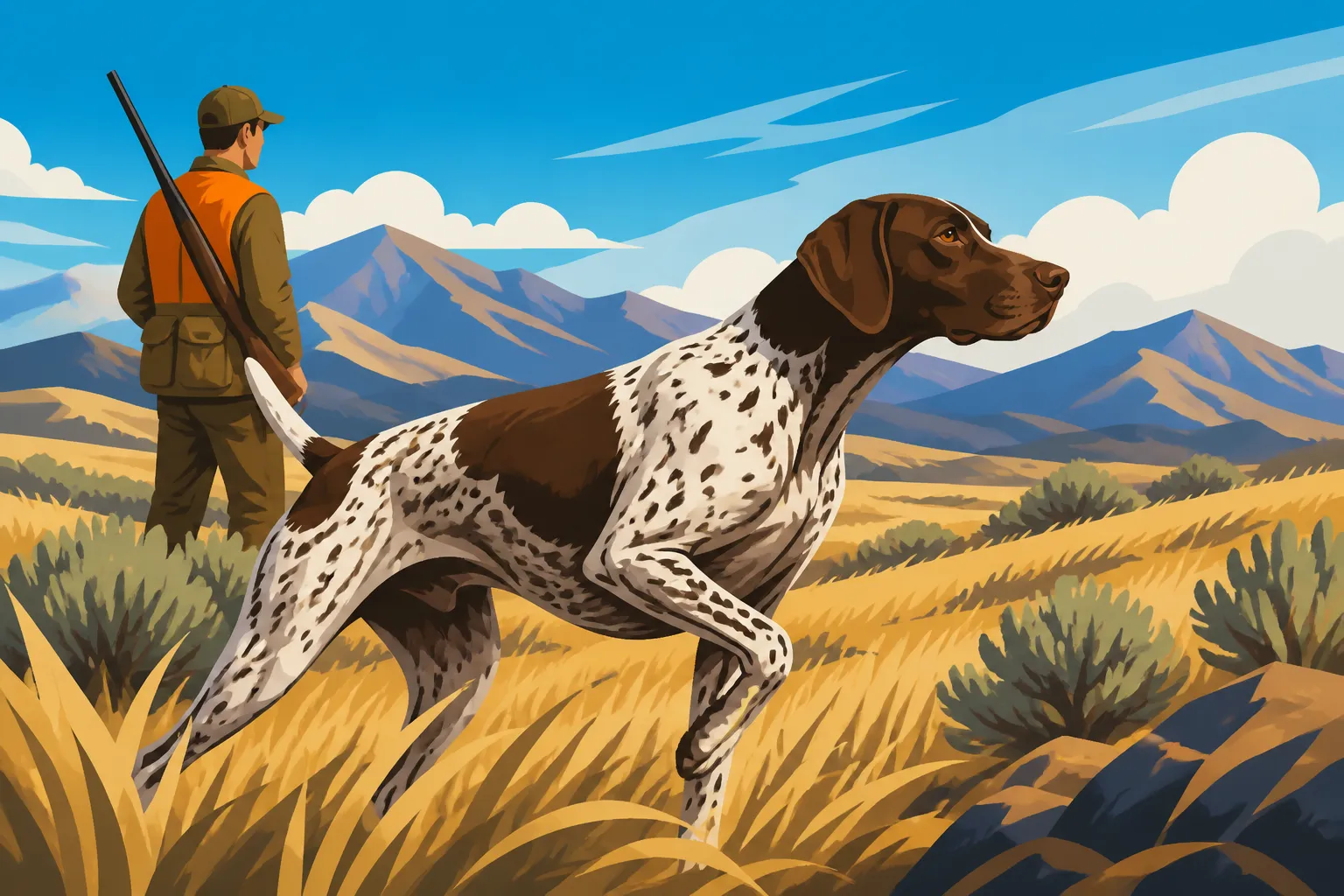
You've got a German Shorthaired Pointer, a boundless expanse of open country, and a sinking feeling as your dog, bred for covering ground, vanishes over the next rise. It's a common dilemma for GSP owners: how do you let them work that incredible nose and powerful stride without losing sight of them or having them "self-hunt" far out of your control? This guide is all about equipping you with the knowledge and techniques to keep your energetic companion working with you, in front of you, and within a manageable range, even when the horizon beckons.
Understanding Your Shorthair's Innate Drive to Range
Let's be honest, it's in their blood. German Shorthaired Pointers weren't bred to trot politely at your heel in a small city park. They were developed in Germany to be versatile hunting dogs, capable of covering vast tracts of varied terrain for long hours. That desire to cast wide and find game is a deeply ingrained part of their genetic makeup, and it's something we, as their owners, need to understand and respect, rather than try to extinguish entirely.
The Hunter's DNA: Bred for Distance and Discovery
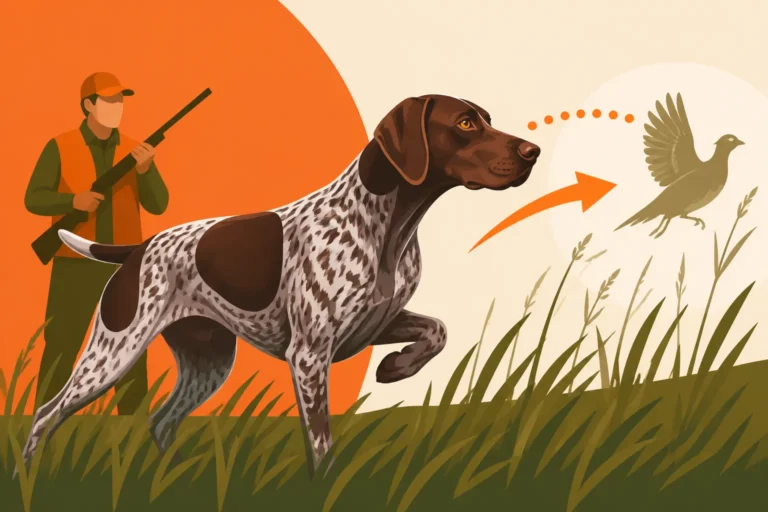
Imagine the wide-open fields and dense cover of the European countryside where the GSP's ancestors honed their skills. A dog that stuck too close would miss potential game. The breed was specifically selected for its ability to quarter efficiently, covering ground with speed and endurance, always searching for that tell-tale scent. When your GSP takes off like a rocket across a freshly cut alfalfa field, they aren't necessarily being disobedient; they're fulfilling centuries of selective breeding. They have an almost insatiable curiosity for what's just over that next ridge or deep in that distant cover. This instinct is what makes them such magnificent hunting partners, but it's also what requires thoughtful management when you're working them in truly expansive areas. It's a powerful engine, and you need to be the skilled driver.
The Thrill of Scent and Independent Work
For a German Shorthaired Pointer, every breath is an opportunity to process a world of scent. Their nose is their primary tool, and the more ground they cover, the more information they gather. It's a self-reinforcing behavior: ranging wide leads to more scent encounters, which leads to more successful finds, which makes them want to range wide even more. They are problem-solvers by nature, eager to figure out where the birds are hiding. This independent drive, while admirable, can quickly lead to a dog that's making its own decisions about where to go and what to pursue, often with little regard for your position or instructions. This isn't usually malicious; it's simply a strong instinct taking over. Recognizing this helps us approach training not as a battle of wills, but as a partnership where you guide their immense talents.
Building a Rock-Solid Foundation: Essential Training for Control
Before you even think about letting your GSP loose on a thousand-acre farm, you need to ensure their basic obedience is flawless. In big country, where distractions are rampant and distances are huge, your fundamental commands are not just polite requests – they're safety lines. Without them, you're quite literally asking for trouble.
The Imperative of a Reliable Recall
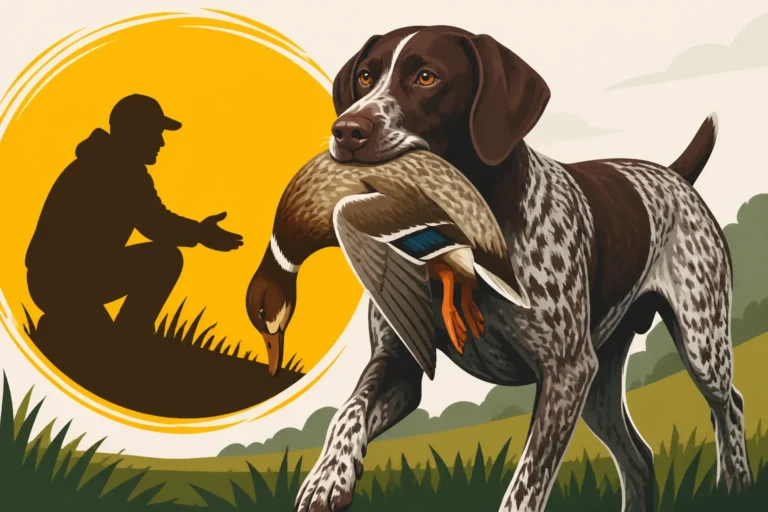
If there's one command that absolutely must be proofed to perfection, it's your recall. "Come!" or "Here!" needs to mean immediate, enthusiastic return, no matter what captivating scent or fleeting rabbit your Shorthair has discovered. Start training this in low-distraction environments, using high-value treats and praise. Make coming back to you the most rewarding thing in their world. Gradually increase distractions and distance. Practice in various environments, from your backyard to local parks, before you ever attempt it in open country. A long line can be an invaluable tool during this phase, allowing you to reinforce the command even when your dog is at a distance, ensuring they understand there's no option but to come. Many online programs, like those offered by BAXTER & Bella, emphasize the crucial nature of this command from puppyhood. Think of it: in big country, a broken recall isn't just an inconvenience; it can mean a lost dog, or worse, a dog in danger. Recall on a German Shorthaired Pointer That Is Locked On is a critical skill.
Teaching the Art of Quartering
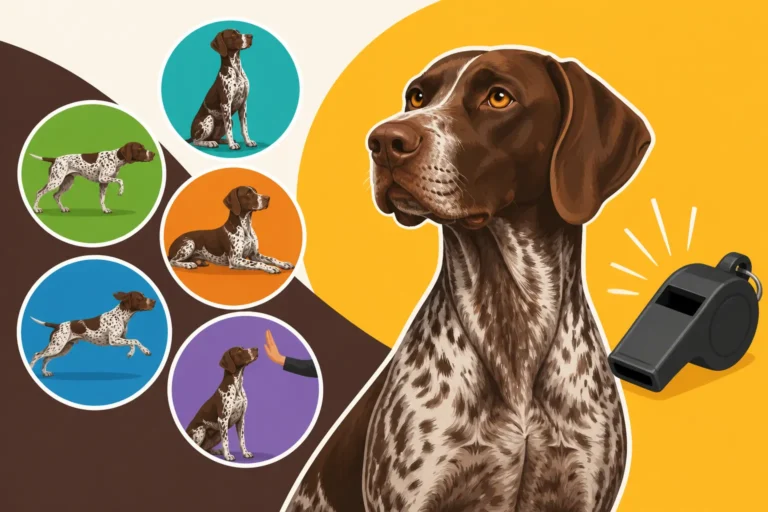
Quartering is the systematic way a hunting dog works a field, moving back and forth in front of the handler in a zigzag pattern, ensuring all ground is covered. It's an elegant dance between dog and handler that keeps the dog in front and within range. Start this training in smaller, less distracting areas. Use a check cord to guide your dog left and right, encouraging them to sweep the field in front of you. Walk in a straight line, and as your dog reaches the desired width, use a distinct whistle or verbal command (like "Hup!" or "Over!") to turn them the other way. Consistently praise and reward them when they maintain the pattern. The goal is for them to understand that the "good stuff" (birds, praise, your interaction) happens when they are working with you, not just for themselves. This method teaches them to be efficient and connected.
Whistle Commands as Your Lifeline
In a wide-open field, with wind, rustling grass, and the vastness itself, your voice can get lost. This is where a good dog whistle becomes your most important communication tool. Whistles carry further, cut through ambient noise better, and have a distinct, consistent sound that your dog can learn to associate with specific commands. Teach a distinct recall whistle (usually a series of short, sharp blasts) and a "turn" or "change direction" whistle (often a single longer blast). Introduce these commands early and consistently, pairing them with the verbal commands you already use. Practice in different conditions and distances. Your dog needs to respond to the whistle instantly, associating it with positive outcomes. An effective whistle can literally save your dog's life if they're ranging too far and heading towards danger or are simply out of sight.
Tools and Techniques for Managing Range in Open Country
Even with a strong foundation, managing a GSP's range in truly big country often requires a little help from technology and smart handler choices. These tools aren't replacements for training, but rather extensions of your communication and safety systems.
The Indispensable E-Collar: Communication, Not Punishment
Let's talk about the e-collar, or electronic collar. When used correctly and humanely, it's not a tool for punishment, but a sophisticated communication device for long distances. It allows you to deliver a gentle, consistent stimulation (think of it like a tap on the shoulder) to get your dog's attention, reinforce commands, or break concentration on a distraction when they are too far away to hear your voice or whistle. Start e-collar conditioning in a controlled environment, ensuring your dog understands that the stimulation is a signal, not a shock, and that turning it off by complying with your command is the desired outcome. Work at the lowest effective level. Many reputable trainers, including those that might advise on a program like BAXTER & Bella, will show you how to layer e-collar use with your existing verbal and whistle commands. For a dog that might be Shortening a Shorthair That Ranges Too Far, an e-collar can be invaluable for consistent, instant feedback.
Consider a modern, reliable e-collar system from a brand readily available on Amazon, known for its consistent performance and humane settings. Look for collars with multiple levels of stimulation, vibration, and tone options to find what works best for your individual dog. The goal is to use it as a silent cue that reinforces your training, giving you that crucial connection even when your dog is hundreds of yards away.
GPS Tracking Collars: Your Peace of Mind
Even the best-trained German Shorthaired Pointer can get disoriented, chase a wounded bird further than intended, or simply get lost in unfamiliar, vast territory. This is where a GPS tracking collar becomes an absolute game-changer. These collars allow you to see your dog's exact location on a handheld device or even your smartphone, offering unparalleled peace of mind. Some systems even provide features like geofencing, alerting you if your dog leaves a pre-defined area, or the ability to track multiple dogs simultaneously.
While they don't control your dog's range, they are the ultimate safety net, allowing you to quickly locate and retrieve them if they do get out of range or lost. For anyone who hunts or works their GSP in large, undeveloped areas, a GPS collar is an investment that's worth every penny. You can find robust and accurate GPS collar systems from various manufacturers on platforms like Amazon, offering different ranges and features to suit your needs.
Field Vests and Bells: Visibility and Audibility
While not directly related to controlling range, a good field vest and a bell or beeper collar significantly aid in managing range by helping you keep track of your dog. A blaze orange or bright-colored vest makes your Shorthair much more visible in cover, especially in heavy brush or tall grass, and crucial for safety during hunting season. Knowing where they are visually allows you to anticipate their movements and intervene with commands before they get too far.
A bell attached to their collar provides an auditory cue, letting you know roughly where they are and their pace. When the bell stops, you know they've likely gone on point. Beeper collars serve a similar purpose, often with different settings to indicate if the dog is moving or stationary on point. These simple tools, often overlooked, are surprisingly effective in keeping you connected to your dog's progress and location, enabling you to manage their range more effectively.
Here's a quick comparison of range management tools:
| Tool | Primary Function | Pros | Cons | Best Use Case |
|---|---|---|---|---|
| Check Cord | Direct physical control/guidance | Immediate feedback, builds foundation | Limited distance, can get tangled | Early training, proofing recall/quartering |
| Whistle | Long-distance auditory command | Carries far, distinct, consistent | Requires consistent conditioning, no physical feedback | Open fields, windy conditions, reinforcing commands |
| E-Collar | Long-distance communication/reinforcement | Consistent feedback at range, attention grabber | Requires careful, humane training; can be misused | Reinforcing recall/quartering at distance, breaking focus |
| GPS Tracking Collar | Location tracking and retrieval | Unparalleled safety, peace of mind | Does not control dog, only locates | Large, unfamiliar territories, safety net |
| Field Vest/Bell | Visibility and audibility | Easy to see/hear dog, safety | No control, only awareness | Hunting, heavy cover, knowing dog's general location |
Troubleshooting Common Range Issues and Advanced Handling
Even with the best training and tools, German Shorthaired Pointers can present unique challenges in big country. It's about ongoing management and adapting your strategy.
When a Shorthair "Self-Hunts"
One of the most frustrating things is when your GSP decides they know better than you and starts hunting for themselves, often ranging out of sight or ignoring your commands in pursuit of their own game. This isn't just about covering ground; it's about making their hunt the priority. To combat this, you need to re-establish yourself as the center of their universe and the source of all the good things. Increase their desire to check in with you by rewarding it heavily. Make yourself exciting! Use different tones of voice, move unpredictably, and make them feel like they're missing out if they're not close.
If they start to drift, use your whistle or e-collar (at a low, attention-getting level) to bring their focus back to you. Make them quarter a birdless section or practice a short recall just to reinforce that you are directing the hunt. Sometimes, it means shortening their range temporarily in training by working in slightly smaller fields or using a longer check cord again, just to remind them of the boundaries and who's in charge. Remember, the partnership is key; you're not just a spectator to their hunt.
Reading the Landscape to Your Advantage
A smart handler understands that the terrain itself can be a powerful ally in managing a Shorthair's range. Don't just walk blindly; strategically use the natural features of the land.
- Work into the Wind: Dogs naturally want to work into the wind to catch scent. By moving into the wind, your dog will often stay in front of you, naturally casting ahead to pick up bird scent. It also helps your voice and whistle carry more effectively to them.
- Use Field Edges and Cover: Start your dog working along a fence line, a hedgerow, or the edge of a woodlot. These natural boundaries can help "funnel" your dog, preventing them from blowing out too wide in one direction. As they gain confidence and understand the pattern, you can gradually move into more open areas.
- Anticipate the Terrain: If you know a deep draw or a thick section of woods is coming up, anticipate your dog wanting to plunge into it. Prepare to call them in closer before they get there, rather than trying to pull them out once they're already engaged. Understanding how a German Shorthaired Pointer ranges in different cover can greatly inform your strategy.
Consistency is King
Managing a GSP's range on big country isn't a "fix it once" kind of deal. It's a constant, ongoing process that requires unwavering consistency. Every outing is a training opportunity. If you let them get away with self-hunting one day, they'll push the boundaries even further the next. Always carry your whistle and, if you use one, your e-collar. Be prepared to reinforce commands, redirect their casts, and reward their cooperation.
Younger Shorthairs, especially during their adolescent phase, often test boundaries and challenge handler control. This is normal, but it's crucial to be firm and consistent during this time. Remember that their energy and drive are a gift, but they need proper channeling. Celebrate their successes, but don't shy away from corrections when necessary. With dedication, your German Shorthaired Pointer will learn to be a magnificent, cooperative partner in the field, working in harmony with you, even when the country stretches out forever.
Disclaimer
This article is for general informational purposes only and does not constitute professional advice. Laws, prices and regulations vary by location and change over time. Consult a qualified professional for guidance on your specific situation.