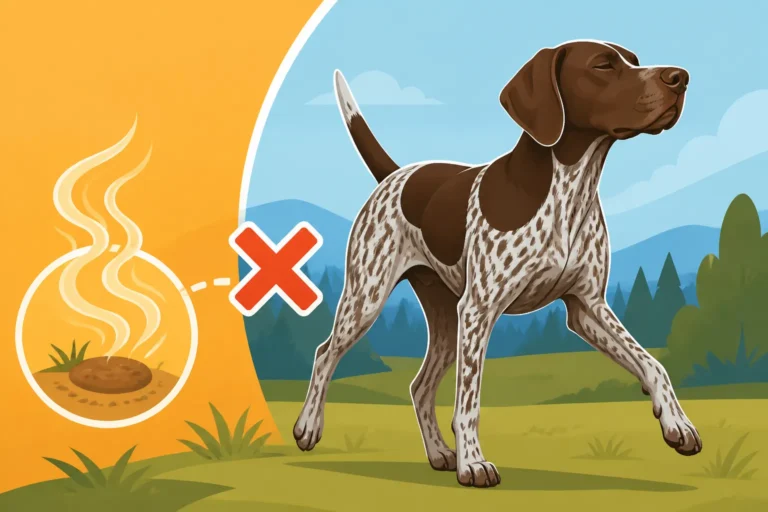
Reading a Shorthair’s Point Before It Breaks
One of the most thrilling moments for any German Shorthaired Pointer owner, especially those of us who spend time in the field, is watching our dog lock onto scent. That picture-perfect point, rigid and intense, is what these dogs were bred for. But that excitement can quickly turn to frustration if your Shorthair breaks point prematurely, flushing the bird before you're in position or worse, before you even realize they've found something. This guide is all about helping you understand the subtle language your GSP uses on point, giving you the tools to anticipate their moves, and ultimately, to help them hold steady until the time is right.
Understanding the German Shorthaired Pointer's Natural Point
For generations, German Shorthaired Pointers have been selectively bred for their keen sense of smell, athleticism, and their innate ability to "point." It's not just a learned behavior; it's deeply ingrained, a fundamental part of their genetic makeup. Understanding this natural drive is the first step in working with your dog to develop a truly solid point.
The Instinctive Drive to Point
A GSP's point is a freeze response, an interruption of their predatory chase sequence. When they hit that strong bird scent, their instincts tell them to stop, locate, and hold the bird, giving the hunter time to get into position. This instinct is what makes them such incredible hunting partners. It's not about catching the bird for themselves; it's about collaboration, about working with you. Think of it as a deeply rooted internal "whoa" command that they apply to themselves the moment they pinpoint prey.
However, even though it's natural, the duration and steadiness of that point are often shaped by training and experience. A young pup might point a butterfly or a leaf blowing in the wind, demonstrating the raw instinct. As they mature and are introduced to game, they learn to refine this behavior, understanding what scent truly means a game bird is present. It’s this refinement that we work on, transforming raw instinct into a reliable, consistent, and steady point.
What a "Good" Point Looks Like
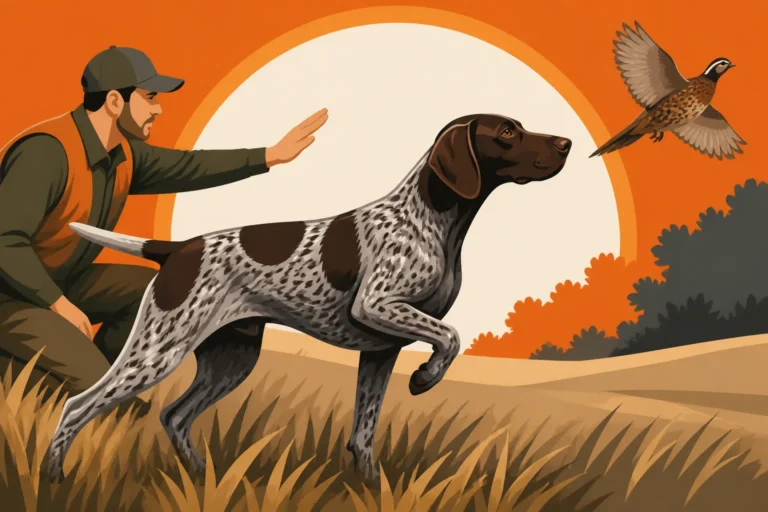
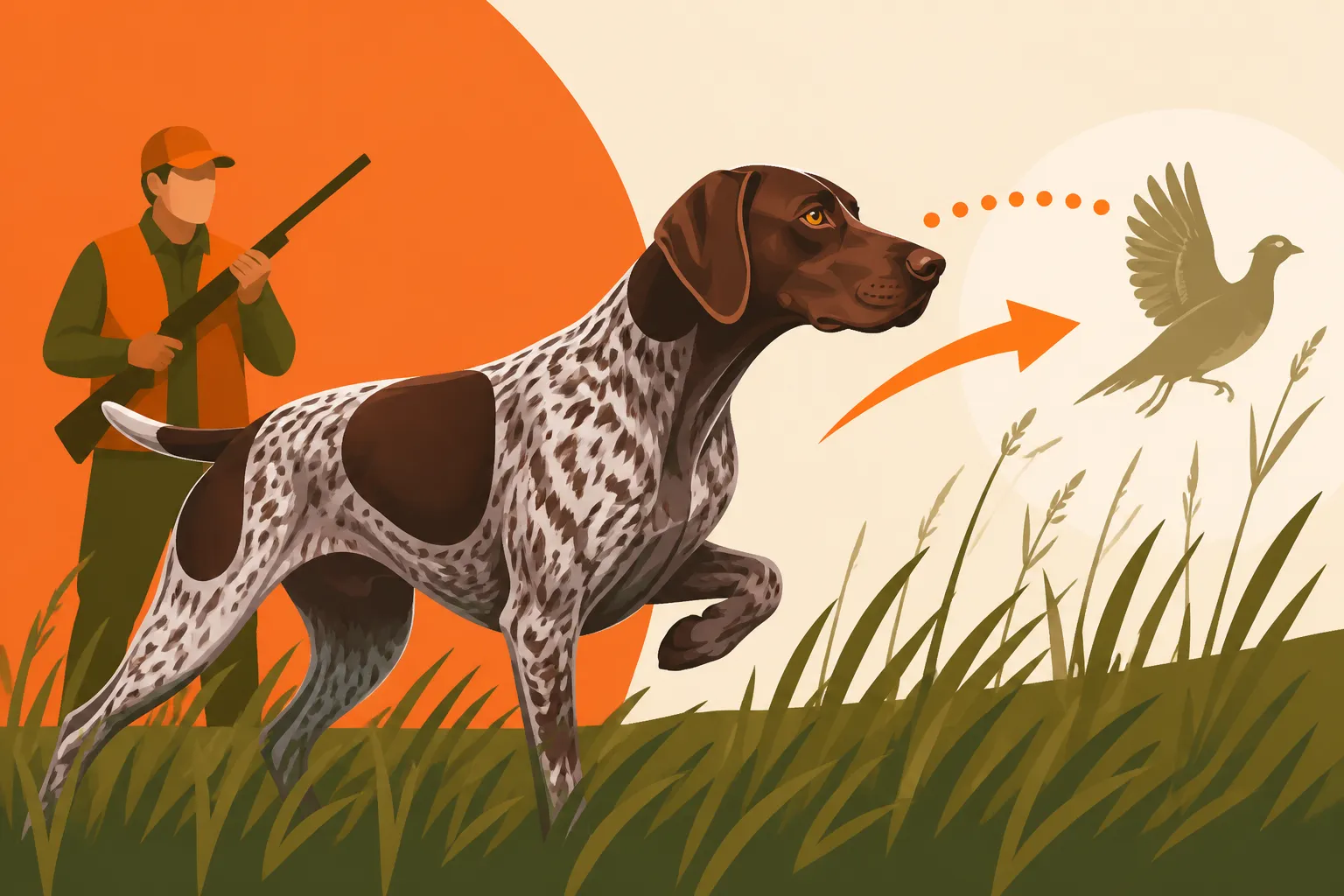
We all have that mental image of a classic point: dog rigid, tail high and stiff, nose aimed directly at the bird, one front paw often lifted. While this is certainly ideal, it's important to recognize that not all good points look exactly alike. The "perfect" point is less about aesthetics and more about effectiveness—the dog is indicating game, holding steady, and not bumping the bird.
A good point also means the dog is confident in its find. There's no creeping, no tail-wagging, no indecisive shifting. The dog is locked. Its entire body is communicating "bird, right here." The intensity in their eyes, the quivering muscles, the focused stillness—these are the hallmarks of a GSP truly committed to its job. Recognizing these signs allows you to move in confidently, knowing your dog is doing its part.
Variations in Pointing Styles
Just like people, every German Shorthaired Pointer is an individual, and their pointing style can vary. Some might have a very high, rigid tail, almost vertical, while others might hold it at a slightly lower angle, still stiff and purposeful. Some dogs are very statuesque, freezing completely, while others might have a slight, almost imperceptible quiver that shows their intense focus.
You might encounter a "low" or "crouching" point, where the dog might get down lower to the ground, especially in thick cover or when scenting a very skittish bird. There are also "heady" pointers who rely heavily on scent, and "footy" pointers who use more of their body to indicate. The key is to learn your dog's individual style. Spend time observing them, not just in the field but even during playtime in the yard. Understanding their baseline will make it easier to spot the subtle shifts that indicate an impending break.
Deciphering the Subtle Cues of a Shorthair on Point
To prevent a point from breaking, you need to become a master at reading your dog's body language. It's a nuanced conversation, and your GSP is constantly telling you what's happening, if only you know how to listen. The subtle shifts, the minute changes—these are your early warning signals.
Reading the Body Language Before the Flush
When a German Shorthaired Pointer first hits scent, they might go into a "sniff-point," testing the air, confirming the location. As they get closer and confirm the bird's precise location, their body will tighten. Look for the stillness that indicates they are locked on. Their muscles will tense, their breathing might become shallower or even momentarily stop as they focus entirely on the scent cone.
Pay close attention to their weight distribution. Are they leaning slightly forward, indicating a desire to move in? Or are they rooted, showing absolute steadiness? A dog that is about to break might shift its weight, even imperceptibly, preparing to spring. Their posture is an open book, telling you their level of confidence, excitement, and self-control. This is where understanding The Structure a German Shorthaired Pointer Needs Daily comes into play; a well-trained dog has better self-control.
Eye Contact and Head Position
A Shorthair on a solid point will have its head held high or level, nose pointed directly into the scent cone. Their eyes will be intensely focused, often unblinking, fixed on the spot where they believe the bird to be. There's a particular look, an intensity that leaves no doubt they are fully engaged.
If you see their head start to dip, or their eyes darting away from the target zone, it could be a sign of uncertainty or that they are preparing to move. Sometimes, a quick glance back at you might mean they're checking if you're coming, or it could be a plea for reassurance. Conversely, a head that is slightly lowered and twitching from side to side could indicate they are trying to pinpoint a running bird, which can also precede a break if the dog decides to follow the scent trail. Mastering Whistle Commands a Shorthair Should Know can help you re-engage their focus if they seem distracted.
Tail Talk and Foot Movement
The tail is a big communicator. On a perfect point, the tail should be stiff, often held high, or slightly curled, but still. Any twitching, wagging, or dropping of the tail can signal a weakening point. A tail that starts to "flag" (small, rapid wags) usually indicates a bird that is starting to run or move, and the dog's excitement is rising, making a break more likely.
Similarly, watch their feet. A truly steady dog will be rooted to the spot. If you see any subtle shifting of paws, a slight lift, or a preparatory crouch, it's a sign that the dog is getting ready to move. This "creeping" is a common issue, and addressing it requires reinforcing steadiness. A dog that is creeping forward is essentially pre-breaking the point, trying to get closer to the bird. Understanding how to address A Shorthair That Creeps Once It Points is critical here.
The Common Reasons a Shorthair's Point Might Break
Knowing why a point breaks is just as important as identifying the cues that it's about to happen. Once you understand the underlying causes, you can tailor your training and handling to mitigate these issues and build a more reliable partner in the field.
Overexcitement and Young Dog Impulsivity
This is perhaps the most common reason for a broken point, especially with young, enthusiastic German Shorthaired Pointers. Their drive to chase is incredibly strong, and the sight or sound of a flushing bird can simply overwhelm their learned self-control. The instinct to pursue takes over before their steadiness training fully kicks in. They're just so eager to please, and that often translates into a desire to get to the bird as quickly as possible.
A young dog, especially in its first or second season, hasn't yet developed the mental maturity to consistently override that powerful chase instinct. They might have a great point for a few seconds, but the temptation of the flush is just too great. This isn't necessarily a fault in the dog; it's a phase in their development that requires consistent, patient training to build stronger impulse control. Early introductions to birds and the gun should be handled carefully to avoid overwhelming them.
Lack of Confidence or Too Much Pressure
On the flip side of overexcitement, a point can break because the dog lacks confidence or feels too much pressure. A dog that is unsure of itself might break point to look back at you for guidance, or it might move in to force a flush because it's uncertain if you saw the bird or are coming in to flush. This can happen if previous corrections were too harsh or if the dog has had negative experiences in the field.
Similarly, an overly zealous handler who rushes in, yells, or exhibits frustration can transfer that anxiety to the dog, causing it to anticipate a negative outcome and break point. Some GSPs are very sensitive and will shut down or become anxious under pressure. It's crucial to be a calm, reassuring presence, even when things don't go perfectly. Your demeanor greatly influences your dog's confidence and performance.
External Distractions and Scent Intensity
The field is full of distractions. Other dogs, unusual noises, changes in wind direction, or even a sudden movement in their peripheral vision can cause a Shorthair to break point. These dogs are highly intelligent and aware of their surroundings, and sometimes that awareness can pull them off a steady stance.
Scent intensity also plays a huge role. If the bird is running, or if the scent is incredibly strong and fresh, it can be almost impossible for some dogs to resist the urge to move in. A bird that is walking or running just ahead of the dog can be a tremendous test of their steadiness, as their instinct is to follow and pin the bird. This is why controlled training scenarios, where you can manage the bird's movement, are so important. It helps them learn to hold even when the scent is screaming "go!" This is also where good Recall on a German Shorthaired Pointer That Is Locked On is essential.
Proactive Strategies for Steadiness on Point
Building a rock-solid point isn't about magical commands; it's about consistent, methodical training that reinforces the desired behavior. These strategies focus on establishing control and confidence in your German Shorthaired Pointer from an early age.
Building a Solid Foundation with "Whoa"
The "whoa" command is the cornerstone of steadiness on point. It teaches your German Shorthaired Pointer to stop instantly and remain motionless, regardless of distractions. This command should be introduced early and practiced extensively, initially away from birds. Start with a check cord, teaching the dog to freeze on command, and gradually increase the duration and add mild distractions. Whoa and Why Every Shorthair Starts There outlines just how fundamental this is.
Progress from simple stationary "whoa" to moving "whoa" where you command them to stop while walking. Then, introduce tempting objects like a thrown dummy or even a rolling ball, commanding "whoa" as they go for it. The goal is for "whoa" to mean "stop everything and freeze," becoming an automatic response. Many handlers find that using a "whoa post" or "whoa barrel" can be incredibly effective in building this muscle memory and physical steadiness, as discussed in Teaching a Shorthair Whoa on a Table or Barrel. Consistency is key here.
Controlled Bird Introductions
Once your Shorthair has a solid "whoa" command, you can start introducing birds in a controlled environment. Use pigeons or pen-raised quail that you can control. The first introductions should be positive and low-pressure. Allow your dog to naturally find and point the bird, then gently enforce the "whoa" command.
It's crucial to manage the bird's behavior initially. Use a bird bag or launcher (readily available on Amazon) to present birds in a way that minimizes the chance of them running or flushing prematurely. This allows your dog to experience the thrill of the point without the overwhelming urge to chase. As they become more consistent, you can introduce slight variations, always ready to reinforce "whoa" if they start to creep or break. Remember that How Many Birds It Takes to Steady a Shorthair varies greatly by individual dog.
Using E-Collars for Reinforcement
E-collars can be incredibly valuable tools for reinforcing steadiness on point, when used correctly and humanely. They are not for punishment but for communication and reinforcement. The goal is to create an association where the dog understands that the e-collar stimulation means to hold its position. Begin with very low levels of stimulation, enough to get your dog's attention but not cause fear or discomfort. When an E-Collar Belongs on a German Shorthaired Pointer emphasizes the importance of proper introduction.
Start by pairing the e-collar stimulation with your "whoa" command during non-bird work. Once the dog understands the connection, you can use it in bird work. If your Shorthair starts to creep or break, a quick, low-level stimulation paired with "whoa" can remind them to stay put. Many trainers find that brands offering comprehensive e-collar training guides or programs, like those associated with BAXTER & Bella, can be invaluable resources for learning proper technique. The key is precise timing and consistency, ensuring the dog associates the correction with the act of breaking point, not with the bird itself.
Responding Effectively When a Point Breaks in the Field
Even with the best training, every dog will have moments where their point breaks. How you respond in these situations is critical, not only for correcting the immediate behavior but for reinforcing future steadiness. Panicking or getting overly frustrated won't help your dog learn.
Correction Versus Re-Direction
When your GSP breaks point, your immediate reaction might be to yell or rush in. However, it's generally more effective to redirect their energy and reinforce the correct behavior. If they break and chase, immediately issue a firm "whoa" command. If they ignore it, a quick, low-level e-collar correction (if they are properly conditioned to it) can serve as a reminder. The goal is to interrupt the chase and bring them back to the concept of "whoa."
Once you've interrupted the chase, bring them back to the area where the point broke, or even to the last place they were steady. Re-establish control, reinforce "whoa," and if possible, try to re-find a bird in the same area for a positive re-training experience. This helps them understand what they should have done, rather than just being punished for what they did wrong. Sometimes, a long check cord, available on Amazon, can be a great tool for physical re-direction without harshness.
Analyzing the Situation for Root Causes
After a broken point, take a moment to analyze what happened. Was the bird running hard? Was there another distraction? Was your dog overtired or overstimulated? Did you take too long to get to them? Understanding the "why" will inform your future training. For instance, if your dog is frequently breaking on running birds, you might need to focus on more specific scenarios that teach them to hold steady when the game moves.
Consider the environment. Is the cover too dense, making it hard for you to see your dog or for your dog to confidently hold? Are you asking too much of a young dog in a new, challenging area? Sometimes, the situation itself sets the dog up for failure. Adjusting your expectations, moving to easier cover, or returning to basic drills can be necessary steps to rebuild confidence. Always remember that a Shorthair that never quits can sometimes hide issues (see How Hip Dysplasia Hides in a Shorthair That Never Quits), so look closely.
Recovering the Dog and the Hunt
Once the point breaks and the bird flushes, don't let the frustration linger. Call your dog back, calmly and firmly. If they return, praise them for the recall, even if the initial point was blown. This ensures they don't associate returning to you with negative consequences. Once they're back, assess their state. Are they still wired? Do they need a moment to calm down before continuing?
Sometimes, the best thing to do after a broken point, especially with a young or overly excited dog, is to call it a day on birds and switch to a different activity, like obedience drills or a quiet walk. This prevents them from repeatedly practicing the wrong behavior and ending the session on a positive, controlled note. For more on managing excitement, look into Reading a German Shorthaired Pointer's Stress Signals.
Advanced Training for a Solid, Reliable Point
Once your Shorthair has a decent "whoa" and understands basic bird introductions, it's time to refine their steadiness and prepare them for real-world hunting scenarios. This is where you build true confidence and reliability.
Steadying to Wing and Shot
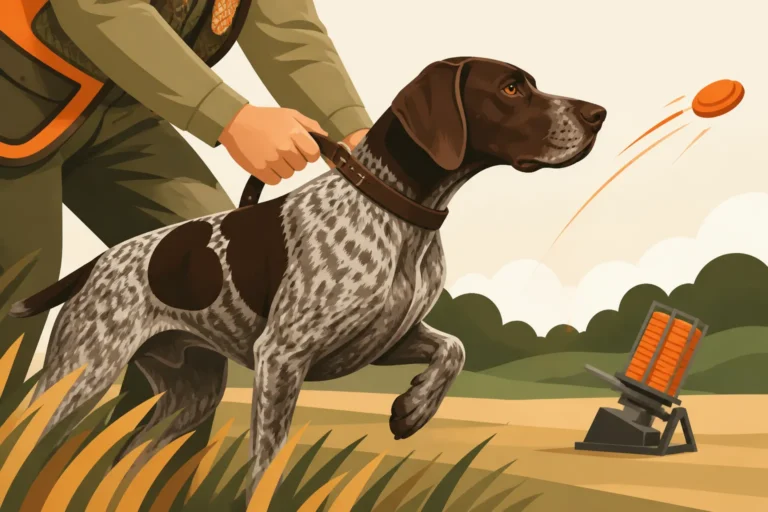
This is the holy grail of point training: your German Shorthaired Pointer holds steady when the bird flushes (wing) and remains steady through the shot (shot). This level of control is achieved through incremental steps. Start by having your dog on a check cord, point a bird, flush it, and fire a blank pistol or a very light shotgun load from a distance. Immediately reinforce "whoa" if they move.
Gradually decrease the distance of the gun, and once they are solid to the flush and shot, introduce a retrieve. The dog must not break point to retrieve the bird until you give the command. This teaches immense self-control. It's a challenging phase that requires patience and consistency. Remember, Steadying a Shorthair to Wing and Shot is a process, not a single event.
Teaching a Shorthair to Back Another Dog's Point
A truly versatile hunting companion, especially in situations where you might hunt with multiple dogs, will honor another dog's point. This is called "backing" and it means your Shorthair recognizes another dog's point and stops to honor it, even if they don't directly scent the bird themselves. This is a higher level of steadiness and discipline.
You can teach backing by having a steady dog point a bird, and then bringing your younger Shorthair into the scenario. As your dog approaches the pointing dog, command "whoa" and make them hold their position behind the pointing dog. Again, a check cord and e-collar can be invaluable tools here. This exercise reinforces the "whoa" command in a more complex, social setting. For more detailed guidance, see Teaching a Shorthair to Back Another Dog's Point.
Simulating Real-World Hunting Scenarios
Once your GSP is steady on point and honors backs, it's time to expose them to a variety of real-world hunting scenarios. This means working them in different types of cover—dense woods, open fields, tall grass—and with various bird species, if possible. Each environment and bird presents unique challenges, from scenting conditions to cover type, which can influence how your dog points and holds.
Practice with varying distances and entry angles. Sometimes, you'll be close when they point; other times, you'll need to cover ground. These diverse experiences help generalize their training, making their point reliable regardless of the situation. Always end your training sessions on a positive note, even if it means doing a few easy drills to ensure your dog feels successful. Continuous exposure and positive reinforcement are key to a well-rounded, dependable hunting partner.
Training Tools to Reinforce a Steady Point
Having the right tools can make a significant difference in the effectiveness and efficiency of your training. These aren't shortcuts, but aids that help communicate your expectations clearly to your German Shorthaired Pointer.
Check Cords and Whoa Posts
The check cord is perhaps the most fundamental tool for teaching steadiness. It's simply a long rope, often 20 to 30 feet, that you attach to your dog's collar. It allows you to physically stop your dog and reinforce the "whoa" command from a distance without having to chase them down. When your dog starts to move, a gentle but firm pull on the cord immediately stops them and reminds them of the command. You can find a variety of durable check cords on Amazon.
A whoa post (or whoa barrel) is another excellent tool. It's a simple, elevated platform or stake where you can place your dog to teach them to stand motionless for extended periods. The elevated position helps them focus on balance and stillness, making it harder for them to fidget or move. It's a great way to instill that physical memory of holding still, which then translates to holding point in the field. This method is explored in Building Whoa on a Shorthair With a Check Cord and Teaching a Shorthair Whoa on a Table or Barrel.
E-Collars and Launchers
As discussed, e-collars, when used correctly, are powerful tools for communicating and reinforcing commands at a distance. For steadiness on point, they allow you to provide a timely, consistent correction when your dog anticipates a flush or starts to creep. Look for e-collars that offer multiple stimulation levels (including vibration and tone) so you can customize the experience for your dog's sensitivity. Always remember that proper introduction and low-level conditioning are paramount to avoid creating a gun-shy or fearful dog.
Bird launchers are invaluable for controlled bird introductions. They allow you to place a bird, then trigger its release remotely. This means you can create predictable flushes, giving your dog the experience of a bird flushing without you having to be right next to them. It also helps in teaching steadiness to wing and shot, as you can control the timing of the flush and the subsequent gun report. You can find quality e-collars and bird launchers through reputable sporting dog suppliers or on platforms like Amazon.
Training Birds and Dummies
No amount of theoretical training can replace actual bird work. Pigeons, quail, and chukar are commonly used training birds because they can be safely managed in controlled settings. Starting with live birds, even if they're pen-raised, gives your Shorthair the authentic scent experience they need to build their point.
Between live bird sessions, retrieving dummies (like canvas or plastic bumpers) can maintain enthusiasm and practice retrieving skills. While they don't offer the scent component, they keep the dog engaged in fetching and delivering to hand, which is also part of a polished bird dog. Some trainers also use "scent birds" which are dummies infused with bird scent to help bridge the gap between pure retrieving and actual bird work. Using Pigeons to Start a Shorthair provides more detail on how to get started.
What to Do When a German Shorthaired Pointer Cannot Hold Point
Sometimes, despite all efforts, a German Shorthaired Pointer struggles with holding point. It's not the end of the world, but it does require a thoughtful approach to assess the underlying issues and adjust your training plan.
Identifying the Root of the Problem
When a Shorthair consistently breaks point, it's crucial to go back to basics and try to pinpoint why. Is it a lack of understanding of the "whoa" command? Is it overwhelming excitement for birds? Are they distracted by environmental factors? Or is there a deeper behavioral issue at play, such as anxiety or fear of correction?
Observe your dog very carefully in different scenarios. Does it happen with all birds, or just certain ones (e.g., running pheasants versus stationary quail)? Does it happen more when you're close or far away? Does it happen with or without other dogs present? Keeping a training journal can help you identify patterns and specific triggers. Sometimes, a dog might be over-corrected, leading to a hesitant point, or it might be a soft dog that can't handle pressure. Understanding Reading a German Shorthaired Pointer's Stress Signals can offer insight.
Reverting to Basic Steadiness Drills
If your Shorthair is struggling, don't be afraid to take several steps back in your training. Forget about hunting for a bit and focus solely on reinforcing the "whoa" command in distraction-free environments. Use the check cord and whoa post religiously. Ensure your dog is absolutely solid on "whoa" without any birds present, for increasing durations, and with increasing non-bird distractions.
Once "whoa" is reliable, reintroduce birds in the most controlled setting possible. Start with very easy setups, ensuring success. Use short, positive sessions. The goal is to rebuild confidence and reinforce the desired behavior without any room for error or the opportunity to break. This might mean keeping them on a short check cord during bird exposures, only allowing them to point, not retrieve.
Seeking Professional Guidance
If you've diligently worked through basic and advanced training, and your German Shorthaired Pointer is still struggling with steadiness, it might be time to seek help from a professional bird dog trainer or behaviorist. An experienced trainer can offer an objective perspective, identify subtle issues you might be missing, and provide tailored strategies for your specific dog.
They often have access to specialized training grounds, equipment, and a variety of birds, which can be invaluable. Sometimes, just a few sessions with an expert can unlock the key to your dog's progress. Don't view seeking help as a failure; view it as an investment in your dog's potential and your partnership in the field. Many reputable trainers are affiliated with organizations like NAVHDA, which offers resources and testing for versatile hunting dogs.
Training Timelines and Expectations for a Steady Point
Developing a truly steady point in a German Shorthaired Pointer is a journey, not a sprint. It takes time, consistency, and a deep understanding of your dog's individual development. Having realistic expectations is key to avoiding frustration and building a strong partnership.
Puppyhood Foundations: Starting Early
The foundation for a steady point actually begins in puppyhood, long before your GSP ever sees a bird. Early obedience training, teaching commands like "sit," "stay," and "come," establishes the handler-dog relationship and builds self-control. Socialization is also critical, exposing your puppy to various sights, sounds, and environments in a positive way so they grow up confident and adaptable. A program like BAXTER & Bella’s online puppy school can provide a fantastic curriculum for these early stages.
Introducing the "whoa" command early is paramount. As soon as your puppy is old enough to understand basic commands (usually around 4-6 months), start working on "whoa" in a low-distraction environment. This isn't about physical steadiness yet, but about the concept of freezing on command. The Age a Shorthair Puppy Starts Whoa offers more specific age guidelines. These early lessons are about building the mental framework for steadiness that will be applied to birds later on.
Adolescent Challenges: The Teenage Years
The adolescent phase (roughly 6 months to 2 years) is often the most challenging time for steadiness training. Your German Shorthaired Pointer is growing, their instincts are kicking into high gear, and they might test boundaries. They might have a great point one day and blow it completely the next. This inconsistency is normal.
During this period, focus on reinforcing all previous training with increased distractions. Continue controlled bird work, always emphasizing the "whoa" command. This is also when you'll start introducing the gun in a safe and gradual manner. Introducing the Gun Without Ruining a Shorthair provides essential guidance. The key is patience and consistency. Avoid putting too much pressure on them in real hunting situations during this time; focus on training and controlled successes.
Mature Steadiness: The Reward of Patience
By the time your German Shorthaired Pointer reaches maturity (typically around 2 years and beyond), their steadiness on point should be much more reliable. This is when all the early training and consistent reinforcement truly pay off. A mature, well-trained GSP will typically hold point confidently, remaining steady to wing and shot, and honoring another dog's point.
However, "mature" doesn't mean "perfect." Even the best dogs can have an off day or encounter a challenging bird that tests their limits. Continuous exposure to different hunting conditions, occasional refresher training, and maintaining a strong bond with your dog will ensure their point remains sharp throughout their working life. The goal isn't just a dog that points, but a reliable, steady partner who trusts your judgment and waits for your cue.
Comparative Table: Stages of Point Development
Here's a quick look at the typical stages of developing a steady point in a German Shorthaired Pointer:
| Stage of Development | Age Range (Approx.) | Key Characteristics | Training Focus | Common Challenges |
|---|---|---|---|---|
| Puppyhood | 2-6 months | Innate pointing instinct, high curiosity, short focus | Basic obedience, "whoa" introduction, positive socialization | Short attention span, easily distracted, puppy nipping |
| Adolescence | 6 months – 2 years | Strong prey drive, growing confidence, inconsistent | Advanced "whoa" with distractions, controlled bird work, gun intro | Overexcitement, testing boundaries, breaking point to chase |
| Early Adulthood | 2-4 years | Developing reliability, improved self-control | Steady to wing/shot, honoring, varied field conditions | Situational inconsistency, handling pressure |
| Mature Working Dog | 4+ years | Consistent, confident, reliable point | Refining skills, maintaining condition, challenging scenarios | Overconfidence, occasional "off" days, adapting to new birds |
Disclaimer
This article is for general informational purposes only and does not constitute professional advice. Laws, prices and regulations vary by location and change over time. Consult a qualified professional for guidance on your specific situation.