A Shorthair That Bumps Birds Instead of Pointing
It's incredibly frustrating when you've invested time and energy into your German Shorthaired Pointer's bird work, only to have them consistently bump birds rather than holding that beautiful, rock-solid point. This isn't just a minor training hiccup; it can feel like a fundamental breakdown of what your GSP is bred to do, and it can seriously impact your hunting success and enjoyment. This comprehensive guide will delve into why this happens and, more importantly, how you can address this common challenge, turning that energetic flush into a reliable, steady point.
Understanding the German Shorthaired Pointer's Natural Point
Our German Shorthaired Pointers are magnificent creatures, literally bred for generations to find and point game birds. This pointing instinct isn't just a trick; it's deeply ingrained in their DNA, a holdover from their ancestors who needed to indicate game to hunters with less sophisticated firearms. But even with this powerful instinct, sometimes it needs a little help, or can even be overridden by other factors.
The Instinctive Behavior of Pointing
Think about it: a GSP's ancestors were developed to be versatile hunting dogs, capable of doing it all. Part of that "all" is finding game and holding it until the hunter can get into position. The pointing stance—that rigid, focused posture, often with one paw raised—is a hardwired behavioral sequence. It's a moment of intense focus and restraint, an explosion of primal drive held in check by generations of selective breeding and, hopefully, good training. When a young GSP puppy locks onto a butterfly or a leaf fluttering in the wind, you're seeing the raw manifestation of that point. It's truly a marvel to witness.
When Instinct Doesn't Quite Translate to Training
While the instinct is strong, the application of that instinct in a controlled, useful way requires guidance. A young dog might feel the urge to point, but the excitement of the bird's scent might be overwhelming. They haven't yet learned that holding still, even for a moment, is ultimately more rewarding than the immediate thrill of the chase. This is where we, as owners and trainers, come in. We need to channel that raw energy and instinct into a refined, reliable behavior. Without proper introduction to birds and consistent reinforcement, that innate pointing ability can become overshadowed by a strong prey drive that leads to flushing rather than holding.
Common Reasons a Shorthair Bumps Birds
There's rarely one single reason why a GSP starts bumping birds. More often, it's a combination of factors, or perhaps one dominant issue that hasn't been addressed. Pinpointing the root cause is the first step toward finding an effective solution.
Lack of Foundation and Early Bird Exposure
One of the biggest culprits is often a lack of proper foundation training. If a GSP puppy is simply turned out into a field with birds without any prior introduction to concepts like "whoa" or controlled exposure, it's almost guaranteed they'll flush. They haven't learned that restraint is part of the game. For many enthusiastic GSP puppies, their first encounter with a live bird can be so exhilarating that they just can't help themselves. They might chase, mouth, or simply barrel into the bird, causing it to flush prematurely. This can quickly become a habit. Think of it like a child seeing a cookie jar—if they haven't been taught impulse control, they'll just grab one. The same applies to a young GSP and a bird. The Age a Shorthair Puppy Starts Whoa is a critical time to start building this foundation.
Over-Eagerness and High Prey Drive
German Shorthaired Pointers are renowned for their incredible drive and athleticism. Sometimes, this very strength becomes a challenge. A dog with an exceptionally high prey drive might be so intensely focused on getting to the bird that the thought of holding still becomes impossible. They might just be too amped up, too excited, and their adrenaline takes over. This isn't a fault in their character; it's simply their breeding shining through in an unrefined way. This over-eagerness can be particularly evident in young, powerful dogs who haven't yet learned to temper their enthusiasm with discipline.
Inconsistent Training and Reinforcement
Dogs thrive on consistency. If your GSP is sometimes allowed to bump birds without correction, and other times expected to point, they will get confused. This inconsistency undermines the training process. Every time they bump a bird and "get away with it"—even if it's just by your momentary lapse in attention—that behavior is inadvertently reinforced. It teaches them that sometimes, flushing is acceptable, or at least not strictly forbidden. This also extends to how you praise and correct. Are you clear and consistent with your commands? Are you rewarding the exact behavior you want? Without clear communication and follow-through, a dog can't possibly understand what's expected of them. Common Mistakes That Ruin Whoa on a Shorthair often stem from this lack of consistency.
Environmental Factors and Bird Quality
Believe it or not, the environment and the quality of your training birds can also play a role. If you're always working with flighty, wild birds in open cover, your GSP might not have enough time to process the scent and lock up before the bird takes off. Conversely, if you're working with pen-raised birds that are too docile, the dog might lose respect for them and simply push them around. The type of cover—dense or sparse—also impacts how quickly a dog encounters a bird and how much time they have to react. Too often, we blame the dog when the training scenario itself is setting them up for failure.
Building a Solid Point from Puppyhood
The best way to prevent a bird-bumping issue is to build a rock-solid foundation from the very beginning. This starts long before your puppy ever sets foot in a bird field.
Introducing the "Whoa" Command Early
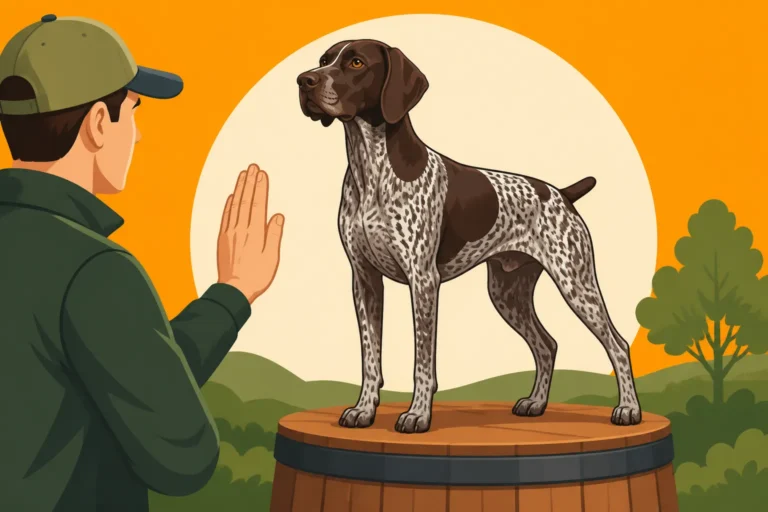
The "whoa" command is the cornerstone of pointing dog training. It teaches your GSP to stop, freeze, and hold position no matter what distractions are present. You can start this in a calm environment, using a check cord. Gently apply pressure on the check cord while saying "whoa," and release the pressure and praise when they stop. Gradually introduce distractions. You can even use a simple "whoa post" or "whoa barrel" to build muscle memory and reinforce the idea of holding still. Teaching a Shorthair Whoa on a Table or Barrel is an excellent way to introduce this concept in a controlled, low-distraction setting.
Imagine walking your young GSP on a long lead, and every time they get too far ahead, you gently step on the lead and say "whoa." When they stop and look back, you immediately release pressure and offer praise, maybe a small treat. This isn't about punishment; it's about teaching them that "whoa" means "stop and hold," and that compliance brings positive rewards. You can find excellent quality long lines and check cords on platforms like Amazon to get started.
Controlled Bird Introductions
Once your puppy has a grasp of "whoa" and general obedience, it's time for controlled bird introductions. This is not about letting them chase a live bird willy-nilly. Instead, use a wing on a string or a dead bird tied to a fishing pole to stimulate their prey drive and point. When they show interest, reinforce the "whoa" command. As they progress, introduce a dizzied or hobbled bird in light cover. The goal is to allow them to encounter the bird, get the scent, and point it successfully, building confidence in holding still rather than rushing in.
A fantastic way to do this is with a Wing on a String for a Shorthair Puppy. You can drag it along the ground, letting the puppy catch the scent, and as they lock on, you reinforce "whoa." If they creep, you gently step on the check cord. The key is to control the situation so the puppy cannot bump the bird initially. This builds their confidence in holding the point, rather than rewarding the chase instinct.
Correcting an Established Bumper
It's one thing to train a puppy from scratch, but what if you have an older GSP who has already developed the habit of bumping birds? Don't despair, it's absolutely fixable, but it requires patience, consistency, and often a return to basics.
Back to Basics: Reinforcing Whoa
If your GSP is bumping birds, the very first step is to go back to intensively reinforcing the "whoa" command. This means drilling it in various environments, with increasing distractions, but without live birds at first. Use a check cord, a long line, and lots of praise for holding still. You need to rebuild that foundation of restraint. It's like going back to elementary school for a few weeks to brush up on core subjects.
Practice "whoa" on walks, in the yard, and even indoors. Ask your dog to "whoa" and hold while you walk around them, throw a toy (but don't let them retrieve it until released), or even have someone else walk by. You want that "whoa" to be an unbreakable command, a reflex. This might mean setting aside hunting for a bit to focus purely on this fundamental skill.
Using Training Devices and Controlled Scenarios
Once "whoa" is solid without bird distractions, it's time to reintroduce birds in a highly controlled manner. This is where tools like remote bird launchers and electronic collars (used correctly and humanely) can be invaluable. Plant a dizzied bird or use a launcher, then bring your GSP in on a check cord. When they scent the bird and start to move, command "whoa!" and apply gentle pressure or a low-level stimulation if using an e-collar, only enough to get their attention and stop them. Release when they hold.
Some trainers also find a "whoa post" or "whoa barrel" useful even for older dogs to re-establish the physical sensation of holding a point. The idea is to prevent the dog from bumping the bird before they have the chance, and gradually allowing more freedom as they demonstrate reliability. You're setting them up for success, not failure.
Tools and Techniques to Aid Pointing
Modern training offers a range of tools and techniques that can be incredibly helpful in correcting a bird-bumping GSP. These are aids, not magic bullets, and should always be used as part of a thoughtful, consistent training plan.
Check Cords and Long Lines
These are your absolute best friends when it comes to teaching and reinforcing "whoa" and controlled bird work. A check cord, typically 20-30 feet long, allows you to maintain control over your GSP without being directly at their side. If they start to creep or bump, a gentle tug and "whoa" command can bring them back into position. It's about preventing the undesired behavior and reinforcing the correct one.
When first introducing birds, the check cord ensures that you can physically stop your dog if they break point. It’s a physical tether to your verbal command, building that crucial association. You can find various lengths and materials for check cords on Amazon, making it easy to find one that suits your training style.
Electronic Collars for Refinement
An e-collar, when used properly and sparingly, can be a powerful tool for reinforcing commands at a distance, particularly "whoa." The key is to introduce it correctly, starting with low-level stimulation as a communication tool, not a punishment. It should be paired with your verbal commands, so the dog learns that the stimulation is simply a reminder of a command they already know. When an E-Collar Belongs on a German Shorthaired Pointer is a crucial read before ever putting one on your dog.
For a dog that bumps birds, an e-collar can provide that immediate, consistent correction or reminder when they begin to break point from a distance. The timing is critical; the stimulation should come at the exact moment the dog starts to creep or flush, followed immediately by praise when they stop. This isn't about shocking the dog into submission, but about offering a subtle, consistent prompt. It's about teaching, not punishing. Many reputable brands offer e-collars suitable for training, and resources like BAXTER & Bella provide excellent online guidance on their proper use.
| Training Tool | Primary Use | Benefits | Considerations |
|---|---|---|---|
| Check Cord | Teaching "whoa," controlled bird introductions | Physical control, immediate feedback, builds consistency. | Requires handler proximity, can get tangled in heavy cover. |
| Whoa Post/Barrel | Building steady "whoa" muscle memory | Isolates "whoa" command, low distraction, builds endurance. | Not bird-specific, needs to be transferred to field scenarios. |
| Remote Bird Launcher | Controlled bird flushes, steadying to flush | Creates realistic bird encounters, allows handler control. | Requires additional equipment, can be expensive, needs careful placement. |
| E-Collar | Reinforcing "whoa" at distance, steadiness | Remote communication, immediate and consistent feedback. | Requires proper introduction and low-level use, can be misused, ethical debate. |
| Wing on a String | Stimulating point instinct in puppies | Safe, simple, builds initial bird drive and pointing interest. | Not a substitute for live birds, limited scent exposure. |
Managing Expectations and Continued Progress
Training a German Shorthaired Pointer to point reliably is a journey, not a destination. There will be setbacks, but with perseverance and a realistic approach, you can achieve your goals.
Patience is Key: It's a Marathon, Not a Sprint
German Shorthaired Pointers are smart, but they're still dogs. They learn through repetition and consistent positive reinforcement. Expecting instant perfection is unrealistic and will only lead to frustration for both you and your dog. Some dogs will pick up pointing quickly; others will take months or even a year to truly solidify their steady point. Celebrate the small victories, like a momentary hold before a flush, and don't dwell on the failures. Every training session is a learning opportunity.
Remember that GSPs are intensely driven. Their desire to please you and to hunt is immense, but sometimes that desire needs to be channeled and refined. If you rush the process, you might create a dog that is intimidated or confused, rather than confident and steady.
Gradual Progression in Different Scenarios
Don't expect your GSP to go from perfect points in a controlled yard to flawless performance in heavy cover with wild birds overnight. You need to gradually increase the difficulty of the training scenarios. Start with dizzied birds in light cover, then move to healthy birds, then to slightly heavier cover. Introduce new locations slowly. Each new variable is a new challenge for your dog to master, and it builds their confidence and reliability.
One week you might focus on holding a point for a few seconds in your backyard. The next, you might move to a local park with controlled bird plants. Eventually, you'll work towards more challenging terrains and bird types. Think about how a child learns to read – they start with simple words, then sentences, then paragraphs, and eventually complex novels. It's the same gradual buildup for your GSP.
Continued Maintenance and Refreshers
Even after your GSP is reliably pointing, consistent maintenance is crucial. Don't let their skills erode during the off-season. Regular refresher sessions with birds, even just a few times a month, will keep their "whoa" sharp and their pointing instinct strong. Just like any athlete, a GSP needs to stay in shape, both physically and mentally, to perform at its best.
This might involve taking them out with a launcher once a month, or visiting a local training preserve to work a few birds. If you're using a trainer, BAXTER & Bella offers ongoing support and resources that can help you maintain and even advance your dog's skills. The goal is to keep the skills honed so that when opening day arrives, your German Shorthaired Pointer is ready to hit the field with confidence and an unbreakable point.
Disclaimer
This article is for general informational purposes only and does not constitute professional advice. Laws, prices and regulations vary by location and change over time. Consult a qualified professional for guidance on your specific situation.