Teaching a Shorthair Whoa on a Table or Barrel
One of the most common frustrations for German Shorthaired Pointer owners, especially those new to the breed, is their incredible drive and boundless energy. It's truly a gift in the field, but it can make foundational obedience feel like an uphill battle, particularly when you need them to hold still. This guide will walk you through the step-by-step process of teaching your high-energy Shorthair the critical "whoa" command using a table or barrel, a technique that establishes a rock-solid foundation for future success both in the home and in the hunting grounds.
Why a Table or Barrel for Whoa Training?
You might be wondering why on earth you'd put your dog on an elevated surface just to teach them to stand still. It seems counterintuitive at first, doesn't it? After all, our Shorthairs are natural athletes, built for covering ground. But a table or barrel offers some distinct advantages that make it an invaluable tool for solidifying the "whoa" command, especially with such a powerful and eager breed. It's all about control, focus, and setting your dog up for success in a very specific way.
Stability and Focus
Imagine trying to teach a child to read while they're bouncing on a trampoline. It's pretty tough, right? The same principle applies to training a German Shorthaired Pointer. Their natural inclination is to move, explore, and react. Placing them on a stable, elevated platform immediately changes their environment and, by extension, their behavior. The confined space and the height make them feel a bit less inclined to bolt, forcing them to engage their brains rather than just their legs. They learn to focus on you and the task at hand because the usual distractions and escape routes are minimized. This is particularly useful for those initial, critical repetitions where you want to build muscle memory and understanding without the added complication of a wide-open field or a busy yard. It's a controlled environment that stacks the odds in your favor for clear communication.
Beyond the physical stability, the platform provides a mental anchor. For a GSP, a platform often becomes associated with a specific task – in this case, "whoa." This helps compartmentalize the learning, making it easier for them to understand what's expected. They're not just standing still anywhere; they're standing still here. This specificity helps them generalize the command later, as they learn the core concept first in an undeniable context. Think of it as a specialized classroom where all other stimuli are muted, allowing the lesson to shine through. This initial clarity is paramount for a dog as intelligent and driven as a Shorthair, preventing confusion and building confidence in their ability to understand and perform.
Minimizing Distractions
One of the biggest battles in training a German Shorthaired Pointer is managing distractions. A bird fluttering by, a squirrel chattering, even a leaf skittering across the ground can be enough to break a young dog's concentration. The elevated platform helps immensely with this. By removing them from ground level, you instantly reduce the accessibility and perceived importance of many common distractions. They can't easily sniff the grass, chase a bug, or wander off to investigate a scent trail. This is particularly crucial for a breed with such an intense prey drive and powerful nose.
Furthermore, the physical barrier of the platform subtly discourages movement. If they try to take a step, they feel the edge of the platform, reminding them of the boundaries. This isn't about punishment; it's about clear, consistent feedback from their environment. It makes the "whoa" command not just a verbal cue, but also a physical sensation of remaining contained and still. This multi-sensory learning approach helps to ingrain the command much more deeply than trying to achieve stillness on the ground where every rustle and scent is an invitation to move. The Two Hours a Day a German Shorthaired Pointer Needs and The Structure a German Shorthaired Pointer Needs Daily often highlight just how much mental and physical engagement these dogs require, and this focused training session provides both.
Getting Started: The Setup and Introduction
Before you can even begin asking your German Shorthaired Pointer to "whoa," you need to get them comfortable with the training environment. Rushing this step is a recipe for frustration, for both you and your dog. Remember, the goal is to build a positive association with the table or barrel, making it a place of calm focus, not fear or anxiety. Taking your time here will pay dividends down the road.
Choosing the Right Platform
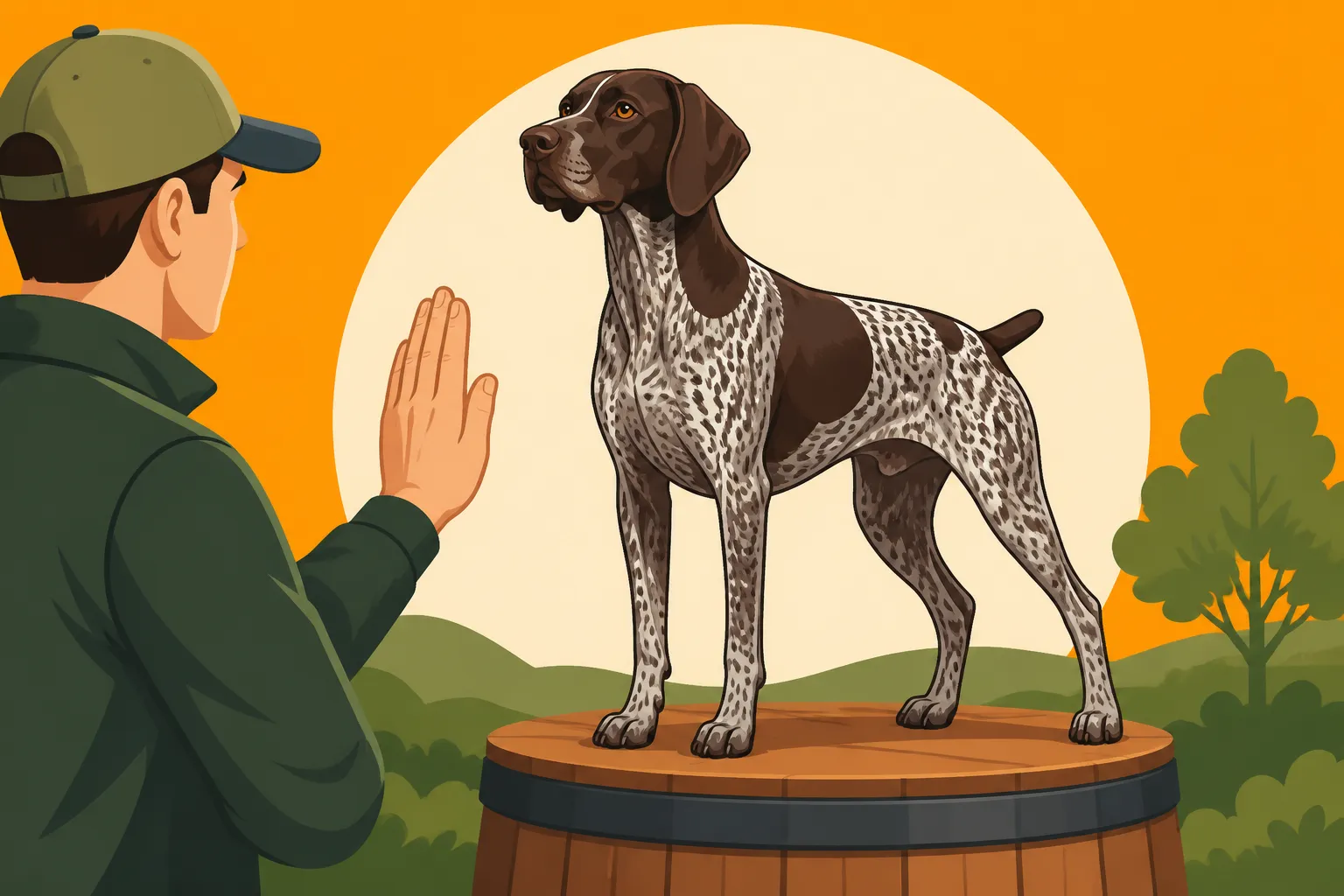
The ideal platform needs to be sturdy, stable, and appropriately sized for your German Shorthaired Pointer. It should be wide enough for them to stand comfortably without feeling cramped, and long enough that they can shift their weight slightly without stepping off. For a puppy, a sturdy coffee table or a large, wide wooden crate turned upside down might work. For an adult GSP, you'll likely need something more substantial, like a purpose-built grooming table or a large, clean plastic barrel laid on its side with a non-slip top.
Safety is paramount. The surface must be non-slip. You can achieve this by adding a rubber mat, a piece of carpet remnant, or even adhesive bathtub strips to the top of your chosen platform. A nervous or insecure dog will feel much more confident if they're not slipping and sliding. Ensure the platform doesn't wobble or rock, as this can create fear and undo all your hard work. You can find excellent non-slip mats and even dedicated dog training platforms on Amazon, which can be a great investment if you plan on doing a lot of field work or other advanced obedience training with your Shorthair.
First Introductions and Comfort
Start by simply introducing your GSP to the platform without any pressure. Place it in a familiar area, perhaps where they eat or play. Let them investigate it at their own pace. Encourage them to step onto it using treats and praise. Don't force them. If they're hesitant, toss a treat onto the platform, then praise when they reach for it. Many trainers, including those aligned with positive reinforcement methods like BAXTER & Bella, advocate for breaking down complex commands into small, achievable steps, and this gentle introduction is step one.
Once they're comfortable stepping on, practice stepping off and back on again. Make it a fun, rewarding game. Give them high-value treats and enthusiastic praise every time they engage with the platform positively. Never use the platform as a punishment zone. The goal is for them to see it as a "happy place" where good things happen and where they get to focus with you. Keep initial sessions very short – just a few minutes – and always end on a positive note, even if it's just one successful step on and off. If your puppy is still in the early stages, consider the guidance in Puppy Classes Before a Shorthair Starts Field Work to ensure a well-rounded foundation.
Building the Whoa: Step-by-Step Training
Once your German Shorthaired Pointer is completely comfortable and confident on the table or barrel, you can begin to introduce the "whoa" command itself. This is where patience and consistency become your best friends. Remember, this isn't about rushing; it's about building a rock-solid, instinctive response.
Short Sessions and Positive Reinforcement
Start with your dog on the platform, facing you. Have plenty of high-value treats ready. As soon as your dog is standing still, even for a split second, say "Whoa" in a calm, clear voice, then immediately give a treat and praise. The timing here is crucial: you want to mark the exact moment of stillness with the command and reward. Release them with a cheerful "Okay!" or "Break!" and let them step off. Repeat this a few times, keeping sessions very short, perhaps 2-3 minutes max, especially for a young Shorthair puppy.
Initially, you're not looking for perfect stillness or duration. You're building the association: "Whoa" means stop, stand still, and good things (treats!) happen. As they start to grasp the concept, gradually increase the duration of stillness before you say "Whoa" and reward. Instead of rewarding for a split second, wait for one second, then two, then three. Always reward after they've held the position for the desired time. If they move before you've said "Whoa" and rewarded, simply reset and try again. Don't scold; just quietly guide them back to the starting position. This positive reinforcement approach is far more effective for breeds like the GSP, which thrive on engagement and praise.
Adding Duration and Distance
Once your Shorthair is consistently holding "whoa" for a few seconds while you're right in front of them, it's time to build duration and distance. This is where the magic of the platform really shines, as it makes it much harder for them to break.
Duration: Slowly extend the time you ask them to hold the "whoa." Start by adding just a few more seconds. If they reliably hold for five seconds, aim for seven, then ten. Keep practicing this in multiple short sessions throughout the day. It’s better to do many short, successful sessions than one long, frustrating one. If they break, shorten the duration slightly for the next repetition to ensure success.
Distance: With duration building, start taking one small step back while they're holding "whoa." Give the command, step back, and if they hold, step back in, praise, and reward. Gradually increase the distance, perhaps taking two steps back, then three. The platform will help them maintain their position even as you move away. Always return to them to deliver the reward, reinforcing that they held their place. This builds trust and confidence that you'll always come back to them. This methodical approach is key to developing a strong, reliable command, moving them towards Holding a Shorthair's Point Until You Walk In when they eventually transition to field scenarios.
Troubleshooting Common Challenges
Even with the best intentions and a solid plan, training a German Shorthaired Pointer can present its unique set of challenges. Their intelligence, combined with their incredible drive, sometimes means they find creative ways to test boundaries or express their discomfort. Don't get discouraged; these are learning opportunities.
Addressing Fear or Refusal
It's not uncommon for a dog, especially a sensitive GSP, to show some hesitation or even outright refusal to get on or stay on the training platform. This isn't defiance; it's often a sign of fear, discomfort, or simply not understanding. The first step is to revisit the comfort phase. Make sure the platform is absolutely stable and non-slip. A wobbly surface or slick footing can be genuinely scary.
If they're still reluctant, try making the platform even more inviting. Place their favorite blanket on it, or scatter a trail of high-value treats leading up to and onto the platform. Instead of asking them to "whoa" immediately, just reward them for touching it, then for putting one paw on, then two, and so on. Break it down into even smaller steps. Some dogs respond well to you sitting on the platform yourself (if it's strong enough and safe), making it a shared, positive space. Never drag or force your dog onto the platform, as this will only exacerbate their fear. Patience and positive association are your most powerful tools here. If you notice signs of stress, such as lip licking, yawning, or tail tucked low, take a break. Understanding Reading a German Shorthaired Pointer's Stress Signals is crucial for effective training.
Managing Excitement and Breaking
German Shorthaired Pointers are, by nature, excitable creatures. Their enthusiasm for work can sometimes override their focus, leading to them breaking the "whoa" command prematurely. If your Shorthair is consistently breaking, it often means you're moving too fast or asking for too much too soon.
Go back to basics: shorten the duration, reduce the distance, and make sure your rewards are exceptionally high-value and delivered immediately. Are you waiting too long to reward? The instant they stand still for the desired time, the treat should appear. Consider your energy level too; if you're overly animated, it might be fueling their excitement rather than calming them. Keep your voice calm, clear, and consistent. If they break, calmly reset them. Sometimes, a brief moment of quiet redirection (just putting them back on the platform without fuss) can be more effective than a verbal correction. If their breaking seems rooted in an inability to settle, incorporating more mental stimulation like Puzzle Feeders and Scent Games for a Shorthair outside of training sessions can help them manage their energy better overall.
Transitioning Off the Table or Barrel
The table or barrel is a fantastic tool for establishing the "whoa" command, but the ultimate goal is for your German Shorthaired Pointer to perform it reliably on the ground, in various environments, and eventually, in the presence of game. This transition requires careful planning and a gradual introduction of real-world elements.
Introducing Ground Work
Once your GSP is holding a steady "whoa" on the platform for a good minute or two, with you at a reasonable distance, it's time to take the show on the road – or, rather, to the ground. Start this transition in the exact same environment where you practiced on the platform, perhaps just a few feet away.
Begin by using a short check cord attached to a well-fitting flat collar, just for a little extra control and safety. Ask for "whoa" just as you did on the platform. Your dog will likely feel the freedom of the ground and might try to move. If they do, gently, but firmly, bring them back to the exact spot they broke from. Don't pull them to you; walk to them, calmly guide them back to the original spot, and ask for "whoa" again. Keep these initial ground sessions short, focused, and heavily rewarded for success. The goal is to make the "whoa" command just as strong on the ground as it is on the platform. For more detailed guidance on check cord training, refer to Building Whoa on a Shorthair With a Check Cord.
Gradually Adding Stimuli
With ground work becoming consistent, it's time to slowly reintroduce distractions. Think of it as a ladder, adding one rung at a time.
- Low-level distractions: Start with very subtle, non-threatening distractions. Perhaps have a family member walk calmly by at a distance, or a favorite toy placed a few feet away (but out of reach). Reward heavily for holding "whoa" through these.
- Environmental changes: Move your training sessions to different, slightly more distracting environments – a quiet corner of your yard, then a park during off-peak hours. Each new location is a new challenge.
- Movement and Sound: Gradually introduce more movement from you (walking circles around them), or quiet, distant sounds. As your GSP progresses, you can incorporate the use of a remote training collar (e-collar) for greater consistency and range in the field, but only after they fully understand the command and its meaning. Remember, an e-collar is a communication tool, not a punishment device. For proper introduction and use, consider consulting When an E-Collar Belongs on a German Shorthaired Pointer. The key is to never overwhelm your dog; if they break, you’ve increased the difficulty too quickly.
Integrating Whoa into Field Work
The ultimate purpose of a rock-solid "whoa" for a German Shorthaired Pointer is its application in the field. This is where all that patient platform and ground work truly pays off, transforming your energetic companion into a controlled, reliable hunting partner.
Whoa with Wing on a String
Before you introduce actual birds, a "wing on a string" is an excellent intermediate step. This allows you to simulate the sight and scent of a bird without the unpredictability of a live one. Secure a bird wing (pheasant, quail, chukar) to a fishing pole or a long stick with a string.
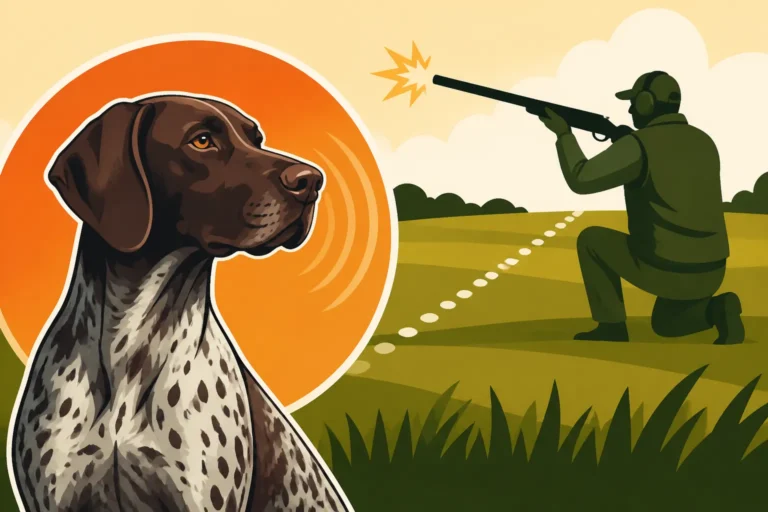
Place your GSP into a "whoa" on the ground, perhaps with a check cord still attached. Then, present the wing. Start by just showing it to them calmly from a distance. If they hold, praise and reward. Gradually, you can begin to swing the wing gently, then more vigorously, moving it past them. The check cord is your safety net here – if they lunge, a gentle check reminds them to hold. This is a critical step in Steadying a Shorthair to Wing and Shot, building their self-control even with their prey drive engaged. They learn that the exciting thing (the bird wing) is not a cue to move, but rather a cue to remain staunch on point.
Whoa with Live Birds
This is the moment you’ve been building towards! When introducing live birds, it's best to start with clipped-wing birds or birds in a bird launcher to control the scenario. Again, begin in a controlled environment. Plant a bird, walk your GSP into the scent, and as they go on point, give the "whoa" command.
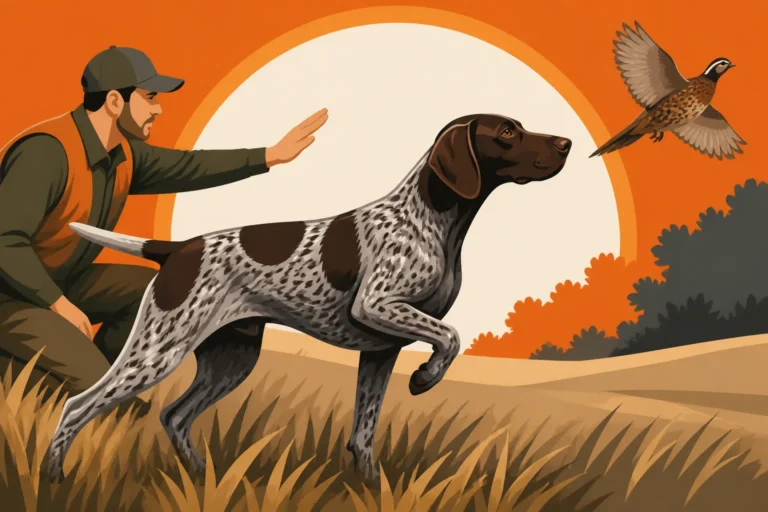
Crucially, have your check cord ready. If they creep or attempt to lunge as the bird flushes, deliver a firm but fair correction with the check cord to remind them of the "whoa." Immediately reset them to the point. Practice this repeatedly. The goal is to instill that automatic "whoa" response upon scenting game, making them staunch to wing and shot. This might take many repetitions over several sessions, and it’s an ongoing process. Every successful "whoa" on a bird strengthens the command and builds their confidence as a hunting dog. Remember, the journey from a bouncing puppy to a steady field partner is a long one, but each step, starting with that stable platform, contributes to their development as an exceptional German Shorthaired Pointer.
Here's a quick overview of the "Whoa" training progression:
| Training Phase | Environment / Tool | Key Goal | Expected Duration | Common Challenge & Solution |
|---|---|---|---|---|
| Comfort with Platform | Table / Barrel (No Cues) | Dog willingly gets on/off, views platform positively | 1-3 days (short, frequent sessions) | Fear/Hesitation: Lure with high-value treats; make it a game. |
| Introducing "Whoa" | Table / Barrel (Static) | Dog associates "Whoa" with stillness, gets rewarded | 1-2 weeks (multiple short sessions daily) | Breaking Position: Shorten duration, immediate reward. |
| Adding Duration/Distance | Table / Barrel (Moving Away) | Dog holds "Whoa" for longer periods, with you further | 2-4 weeks | Pre-emptive Movement: Reset calmly, return to shorter duration. |
| Ground Work Transition | Familiar Ground (Check Cord) | Dog holds "Whoa" reliably on ground with mild distractions | 2-3 weeks | Lungsing/Wandering: Gentle check cord reminder, reset. |
| Introducing Stimuli | Varied Ground (Check Cord/E-Collar) | Dog holds "Whoa" through increasing distractions | 3-6 weeks | Overwhelm: Reduce distraction level, ensure success. |
| Wing on a String | Field Simulation (Check Cord) | Dog holds "Whoa" while focusing on bird scent/sight | 2-4 weeks | Breaking Point: Firm check cord correction, immediate reset. |
| Live Birds | Field (Check Cord/E-Collar) | Dog holds "Whoa" on point, staunch to flush | Ongoing (throughout first hunting season) | Chasing Flush: Consistent e-collar/check cord communication. |
Disclaimer
This article is for general informational purposes only and does not constitute professional advice. Laws, prices and regulations vary by location and change over time. Consult a qualified professional for guidance on your specific situation.