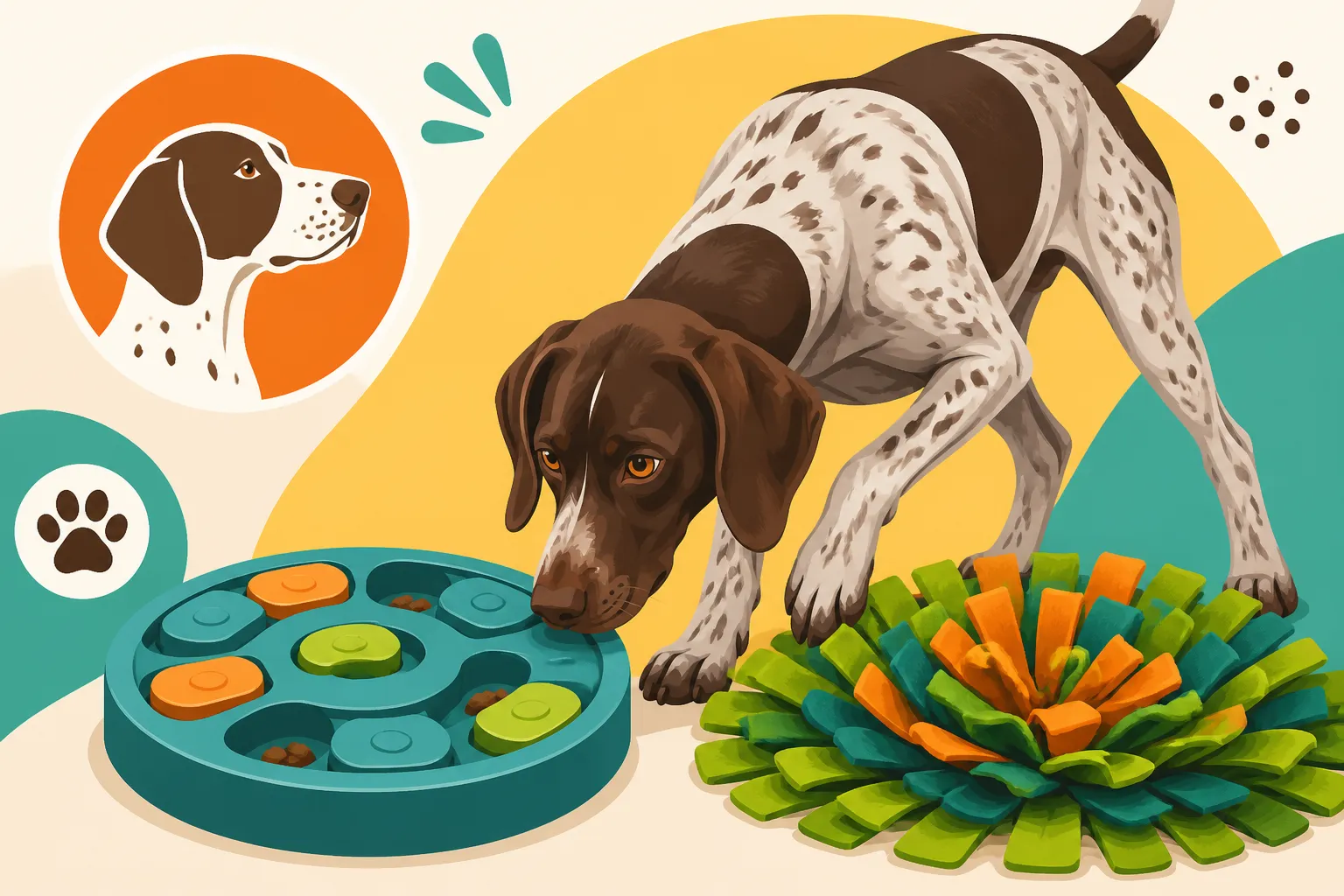
Puzzle Feeders and Scent Games for a Shorthair
Living with a German Shorthaired Pointer means embracing a whirlwind of energy and a mind that's always on the go. While we often focus on their need for endless physical exercise – chasing birds, running trails, swimming in the lake – it's easy to overlook another crucial aspect of their well-being: mental stimulation. A bored Shorthair is often a destructive Shorthair, and this guide is all about channeling that incredible drive into engaging, fulfilling activities through puzzle feeders and scent games.
The German Shorthaired Pointer Brain: More Than Just Speed
You know your German Shorthaired Pointer has boundless energy; they can run for miles and still look at you expectantly, ready for more. But beneath that sleek, athletic exterior lies a sharp, intelligent mind that needs just as much exercise as their powerful legs. Ignoring their mental needs can lead to a host of frustrating behaviors, proving that a tired dog isn't just physically exhausted, but mentally engaged too.
Why Physical Exercise Isn't Always Enough
Think about it: your GSP was bred for centuries to be an all-around hunting dog. This isn't just about speed and endurance; it's about problem-solving in the field, tracking subtle scents, marking fallen birds, and working cooperatively with a handler. They're not just running; they're thinking. A long run is great for burning off steam, but it doesn't always satisfy that deep-seated need to work and think. Many owners will tell you that even after The Two Hours a Day a German Shorthaired Pointer Needs, their dog can still be bouncing off the walls if their brain hasn't been put to use. Without outlets for their intelligence, they often invent their own, which usually involves things you'd rather they didn't, like rearranging your flowerbeds or redecorating your couch cushions.
The Importance of Their Incredible Nose
Let's talk about that nose. It's one of their most remarkable features, a finely tuned instrument of detection that’s a direct inheritance from The German Kennels the Shorthair Was Built In where they were developed. German Shorthaired Pointers possess an olfactory prowess that's truly astounding. They can pick up scents that are completely imperceptible to us, deciphering a complex world of smells. This isn't just a party trick; it's fundamental to their identity as a breed. To deny a GSP the opportunity to use their nose is like asking a bird dog not to point – it goes against their very nature. Engaging their nose in scent games isn't just fun; it's profoundly satisfying for them, tapping into their deepest instincts as hunters and trackers. This is why harnessing The Nose the German Shorthaired Pointer Was Selected For is so important for their overall happiness.
Diving into Puzzle Feeders for Mental Engagement
If you've never tried a puzzle feeder, you're missing out on a fantastic tool for mental enrichment. These aren't just fancy dog bowls; they're devices designed to make your dog work for their food or treats, turning mealtime into a stimulating mental exercise rather than a five-second gobble-fest. It's an easy way to provide meaningful engagement, especially on days when the weather isn't cooperating for a long outdoor adventure.
Types of Puzzle Feeders and How They Work
Puzzle feeders come in a huge variety, from simple slow-feed bowls to complex, multi-stage challenges. The basic idea is the same: the dog has to manipulate the object in some way to get the reward inside.
- Slow Feeder Bowls: These are the simplest, often featuring ridges or labyrinths that force your dog to eat around obstacles, slowing down their eating speed. Great for preventing bloat in gulping dogs, and a gentle intro to "working" for food.
- Treat Dispensing Balls/Kongs: These are hollow rubber toys or balls with openings that dispense kibble or treats as the dog rolls or bats them around. Simple, durable, and a good way to get them moving a bit. Many people load up a classic Kong with a bit of peanut butter or wet food and freeze it for extended engagement.
- Slider Puzzles: These often have compartments covered by sliding tops or rotating disks. Your dog has to nudge, slide, or lift the pieces to reveal the food underneath. These require more cognitive effort and paw/nose dexterity. You can find a huge selection of these on Amazon with varying levels of difficulty.
- Snuffle Mats: Made of fabric strips, these mats hide kibble or treats within their folds, requiring your dog to sniff and forage to find their meal. They really engage the nose and mimic natural grazing behavior.
The beauty of these tools is that they leverage a dog's natural drive to seek and obtain food, transforming a mundane daily routine into an engaging brain game.
Introducing Your Shorthair to Puzzle Feeders
Starting with puzzle feeders should be a positive experience. Don't throw your Shorthair into the deep end with a super complex puzzle right away, or they might get frustrated and give up.
- Start Simple: Begin with a slow feeder bowl or a very easy treat-dispensing ball where the food falls out quickly. Make success almost guaranteed.
- Use High-Value Rewards: In the beginning, use treats or kibble that your Shorthair absolutely loves. This builds motivation and shows them that sticking with the puzzle leads to great things.
- Show Them How: Sometimes, a little demonstration helps. Show them how to nudge a piece, or roll the ball so a treat falls out. You can even leave some food half-exposed to make it easier.
- Supervise Early Sessions: Watch your dog to make sure they're not getting frustrated or trying to chew through the puzzle. The goal is mental engagement, not destruction! If they're struggling, make it easier.
- Increase Difficulty Gradually: Once they've mastered a simple puzzle, you can move to something a bit more challenging. Rotate through different puzzles to keep things fresh and exciting. A GSP's intelligence means they'll quickly figure out the pattern, so variety is key to maintaining interest.
Maximizing the Benefits and Avoiding Frustration
To truly get the most out of puzzle feeders for your German Shorthaired Pointer, think strategically about how you use them.
- Rotation is Key: GSPs are smart, and they’ll solve the same puzzle quickly. Have a few different types and rotate them daily or weekly. This keeps their brain working on new problems.
- Use Mealtime: Instead of feeding all their kibble in a bowl, put a portion of it into a puzzle feeder. This makes mealtime longer, more satisfying, and reduces the risk of them getting bored and searching for "forbidden" snacks.
- Supervise, Especially with New Puzzles: As mentioned, you want to ensure they're using the puzzle as intended and not trying to brute-force it by chewing. Some toys are not made for heavy chewers, and a determined GSP can make short work of a plastic puzzle.
- Keep it Positive: If your dog seems stressed or frustrated, intervene. Make it easier, offer encouragement, or simply put the puzzle away and try again later. The goal is engagement, not stress.
- Consider Homemade Options: You don't always need to buy expensive toys. A muffin tin with tennis balls hiding treats, or an empty cardboard box with crumpled paper and kibble, can be fantastic DIY puzzle feeders.
| Puzzle Feeder Type | Difficulty Level | Primary Benefit | Best For |
|---|---|---|---|
| Slow Feeder Bowl | Easy | Slows eating, light engagement | Fast eaters, beginners |
| Treat Dispensing Ball | Easy to Medium | Active play, problem-solving | Energetic dogs, outdoor use |
| Snuffle Mat | Medium | Scent work, foraging | Any dog, especially those with strong sniff drive |
| Slider/Lifting Puzzle | Medium to Hard | Cognitive challenge, dexterity | Dogs who enjoy mental work, indoor use |
| Frozen Kong/Lick Mat | Easy to Hard | Calming, prolonged engagement | Anxious dogs, crate training, quiet time |
Unleashing Their Inner Hunter with Scent Games
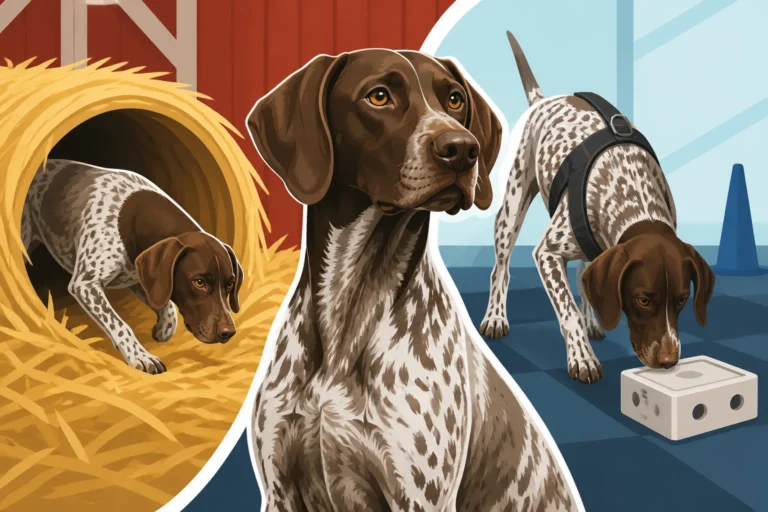
Scent games are perhaps the most natural and rewarding form of mental exercise for a German Shorthaired Pointer. They are literally bred to use their nose, to find hidden things, and to follow a trail. These games aren't just fun; they fulfill a deep, instinctual need within your GSP, making them calmer, more confident, and incredibly satisfied. If you've ever watched a Shorthair work in the field, you understand their deep connection to scent; Using Pigeons to Start a Shorthair or finding upland game is all about their nose.
Why Scent Games Tap into Their Primal Instincts
Imagine being a German Shorthaired Pointer. Your world is rich with smells, a tapestry of information that tells you everything about your environment. When you engage them in scent games, you're not just playing; you're allowing them to practice what they were born to do. This mental effort is incredibly tiring, in a good way. A 15-minute scent session can be as exhausting for their brain as a 30-minute run is for their body. It builds focus, reduces anxiety, and strengthens the bond between you as you work together. It's a way to fulfill that intrinsic desire to hunt and find, even if it's just a piece of kibble in your living room.
Simple Scent Games to Start With at Home
You don't need fancy equipment to start scent games. Your house and a handful of treats are all you need!
- "Find the Treat" (Beginner): Start by letting your GSP watch you hide a few high-value treats in plain sight in one room. Say "Find it!" or "Search!" and encourage them to sniff them out. As they get the idea, you can start hiding them in slightly less obvious spots, like under a rug, behind a chair leg, or under a towel. Keep it easy enough that they succeed quickly.
- The "Shell Game" (Intermediate): Place three opaque cups upside down. Let your Shorthair watch you put a treat under one of the cups. Shuffle the cups slowly and then encourage them to pick the correct one. This works on both scent and memory, and it's something you can easily vary the speed and complexity of.
- "Hide and Seek" (Fun for all!): This is a great family game. Have one person hold your GSP in another room while another person goes and hides somewhere in the house. Call your dog's name (excitedly!) and let them "find" you. Reward them with praise and a treat when they succeed. This teaches recall in an exciting way and uses their searching instincts. You can even hide treats on your person to make it a double reward!
Remember to always use a consistent command like "Find it!" or "Search!" to help your dog understand the game. Praise and reward enthusiastically when they succeed!
Advanced Scent Work and Training Resources
Once your German Shorthaired Pointer masters the basics, you can expand their scent-work horizons. There are so many possibilities to challenge their amazing noses!
- Outdoor Scavenger Hunts: Take the "Find the Treat" game outside. Hide treats in taller grass, under leaves, behind bushes, or even partially buried. The natural environment provides a much richer scent tapestry and more complex challenges. Always be mindful of the weather and terrain when asking your Shorthair to work their nose outside.
- Dedicated Scent Training: If your GSP really takes to scent games, you might consider formal scent work or K9 Nose Work classes. These classes teach dogs to find specific target odors (like birch, anise, or clove) in various environments. It's an incredible confidence builder and a fantastic way to bond. Companies like BAXTER & Bella offer structured online courses that can guide you through advanced scent work, offering a curriculum you can follow from home at your own pace.
- Tracking Games: For a true test of their nose, try basic tracking. Lay a short scent trail by dragging a high-value treat on the ground for a short distance, then leaving a "prize" at the end. Encourage your GSP to follow the trail. This takes more patience and practice but is deeply satisfying for a breed like the Shorthair.
Engaging your GSP in these activities will show you just how much Mental Work That Tires a Shorthair Out can be just as effective as a long sprint in the field.
Integrating Mental Work into Your Shorthair's Routine
The key to a well-adjusted German Shorthaired Pointer isn't just doing these activities, but integrating them thoughtfully into their daily life. It’s about creating a holistic approach to their exercise and enrichment, recognizing that their mind and body are equally important.
Crafting a Balanced Daily Schedule
Life with a GSP is busy, and it's easy to fall into a routine of just physical exercise. But a truly balanced schedule includes dedicated time for mental work.
Here’s an example of how you might weave it in:
- Morning Wake-Up: Instead of a bowl, give half their breakfast in a snuffle mat or a slow-feeder. This starts their day with a little mental puzzle.
- Mid-Morning Activity (if possible): A short 10-15 minute session of "Find the Treat" in the yard or house. This is perfect for a quick brain break.
- Afternoon Wind-Down: After a good run or hike, offer a challenging frozen Kong or a more complex slider puzzle to help them settle and consolidate their energy. It gives them something constructive to do while you might be busy.
- Evening Bonding: End the day with a gentle game of "Hide and Seek" with family members. It's low impact, fun, and reinforces their bond with everyone.
Remember, consistency is more important than duration. Short, frequent bursts of mental stimulation are often more effective than one long, overwhelming session. Think about how a Shorthair's need to hunt is often satisfied not just by hunting, but by any activity that allows them to use their natural talents.
Troubleshooting Common Challenges
Even with the best intentions, you might run into some bumps in the road.
- Destruction: If your Shorthair chews the puzzle feeder instead of solving it, it might be too hard, or they might be too aroused. Try an easier puzzle, supervise closely, or opt for a more durable toy, like a rubber KONG-style dispenser. Sometimes, if a Shorthair is simply under-exercised both mentally and physically, they'll resort to destructive behaviors, which can include your prized possessions. It's a sign they need more appropriate outlets.
- Loss of Interest: If they seem bored, switch up the puzzle or game. Use a different type of treat or a more enticing scent. Try hiding treats in new locations. Remember their intelligence; they quickly learn patterns.
- Over-excitement: Some GSPs get incredibly amped up when introduced to new games. Keep sessions short and end on a positive note before they get too wild. Work on impulse control exercises alongside these games.
- "Cheating": Your smart Shorthair might try to just flip the puzzle over or tear it open. This is where supervision comes in, and reinforcing the "correct" way to solve it with praise and rewards. If they continue to "cheat," the puzzle might be too easy, or not securely designed.
The Long-Term Rewards of a Mentally Stimulated Shorthair
Investing time in puzzle feeders and scent games for your German Shorthaired Pointer pays dividends in so many ways. You'll likely see a significant reduction in unwanted behaviors, as a mentally satisfied dog is less likely to resort to destructive chewing, excessive barking, or anxious pacing. When their natural instincts are fulfilled through appropriate channels, they become calmer, more focused, and generally happier companions.
This mental engagement helps them navigate the world with greater confidence and adaptability. It deepens your relationship, as you become the source of enriching and exciting activities. Instead of just a physically demanding running partner – though they excel at that too, as noted in Whether a Shorthair Works as a Running Partner Instead – you'll have a dog that is truly a partner in every sense of the word, capable of complex thought and eager to engage with you on a deeper level. You'll witness the joy and satisfaction on their face as they proudly present their "found" prize, a testament to their incredible abilities and your thoughtful care.
Disclaimer
This article is for general informational purposes only and does not constitute professional advice. Laws, prices and regulations vary by location and change over time. Consult a qualified professional for guidance on your specific situation.