What the Natural Ability Test Scores on a Shorthair
It’s incredibly common to wonder what exactly goes into evaluating your German Shorthaired Pointer’s natural talents, especially when you’re looking at a test like the NAVHDA Natural Ability (NA) test. Many folks feel a bit intimidated by the jargon or aren't quite sure what the judges are truly looking for beyond a dog that simply finds birds. This guide is here to break down precisely what the Natural Ability Test scores on a Shorthair, demystifying each category so you can better understand your dog’s innate potential and how to foster it.
Understanding the Natural Ability Test's Purpose
When you first hear "Natural Ability Test," it's easy to picture a seasoned gun dog flawlessly executing every command. But that's not what the NAVHDA NA test is about at all. This evaluation is specifically designed for young dogs, usually under 16 months of age, to assess the inherited instincts that make a versatile hunting dog. It's less about polished performance and more about raw, undeniable talent. This test helps both owners and breeders understand the genetic strengths of a particular Shorthair and how well those traits align with the breed's purpose.
What "Natural Ability" Really Means for a Shorthair
For a German Shorthaired Pointer, "natural ability" refers to those inherent, unlearned traits that are crucial for a successful hunting companion. We're talking about instinctual behaviors like scenting, searching, pointing, and retrieving, as well as their general temperament and desire to please. These are the building blocks, the genetic software, if you will, that your Shorthair comes pre-loaded with. Think of it this way: you can teach a dog commands, but you can't teach it to have an intense desire to hunt or a naturally good nose. These are things they're born with, and the NA test is designed to bring those to light.
Many GSP owners, especially those new to the breed, might feel like their puppy is a whirlwind of energy with no clear direction. The NA test provides a structured way to see that energy channeled into specific, valuable instincts. It gives you a snapshot of what your dog is truly made of before formal training fully kicks in. It's a fantastic way to celebrate those inherent gifts and understand what you have to work with.
The Foundation for Advanced Training
Passing the Natural Ability Test, particularly with strong scores, provides a solid foundation for more advanced training down the road. It tells you that your Shorthair has the intrinsic drive and physical attributes necessary to excel as a versatile hunting dog. For example, if your dog shows a strong "desire to work" and "cooperation," you know you have a willing student eager to engage with you in training. This early confirmation of natural talent can be incredibly encouraging and helps guide your training focus.
Without a good understanding of these natural abilities, training can feel like an uphill battle. If a dog lacks a strong natural point, for instance, you'll know that you'll need to dedicate more time and specific techniques to developing that skill. Conversely, if your dog scores highly in "nose" and "search," you can confidently lean into more advanced bird work, knowing they have the fundamental tools. It's like building a house; the NA test helps you confirm you have a strong slab before you start framing the walls. For more on developing a young dog, you might find Raising a Shorthair Puppy Toward Its First Season to be a helpful read.
Deconstructing the Scoring Categories
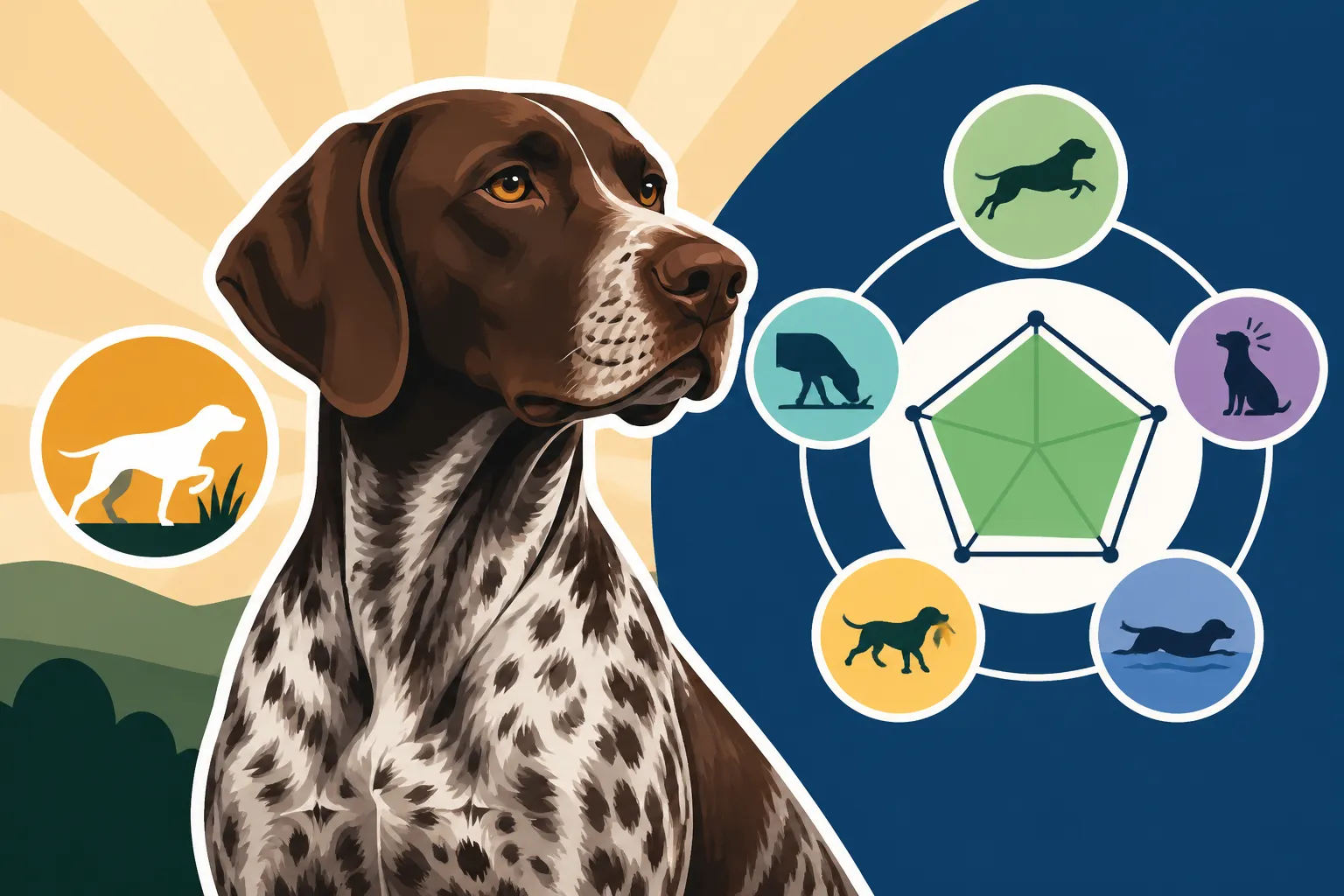
The NAVHDA Natural Ability Test evaluates five core categories, each reflecting a vital aspect of a versatile hunting dog's genetic makeup. Understanding what each category entails and how it's judged is key to appreciating your Shorthair's performance. It’s not just about if they do it, but how they do it—with what intensity, consistency, and style.
Nose: What a Shorthair's Nose Does
The "Nose" category assesses your German Shorthaired Pointer's ability to locate game birds by scent. This is about more than just sniffing the ground; it’s about their capacity to pick up airborne scent, differentiate bird scent from other smells, and then follow that scent cone to the bird. Judges look for how accurately and consistently the dog locates birds, how quickly they acknowledge scent, and if they rely primarily on their nose versus sight. A dog with a truly excellent nose will often "lock up" on scent before they even see the bird, demonstrating their innate ability to decipher the invisible language of the air.
This is where the ancient heritage of the Shorthair truly shines. Remember, these dogs were bred for centuries to find game efficiently. A dog that continually bumps into birds because it's not effectively using its nose won't score well here. The ideal is a dog that works into the wind, head up, processing information with remarkable precision. If you're curious about the lineage, The Hound Blood Behind a Shorthair's Nose offers a deeper dive into this incredible sense.
Search: The Instinct to Find Birds
"Search" measures your Shorthair's instinct to actively and intelligently quarter the field, covering ground efficiently to find game. It's not just running aimlessly; it's about a purposeful, methodical pattern that maximizes the chances of encountering birds. Judges evaluate the dog's range (how far they work from the handler), their pattern (how they cover the terrain), and their endurance. A good search dog will hunt with enthusiasm, staying within reasonable gun range while systematically dissecting likely bird-holding cover. They should demonstrate independence and a strong desire to locate game, not just follow the handler.
An under-exercised German Shorthaired Pointer might just run in circles, but a dog with good search instinct will have a natural rhythm to their work. This is a critical component for actual hunting, as you need a dog that will actively seek out game and not wait for you to stumble upon it. It's a beautiful thing to watch a young Shorthair instinctively work a field, their body language announcing their intent. You can enhance this with consistent exercise; remember The Two Hours a Day a German Shorthaired Pointer Needs to keep them fit and sharp.
Point: The Iconic Stance
Ah, the "Point." This is often what draws people to pointing breeds like the German Shorthaired Pointer. In the NA test, "Point" evaluates the dog's natural tendency to freeze and indicate the location of game once scent is detected. Judges look for intensity, steadiness (how long they hold the point), and style (the posture and confidence). A strong point isn't just a brief pause; it's a rigid, often statuesque freeze that communicates the bird's presence clearly. The dog should hold the point until the handler moves in to flush the bird.
Even in young puppies, you can sometimes see this instinct emerge. The Age a Shorthair Puppy First Points can give you an idea of when to expect this magnificent display. A solid point allows the hunter to approach the bird, prepare for the shot, and execute a clean retrieve. While steadiness to wing and shot comes with training, the innate desire to point is a natural gift.
Desire to Work: The Engine of the Shorthair
"Desire to Work" is arguably one of the most important categories, as it assesses the sheer passion, drive, and perseverance your Shorthair brings to the field. This isn't just about physical energy, but the mental fortitude to keep hunting, even when tired or faced with difficult cover or scarce birds. Judges look for enthusiasm, determination, and a relentless drive to find and work game. A high-scoring dog in this category is one that genuinely loves its job and shows an unwavering commitment to its task.
This deep-seated desire is what makes the German Shorthaired Pointer such an incredible partner. It’s that internal engine that keeps them going, day in and day out, through thick brush and cold water. It's the difference between a dog that clocks out early and one that will keep hunting until you call them in. This is often the trait that makes people fall in love with the breed's intensity. You can see this desire manifested early, but it also benefits from structure and routine, as detailed in The Structure a German Shorthaired Pointer Needs Daily.
Cooperation: Working With Their Handler
"Cooperation" evaluates your Shorthair's willingness and ability to work with you as a team. This isn't about perfect obedience, but rather their natural inclination to stay in reasonable proximity, check in periodically, and respond to basic directional commands (even if unpolished). It’s about being attentive to the handler while still performing their hunting duties. A cooperative dog isn't self-hunting; they're aware of your presence and adjust their work to yours.
This category is crucial because even the most talented hunter is less valuable if they decide to go off on their own adventure. A cooperative Shorthair wants to work for you, sharing the hunt. Early training that builds a strong bond and basic responsiveness, such as foundational puppy classes or structured online programs like BAXTER & Bella, can significantly foster this natural trait, ensuring your dog understands that working together is rewarding. Even something as simple as teaching them "Whoa" from an early age, as discussed in Whoa and Why Every Shorthair Starts There, contributes to a cooperative mindset.
The Scoring System and Its Implications
The Natural Ability Test employs a specific scoring system to quantify your Shorthair's performance in each of the categories mentioned above. Understanding this system is vital for interpreting the results and planning your next steps in their development.
How Points Are Awarded
Each of the five categories—Nose, Search, Point, Desire to Work, and Cooperation—is scored individually. The possible scores for each category are:
- Very Good (4 points): Denotes excellent natural ability, showing strong instinct and performance for a young dog.
- Good (3 points): Represents solid, above-average natural ability, indicating a promising foundation.
- Satisfactory (2 points): Shows adequate natural ability, meaning the instinct is present but might need more encouragement or development.
- Weak (1 point): Indicates a noticeable deficiency in that particular natural ability.
- No Score (0 points): Means the dog failed to demonstrate the ability or performed so poorly that no score could be given.
The scores from all five categories are then summed to give a total score. Based on this total score, the dog receives an overall rating:
| Overall Rating | Total Points Range | Description |
|---|---|---|
| Prize I | 10-12 points | Exceptional natural ability, ready for advanced training. |
| Prize II | 7-9 points | Very good natural ability, strong potential for hunting. |
| Prize III | 5-6 points | Satisfactory natural ability, good foundation with some areas needing development. |
| No Prize | 0-4 points | Insufficient natural ability demonstrated. |
It's important to remember that a "No Prize" doesn't mean your dog is a "bad dog" or can't be a hunting companion. It simply means they didn't demonstrate the natural abilities to the required level on that day. Many factors, from a dog having an off day to unfamiliarity with the environment, can affect performance.
Interpreting Your Shorthair's Scores
Interpreting your Shorthair's NA scores goes beyond just seeing "Prize I" or "Prize II." It's about looking at the individual category scores to pinpoint strengths and areas where more targeted training might be needed. For example, a dog that earns a Prize I might have scored 4s across the board, or perhaps a mix like 4-4-4-3-3. That slight dip in a "3" score might indicate a particular area to focus on, even if the overall performance was stellar.
If your Shorthair scores a "Weak" in, say, "Point," it doesn't mean they'll never point, but it suggests that instinct might not be as strong. You might need to use more focused bird introduction and steadying exercises, such as those that teach How Many Birds It Takes to Steady a Shorthair. For breeders, these scores are invaluable, offering insights into the genetic potential of their lines. For owners, it's a roadmap to building on existing talents and addressing any weaker links. Remember that a score of "Satisfactory" or "Good" is still a positive indication of natural ability.
Beyond the Scorecard: Practical Takeaways for Your Dog
The scores from the Natural Ability Test are a fantastic tool, but they're not the be-all and end-all. The most significant takeaway should be a deeper understanding of your individual dog. If your GSP scored well in Nose and Search, but less so in Cooperation, it tells you they have the drive to find birds, but you need to invest more time in reinforcing responsiveness and working together. This might involve more consistent recall practice, or using tools like a longer check cord you might pick up from Amazon to guide their range.
Conversely, if your dog showed incredible cooperation and desire to work but struggled with an intense point, you know you have a highly trainable dog that will likely benefit from repeated positive exposure to birds to develop that pointing instinct. The NA test provides a starting point, not a finishing line. It's the beginning of a conversation about your Shorthair's talents and how you can best develop them into a truly exceptional hunting partner and family member. It can also help you answer the question of Whether a Pet Shorthair Should Be NAVHDA Tested, even if hunting isn't your primary goal, as it provides great insight into their natural predispositions.
Disclaimer
This article is for general informational purposes only and does not constitute professional advice. Laws, prices and regulations vary by location and change over time. Consult a qualified professional for guidance on your specific situation.