Preparing a Shorthair for the Utility Preparatory Test
Preparing your German Shorthaired Pointer for the Utility Preparatory Test (UPT) can feel like a daunting task, especially when you've invested so much time and heart into their Natural Ability. It’s a significant step up, demanding precision, advanced obedience, and a more polished performance than earlier tests. This guide is here to walk you through the essential preparations, focusing on developing the specific skills your Shorthair needs to confidently tackle the UPT, and helping you understand what the judges are truly looking for.
Understanding the Utility Preparatory Test Requirements
The Utility Preparatory Test (UPT) is a critical evaluation for a German Shorthaired Pointer, designed to gauge its progress beyond the Natural Ability (NA) level and confirm it's ready for advanced work, including the Utility Test (UT). It's not just about finding birds anymore; it's about control, cooperation, and demonstrating a versatile skill set under more demanding circumstances. Many handlers find the transition challenging because it requires a shift from allowing natural instincts to guiding a more controlled, polished performance.
What the UPT Actually Measures
The UPT isn't just a harder version of the NA test; it's a completely different beast, focusing on the dog's trained ability and its partnership with the handler. Where the NA test celebrates raw instinct, the UPT assesses how well that instinct has been refined and shaped. Judges are looking for a dog that not only can perform tasks like a blind retrieve or an advanced search, but does so with enthusiasm and competence, while remaining under control. It's the stage where your Shorthair starts to show its true potential as a finished gun dog. It's not enough for them to just find a bird; they need to find it where you direct them, hold point, and retrieve on command, all while exhibiting excellent manners. This is where you see the fruits of dedicated training and the strength of the bond you've built together.
Key Skills Evaluated in the UPT
The UPT breaks down into several distinct components, each testing a specific aspect of your German Shorthaired Pointer's training and natural ability, but now with a heavy emphasis on control.
- Field Work: This is still paramount, but with an added layer of expectation. Your dog will be expected to make a searching cast, locate game, and point staunchly. Unlike the NA test, the expectation for steadiness is much higher. The dog needs to hold its point, often for an extended period, until you command it to retrieve. This is where patience and consistent "whoa" training really pay off. Holding a Shorthair's Point Until You Walk In is a crucial skill to master here.
- Water Work: No longer just a splash and retrieve, the UPT demands a controlled water retrieve from an unseen bird, often called a "blind." This tests your dog's ability to take direction, mark falls, and use its nose effectively in a different environment. They need to enter the water confidently, retrieve the bird, and deliver it to hand. Water Retrieves With a German Shorthaired Pointer should be practiced diligently, focusing on the blind aspect.
- Retrieve of a Shot Game Bird: This section truly tests the "finished" aspect of the retrieve. The dog must demonstrate a clean, confident retrieve, bringing the bird directly to you and delivering it softly and directly to hand. Any mouthing, dropping, or reluctance to deliver will be noted. The emphasis is on a reliable, consistent retrieve under pressure. This is where Teaching a Shorthair to Deliver a Bird to Hand becomes non-negotiable.
- Cooperation and Obedience: Throughout all phases, the judges are keenly observing the dog's general obedience and its willingness to work with you. This isn't just about formal heel work, but about how responsive your Shorthair is to your commands and how well it maintains focus despite distractions. Whistle Commands a Shorthair Should Know are vital for effective communication at a distance, ensuring your dog stays connected to you.
Why the UPT is a Stepping Stone
Think of the UPT not as a finish line, but as a critical checkpoint on the path to becoming a truly versatile gun dog. Passing the UPT signifies that your Shorthair possesses the foundational training and temperament to excel in the more rigorous Utility Test, which is often considered the pinnacle of NAVHDA testing for versatile breeds. It demonstrates that your training methods are sound, your dog has absorbed the lessons, and the partnership between you is strong. It also helps identify any weak areas that still need attention before attempting the UT. It's a testament to consistency and the bond you share, proving your German Shorthaired Pointer is more than just a talented hunter; it's a well-trained, reliable companion in the field.
Foundational Training for the UPT
Moving from the Natural Ability (NA) test to the Utility Preparatory Test (UPT) is a significant leap, requiring a strong foundation of advanced obedience and specialized skills. It's not enough for your German Shorthaired Pointer to have good instincts; they need to be honed and controlled. This stage of training is where you really build the bridge between your dog's natural talent and its disciplined performance.
Reinforcing Advanced Obedience
At the UPT level, basic commands like "sit," "stay," and "heel" need to be rock-solid, performed reliably under any distraction. This is no longer just about compliance in the backyard; it's about instant response in a field full of scent, other dogs, and the excitement of birds.
- Proofing Commands: Take your obedience training to new environments. Practice "sit-stays" and "down-stays" in busy parks, near livestock, or even on the edge of a hunting preserve. The goal is for your Shorthair to perform these commands perfectly, regardless of what's happening around them. This level of proofing ensures that when the pressure of the test is on, your dog's foundation won't crack. Some handlers find online training programs incredibly helpful for structuring this proofing. Programs like those offered by BAXTER & Bella can provide step-by-step guidance and support for handlers looking to build this kind of rock-solid foundation.
- "Whoa" Perfection: "Whoa" is arguably the single most important command for the UPT. Your Shorthair must be able to hold a solid "whoa" for extended periods, even as birds flush or shots are fired. Start with short durations in low-distraction environments and gradually increase the time and the distractions. Use a check cord for control and correction initially. Building Whoa on a Shorthair With a Check Cord is an excellent starting point for this crucial command. Remember, "whoa" means "stop and stay right there, no matter what," and your dog needs to understand and respect that.
- Recall Under Pressure: A reliable recall is essential for keeping your dog safe and under control during the test. Practice your "here" or "come" command frequently, starting from short distances and slowly extending the range and adding distractions. Reward heavily for prompt returns. If your Shorthair is prone to ranging too far, working on Shortening a Shorthair That Ranges Too Far will be beneficial, and using a reliable e-collar, such as those often found on Amazon from reputable brands like SportDOG or Garmin, can be a valuable tool for reinforcing recall at greater distances, especially in open fields.
Developing Steadiness to Wing and Shot
Steadiness is what separates a good bird dog from a great one, and it's a non-negotiable for the UPT. Your Shorthair must point staunchly, remain still through the flush, and stay steady to the shot. This is where many dogs struggle, as their natural instinct is to chase.
- Controlled Bird Introductions: Use pigeons or chukar in a controlled setting. Start with your dog on a check cord, allowing them to point. When the bird flushes, issue your "whoa" command and gently enforce it with the check cord if necessary. Do not allow your dog to break point or chase. Gradually introduce blank pistol shots further away from the dog as it holds point, slowly bringing the sound closer as your dog demonstrates steadiness.
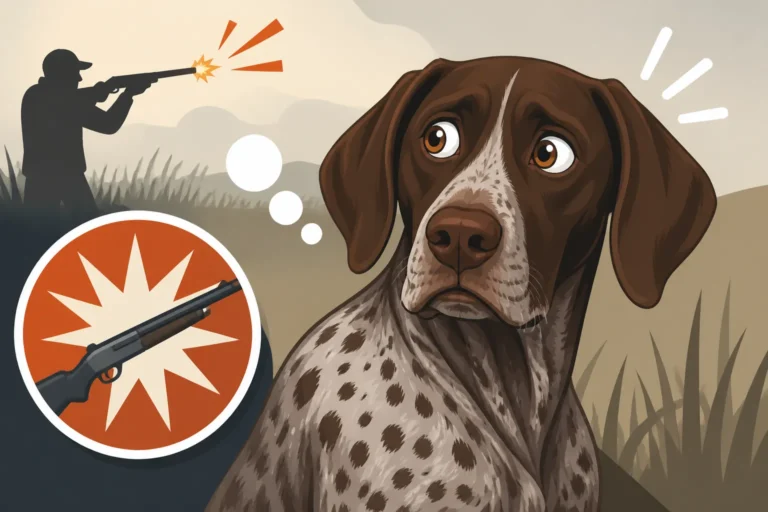
- Progressive Gun Introduction: If your dog hasn't had formal gun introduction, or if they're a bit sensitive, build up their tolerance slowly. Start with very light loads and distances far away, gradually decreasing the distance and increasing the sound. The goal is for them to associate the sound of the shot with the exciting event of a bird, not with fear. Building a Shorthair's Gun Tolerance From a Distance offers detailed advice on this sensitive process.
- "Steadiness" Drills: Work on drills where your Shorthair points a bird, the bird flushes, and you fire a blank, all while the dog remains absolutely still. Only after the shot and the bird is down, do you give the retrieve command. This patience is key. It might take How Many Birds It Takes to Steady a Shorthair, but the payoff is immense. This process requires incredible self-control from your dog, and consistent, fair correction from you.
Mastering the Blind Retrieve and Search
The UPT introduces the challenge of the blind retrieve, where your dog must find an unseen bird based on your directions, and a more advanced search pattern. This is a big step up from just retrieving a bird it has seen fall.
- Introduction to Blind Retrieves: Begin with very short, easy blinds. Have someone place a bird just out of sight in light cover while your dog watches, then send your dog directly to it. Gradually increase the distance and the difficulty of the cover, making sure your dog understands the concept of retrieving something it didn't see fall. Use hand signals and verbal commands to guide them.
- Patterning the Search: For the field search, encourage your Shorthair to quarter naturally, systematically covering the ground in front of you. Use your whistle and hand signals to guide them, ensuring they are working efficiently and not just running aimlessly. The goal is to maximize their chances of finding birds while staying within gun range. Teaching a Shorthair to Quarter in Front of You covers these essential techniques for developing an effective search pattern.
- Water Blind Development: This combines the blind retrieve with water work. Start with a simple water retrieve where the dog sees the throw, then progress to having a bird dropped just out of sight on the bank or in shallow water. Guide your dog with directional casts and verbal cues. Confidence in the water is paramount here, so ensure your Shorthair is a strong, willing swimmer.
Practical Preparation and Handling Strategies
Preparing for the UPT involves not just training your German Shorthaired Pointer, but also honing your own skills as a handler. Your demeanor, consistency, and ability to read your dog will profoundly impact their performance on test day.
Simulating Test Conditions
The best way to prepare your Shorthair for the UPT is to make training as close to the actual test environment as possible. This helps desensitize your dog to potential distractions and builds their confidence in various scenarios.
- Training Grounds Variety: Don't just train in your usual spot. Seek out different terrains – open fields, light cover, dense cover, and varied water sources like ponds and streams. Each new environment presents unique challenges, like new scents or unfamiliar footing, that your Shorthair will encounter during the test. The more varied experiences they have, the less likely they are to be thrown off by new surroundings.
- Working with Other Dogs: The UPT often involves other dogs and handlers, whether waiting for their turn or in a bracing situation. Practice training alongside other dogs that are also in training. This helps your Shorthair learn to focus on your commands, even when another dog is working nearby. If your Shorthair has a tendency to get distracted by other dogs' points, working on A Shorthair That Steals Its Bracemate's Point is a crucial step. It builds discipline and teaches them to respect another dog's work.
- Introducing Test-Like Scenarios: Simulate the entire test sequence, from walking to the line to the field work, water work, and retrieve. Have a friend act as a "judge" to add a layer of formality. Practice handling your dog on and off leash, moving from one station to the next, just as you would on test day. This rehearsal helps both of you get into the rhythm and routine of the test.
Building Your Shorthair's Confidence and Focus
A confident dog performs better under pressure. Your role is to build that confidence while maintaining their focus squarely on you.
- Positive Reinforcement and Successes: Every training session should aim for success. Break down complex tasks into smaller, achievable steps. Reward generously with praise, treats, or a favorite toy when your Shorthair performs correctly. Positive experiences build a dog's enthusiasm and willingness to try new things. Remember, a confident dog is a happy worker.
- Managing Energy Levels: German Shorthaired Pointers have boundless energy. Ensuring they are adequately exercised before a training session can help them focus better, rather than being overly rambunctious. However, don't over-tire them to the point of exhaustion. A dog that is physically comfortable but mentally ready to work is ideal. The Two Hours a Day a German Shorthaired Pointer Needs for exercise should be factored into their routine.
- The Power of Play: Incorporate play into your training. A game of fetch or a quick run can be a fantastic reward and a way to reinforce your bond. For hunting dogs, playtime often involves retrieving dummies or finding hidden treats, which can double as skill-building exercises. Using a durable retrieving dummy found on Amazon can make these play sessions productive and fun.
The Handler's Role: Calmness and Clarity
Your state of mind and how you communicate are just as important as your dog's training. Dogs are incredibly attuned to our emotions and body language.
- Maintain Composure: Test day is inherently stressful, but your Shorthair will pick up on your anxiety. Practice staying calm and focused during training. Use clear, consistent commands, and avoid getting frustrated if things don't go perfectly. Your calm demeanor will help your dog stay calm and focused.
- Clear Communication: Use consistent verbal commands and hand signals. Avoid rambling or repeating commands. Your dog needs to understand exactly what you expect. If you've been working with a BAXTER & Bella online program, you'll likely have established a strong framework for clear and consistent communication, which is invaluable on test day. Practice your whistle signals; they're essential for communication at a distance in the field.
- Reading Your Dog: Pay close attention to your Shorthair's body language. Are they stressed? Distracted? Over-excited? Learning to read Reading a German Shorthaired Pointer's Stress Signals will allow you to intervene or adjust your approach before an issue escalates. Sometimes, a quick break or a change in activity can reset their focus. Knowing when to push and when to back off is a hallmark of an effective handler.
Common Challenges and Troubleshooting
Preparing for the Utility Preparatory Test is rarely a smooth road. You're bound to encounter bumps along the way, and recognizing common challenges and having strategies to overcome them is key to success.
Addressing Steadiness Issues
Steadiness – the ability to remain still to wing and shot – is often the biggest hurdle for high-drive German Shorthaired Pointers. Their instinct is to chase, and overriding that takes consistent, patient work.
- Back to Basics with Whoa: If your Shorthair is breaking point, go back to square one with your "whoa" command. This means practicing it without birds, in various low-distraction environments, until it's absolutely reliable. Use a "whoa post" or a barrel if necessary, to remove any possibility of movement. Only when "whoa" is perfect in static situations should you reintroduce birds.
- Controlled Exposures to Birds and Shot: Never allow your dog to break point. Each time they successfully hold, they build the right habit. Each time they break, they reinforce the wrong one. Start with your dog on a check cord or longer lead, allowing them to point. Have a bird flushed by a helper. As the bird flushes, immediately reinforce "whoa" if your dog tries to move. Fire a blank pistol further away, gradually bringing the sound closer. It's often helpful to work with a professional trainer who has access to birds and launchers to perfect Steadying a Shorthair to Wing and Shot.
- Patience and Repetition: Steadiness isn't learned overnight. It's a cumulative effect of hundreds of successful repetitions. Don't rush it. It might feel slow, but rushing will only create more problems down the line. Remember, it's not just about the bird, it's about control in the face of immense temptation.
Improving Retrieve Consistency
A consistent, confident retrieve to hand is vital for the UPT, especially for blind retrieves. Many Shorthairs love to retrieve, but doing so reliably and with good manners is another matter entirely.
- Force Fetch Refinement: For many handlers, formal force fetch training is essential to ensure a reliable and proper retrieve. It teaches the dog that retrieving is not optional, and that holding the bird properly and delivering it to hand is the expected behavior. While it sounds intense, properly executed force fetch creates a dog that confidently retrieves anything asked of it. If you're struggling with your Shorthair dropping birds or mouthing them, understanding Force Fetch Explained for a Shorthair Owner can provide a solid foundation for improvement.
- Varying Retrieve Objects and Environments: Practice retrieves with different types of dummies and birds (feathers, fur) in various environments – open fields, thick cover, and water. This helps generalize the retrieve command so your dog isn't dependent on a specific object or location.
- Short, Successful Sessions: Keep retrieve training sessions positive and relatively short. End on a high note. If your dog is getting distracted or bored, take a break. Over-drilling can lead to a loss of enthusiasm.
Overcoming Water Work Hesitancy
Some German Shorthaired Pointers take to water like ducks, while others need a bit more encouragement. For the UPT, confident water entry and retrieves are non-negotiable, especially for blind retrieves.
- Positive Introductions to Water: If your Shorthair is hesitant, make water a fun, positive experience. Start in shallow, warm water. Toss toys or treats into the water, and wade in with them. Never force a dog into water; this can create a lifelong aversion. Many dogs will follow their handler into water, building confidence with proximity. Teaching a Shorthair to Enter Water Willingly is a great resource if you're facing this issue.
- Gradual Increase in Difficulty: Once your dog is comfortable in shallow water, gradually move to deeper areas. Practice retrieving visible bumpers from the water, slowly increasing the distance. Only introduce blind retrieves in water once your dog is a confident, enthusiastic water retriever.
- Cold Water Considerations: German Shorthaired Pointers have relatively thin coats, making them susceptible to cold. If training in cooler weather or water, consider a neoprene vest to keep them warm and comfortable. Products like neoprene vests are readily available on Amazon and can significantly extend your dog's comfort and willingness to work in water. Always ensure your dog is warmed up and dried off after cold water sessions to prevent issues like Cold Water Tail in a German Shorthaired Pointer.
The UPT is a challenging but incredibly rewarding test that showcases the full versatility of your German Shorthaired Pointer. With consistent training, a focus on foundational obedience, and a strong partnership, you and your Shorthair can achieve success.
Disclaimer
This article is for general informational purposes only and does not constitute professional advice. Laws, prices and regulations vary by location and change over time. Consult a qualified professional for guidance on your specific situation.