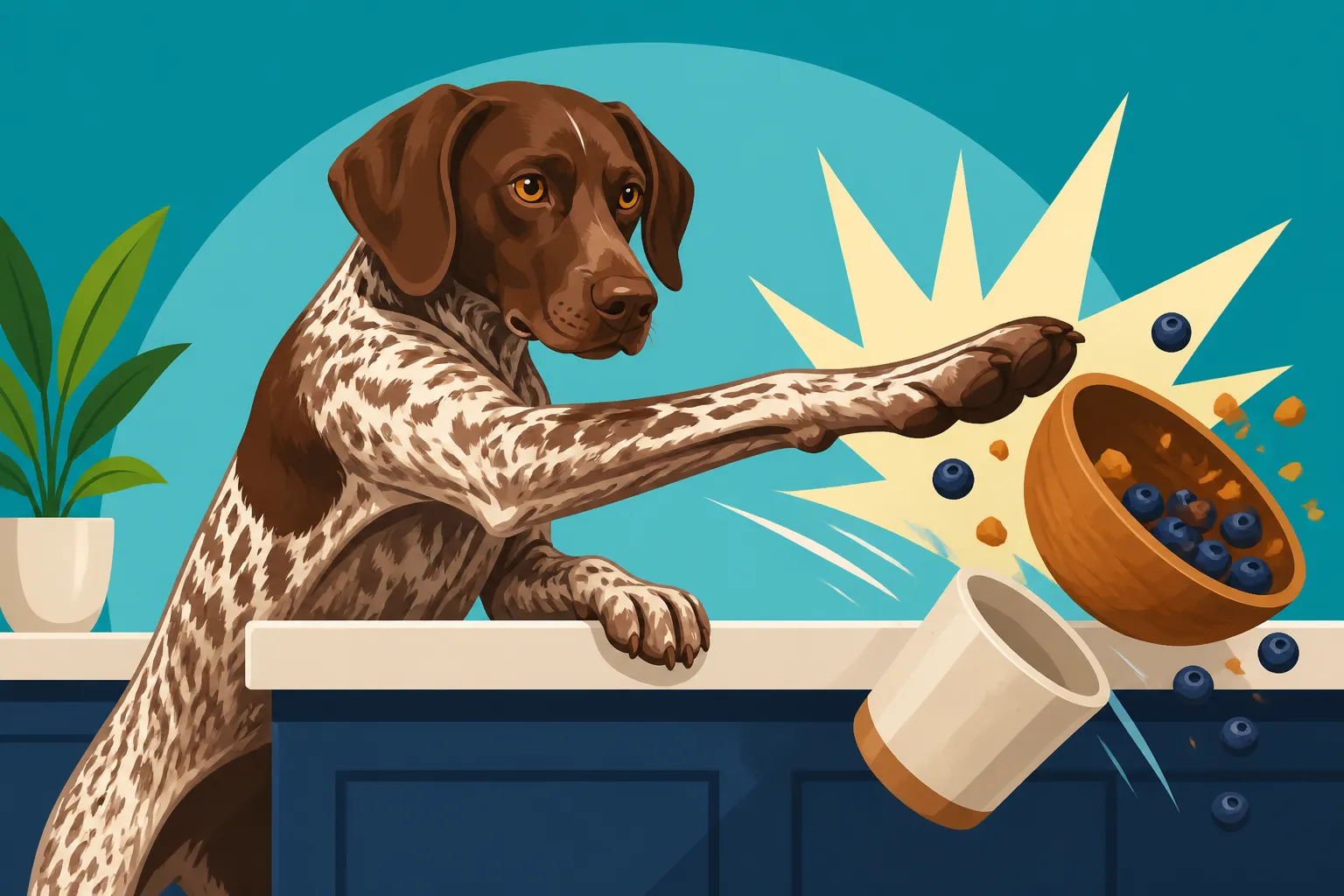
The Shorthair That Clears a Counter in One Reach
Oh, the sheer frustration of walking into your kitchen only to find that your meticulously prepared meal, or even just the mail, has been expertly removed from the countertop by your otherwise angelic German Shorthaired Pointer! It’s a common scenario that leaves many GSP owners feeling baffled and, let's be honest, a little impressed by their dog's athletic prowess and cunning. This guide is here to unravel the mystery behind why your GSP sees your counters as an all-you-can-eat buffet and, more importantly, to give you actionable strategies to keep those paws firmly on the floor.
Understanding the Counter-Surfing Instinct in German Shorthaired Pointers
It’s easy to feel like your GSP is actively trying to annoy you when they snatch something off the counter, but their behavior usually stems from deep-seated instincts and learned responses. These aren't malicious acts; they're often the result of opportunity, curiosity, and a powerful drive to find resources. Understanding these roots is the first step toward managing the behavior.
The GSP's Natural Drive for Food and Foraging
German Shorthaired Pointers were originally bred as versatile hunting dogs, meant to find, point, and retrieve game, often in challenging conditions. This intense drive translates into an incredible scenting ability and an almost insatiable curiosity about anything that might be edible. If there's a scent lingering on the counter, even from something you put away hours ago, your GSP is going to know about it. Their noses are incredibly powerful tools, and they're constantly evaluating their environment for interesting smells.
Think about it: in the wild, a dog that successfully forages for food is a dog that survives. While your kitchen counter isn't the wilderness, your GSP's brain often operates on those ancient principles. A forgotten sandwich or a plate of cooling cookies isn't just food; it's a high-value resource, and their natural inclination is to secure it. This foraging instinct, coupled with their intelligence, means they're always on the lookout for an easy score. They’re not being "bad"; they’re being dogs, albeit very resourceful ones.
Athleticism and Opportunism: Why Counters Aren't a Barrier
Let’s be real, GSPs are athletes. They are built for speed, agility, and endurance, with strong hindquarters that allow for impressive jumps. A kitchen counter, which might seem like an insurmountable obstacle to a smaller or less agile dog, is often just a slight vertical challenge for a German Shorthaired Pointer. They can launch themselves with surprising grace and precision, often using their front paws to steady themselves or sweep items into their grasp.
This physical capability is combined with an opportunistic nature. They learn incredibly quickly. If they’ve had even one successful "raid" where they grabbed a dropped crumb or a forgotten treat, they’ve learned that the counter can yield rewards. This single success can be enough to cement the behavior, turning what might have been an accidental brush with the counter into a deliberate act. They're smart enough to remember where the goodies once were and will continue to check those spots, hoping for a repeat performance.
The Reinforcement Loop: Why It Keeps Happening
Counter-surfing is a self-rewarding behavior. Every time your GSP successfully snags a scrap of food, even if it's just a tiny crumb, they receive an immediate and highly satisfying reward: food! This positive reinforcement loop is incredibly powerful. Imagine if you won a small lottery prize every time you checked your mail – you'd probably check your mail a lot more often, right? For your GSP, finding a whole plate of unattended dinner is like hitting the jackpot.
Even if you interrupt them or scold them, the memory of the past successes often outweighs the momentary negative interaction. They quickly learn to be stealthy or to wait for opportune moments when you're distracted or out of the room. The occasional "jackpot" keeps them motivated, making it a persistent challenge for owners. Breaking this cycle requires diligent management and consistent training, otherwise, they'll always be hoping for that next big score.
Proactive Strategies to Prevent Counter-Surfing
Prevention is always easier than correction, especially with a clever and determined breed like the German Shorthaired Pointer. By taking proactive steps, you can drastically reduce the opportunities for your dog to practice this unwanted behavior. It's about setting them up for success and making counter-surfing an unrewarding endeavor.
Creating a "Nothing on the Counter" Policy
This might sound simple, but it’s the cornerstone of stopping counter-surfing. Absolutely nothing edible, or even tempting, should ever be left on your counters, especially when your GSP is unsupervised. This means:
- Wipe down counters diligently: Even invisible crumbs can be a powerful scent magnet. Use a good cleaner that eliminates food odors.
- Put food away immediately: After preparing or eating a meal, leftovers go into the fridge or sealed containers right away. Don’t let plates sit.
- Store tempting items out of reach: Bread, fruit, treats, or anything that smells good needs to be in cabinets, on high shelves, or in the pantry. Don't underestimate how high a determined GSP can reach or jump. This also applies to non-food items like mail, wallets, or keys, as these can become enticing "toys" or simply get knocked onto the floor and chewed.
Consistency is key here, and it needs to extend to everyone in the household. One slip-up by a family member can undo weeks of diligent effort. If your GSP learns that sometimes the counters are clear, but other times they yield a reward, they'll keep checking, hoping for that occasional jackpot. Make it a hard and fast rule for everyone, always.
Managing Your GSP's Environment and Routine
Sometimes, the best solution isn't about direct training, but about managing the environment. If your GSP can't get to the counters, they can't counter-surf!
- Restrict access: When you can't actively supervise your dog, confine them to a "dog-proofed" area of the house, like a utility room or a large crate. Baby gates can be invaluable for blocking off kitchen access. This isn't punishment; it's responsible management that prevents them from practicing bad habits. Crating is often a great tool, especially during those times when you're busy or away from home for short periods.
- Ensure adequate exercise and mental stimulation: A tired GSP is a good GSP, and a bored GSP is often a destructive or mischievous GSP. These dogs have boundless energy and keen minds. They need substantial physical exercise daily, not just a casual walk around the block. Think long runs, intense games of fetch, or structured training sessions. Beyond physical activity, they thrive on mental challenges. Puzzle feeders, scent games, and regular training sessions can help satisfy their intelligent minds. If your German Shorthaired Pointer isn't getting enough outlets for their energy, they're much more likely to invent their own "jobs," which often involve exploring forbidden territories like your countertops. Consider if your GSP is getting The Two Hours a Day a German Shorthaired Pointer Needs to truly be content.
Foundation Training for Impulse Control
Teaching your GSP specific commands that build impulse control can be incredibly effective in combating counter-surfing. These aren't just tricks; they're essential life skills.
- "Leave It" command: This is perhaps the most crucial command for counter-surfing. Start by teaching "leave it" with low-value items on the floor, gradually increasing the temptation and the distance. The goal is for your GSP to ignore an item even when it's highly desirable, instead choosing to look at you for a reward. Practice consistently, making sure the reward for "leaving it" (a high-value treat from your hand) is always better than whatever they are leaving. This builds a strong association that listening to you pays off.
- "Off" command: This command is used to get your dog off of something they shouldn't be on. Again, start with low-stakes scenarios, like getting them off the sofa. Lure them off with a treat, say "Off," and reward them when all four paws are on the floor. With consistency, you can apply this to counters. The key is to teach it before they are on the counter, so they understand what you want.
- Rewarding good behavior: Don't just focus on stopping the bad behavior. Actively praise and reward your GSP when you see them not paying attention to the counters, or choosing to lie down instead of prowl. Positive reinforcement for desired behaviors helps strengthen those good habits. Regularly practicing commands like "whoa" (staying still and frozen) can also build excellent impulse control that carries over into everyday life. Building Whoa on a Shorthair With a Check Cord is a fundamental skill for many GSPs that can be adapted to keep them from darting for the counter.
What to Do When Your Shorthair Gets on the Counter
Despite your best efforts, there will likely be times your clever GSP manages to get on the counter. How you respond in these moments is critical to preventing the behavior from becoming ingrained or escalating. Your reaction needs to be calm, consistent, and immediately clear.
The Importance of Immediate, Calm Interruption
When you catch your GSP in the act, your first instinct might be to yell, chase, or grab them. Resist this urge! For many GSPs, a chase becomes a fun game, and yelling can simply add excitement or confusion rather than deterring the behavior. They might think, "Oh, my human is playing too!" or "They're just excited about what I found!"
Instead, aim for a calm, firm interruption that immediately breaks their focus without creating drama. A sharp, unexpected noise (like clapping your hands loudly, dropping a plastic container, or a quick, firm "Off!") can startle them enough to get them to back away. The moment they remove their paws or retreat, calmly redirect them to a more appropriate activity or command, such as "sit" or "down," and then reward them for that desired behavior. The goal is to make the act of counter-surfing unrewarding and startling, while making listening to you highly rewarding. This teaches them that being on the counter has an unpleasant consequence (the startling noise), but coming off it and listening to you brings good things.
Setting Up for Success: Management Tools
Sometimes, you need a little help to make the kitchen less appealing. There are several tools that can act as deterrents without you having to be physically present every second. These are most effective when used consistently.
- Motion-activated alarms or air cans: These can be placed strategically on counters. When your GSP jumps up, the alarm sounds or a burst of air is released, startling them. This creates a negative association with the counter itself, rather than associating your presence with the correction. The key is that the environment corrects the behavior, not you. Many brands offer these, and they can be found easily on platforms like Amazon. Always test them first to ensure they aren't overly terrifying for your dog, but merely surprising.
- Cans of pennies: A simple, old-school trick is to stack empty soda cans with a few pennies inside near the edge of the counter. If your GSP bumps them while trying to get on the counter, they'll fall with a startling clatter, creating the same kind of environmental deterrent as the motion-activated devices. Again, the goal is surprise, not pain or fear.
- Bitter apple sprays: For specific items that your GSP repeatedly targets, you might try a bitter apple spray. This makes the object taste unpleasant. However, this is less effective for the counter itself, as they often aren't licking the counter but grabbing the food off it. It's more useful for preventing chewing on specific objects once they've been brought down.
Remember, these tools are meant to be temporary deterrents while you establish better habits and consistent management. They are not a substitute for proper training and supervision.
Addressing Underlying Factors and Advanced Training
If counter-surfing persists despite consistent management and basic training, it’s worth looking at some deeper factors. Sometimes, the behavior is a symptom of an unmet need or a lack of understanding on the dog's part.
Ensuring Adequate Nutrition and Feeding Schedules
Could your GSP actually be genuinely hungry, or are they experiencing a nutritional imbalance? While it's easy to assume they're just being greedy, sometimes a dog that feels constantly hungry might be more driven to seek out additional food sources.
- Review their diet: Are they on a high-quality, appropriate diet for their activity level? German Shorthaired Pointers burn a lot of calories, especially if they are active hunting dogs or engaged in rigorous exercise daily. They may need more food than a less active breed of similar size. Consult with your veterinarian to ensure your GSP's diet is meeting all their caloric and nutritional needs. Your vet can help you determine The Daily Ration a Working Shorthair Actually Eats to ensure they're truly satisfied.
- Consistent meal times: Feed your GSP at predictable times each day. This helps regulate their appetite and expectations, reducing the urge to forage constantly. If they know food is coming at 6 AM and 6 PM, they might be less inclined to scour the counters at 4 PM.
- Slow feeders and puzzle bowls: These can make meal times more engaging and satisfying, slowing down their eating and providing a bit of mental work. This can reduce the immediate post-meal hunger feeling and help keep their brains busy.
Advanced Obedience and Engaging Their Minds
German Shorthaired Pointers are incredibly intelligent, and they thrive on having a "job" to do. If their minds aren't adequately challenged, they'll find their own entertainment, which, as we know, often involves counter-surfing.
- Complex commands and sequences: Once your GSP has mastered basic commands, move on to more complex sequences. Teach them to fetch specific items, or to perform a series of actions before receiving a reward. This deepens their understanding of your expectations and gives them a productive outlet for their intelligence.
- Scent work and nose games: Harness their incredible natural scenting abilities! Hide treats or their favorite toys around the house and encourage them to "find" them. This is mentally exhausting and incredibly rewarding for a GSP. It redirects their powerful nose from counter-scavenging to a positive, engaging activity.
- Structured training programs: Sometimes, a structured approach with clear lessons and progress tracking can be incredibly beneficial. Programs like those offered by BAXTER & Bella provide comprehensive, step-by-step guidance that can help you integrate advanced obedience and impulse control into your GSP's routine. Such programs can guide you through exercises that make not counter-surfing a more rewarding and ingrained habit than the act itself. This might involve rewarding them for staying on their mat in the kitchen, or for performing a "down-stay" while you prepare food.
Consulting a Professional Trainer or Behaviorist
If you've diligently tried all the above strategies and your GSP continues to be a persistent counter-surfer, it might be time to bring in professional help.
- Identify root causes: A certified professional dog trainer or veterinary behaviorist can observe your GSP's behavior in your home environment and help identify any underlying causes you might have missed. They can assess your dog's temperament, your training methods, and your home environment for factors contributing to the problem.
- Tailored training plan: A professional can create a customized training plan that is specific to your dog's needs and your household dynamics. They can teach you advanced techniques for impulse control, focus, and environmental management. They might introduce specific tools or strategies that are a good fit for your unique situation.
- Consistent reinforcement: They can also help you ensure that everyone in the household is consistent in their approach, which, as we've discussed, is absolutely vital for a clever breed like the GSP. Getting an outside perspective can often highlight subtle issues that have been inadvertently reinforcing the behavior.
Remember, seeking professional help is a sign of a responsible and caring owner, not a failure. It means you're committed to finding a lasting solution for both you and your beloved German Shorthaired Pointer.
Proactive vs. Reactive Strategies for Counter-Surfing
To help clarify the different approaches, here's a quick comparison of proactive (preventative) versus reactive (response to behavior) strategies when dealing with a counter-surfing German Shorthaired Pointer.
| Strategy Type | Description | Examples | Key Benefit |
|---|---|---|---|
| Proactive | Actions taken before the behavior occurs to prevent it or make it less likely. Focus on prevention and environmental management. | 1. "Nothing on the counter" policy, always clearing surfaces. 2. Crate training or using baby gates to restrict kitchen access. 3. Ensuring ample daily exercise and mental stimulation. 4. Consistent training of "Leave It" and "Off" commands outside of counter-surfing context. 5. Feeding high-quality food on a consistent schedule. |
Prevents the behavior from happening in the first place, reducing opportunities for self-reward. Builds good habits. |
| Reactive | Actions taken during or immediately after the behavior occurs to stop it or deter future occurrences. Focus on immediate correction and interruption. | 1. Using a startling noise (clap, dropping cans, motion-activated alarm) when caught in the act. 2. Immediately redirecting to an appropriate command ("sit," "down") and rewarding compliance. 3. Applying bitter apple spray to specific items (though less effective for counters themselves). 4. Calmly saying "Off" and luring the dog down. |
Stops the unwanted behavior in the moment and creates a negative association with the act. |
Disclaimer
This article is for general informational purposes only and does not constitute professional advice. Laws, prices and regulations vary by location and change over time. Consult a qualified professional for guidance on your specific situation.