A Shorthair That Steals Its Bracemate’s Point
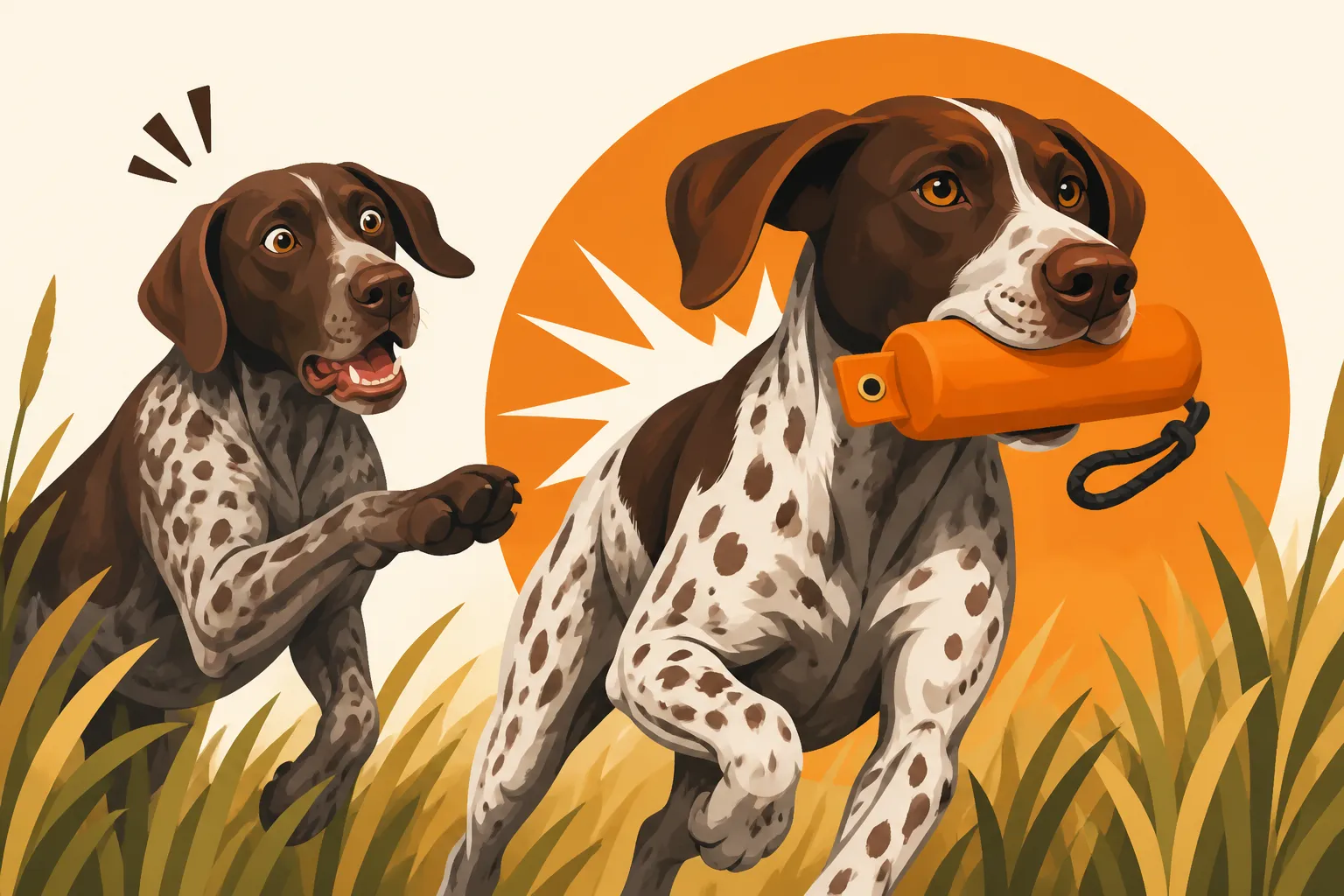
There's nothing quite as frustrating for a hunter running a brace of German Shorthaired Pointers as seeing one dog lock up beautifully on point, only for its bracemate to come barreling in, flushing the birds prematurely or crowding the pointer. This guide will walk you through why this "point stealing" happens, the problems it creates, and, most importantly, provide actionable strategies to teach your Shorthairs to hunt cooperatively and respectfully.
Why Your Shorthair Might Be Stealing Points
When you see one of your German Shorthaired Pointers charge in on another's point, it's easy to get angry or think your dog is being deliberately disobedient. But often, it's less about malicious intent and more about a combination of powerful instincts, incomplete training, and overwhelming excitement. Understanding the root cause is the first step toward fixing it.
Instinct Versus Training
German Shorthaired Pointers are, by nature, intense and driven hunting machines. Their instinct is to find birds, point them, and then, often, participate in the retrieve. When another dog points, especially if they are close, the second dog's prey drive can kick into overdrive. They see the pointing dog as having located game, and their primal urge is to get in on the action. This can lead to them pushing past or running around the pointing dog, inadvertently (or sometimes purposefully) moving in on the bird. They haven't necessarily been taught not to do this, or the training hasn't been reinforced enough to override that powerful, hardwired instinct. It’s not that they’re bad dogs; they’re just dogs following their instincts without the proper learned boundaries.
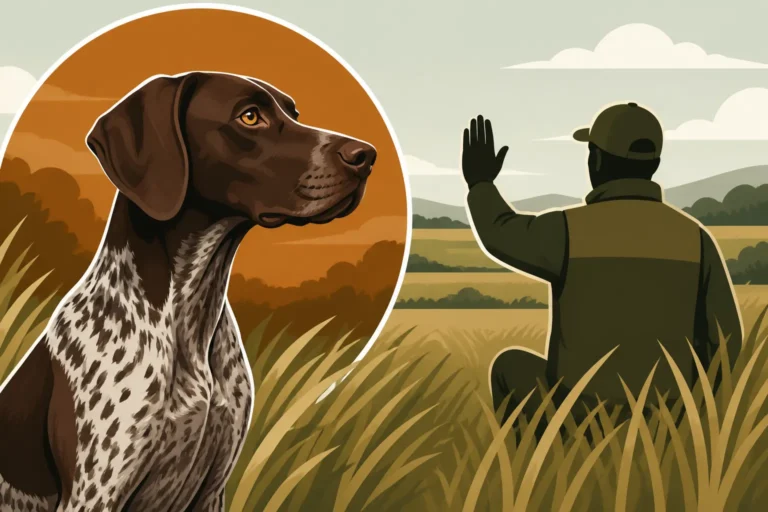
For a young, enthusiastic Shorthair, the sight of a bracemate locked up on point is like a giant, flashing neon sign saying "BIRDS HERE!" Without a solid understanding of the "whoa" command, or the concept of backing, they'll simply go for the perceived reward. This is where comprehensive training, starting with the basics, becomes absolutely critical. It’s about channeling that incredible drive, not crushing it.
Lack of Steadying and Whoa
One of the biggest culprits behind a point-stealing Shorthair is often an insufficient foundation in steadying. Steadying means teaching your dog to remain motionless and composed through the flush of birds and the shot, only moving on command. If your dog hasn't mastered Steadying a Shorthair to Wing and Shot, it's highly unlikely they will respect another dog's point. The "whoa" command is the cornerstone of this. A dog that is not reliably "whoa-ed" will struggle to stand still when another dog is pointing.
Think of it this way: if your dog isn't solid on its own point, consistently holding still until released, how can you expect it to hold still for another dog's point? It's a progressive skill. Many handlers might rush through the whoa training or only practice it in controlled environments, which doesn't prepare the dog for the high-intensity real-world scenario of multiple dogs and wild birds. The excitement simply overwhelms their training, and they break point or crash another dog's.
Dominance or Excitement?
While some might interpret point stealing as a dog attempting to "dominate" the other, it's usually more nuanced. It's almost always a symptom of overwhelming excitement and a lack of proper control and understanding, rather than a deliberate power play. A GSP's drive to find and work birds is immense. When presented with a bracemate on point, a less-trained or highly excitable dog might interpret it as a race to the bird, or simply an invitation to join the fun.
A dog that is truly "stealing" a point might be one that has learned, through lack of correction, that it can get to the birds first if it just pushes past its bracemate. This becomes a learned behavior, but it originates from that high-octane prey drive. Occasionally, an inexperienced dog might genuinely not understand what the other dog is doing. They see a frozen dog, then smell birds, and think, "Great! Let's get them!" The key is to address the underlying lack of discipline and the inability to manage intense excitement rather than assuming malicious intent.
The Real Impact of a Stolen Point: More Than Just Missed Birds
A stolen point isn't just a minor annoyance; it can have significant negative repercussions, affecting your hunting success, the safety of your dogs, and the overall enjoyment of your time afield. It's a behavior that truly undermines the concept of a "brace" or team hunting.
Busted Birds and Frustrated Hunters
Let's be honest, the most immediate and painful consequence of a stolen point is often a blown opportunity. You see your lead dog locked up, tail quivering, nose to the wind – a picture of perfection. You start your walk-in, gun ready, heart thumping with anticipation. Then, suddenly, the second dog is a blur, charging past the pointer, crashing into the cover, and whoosh! The birds erupt, far out of range, or scatter in directions you weren't expecting. It's a deeply frustrating experience.
This isn't just about missing a shot. It also educates the birds to flush wilder and sooner, making them harder to hunt successfully in the future. Repeatedly busting birds can turn a promising covey into one that's nearly impossible to approach, impacting not just your day, but potentially future hunts in that area. For the hunter, it saps enthusiasm and replaces it with irritation, diminishing the pure joy of watching well-trained dogs work.
Erosion of Canine Teamwork
German Shorthaired Pointers are bred to be versatile, intelligent, and cooperative partners. When running two dogs, the ideal is a seamless partnership where each dog contributes to the hunt, honoring the other's work. A point stealer breaks this bond. The dog that made the point might become discouraged or confused. Why bother finding and holding birds if another dog is just going to rush in and take the glory (or flush them away)?
Over time, this can lead to a breakdown in the pointing dog's confidence or even cause it to start rushing its own points, trying to get to the birds before the stealer does. The stealer, meanwhile, learns that there are no consequences for its actions, reinforcing the undesirable behavior. Instead of two dogs working together efficiently to cover ground and pin birds, you end up with two dogs potentially competing, creating chaos rather than synergy. Hunting Two German Shorthaired Pointers Together should be a beautiful dance, not a wrestling match.
Safety Concerns and Field Etiquette
Beyond the frustration and lost opportunities, a dog that consistently breaks or steals points can create safety hazards. Imagine one dog locked on a bird in heavy cover, and the second dog, ignoring the point, plows through directly into the line of fire as you prepare to shoot. This scenario, while hopefully rare, highlights the potential for serious accidents when dogs are out of control. Furthermore, if you're hunting with others, a dog that doesn't respect another's point is a major breach of field etiquette. It can ruin another hunter's shot, demonstrate a lack of control over your animal, and frankly, make you an undesirable hunting partner.
There's also the risk to the dogs themselves. A dog blindly crashing through thick cover, oblivious to the other dog or the environment, can run into hidden obstacles, barbed wire, or even other animals. Teaching a dog to "back" (honor another dog's point) is not just a polite gesture; it's a fundamental aspect of safe and effective multi-dog hunting. The Vet Schedule a Working Shorthair Should Keep often includes discussions about field safety, and preventing point-stealing is a huge part of that.
Step-by-Step Solutions to Stop Point Stealing
Correcting point-stealing behavior requires patience, consistency, and a systematic approach. It's about rebuilding foundational commands and introducing new ones specifically for multi-dog work. Remember, this isn't a quick fix; it's a training journey that will yield a more reliable, respectful hunting partner.
Reinforcing Foundational Obedience
Before you can even think about teaching your Shorthair to honor another dog's point, you need rock-solid individual obedience. This means a reliable "whoa" command, impeccable recall, and the ability to hold steady under distraction. Without these basics, any advanced training for backing will crumble.
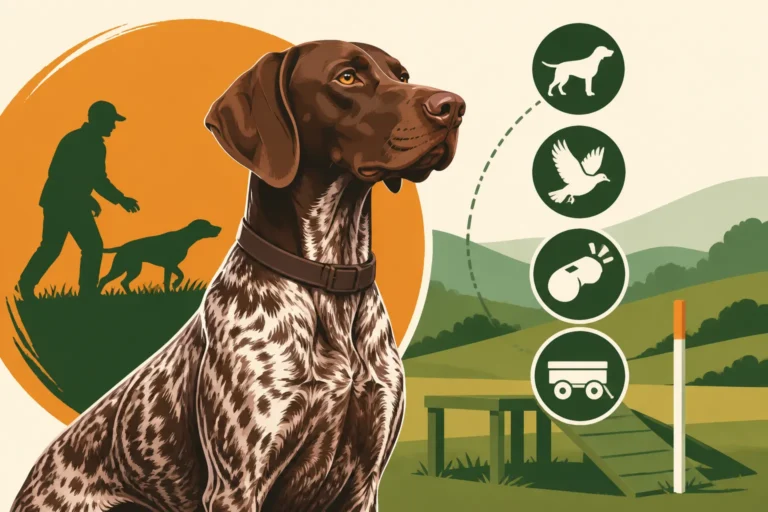
Start with your "whoa" command in a controlled environment. Use a check cord (a long leash) on your dog. Walk your dog, say "whoa," and immediately stop them, gently but firmly, with the check cord. Make them stand motionless for increasing periods. Don't move on until your dog can hold "whoa" for several minutes without breaking position, even with minor distractions. Introduce a wing on a string, then a dead bird, then a live bird in a controlled pen. Every time your dog even thinks about moving, reinforce "whoa" with the check cord. This isn't punishment; it's communication about what is expected. This rigorous approach in a low-distraction setting is crucial. Holding a Shorthair's Whoa Before Birds Appear is the absolute bedrock for everything else. Many dog owners find structured online programs, like those offered by BAXTER & Bella, helpful for building these foundational behaviors from home.
Introducing the "Back" Command
Once your Shorthair is solid on "whoa" as an individual, you can introduce the "back" command, which is specifically for honoring another dog's point. This is the explicit instruction to stop and stand still behind another dog that is on point.
- Start with a stationary, pointing decoy: Initially, use a stuffed dog or even a person pretending to point. Lead your second dog (the one you're training to back) towards this "pointing" decoy.
- Use the check cord and "whoa": As your dog approaches the decoy and shows interest in the "bird" that the decoy is pointing at, give the "whoa" command and use the check cord to stop them a respectful distance behind the decoy. The goal is for your dog to stop, observe the pointing dog, and remain steady without attempting to move closer to the birds.
- Introduce a real, steady dog: Once your dog reliably backs the decoy, you can introduce a calm, steady, experienced dog that will hold a point. Set up scenarios where the experienced dog points a bird (either a restrained bird or a bird in a launcher), and then bring your second dog in on a check cord.
- Enforce "whoa" and "back": As your second dog sees the first dog on point, immediately issue "whoa" or your chosen "back" command. Use the check cord to ensure they stop and hold. The distance from the pointing dog should be enough that your dog isn't crowding, but can still clearly see the situation.
- Gradual progression: Slowly increase the distraction and realism. Move from restrained birds to birds on launchers, and eventually to planted wild birds. Practice this extensively until your dog understands that another dog's point is a signal to stop and wait for your command. This is exactly what Teaching a Shorthair to Back Another Dog's Point is all about.
Here's a comparison of training scenarios:
| Training Stage | Goal | Setup | Key Focus |
|---|---|---|---|
| Individual Whoa | Dog holds steady on its own point. | Check cord, restrained bird/wing, minimal distractions. | Impeccable obedience to "whoa" in varied positions. |
| Decoy Backing | Dog stops and waits behind a stationary decoy/person. | Decoy "pointing," check cord on trainee. | Understanding "back" or "whoa" when another dog indicates birds. |
| Steady Dog Backing | Dog stops and waits behind a real, steady pointing dog. | Steady dog on point (live bird), check cord on trainee. | Honoring a live dog's work, distance, and steadiness. |
| Real World Scenarios | Dog reliably backs in varied terrain and bird situations. | Two dogs hunting, planted/wild birds, long lines/e-collar. | Consistency under pressure, handler trust, reading dog body language. |
Utilizing Training Tools Effectively
Beyond the check cord, other tools can be incredibly effective in teaching and reinforcing these complex behaviors.
- E-Collar (Electronic Collar): An e-collar is not a punishment tool, but a communication device when used correctly. For advanced stages of steadying and backing, it can provide reliable remote reinforcement for "whoa" or "back" when your dog is at a distance and off-leash. It allows you to communicate with your dog instantly, even when they're in full prey drive. Proper introduction and use are vital; seek professional guidance if you're unsure. The key is to introduce the e-collar at low stimulation levels in conjunction with known commands, building positive associations before using it for corrections. When an E-Collar Belongs on a German Shorthaired Pointer dives deeper into responsible e-collar use. You can find reliable e-collars suitable for GSPs on Amazon.
- Bird Launchers: These devices allow you to control the flush of a bird precisely. This is invaluable when practicing steadying and backing, as it removes the unpredictability of a wild bird flushing and lets you set up controlled repetitions. You can trigger the flush when you're ready, not when the bird decides. This builds confidence in your dog that your command dictates the action, not the bird's movement.
Simulated Scenarios and Real-World Application
Once your dogs understand the concepts in controlled settings, it's time to bridge the gap to real-world hunting.
- Practice with planted birds: Start by planting birds (pigeons or quail work well) in cover and bringing in your dogs one at a time. Let one dog establish a solid point, then bring in the second dog on a long check cord. Enforce the "back" command. Gradually increase the difficulty by planting birds in different types of cover and varying the distance between the dogs.
- Work with a trusted training partner: If possible, train with another person who also has a steady dog. This allows for more realistic scenarios and different dynamics. One person can handle the pointing dog, while the other focuses on the backing dog.
- Gradual introduction to wild birds: Only when your dogs are consistently backing and steadying on planted birds should you introduce them to wild bird hunting. Start in areas with fewer birds or where birds are less likely to flush wildly. Keep your check cord handy, or ensure your e-collar communication is flawless. Expect setbacks; the adrenaline of wild birds is a whole new level.
- Consistency is key: Every time you hunt with two dogs, you must enforce the "back" command. If you let it slide "just this once," you're undermining all your hard work. German Shorthaired Pointers are intelligent and will quickly learn what they can get away with. Be consistent, patient, and celebrate every successful backed point. Training resources like BAXTER & Bella can offer structured programs to keep you on track with consistency.
Remember, the goal is not to suppress your German Shorthaired Pointer's incredible drive, but to channel it into a disciplined, cooperative effort. A dog that proudly and reliably backs its bracemate is a testament to dedicated training and a joy to watch in the field.
Disclaimer
This article is for general informational purposes only and does not constitute professional advice. Laws, prices and regulations vary by location and change over time. Consult a qualified professional for guidance on your specific situation.