Hunting Two German Shorthaired Pointers Together
Hunting two German Shorthaired Pointers together can feel like trying to conduct a symphony orchestra where each musician has their own idea of the tempo and melody. It’s incredibly rewarding when they’re in sync, but it can also be a chaotic dance of crossed signals and competing instincts if you haven't laid the groundwork. This guide will walk you through the unique joys and challenges of working a brace of GSPs, offering practical advice to help you transform two individual hunting machines into a cohesive, bird-finding team.
Why Hunting Two Shorthairs Together Is a Different Ballgame
Let's be real, managing one high-energy German Shorthaired Pointer in the field is a commitment. Adding a second one isn't simply multiplying the effort by two; it's an exponential leap in complexity. These dogs are intelligent, driven, and often have strong opinions, which can be both a blessing and a curse when you're trying to get them to work as a unit. Many of us dream of seeing a beautiful brace of Shorthairs quartering the field in perfect harmony, but the reality is that it takes a lot of intentional training to get there.
The Independent Nature of Shorthairs and Why Two Amplify It
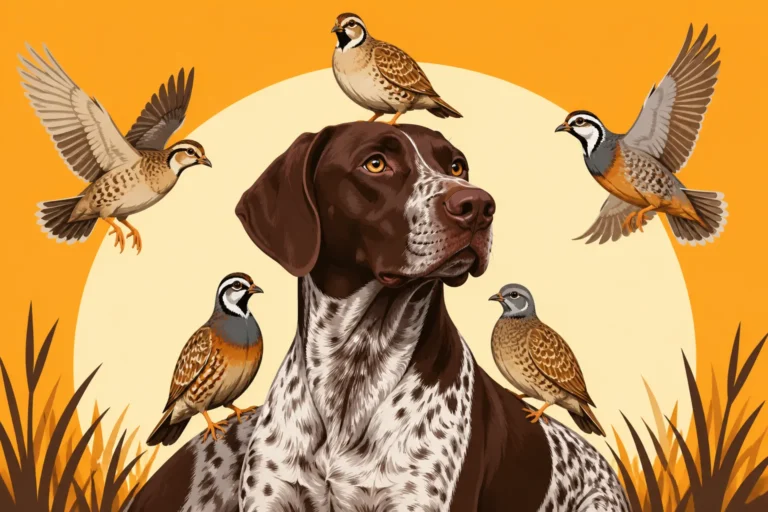
German Shorthaired Pointers were bred to be versatile, independent hunters. They’re expected to cover ground, find game, point staunchly, and retrieve, often making decisions quickly on their own. This independence is fantastic when you're hunting solo and relying on your dog's initiative. However, when you introduce a second Shorthair, that independent streak can quickly become a challenge. Instead of working together, they might compete for birds, range in different directions, or fail to honor each other's points. You might find one dog locking up on a pheasant while the other, oblivious or simply more interested in the rabbit scent it just picked up, blows right past, flushing the bird prematurely. It's frustrating when you see that happen, and it makes you question if you're doing something wrong. The truth is, it's a natural inclination for these dogs, and it's your job to guide them into understanding cooperation.
The Reward: Double the Nose, Double the Fun
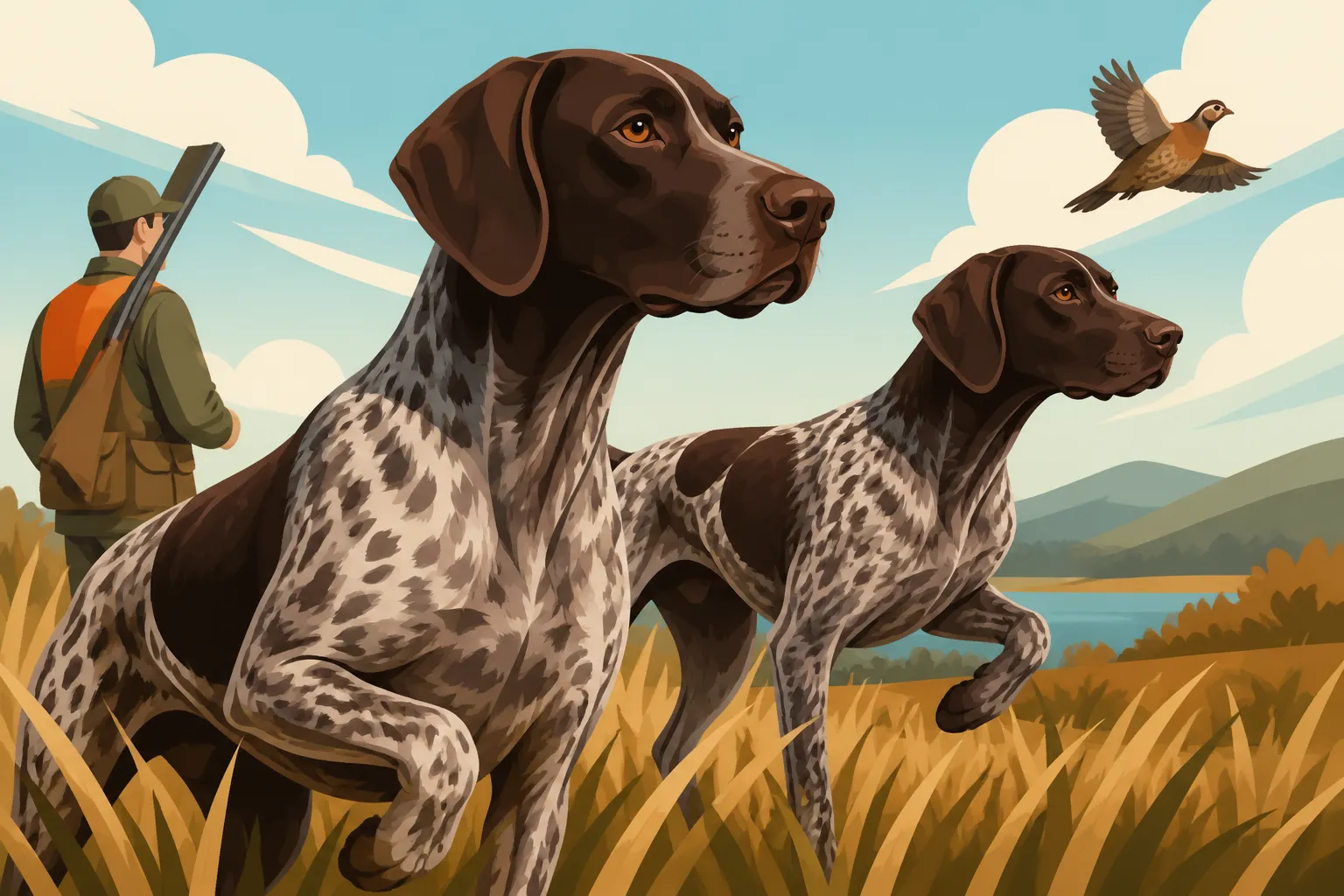
Despite the potential for chaos, there's a reason so many hunters aspire to work a brace of German Shorthaired Pointers. When it clicks, it's truly magnificent. Two experienced noses working together can cover more ground, pinpoint scent cones faster, and significantly increase your chances of finding game in challenging cover. Imagine one dog locked on point at the edge of a thick cattail marsh, and the second dog, seeing its brace-mate's stance, backs the point instinctively, honoring the find. It’s a seamless operation, a ballet of canine instinct and training that maximizes efficiency and covers ground you'd never manage with one dog, let alone on your own. The sheer joy of watching two magnificent athletes flow across the landscape, connected by an unspoken bond and a shared purpose, is an unparalleled experience for any bird hunter. The extra effort in training pays off tenfold in these moments.
Reading the Dynamics: Who Leads, Who Follows
Every pair of Shorthairs will develop its own unique dynamic. You’ll often find one dog naturally takes on a more dominant or independent role, acting as the primary finder, while the other might be more inclined to back or work closer. This isn't necessarily a bad thing, but understanding this dynamic is crucial for effective handling. Is one dog a bold, wide-ranging hunter who loves to strike out and find birds? Is the other a more cautious, methodical tracker who might be better at picking up scent in dense cover or following up on a running bird? Observe their natural tendencies. Do they naturally gravitate towards each other, or do they spread out immediately? Some pairs might instinctively "check in" with each other, while others act like they're in different zip codes. Recognizing these patterns allows you to adjust your handling, perhaps giving more leeway to the bolder dog while keeping the other a bit tighter on a check cord initially. This insight helps you foster their strengths while mitigating their weaknesses as a team.
Training Your Shorthairs for Brace Work
You wouldn't expect two musicians to play a symphony without practicing their individual parts first, right? The same goes for hunting dogs. Before you even think about putting two Shorthairs together in the field, each dog needs a solid individual foundation. Skipping this step is a recipe for frustration and potentially ruining good hunting habits.
Individual Foundation First: No Shortcuts
Before brace work, each German Shorthaired Pointer needs to be a fully competent, reliable individual hunter. This means they should be thoroughly trained on basic obedience, recall, quartering, steady to wing and shot, and retrieving. They need to understand and respond to Whistle Commands a Shorthair Should Know and hand signals flawlessly, even with distractions. If one dog consistently breaks point or doesn't retrieve reliably, those issues will only escalate when a second dog is introduced. Imagine one dog breaking at the flush while the other is staunchly holding. It creates confusion and undoes good habits for both. So, dedicate time to individual lessons, even after they've seemingly "graduated." Just like a skilled athlete, they need ongoing reinforcement. Work with them on retrieving drills, practice their whoa commands in various environments, and ensure their recall is bulletproof. Remember, their individual reliability forms the bedrock of their team performance.
Introducing the Brace: Controlled Environments
Once both dogs are solid solo performers, you can start the brace introduction. Don't throw them into prime hunting cover right away. Begin in a controlled environment, like a large, fenced yard or an open field with minimal distractions. Start with simple walks on leashes, gradually transitioning to long lines or check cords. The goal here is to get them accustomed to working in close proximity without competing or getting overly excited.
A great way to start is by having a helper. One person handles one dog, and another handles the second. Practice parallel walks, then gradual arcs, always rewarding calm, focused behavior. Tools like an e-collar, properly conditioned, can be invaluable here for consistent communication with both dogs, especially as you increase distance. E-Collars Built for a Running German Shorthaired Pointer can help reinforce commands simultaneously or individually as needed. Some online programs, like BAXTER & Bella, offer structured approaches to multi-dog training, helping you build this foundation step-by-step. They can guide you through the process of keeping both dogs engaged with you while acknowledging each other's presence, rather than seeing each other as rivals.
Teaching "Whoa" and "Back": The Non-Negotiables
"Whoa" and "back" are the cornerstones of successful brace work. "Whoa" means stopping dead in their tracks, no matter what, and holding steady. Whoa and Why Every Shorthair Starts There applies doubly to brace work. Both dogs must respect this command implicitly. "Back" is the critical skill where one dog honors the point of another, stopping and standing behind its brace-mate without interfering with the find.
Practice "whoa" extensively with each dog individually using a Building Whoa on a Shorthair With a Check Cord or a whoa post. Once rock solid, start introducing "back." You can do this with a planted bird and a helper. Have one dog on point, then bring the second dog in, commanding "whoa" or "back" as it approaches the pointing dog. Use plenty of positive reinforcement for correct behavior. This takes patience and repetition. Don’t rush it. The goal is for the "backing" dog to learn that it gets rewarded for respecting its partner’s find, not for trying to steal it or flush the bird itself. It’s a nuanced dance that requires trust in your handling and in their partner.
Developing a Shared Hunt Pattern
German Shorthaired Pointers are naturally inclined to quarter the field in front of the hunter, covering ground efficiently. With two dogs, the challenge is to get them to do this together, creating a wider sweep of the field rather than overlapping or diverging wildly. Start by working them on long lines in open fields. Encourage them to quarter in unison, using consistent whistle commands and hand signals. You might find one dog naturally ranges wider than the other. Use your training to Shortening a Shorthair That Ranges Too Far or encouraging the closer dog to expand its range slightly.
Consider using a GPS tracking collar, readily available on platforms like Amazon, for both dogs. This not only offers safety but also allows you to visually analyze their patterns and identify where they might be overlapping or leaving gaps. Watching their movements on the GPS unit will give you immediate feedback on whether they're working effectively as a team or if one is constantly trying to out-compete the other for ground. The goal is to build a cooperative pattern where they intuitively understand how to share the field.
Managing Two Shorthairs in the Field
So, you’ve put in the countless hours of training, your Shorthairs are individually solid, and they've shown promise in controlled brace work. Now, it's time to hit the real field. This is where all that hard work is truly tested, and you’ll discover the subtle differences between training scenarios and actual hunting pressure.
Communication is Key: Voice, Whistle, and Hand Signals
With two dogs, your communication needs to be exceptionally clear and consistent. Your voice commands might get lost in the wind or the excitement of the hunt. That's why Whistle Commands a Shorthair Should Know become paramount. Each whistle blast should have a precise meaning, and both dogs need to respond to it instantly. Hand signals are also critical, especially if one dog is ranging further out or if you need to direct them in different directions to cover a specific piece of cover.
Practice calling each dog by name, then giving the command. For example, "Buddy, WHOA!" then "Belle, BACK!" or a distinct whistle for each. You'll develop a rhythm. It takes a lot of mental energy from you to keep track of both dogs, anticipate their movements, and communicate effectively, so don’t underestimate this aspect. You’ll become a conductor, orchestrating their movements with subtle cues.
Dealing with Conflicting Points or Bumping
One of the most common brace hunting scenarios (and frustrations!) is when both dogs hit scent at slightly different times, or one dog bumps a bird while the other is pointing. When two Shorthairs are covering ground, it’s inevitable.
If both dogs point simultaneously, fantastic! Walk in and prepare for the flush. If one dog points and the other tries to "steal" the point or, worse, bumps the bird, you must correct immediately. This is where your reliable "whoa" and "back" commands, possibly reinforced by an e-collar, are vital. The goal is to instill that the first dog to establish a point "owns" the bird, and the second dog must honor it. Teaching a Shorthair to Back Another Dog's Point is a lesson that needs constant reinforcement, especially in the heat of the moment. It’s a delicate balance of correcting unwanted behavior without crushing their drive. Sometimes, if one dog is consistently bumping, you may need to leash that dog for a bit or put them up in the truck for a break to reinforce that their behavior is unacceptable.
Handling Retrieves and Honoring Each Other's Work
When a bird is downed, who retrieves it? Ideally, the dog that made the retrieve should bring it directly to hand, but with two dogs, sometimes both will attempt the retrieve, or one will grab it and run off, sparking a game of keep-away.
Establish a clear rule: only one dog retrieves at a time, usually the dog closest to the downed bird or the one you specifically command to retrieve. The other dog should remain on "whoa" until released. Practice this with training dummies. Throw two dummies, but only send one dog for a retrieve, keeping the other on whoa. Then release the second dog for its retrieve, or call the first dog in with both. It teaches patience and honoring, not just of a point but of the entire sequence of the hunt. This discipline prevents squabbles over downed game and ensures safe, prompt retrieves.
Gear Considerations for Multiple Dogs
Hunting with two Shorthairs means doubling up on some gear and making strategic choices for others.
| Gear Item | Solo Hunter Consideration | Brace Hunter Consideration |
|---|---|---|
| GPS Tracking Collars | Optional, good for safety | Essential for tracking two dogs, monitoring their range, and ensuring they don't get lost or separated. Look for systems that support multiple collars on one handheld. |
| E-Collars | Training reinforcement | Critical for clear, individual communication and simultaneous corrections in the field. Ensure separate frequencies or channels for each dog. |
| Whistles | Standard | Having a distinct tone or using a silent whistle for one dog and an audible for the other can add clarity, though usually one whistle suffices with proper training. |
| Water | Portable bottle/bowl | Larger capacity water jugs and multiple collapsible bowls. Two high-energy dogs will drink a lot. |
| First Aid Kit | Standard canine kit | Expanded with more bandages, antiseptic, and specific items for common injuries like Cut Pads on a German Shorthaired Pointer After a Long Day or thorn punctures, as the likelihood of injury increases with two dogs. |
| Leashes/Cords | One lead | Two leads, preferably long lines or check cords, for controlled work or temporary leashing of an overzealous dog. |
| Dog Box/Crate | Single compartment | Double compartment or two separate crates in the truck/kennel. Allows for cooling down, separating if needed, and safe transport. |
| Safety Vest | Optional blaze orange | Essential for both dogs, especially in heavy cover or crowded hunting areas, to distinguish them from game and ensure visibility for you and other hunters. |
You might find yourself investing in a multi-dog tracking system (many excellent options are available on Amazon) that allows you to see both dogs' locations on one screen. This is a game-changer for maintaining control and awareness of where each dog is ranging. Also, having separate but easily identifiable e-collar transmitters or clearly marked buttons on a multi-dog transmitter is crucial in the heat of the moment. You don't want to accidentally correct the wrong dog! And always remember to carry plenty of water for both, especially on warm days or long hunts, because Watering a German Shorthaired Pointer Through a Long Day is non-negotiable for two active dogs.
Common Pitfalls and How to Avoid Them
Even with the best training, brace hunting can present unique challenges. Anticipating these issues and having a plan to address them will save you a lot of headaches and help both you and your dogs enjoy the hunt more.
Jealousy and Competition in the Field
It's natural for dogs to be competitive, especially German Shorthaired Pointers with their strong prey drive. This can manifest as one dog trying to beat the other to a bird, rushing ahead, or getting possessive over a retrieve. This competition can erode good habits and make for an unpleasant hunt.
The key to avoiding this is consistent enforcement of rules. The "whoa" and "back" commands are your best defense. If one dog consistently tries to rush ahead or crowd the other's point, a swift, firm correction is necessary. Make sure to reward the dog that is honoring its brace-mate's point or waiting patiently for its turn to retrieve. The idea is to teach them that cooperation, not competition, is what gets them rewarded with more birds and more praise. Sometimes, separating them for a short period during the hunt (one on a leash, one working) can remind them of individual expectations before bringing them back together.
Over-Ranging or Lack of Control
Two German Shorthaired Pointers, especially young ones, can cover a phenomenal amount of ground, sometimes to your detriment. If both dogs decide to range independently and widely, you can quickly lose control, or worse, lose them entirely. This is why Shortening a Shorthair That Ranges Too Far is so important, and it applies to both dogs when hunting in a brace.
Consistent reinforcement of your quartering pattern and recall commands is paramount. If one or both dogs are starting to push too far, use your whistle and e-collar to bring them back into your desired range immediately. Don't wait until they're out of sight. Remember, it's about making them want to stay with you and work in tandem, not just forcing them. Consistent Conditioning a Shorthair Before Opening Day on these control aspects is vital to prevent issues once birds are in the air. A GPS collar is a lifesaver here, allowing you to track their precise location and intervene before they get too far afield.
Fatigue and Hydration for a Pair
Two German Shorthaired Pointers working hard together will expend an incredible amount of energy. They can become tired faster than a single dog, especially if they're running harder to keep up with each other or covering more ground. The Two Hours a Day a German Shorthaired Pointer Needs for exercise is a baseline; hunting days demand much more.
Keep a close eye on both dogs for signs of fatigue, such as lagging behind, excessive panting, or a drop in enthusiasm. Reading a German Shorthaired Pointer's Stress Signals is key here. Carry ample water and offer it frequently. Plan for shorter hunting sessions or incorporate more breaks than you might with a single dog. You might need to rotate them, putting one in the truck for a break while the other works for a short period, then swapping. It’s better to end a hunt early with two happy, healthy dogs than to push them to exhaustion and risk injury or burnout. Always ensure you are prepared with a proper first aid kit and know the nearest emergency vet, as the likelihood of an issue increases with more dogs in the field. This also ties into the importance of maintaining a The Vet Schedule a Working Shorthair Should Keep for both dogs to ensure they are physically fit for the demands of brace hunting.
Disclaimer
This article is for general informational purposes only and does not constitute professional advice. Laws, prices and regulations vary by location and change over time. Consult a qualified professional for guidance on your specific situation.