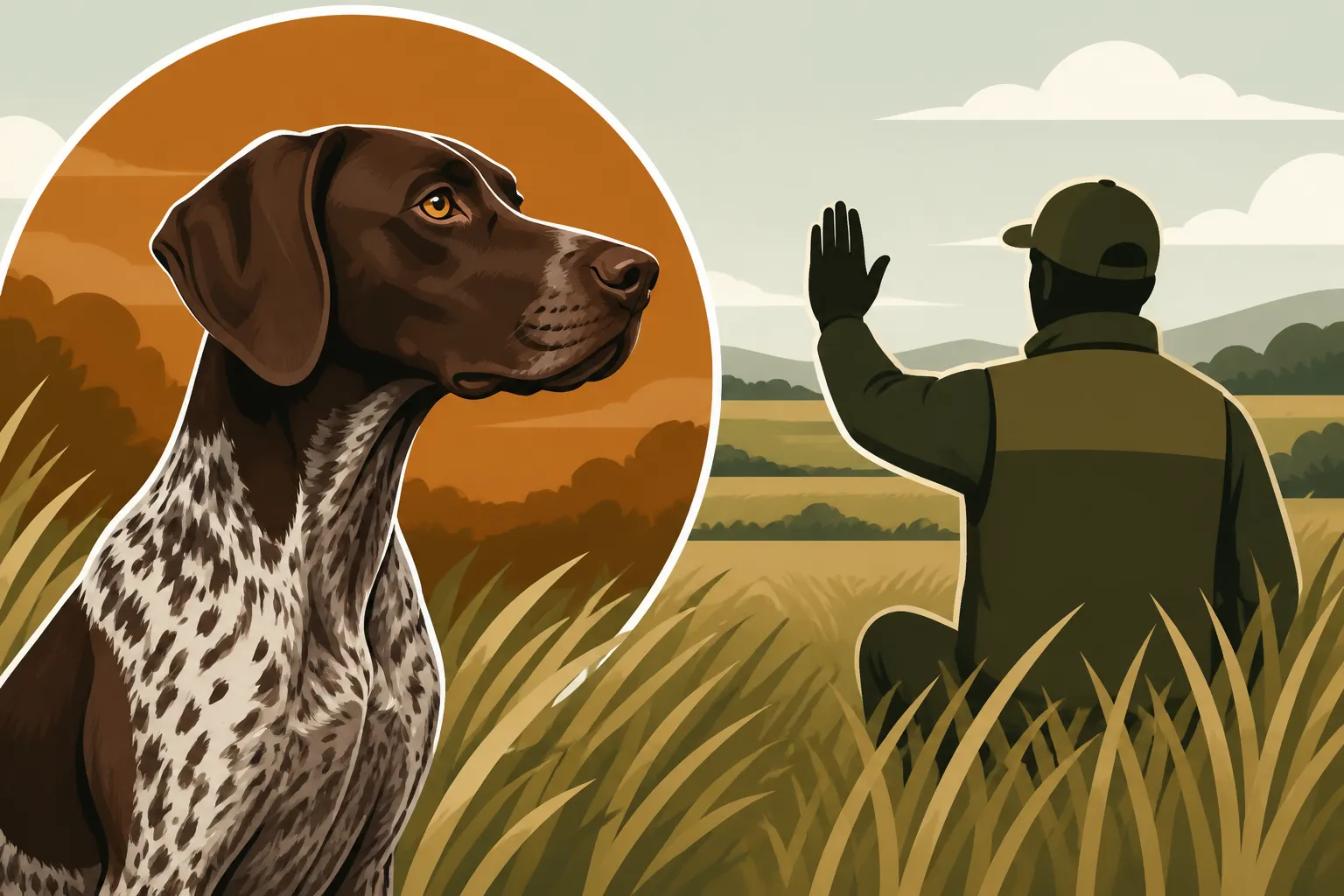
Whether a Shorthair Reads Hand Signals at Two Hundred Yards
It's a common dream for German Shorthaired Pointer owners, especially those of us who love working our dogs in wide-open spaces: to have our GSP respond to a subtle hand signal from what feels like an impossible distance. You're out in the field, your dog is locked up on point 150 yards away, and you need to direct them just a few feet left, or perhaps call them off entirely if the conditions change. The frustration of trying to yell into the wind, or feeling a loss of control when they're ranging far, is real. This guide will dive deep into whether a German Shorthaired Pointer can truly read hand signals at two hundred yards, exploring the natural abilities, the intensive training required, and the factors that make such impressive communication possible.
Understanding the German Shorthaired Pointer's Natural Abilities
German Shorthaired Pointers are, by their very design, exceptional athletes and intelligent working dogs. Their history is steeped in versatility, bred to hunt, point, and retrieve game across varied terrains, often with minimal direct human contact. This innate predisposition lays a crucial foundation for advanced distance work.
Innate Intelligence and Drive
Let's be real, GSPs are smart cookies. They weren't just bred for good looks; they were developed by German hunters who needed a dog capable of performing a multitude of tasks – pointing upland birds, tracking game, and even retrieving waterfowl. This required a keen intellect, problem-solving skills, and an eagerness to cooperate with their handler. Their desire to please, coupled with that intense prey drive, means they are highly motivated students. They want to work, and they want to get it right. This isn't a breed that just runs aimlessly; they are constantly processing their environment, including your cues. When you combine this intelligence with proper training, their capacity for learning complex commands, including those communicated non-verbally, is immense. They learn to associate your physical gestures with specific actions, and because of their high energy and focused nature, they are often looking for direction, even when seemingly far away.
Vision and Attention Span at Distance
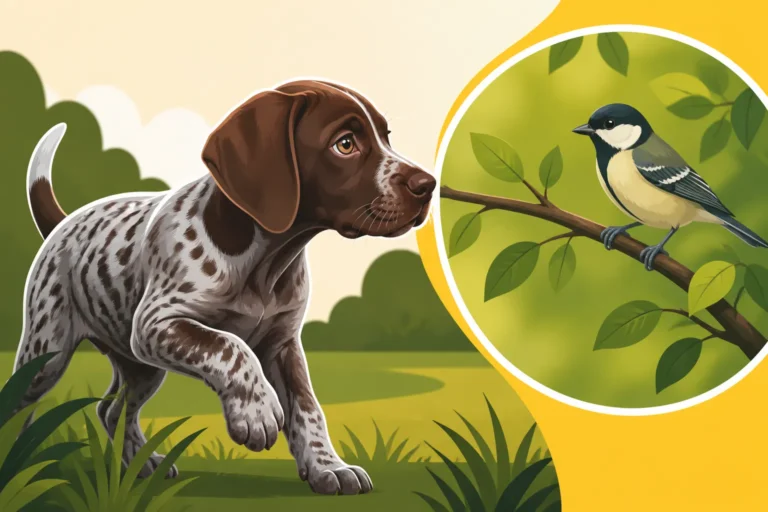
Anyone who's watched a GSP work knows they possess excellent eyesight, a critical trait for a pointing breed. They're scanning the horizon, watching for birds, and this visual acuity extends to recognizing their handler's movements. To catch a hand signal at two hundred yards, a dog needs not only good vision but also an unwavering attention span. This isn't something they're born with for such extreme distances; it's meticulously built through training. From the moment they're puppies, teaching them to focus on you, even amidst distractions, is paramount. Think of it like a human learning to read micro-expressions across a crowded room – it takes practice and a known context. For a GSP, maintaining focus on their handler, even when a rabbit bolts across their path or a fresh scent hits their nose, is a testament to the strength of their bond and the consistency of their training. When you're out there, a simple arm raise or a turn of the body needs to be distinguishable from natural movements, and your dog has to be conditioned to constantly check in with you, even if it's just a quick glance.
The Art of Long-Distance Hand Signal Training
Achieving consistent response to hand signals at two hundred yards is not a fluke; it's a testament to a well-structured and patient training regimen. It's a journey, not a sprint, and every single step builds upon the last.
Building the Foundation: Close-Range Mastery
You wouldn't expect a child to read a complex novel before they master the alphabet, right? The same goes for our GSPs. Long-distance control starts with impeccable close-range obedience. Every command you want your dog to perform at a distance must first be flawlessly executed right at your feet. Commands like "sit," "stay," "come," "heel," "whoa," and directional cues (left, right, back) are taught initially with verbal commands and accompanying hand gestures. Your hand signals need to be crisp, clear, and always mean the exact same thing. For example, a raised hand for "whoa" or "stay" must consistently signify immobility. A sweeping arm motion for "go back" or "over" must always indicate that specific direction.
Repetition is the name of the game, but not just mindless drilling. It's about consistent positive reinforcement, marking the desired behavior with praise, a clicker, or a treat the moment they respond correctly. Once your GSP understands the verbal command and its corresponding action, you start fading the verbal cue, relying more and more on the hand signal. This ensures the hand signal alone carries the weight of the command. This close-range mastery is where the neural pathways are forged, making the later, more challenging distance work possible. A dog that doesn't reliably "whoa" at ten feet won't do it at two hundred. You can read more about starting with basics in Whoa and Why Every Shorthair Starts There.
Gradual Distance Extension and Generalization
Once your GSP is rock-solid on hand signals at close range, the exciting part begins: slowly, incrementally, increasing the distance. This isn't about jumping from 10 yards to 100. It's about a methodical progression. Start by moving back just a few extra feet. If they respond, great! Move back a little more. If they hesitate or fail, you immediately close the distance and reinforce the command where they can succeed. This back-and-forth ensures they never feel overwhelmed and always feel successful.
As you extend the distance, you also need to introduce varied environments and distractions. Training in your quiet backyard is one thing; performing in a field with other dogs, varied scents, and rustling cover is another entirely. Start with minimal distractions and gradually add more, ensuring your dog can generalize the command regardless of the environment. Tools like long check cords are invaluable here, allowing you to give a gentle reminder tug if your dog breaks a "whoa" or misses a directional cue from 30 or 50 yards away. For even greater distances, and for safety, many experienced handlers introduce e-collars (electronic collars) as a communication aid, not a punishment device. When used correctly, they provide a distinct, consistent sensation that can reinforce a hand signal or vocal command at long range. They act as an extension of your arm, giving a gentle tap to remind the dog to check in with you or to reinforce a turn. Training programs like those offered by BAXTER & Bella often provide structured methods for introducing such tools and building reliable distance work, focusing on positive reinforcement and clear communication. You can also explore When an E-Collar Belongs on a German Shorthaired Pointer for more details on its proper use.
Signal Clarity and Dog's Visual Acuity
At two hundred yards, your dog isn't going to see a subtle flick of your wrist. Hand signals need to be exaggerated, distinct, and easily identifiable against the background. Think bold, sweeping movements that contrast with your clothing. A wide-open stance, clearly extended arms, and deliberate body language become your primary language.
Consider the factors that affect visibility:
- Lighting: Bright sunlight can cause glare, while dim light at dawn or dusk reduces clarity.
- Background: A busy background of trees or tall grass can camouflage your signals. A wide-open field offers the best visibility.
- Handler's Clothing: Wearing contrasting colors (e.g., a dark shirt against a light sky, or blaze orange against green cover) can make your movements stand out.
It's also crucial to teach your dog to anticipate and look for these signals. Many handlers incorporate a whistle command – a short, sharp toot – that means "look at me!" This cue signals the dog to turn its head and scan for your next hand signal, bridging the gap when they might be focused elsewhere. This two-step communication, whistle then hand signal, is highly effective for maintaining control at extreme ranges.
Here's a simple table illustrating common hand signals for a GSP:
| Hand Signal Description | Command / Meaning | Application |
|---|---|---|
| Open hand, palm facing dog, arm up | Whoa / Stay | To stop the dog and hold its position, often on point. |
| Sweeping arm motion to the side | Over / Turn | To direct the dog to move left or right. |
| Arm extended back, palm open | Back / Go Back | To send the dog further out or back to a specific area. |
| Arm raised, then sweeping down to ground | Down / Lie Down | To get the dog to lie down on command. |
| Hand patting thigh | Come / Here | To recall the dog immediately to your side. |
| Pointing at an object or area | Fetch / Find | To direct the dog to a specific retrieve or investigate an area. |
Factors Influencing Long-Range Performance
Achieving two-hundred-yard communication isn't just about the dog; it's a dynamic interplay between the dog, the environment, and, perhaps most importantly, the handler.
The Dog's Temperament and Training History
Every GSP is an individual. While the breed as a whole is highly trainable and driven, some dogs have a naturally softer temperament, while others are incredibly bold and independent. A dog with high prey drive and an eager-to-please attitude will generally take to long-distance training more readily than a more hesitant or easily distracted individual. A solid training history, starting from puppyhood, that emphasizes a strong bond, consistent expectations, and positive reinforcement, creates a dog that trusts its handler and looks to them for guidance.
Early socialization plays a huge role here too. A dog exposed to many different sights, sounds, and environments from a young age will be more confident and less likely to be overwhelmed by distractions in the field. This confidence translates into better focus, even when a flock of birds explodes nearby or another dog runs past. Without that foundational work and a history of successful, positive interactions, expecting complex commands at extreme distances is simply unrealistic. Consider the broader training needs in The Structure a German Shorthaired Pointer Needs Daily for a holistic view of their development.
Environmental Conditions and Distractions
The real world is rarely a controlled training ground. Wind, varied terrain, dense cover, and the presence of other game or dogs all introduce variables that can challenge a GSP's ability to pick up on distant hand signals.
- Wind: Strong winds can make it harder for your dog to hear a whistle, and can also carry your scent or the scent of game, potentially distracting your dog from your visual cues.
- Terrain: Hills, dips, and heavy cover can obstruct your dog's line of sight, making hand signals invisible. You need to train your dog to work with the terrain, understanding that they might need to move to higher ground or peek around obstacles to see you.
- Cover: A dog working through chest-high milo or dense brush might only have their head visible, drastically reducing the window for seeing a hand signal.
- Distractions: The ultimate test of long-distance communication is when your dog is fully engaged with a bird, whether it's locked on point or tracking a runner. Their focus will naturally be on the game. This is where the reliability of your signals, built through countless repetitions in increasingly distracting scenarios, truly shines.
It's crucial to train in as many varied conditions as possible. Don't just work your dog on sunny, calm days. Get out there when it's breezy, when the sun is low, and in different types of cover. This helps your dog learn to filter out environmental noise and maintain focus on you. Regularly checking your dog for potential issues after a hunt, like those covered in Checking a German Shorthaired Pointer Over After a Hunt or Foxtails and Grass Awns in a Hunting Shorthair, also reinforces their health and comfort, which contributes to their ability to perform.
Handler Skill and Consistency
Let's face it, the handler is often the weakest link in the chain. Your GSP is a reflection of your training. To get reliable two-hundred-yard responses, you need to be as consistent and disciplined as you expect your dog to be. This means:
- Clear Signals: Ensuring your hand signals are always identical, distinct, and visible from a distance. No mumbling with your hands!
- Consistent Expectations: Never letting a command slide. If you give a "whoa" and your dog creeps, you must correct it immediately, even if it means walking all the way out to them. Inconsistency breeds confusion.
- Patience and Persistence: Training for this level of distance work takes months, even years. There will be frustrating days. Your ability to remain patient, positive, and persistent is key.
- Reading Your Dog: Understanding your dog's body language, knowing when they're confused, when they're about to break, or when they're confidently executing a command, allows you to intervene at the right moment.
- Equipment Mastery: Using tools like whistles, check cords, and e-collars effectively requires skill. Knowing when to use a correction, and at what level, is crucial for maintaining a positive training relationship.
- Physical Fitness: Keeping up with a GSP over open ground to provide timely corrections or praise demands a certain level of handler fitness too!
Investing in quality gear also aids this process. A durable, highly visible check cord (check out options on Amazon) can be an excellent stepping stone for extending control before transitioning to electronic communication. A reliable GPS tracking collar (also widely available on Amazon) can give you peace of mind when your GSP is ranging out of sight, allowing you to focus on training without fear of losing them, and can even help measure those impressive distances.
Real-World Applications and Expectations
So, can a Shorthair actually read hand signals at two hundred yards? Yes, with all the caveats we've discussed, it's absolutely possible. But what does that look like in practice, and what are realistic expectations?
Hunting and Field Work Scenarios
In the world of upland bird hunting, a GSP's ability to respond to distant hand signals is not just impressive; it's a game-changer. Imagine your dog is quartering a vast prairie, 150 yards out, and suddenly locks on point in a patch of cover you can barely see. You know from experience that birds often run from that particular type of cover, so you want to send your dog a few yards ahead, or perhaps direct them to swing wide around a dense thicket to cut off a running pheasant. A subtle "over" signal with your arm, followed by a slight directional sweep, can guide your dog precisely. This level of communication allows you to work smarter, conserving your energy and your dog's, and increasing your chances of success. It means you don't have to break their focus by yelling or running up to them.
These signals are also vital for directing your dog to retrieve a fallen bird in heavy cover, turning them back into a known birdy area, or even having them back another dog's point from a significant distance. For many serious bird hunters, this kind of distant control is not a luxury, but a necessity for truly efficient and enjoyable hunts. The goal isn't just to retrieve; it's to retrieve cleanly and efficiently. As dogs age, their range might naturally decrease, but a well-trained dog can still work effectively for many seasons. You can learn more about their longevity in How Long a Working German Shorthaired Pointer Stays Sound and The Age a German Shorthaired Pointer Slows in the Field.
Competitive Field Trials and Tests
For those who enjoy the competitive side of German Shorthaired Pointers, such as NAVHDA (North American Versatile Hunting Dog Association) tests or AKC hunt tests, long-distance hand signal communication is absolutely critical. These tests evaluate a dog's natural abilities and trained skills in realistic hunting scenarios, often requiring precise control at range. In a NAVHDA Utility Test, for instance, a dog might need to execute a directional retrieve, taking a cast to the left or right to pick up a bird that landed out of sight. The handler cannot use verbal commands, only hand signals or a whistle. A "back" command might send a dog 100 yards out to locate a duck in thick cattails, while a "come in" signal brings them straight back.
Judges are looking for a fluid, cooperative partnership where the dog responds promptly and willingly to the handler's silent cues. A dog that can consistently take and execute these commands at distances well over 100 yards demonstrates a high level of training and an exceptional bond with its handler. If you're considering competition, understanding What the Natural Ability Test Scores on a Shorthair can give you an insight into the foundational skills expected.
Limitations and Realistic Goals
While 200 yards is attainable, it's important to set realistic expectations. This level of performance is at the peak of what's possible and requires exceptional dedication from both dog and handler. Not every GSP, or every owner, will reach this benchmark, and that's perfectly fine! The journey of improving long-distance communication, even if it only gets you to 100 or 150 yards, is incredibly rewarding and enhances your dog's safety and effectiveness in the field or simply makes your walks more enjoyable.
Factors like poor visibility (heavy fog, dense cover, glaring sun), extreme wind, or an exceptionally high-distraction environment can challenge even the most seasoned dog and handler at these distances. Your goal should be consistent, reliable communication at the distances you actually need for your lifestyle, whether that's 50 yards in a local park or 150 yards in vast hunting grounds. Always prioritize clarity, consistency, and maintaining a positive relationship with your dog. The key isn't necessarily hitting that exact 200-yard mark every single time, but rather building a dog that is always aware of your presence and receptive to your guidance, no matter how far they range or how quickly they can cover ground, as discussed in How Far a German Shorthaired Pointer Runs in an Hour. With patience, practice, and a deep understanding of your GSP's capabilities, you can achieve truly remarkable feats of communication.
Disclaimer
This article is for general informational purposes only and does not constitute professional advice. Laws, prices and regulations vary by location and change over time. Consult a qualified professional for guidance on your specific situation.