How Far a German Shorthaired Pointer Runs in an Hour
It’s a question every German Shorthaired Pointer owner, or prospective owner, has probably pondered while watching their athletic companion tear across a field: just how far can this dog run in an hour? It’s not a simple answer, because while these dogs are incredible athletes, their "run" isn't always a steady pace, and many factors influence the actual distance covered. This guide will dive deep into the unique physiology and boundless energy of the GSP, offering realistic expectations for their hourly mileage and crucial advice on how to safely meet their exercise needs.
Understanding the German Shorthaired Pointer's Engine Room
German Shorthaired Pointers are, quite literally, built for motion. Their entire existence revolves around covering ground efficiently and relentlessly. When you see that deep chest, long, powerful legs, and that eager expression, you're looking at a dog designed by generations of selective breeding to be a supreme endurance athlete.
The Breed's Design for Endurance, Not Just Speed
Think of a GSP not as a drag racer, but as a cross-country runner. Their historical purpose in Germany was to be a "versatile hunting dog"—a four-in-one package that could point upland birds, retrieve waterfowl, track game, and even dispatch vermin. To do all of this, often across diverse and challenging terrain, required a dog with incredible stamina, not just short bursts of speed.
This means their bodies are optimized for sustained effort. They have efficient respiratory and circulatory systems, lean musculature, and a high metabolism that allows them to convert food into energy effectively. A well-conditioned German Shorthaired Pointer can maintain a tireless trot or canter for extended periods, searching cover for scent. It’s this mental and physical drive to work that truly sets them apart; they don't just run because they have to, they run because it's what they were born to do. This inherent desire is why they need so much daily physical and mental stimulation; without it, their engine room can feel like it's perpetually idling, leading to frustration for both dog and owner. Understanding this historical context helps us appreciate why a GSP views an hour of running not as a chore, but as pure joy.
Factors Influencing a GSP's Running Distance
Pinpointing an exact number for how far a GSP can run in an hour is tricky because so many variables come into play. It's like asking how far a human can run—are we talking about an Olympic marathoner or someone taking a leisurely stroll?
Consider these critical factors:
- Age and Development: A young puppy, still developing bones and joints, should absolutely not be pushed for distance. Their growth plates are vulnerable, and over-exercising can lead to lifelong issues. Conversely, a senior GSP, say The Age a German Shorthaired Pointer Is Called Senior, will naturally cover less ground and tire more quickly. The sweet spot for sustained, high-intensity running is typically between two and eight years of age, once they're fully mature but before age starts to catch up.
- Conditioning and Fitness Level: This is perhaps the biggest factor. A GSP that gets regular, intense exercise will have far greater stamina than one that primarily lives a sedentary lifestyle with only short walks. A dog that is conditioned for hunting season, for example, will be a finely tuned athlete, capable of covering impressive distances without undue stress. If your GSP hasn't been consistently exercising at a high level, you need to build up their fitness gradually, much like a human training for a race. Trying to go from couch potato to marathoner in a week is a recipe for injury. Conditioning a Shorthair Before Opening Day is crucial for any active season.
- Terrain and Weather Conditions: Running on soft grass is vastly different from navigating rocky trails, deep snow, or thick cover. Rougher terrain increases effort and decreases speed. Similarly, extreme weather, whether scorching summer heat or bitter winter cold, significantly impacts a dog's endurance and how far they can safely go. For instance, The Temperature a German Shorthaired Pointer Should Not Hunt In is a critical consideration to prevent overheating.
- Motivation and Activity Type: Is your GSP running a dedicated jogging path with you, or are they excitedly quartering a field, following scents, and making sudden stops and turns? A focused hunting dog, driven by instinct, will cover ground with incredible intensity and purpose. A dog accompanying a human runner might maintain a more consistent pace, but their internal drive may not be as high if they aren't actively "working."
- Individual Variation: Even within the breed, there's a range. Some GSPs are simply hotter, faster, and more driven than others. Genetics play a role, as does their early exposure to activity and training. One GSP might be content with five miles, while another feels like they've barely started.
The Reality of "An Hour's Run" for a GSP
When we talk about an hour's run, it's essential to define what that "run" actually entails for a German Shorthaired Pointer. It's rarely a steady, unwavering pace like a human on a treadmill. Their activity is dynamic, a beautiful dance of energy bursts and focused searching.
Estimating Distance in Ideal Conditions
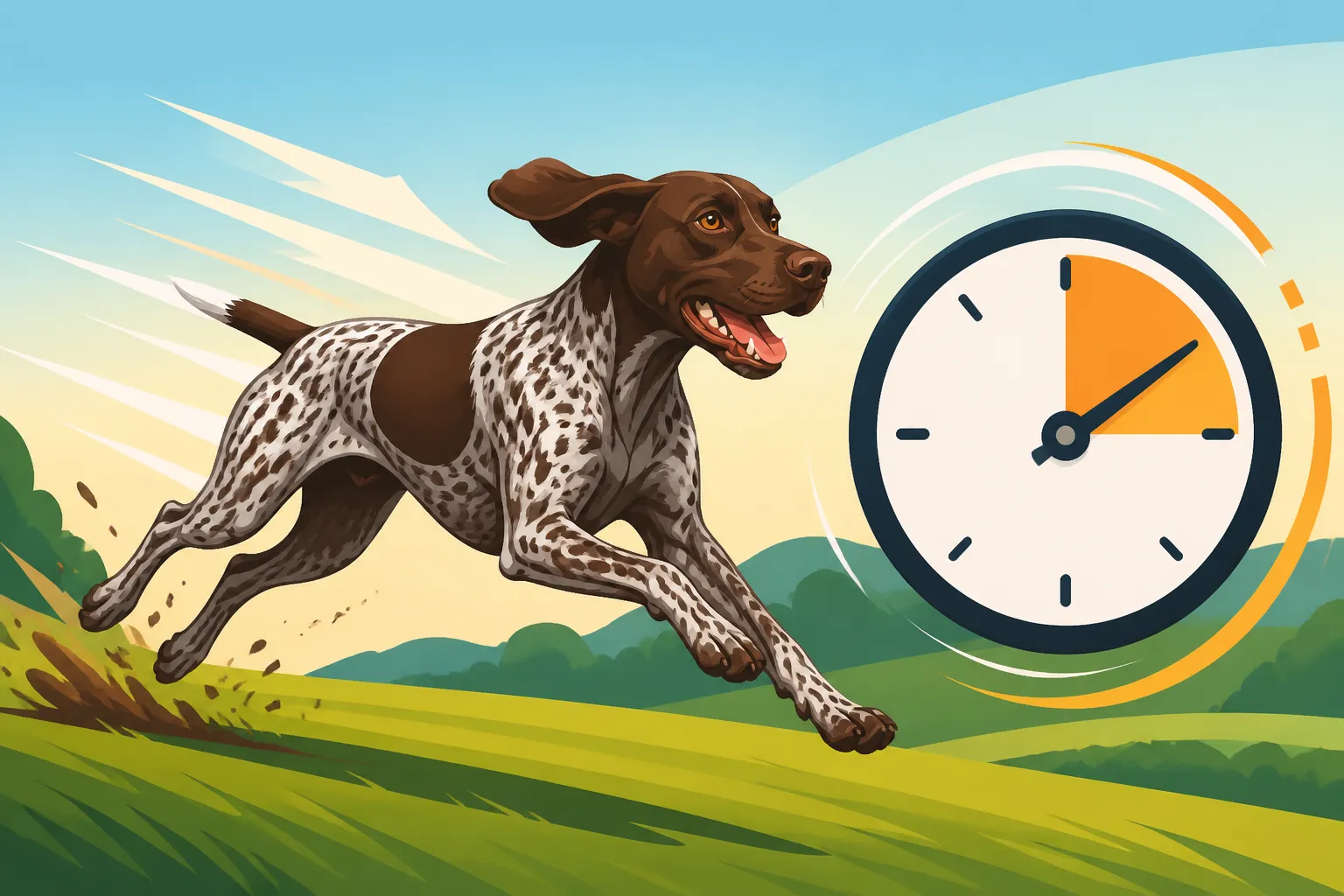
For a well-conditioned, adult German Shorthaired Pointer under ideal conditions (moderate temperature, varied but not overly strenuous terrain like open fields or trails, and consistent but not forced movement), you could realistically expect them to cover anywhere from 5 to 10 miles in an hour.
Let's break that down:
- Pace: A GSP's natural working pace often involves a fast trot or a fluid canter, interspersed with periods of pointing, bursting into a gallop after a flush, or retrieving. An average human jogging pace is typically 5-6 miles per hour. A GSP accompanying a jogger can easily maintain this, often moving at a slightly faster pace with bursts ahead, then circling back.
- Efficiency: Their gait is incredibly efficient. They glide over the ground, minimizing wasted energy. This allows them to cover more distance with less apparent effort than many other breeds.
- Context: This estimate assumes the dog is engaged and moving, whether it's hunting, running alongside a bike, or free-running in a safe, open area. It's not just a walk in the park.
Important Caveats:
- Not a Metric for All Dogs: This is an upper-end estimate for a fit dog. Most pet GSPs, while active, might not be conditioned to this level, especially if their daily exercise consists of leash walks and backyard play.
- Focus on Quality, Not Just Quantity: Don't get hung up on the exact mileage. What truly matters is the quality of the exercise—is it stimulating, physically challenging, and engaging for your GSP? The Two Hours a Day a German Shorthaired Pointer Needs is a general guideline for daily activity, and a good chunk of that should involve vigorous exercise.
What a German Shorthaired Pointer Actually Does in an Hour
Imagine your GSP in a typical field scenario. It's not a monotonous sprint. It's a complex, multi-faceted activity:
- The Search Pattern: A GSP will typically "quarter" the field, running back and forth in front of you, covering every inch to pick up scent. This involves constant changes in direction, acceleration, and deceleration. They might zig-zag for several hundred yards, then make a wide circle, then plunge into a thicket. This meandering, investigative running, while covering ground, isn't a straight line.
- The Point: Suddenly, they lock up—a rigid, intense point. All motion ceases. This can last seconds or minutes, a complete pause in their running.
- The Flush and Chase (or Hold): If a bird flushes, there's an explosive burst of speed. If steady to wing and shot, they might hold their position. If retrieving, they'll gallop to the fallen bird and return. These are high-intensity, short-duration efforts.
- The Trot Back: After a retrieve or a break, they settle back into that tireless trot, ears flapping, nose to the ground, eager for the next scent.
This stop-and-go, high-variability activity is incredibly demanding. While their GPS collar might show 7 miles covered in an hour, that mileage includes all these different modes of movement, many of which burn more energy than a simple straight-line run. It's the equivalent of a human doing interval training, not just a steady state cardio workout. This is why a GSP can appear to run "forever" and still come back ready for more—their genetic programming ensures they can sustain this type of varied, high-output work.
Maximizing Your GSP's Running Potential Safely
Unleashing a GSP's full running potential requires careful planning and a commitment to their well-being. These aren't dogs you can just "turn out" and expect them to be fine without proper management.
Gradual Conditioning and Proper Preparation
Safety and longevity are paramount when exercising a German Shorthaired Pointer. Jumping straight into long, intense runs without preparation can lead to injuries, burnout, or even a dislike for the activity.
- Start Slow, Build Gradually: If your GSP isn't already conditioned for long runs, begin with shorter distances and lower intensity, slowly increasing both over weeks or months. Pay attention to how they recover. Are they limping the next day? Are they unusually lethargic? These are signs you're pushing too hard.
- Warm-Up and Cool-Down: Just like human athletes, GSPs benefit immensely from a proper warm-up before a vigorous run and a cool-down afterward. A 10-15 minute brisk walk or light jog can get their muscles ready. A similar period of walking and gentle stretching (if your dog allows it) can prevent stiffness and aid recovery.
- Hydration is Non-Negotiable: GSPs, especially those with dark coats, can overheat quickly. Always carry plenty of fresh water for your dog, and offer it frequently during runs, especially in warmer weather. Watch for signs of dehydration or Heat Exhaustion in an Early Season Shorthair, such as excessive panting, dark red gums, or staggering. Portable dog bowls are a must-have for any active GSP owner.
- Pad Care: Their paw pads take a beating on long runs, particularly on abrasive surfaces. Inspect your dog's pads regularly for cuts, cracks, or excessive wear. Products designed to toughen pads can be helpful, and in extreme conditions, protective boots might be necessary. Conditioning a Shorthair's Pads Before Opening Day can make a huge difference in preventing mid-season lameness.
- Regular Veterinary Check-ups: A GSP that runs frequently needs regular check-ups to ensure they're in top condition. Your vet can advise on appropriate exercise levels, joint health, and overall fitness. Don't skip The Vet Schedule a Working Shorthair Should Keep.
Recognizing Limits and Preventing Injury
Even the most driven GSP has limits, and it’s our responsibility as owners to recognize them. Pushing a dog beyond its capacity can lead to serious health issues.
- Watch for Fatigue: A truly tired GSP might lag behind, show reluctance to move, or become less responsive to commands. Their stride might shorten, and their tail might drop. Don't confuse normal exertion with dangerous fatigue.
- Lameness or Stiffness: Any limping, favoring a leg, or unusual stiffness after a run warrants immediate attention. It could be a minor muscle strain, a torn pad, or something more serious.
- Overheating: As mentioned, GSPs are prone to overheating. Beyond panting, look for drooling, bright red gums, rapid pulse, and disorientation. If you suspect overheating, stop immediately, move to a cool, shaded area, offer water, and consider cooling their body with wet towels.
- Joint Health: The constant impact of running can take a toll on joints over time. This is especially true for a breed that can be predisposed to conditions like hip or elbow dysplasia. Discuss appropriate joint supplements with your vet. Joint Supplements for a Hunting German Shorthaired Pointer can be a proactive measure. Remember, The Age a German Shorthaired Pointer Can Start Roadwork should be carefully considered to protect developing joints.
- Rest Days are Essential: Just like human athletes, GSPs need rest days to allow their bodies to recover and repair. Don't feel guilty about giving them a day off from intense exercise; it's crucial for preventing overuse injuries and maintaining peak performance.
Gear and Training Aids for Safe Running
Having the right equipment and training philosophy can make a world of difference in your GSP's running life.
- GPS Tracking Collars: For off-leash running in open spaces, a reliable GPS tracking collar is an absolute must-have. Brands available on platforms like Amazon offer excellent options that can not only help you locate your dog if they range too far, but also provide valuable data on distance covered, speed, and even caloric expenditure. This information can help you better understand your dog's activity levels and tailor their training.
- E-Collars for Recall: While not for everyone, an E-collar (electronic collar) used responsibly and correctly can be an invaluable tool for maintaining control and ensuring safety during off-leash running, especially for a breed like the GSP with a strong prey drive. They allow for consistent communication over distance, which is crucial when your dog might be a quarter-mile ahead. Again, a wide variety of reputable options can be found on Amazon. Proper training with an E-collar is essential; it should never be used punitively.
- Appropriate Harness and Leash: If you're running on-leash, invest in a comfortable, well-fitting harness that doesn't restrict shoulder movement or chafe. A hands-free leash that attaches to your waist can be a game-changer, allowing you to maintain your running form while keeping your dog securely by your side.
- Structured Training Programs: Sometimes, managing a high-energy GSP feels like trying to contain a whirlwind. Utilizing structured training programs can provide the framework needed to channel that energy constructively. Companies like BAXTER & Bella offer comprehensive online puppy and dog training programs that can help you establish strong foundational obedience, build reliable recall, and instill manners that are vital for a dog that spends a lot of time off-leash and interacting with the world. These programs often emphasize positive reinforcement, which is excellent for sensitive and intelligent breeds like the GSP. Learning commands like "Whoa" or "heel" at varying speeds and distractions can greatly enhance safety and enjoyment during runs.
- Consider Specialized Activities: Beyond just running, think about activities that engage their natural abilities. Running a Shorthair Beside a Bike Safely (bikejoring) or Roading a German Shorthaired Pointer for Fitness can be excellent ways to provide intense, sustained exercise. These activities can cover significant distances and work different muscle groups, all while keeping your GSP mentally stimulated.
Running with a German Shorthaired Pointer is more than just exercise; it's a partnership, a way to connect with a dog that lives for movement. By understanding their incredible capabilities, respecting their limits, and providing them with the right preparation and tools, you can ensure many miles of happy, healthy adventures together.
Disclaimer
This article is for general informational purposes only and does not constitute professional advice. Laws, prices and regulations vary by location and change over time. Consult a qualified professional for guidance on your specific situation.