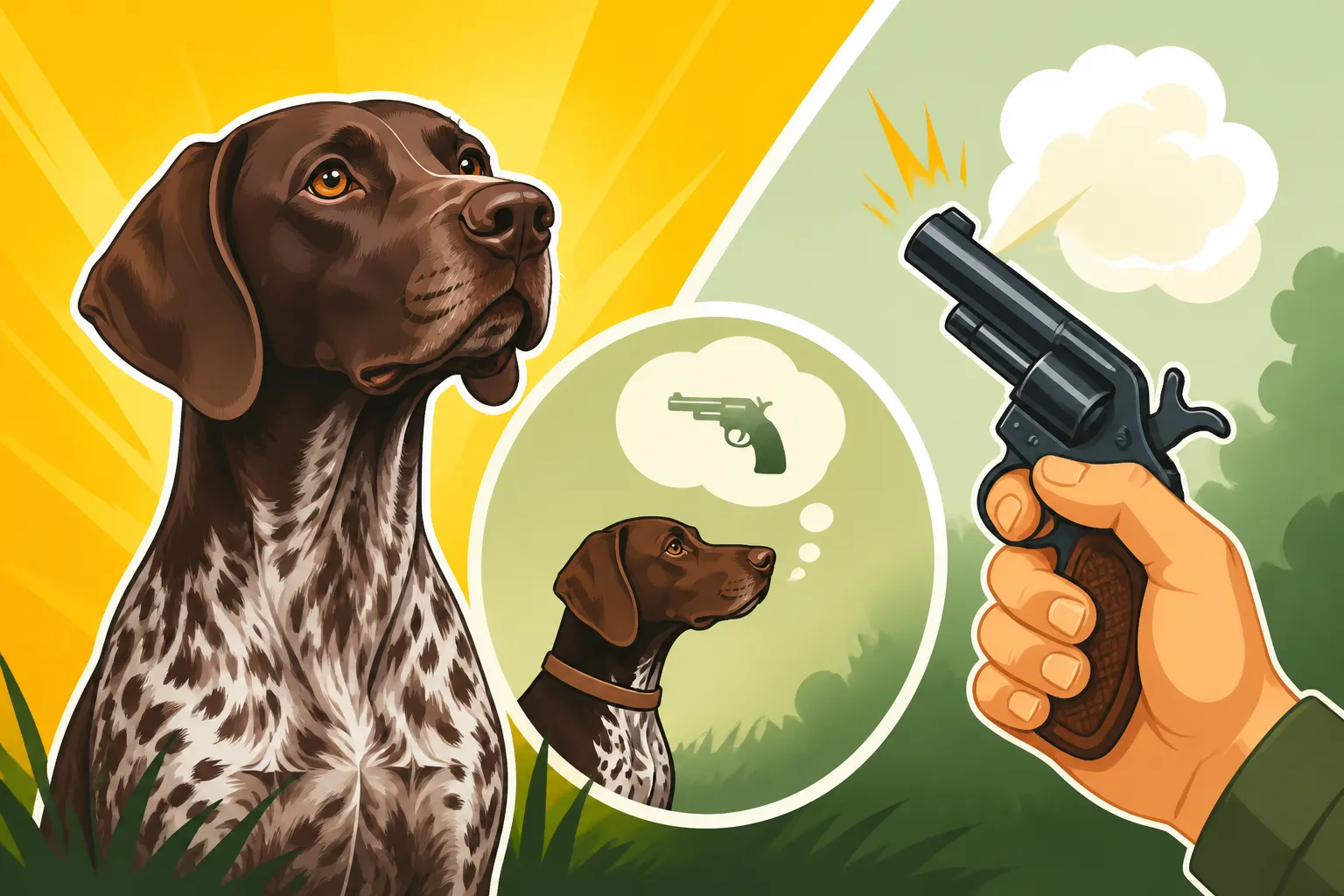
Starting a Shorthair’s Gun Introduction With a Cap Pistol
The thought of introducing your energetic German Shorthaired Pointer to the sound of gunfire can be incredibly daunting, often filling owners with anxiety about doing it wrong and creating a gun-shy dog. Many of us have heard the horror stories, or perhaps even experienced the heartbreak, of a promising hunting companion ruined by a single misstep. This guide is here to walk you through a gentle, positive, and systematic approach, starting with a simple cap pistol, to ensure your GSP builds a confident, lifelong association with loud noises.
Why Starting Right with Gun Introduction is Critical for Your GSP
German Shorthaired Pointers are, by their very nature, sensitive and intelligent dogs. While they are bred for the field, their eagerness and intense focus can sometimes mask an underlying sensitivity to new experiences, especially sudden, loud noises. Rushing the introduction to gunfire is one of the most common, and unfortunately, most irreversible mistakes an owner can make. It’s not just about getting them to tolerate the sound; it’s about ensuring they embrace it as a cue for fun and work, not fear.
The Lifelong Impact of Gun Shyness
Imagine a dog that cowers at the sound of a distant firecracker, hides under the bed during a thunderstorm, or worse, bolts for the truck at the crack of a shotgun. This isn't just an inconvenience; it's a profound welfare issue for a dog whose instincts are tied to the sounds of the hunt. Gun shyness is a phobia that can manifest in various ways, from mild anxiety to full-blown panic attacks, sometimes even leading to aggression or destructive behaviors. Once established, it can be incredibly difficult, if not impossible, to fully resolve, drastically altering your dog’s quality of life and your relationship with them. It can also end a promising hunting career before it even truly begins. We want our shorthairs to be bold and confident partners, not trembling shadows.
The repercussions extend beyond hunting. A gun-shy dog might also develop sensitivities to other loud noises, making everyday life challenging. Construction sounds, slamming doors, even a dropped pot in the kitchen can trigger a fear response. This isn't just about their ability to perform a task; it's about their overall emotional well-being and ability to enjoy a normal, happy life alongside their human companions. Preventing this outcome is far easier and kinder than trying to cure it.
Understanding Your Shorthair's Sensitive Nature
German Shorthaired Pointers are known for their intense bond with their owners and their desire to please. This strong connection makes them highly attuned to our emotions and reactions. If we are nervous, they pick up on it. If we are frustrated, they feel it. This sensitivity, while a wonderful trait for training and partnership, also means they can be easily overwhelmed by negative experiences, particularly during their critical developmental stages. Their high prey drive and exuberance in the field, which can make them seem fearless, can sometimes mask a deeper emotional fragility when it comes to unexpected sensory input.
Their genetic predisposition for hunting also means they are hardwired to react to stimuli in the field. A sudden, jarring sound that isn't properly introduced can short-circuit their natural retrieve or point, turning an instinctive drive into a source of terror. Building positive associations is about leveraging their intelligence and desire to work with you, rather than letting a frightening experience hijack their natural abilities. It's why a methodical approach, starting small and gradually building up, is so utterly essential. We want to reinforce their natural courage, not shatter it. Reading a German Shorthaired Pointer's Stress Signals is crucial here, as early recognition of discomfort can prevent a snowballing fear response.
Essential Preparations Before the First Pop
Before you even think about introducing a cap pistol, it's vital to lay a solid foundation. This isn't just about the noise itself, but about creating an environment where your GSP feels secure, happy, and associates new experiences with positive outcomes. A rushed introduction in a chaotic setting can be just as damaging as a too-loud sound. Think of it as setting the stage for success.
Building a Foundation of Trust and Positive Association
Your GSP needs to trust you implicitly. This means having a strong relationship built on consistent positive reinforcement, clear communication, and plenty of fun activities together. Ensure your dog has a solid grasp of basic obedience commands like "sit," "stay," and "come." These commands will be invaluable during the introduction process, allowing you to manage their behavior and ensure their safety. Programs like those offered by BAXTER & Bella can be fantastic resources for building this foundational obedience in a positive, reward-based way, setting your dog up for success in all areas of their training. A well-socialized, confident dog is much less likely to be startled into fear by new sounds.
Beyond formal training, spend quality time playing with your dog. Tug-of-war, fetch, and hide-and-seek build confidence and reinforce your bond. The more positive experiences your dog has with you, the more resilient they will be to novel situations. Make sure they are regularly exercised and mentally stimulated. A tired, happy dog is generally more relaxed and less prone to anxious reactions. The Structure a German Shorthaired Pointer Needs Daily often includes plenty of mental stimulation alongside physical activity.
Choosing the Right Environment and Equipment
The location for your initial gun introduction sessions is almost as important as the method itself. You need a calm, controlled, and distraction-free environment. A large, open field away from residential areas, roads, or other loud noises is ideal. Avoid windy days, as wind can carry sound erratically and make it harder to gauge your dog's reaction. The goal is predictable sound, predictable environment.
For equipment, you'll need a cap pistol – the simpler, the better, like those often found for children's play. You'll also need high-value treats that your GSP absolutely loves, a favorite toy, and a long lead or check cord to maintain control if needed. Remember to wear appropriate hearing protection for yourself, even with a cap pistol, as repeated exposure to any loud noise can be damaging. You can find simple cap pistols and hearing protection on online retailers like Amazon. It's also wise to have a training partner to help, especially in the early stages, so one person can focus on the dog while the other handles the sound.
Step-by-Step: Introducing the Cap Pistol
This is where the rubber meets the road. Patience is your most important tool here. Do not rush any step, and always prioritize your dog's comfort and positive experience. The goal is to build curiosity and excitement, not apprehension.
The Initial Distances and Observations
Start by having your training partner stand a significant distance away from you and your GSP – at least 50 to 100 yards, depending on how loud the cap pistol is and your dog's general sensitivity. The first few sessions might even begin with the sound coming from behind a natural barrier, like a hill or dense woods, to further muffle it. While your partner is at that distance, engage your GSP in a highly enjoyable activity. This could be playing fetch with their favorite toy, giving them a special chew, or simply showering them with affection and high-value treats. The key is that they are deeply absorbed in something positive.
Have your partner fire a single cap pistol shot while your dog is happily engaged. Observe your dog's reaction very closely.
- Ideal Reaction: Your dog barely notices, perhaps flicking an ear but immediately returning to the activity.
- Mild Curiosity: Your dog looks towards the sound, perhaps slightly pauses, then continues playing without visible anxiety.
- Slight Startle: Your dog startles, perhaps flinches or looks around with wide eyes, but recovers quickly and is easily re-engaged.
If your dog shows anything more than a slight startle, stop for the day, make a mental note, and try again tomorrow at an even greater distance or with more distraction. The session should end on a positive note, regardless of the reaction. Never push through fear. This initial stage is all about building a positive, or at least neutral, association. How Far From a Shorthair to Fire the First Shot emphasizes the importance of distance.
Gradually Decreasing Distance and Increasing Intensity
Once your GSP consistently shows no adverse reaction at the initial distance, you can gradually begin to decrease the distance between the cap pistol and your dog. Move in increments of 10-15 yards at a time. This process might take days, weeks, or even months, depending on your individual dog. Some shorthairs are naturally bolder, while others need more time. Each session, repeat the process: engage your dog in a fun activity, fire a single shot, and observe.
Gun Introduction Checklist
| Step | Action | GSP Reaction to Watch For | Next Step/Troubleshooting |
|---|---|---|---|
| 1. Foundation | Ensure strong basic obedience, positive bond. | Confidence, responsiveness, engagement. | Revisit obedience training; increase positive play. Ninety Minutes of Real Exercise for a Shorthair helps. |
| 2. Environment | Choose quiet, open field, no distractions. | Calm demeanor, focus on you. | Change location; remove distractions; ensure GSP is well-exercised beforehand. |
| 3. Initial Distance | Partner 50-100+ yards away; GSP engaged in high-value activity. | Ears flick, no overt fear, quickly re-engages. | Increase distance; use even higher-value treats/toys; reduce sound (e.g., behind cover). |
| 4. Gradual Approach | Decrease distance by 10-15 yards each successful session. | Consistent calm or curious reaction, continued engagement with activity. | Stop if any fear sign; revert to previous successful distance; slow down. |
| 5. Multiple Shots | Introduce a second shot after initial one is consistently ignored. | No change in positive reaction. | Delay adding shots; ensure comfort with single shots at current distance. |
| 6. Vary Activity | Introduce shots during different positive activities (walking, pointing). | Unfazed by sound while performing other tasks. | Revert to pure play; simplify the activity. Introducing a German Shorthaired Pointer to Birds can come later. |
| 7. Handler Fires | You, the handler, fire the pistol from a distance. | No change in reaction; still focused on task/treats. | Have partner resume firing; ensure GSP does not associate you with the frightening sound. |
| 8. Move & Fire | Fire as you move, or during field scenarios. | Ignores sound, maintains focus on work/fun. | Revert to stationary firing; simplify the scenario. |
As your GSP becomes accustomed to the sound at closer ranges, you can start introducing a second shot, but only after the first one is consistently ignored. Wait a few seconds between shots to gauge their reaction to each. Gradually, you can introduce more shots in quick succession, always ensuring your dog remains relaxed and happy. The goal is for the sound to become completely unremarkable, just another part of their fun experience. Remember that What a Shorthair's Seizure Looks Like the First Time can include very subtle signs of extreme stress, so watch for anything unusual.
What to Do if Your Shorthair Shows Stress
It’s crucial to know the signs of stress and fear in your GSP. These can be subtle, especially in a breed that tries so hard to please. Look for:
- Tucked tail
- Flattened ears
- Wide, dilated eyes ("whale eye")
- Lip licking or excessive yawning
- Crouching or cowering
- Excessive panting (when not hot or exerting)
- Trembling or shivering
- Trying to escape or hide
- Refusal to take treats or play
If you see any of these signs, even subtle ones, stop immediately. Do not try to soothe or coddle your dog in the moment, as this can inadvertently reinforce their fear. Instead, simply end the session, perhaps by throwing a favorite toy in the opposite direction of the sound, and calmly walk away. The next time, go back to a much greater distance where your dog was comfortable, or even take a few days off from gun introduction entirely. Sometimes, simply taking a break and rebuilding their confidence with fun, familiar activities is the best medicine. Signs a German Shorthaired Pointer Has Gone Gun Shy provides further detail on recognizing these crucial indicators.
Progressing Beyond the Cap Pistol and Preventing Setbacks
Once your German Shorthaired Pointer is completely comfortable with the cap pistol at close range and during various positive activities, you can start thinking about introducing slightly louder sounds. This progression needs to be just as careful and gradual as the initial cap pistol steps.
Moving to Louder Sounds Safely
The natural next step after a cap pistol is often a blank pistol, which produces a significantly louder pop. Do not jump directly from a cap pistol to a full shotgun blast. The jump in sound intensity is far too great and will likely undo all your hard work. When introducing the blank pistol, revert to the same initial distant approach you used with the cap pistol – 50 to 100 yards, or even further if needed. Repeat the entire process of gradual distance reduction, positive reinforcement, and careful observation. Whether a Shorthair Hears a Blank Pistol or a Shotgun First is a common question, and the answer for safe introduction is always to progress slowly.
Once the blank pistol is comfortable, you can then consider moving to a .22 rifle fired at a very long distance, or a 20-gauge shotgun fired at an extreme distance (e.g., 200-300 yards), before eventually introducing a 12-gauge shotgun from afar. Each step in sound intensity requires a reset of your distance and a renewed commitment to patience. It's not about how quickly you get there, but how confidently your dog arrives. Always ensure the sound is associated with something positive, like a retrieve, a treat, or praise.
Maintaining Positive Associations and Reinforcement
The goal isn't just to make your GSP tolerate gunshots; it's to make them associate the sound with positive, exciting things, like birds flushing, retrieving a bumper, or hunting. Once your dog is comfortable with the sounds, start incorporating them into actual training scenarios. Fire a cap pistol (or eventually a blank pistol) right as a training bumper is thrown, or when a bird flushes during controlled bird work. Your dog should be so focused on the exciting activity that the sound becomes merely background noise, a cue that good things are happening.
Consistency is key. Don't let weeks or months go by without reinforcing this training. Even once your GSP is fully gun-broke, occasional positive exposure to gunshots during training or fun outings will help maintain their confidence. Avoid any situation where a gunshot could be associated with a negative experience, such as a painful injury, severe reprimand, or being startled without warning. Remember, preventing gun shyness is infinitely easier than Fixing a Gun Shy German Shorthaired Pointer. Keep it fun, keep it positive, and you'll have a confident, happy hunting partner for years to come.
Disclaimer
This article is for general informational purposes only and does not constitute professional advice. Laws, prices and regulations vary by location and change over time. Consult a qualified professional for guidance on your specific situation.