Common Mistakes That Ruin Whoa on a Shorthair
It's incredibly frustrating when you pour your heart and soul into training your German Shorthaired Pointer, especially on a fundamental command like "whoa," only to see it unravel right when it matters most in the field. This guide dives deep into the common pitfalls and well-intentioned blunders that can accidentally undermine your GSP's "whoa" command, helping you understand how to solidify this crucial skill.
Understanding "Whoa" Beyond the Command
"Whoa" isn't just a simple stop command for a German Shorthaired Pointer; it's a foundational pillar of their field training, embodying self-control, patience, and respect for the bird. For a breed born with an insatiable drive to hunt and retrieve, teaching "whoa" is about channeling that intense instinct into disciplined action, rather than stifling it. It requires an understanding of what makes these incredible dogs tick and how to communicate expectations clearly and consistently.
What "Whoa" Truly Means for a German Shorthaired Pointer
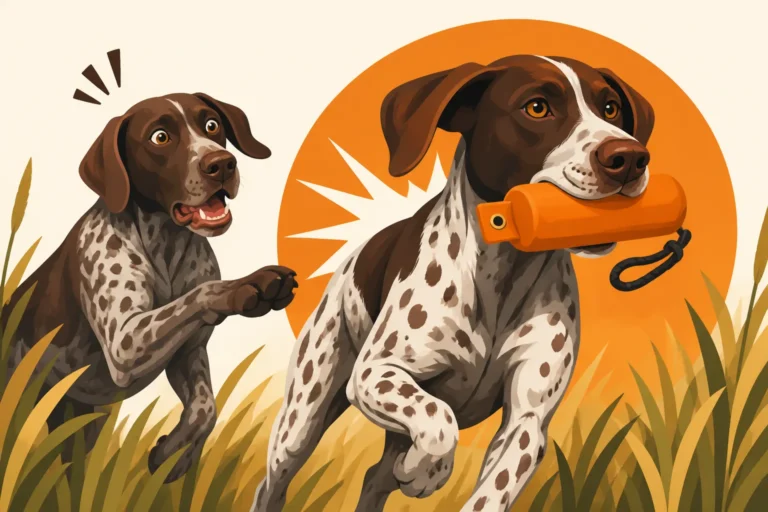
For a GSP, "whoa" means to stop, stand perfectly still, and maintain that position regardless of distractions. This isn't just a brief pause; it's an unwavering stance in the face of flushing birds, gunshots, or other dogs. It's about developing the dog's ability to "honor the point"—to hold steady while a bird is being worked or even shot over them. Without a solid "whoa," a GSP's natural drive can lead to bumping birds, breaking point, or even chasing shot game prematurely, which can be detrimental to a successful hunt and even dangerous.
Think about it from your Shorthair's perspective: their entire being is wired to find and pursue. To ask them to halt mid-stride, perhaps with the scent of a pheasant hot in their nostrils, takes immense mental fortitude and trust in their handler. It's an override of their most powerful instincts, which is why it demands such careful and patient instruction. A truly "whoa-broke" dog is a joy to hunt over, a true partner in the field, moving with purpose and holding steady on command, allowing you to approach the flush without interference.
The Foundation: Building Patience and Impulse Control
Before you even dream of putting a bird in front of your young German Shorthaired Pointer, the groundwork for "whoa" begins with general obedience and fostering impulse control in everyday life. This means teaching your puppy to sit-stay, down-stay, and wait for their food bowl. These seemingly simple exercises build the mental muscles needed for more advanced commands. A dog that can't hold a sit-stay for a minute in your living room isn't ready to hold a point on a wild bird.
Start teaching patience early, in low-distraction environments, gradually increasing the challenge. Many trainers suggest that formal "whoa" training, especially on a barrel or whoa post, can begin around six months of age, though simple restraint and patience exercises should start much earlier. You can find more about this in articles like The Age a Shorthair Puppy Starts Whoa. It's about a systematic progression: command, immediate correction/guidance if they break, then praise. Consistency here is key. If you sometimes let them break a stay at home, they learn that "stay" is optional, and that attitude will certainly transfer to "whoa" in the field.
Common Training Pitfalls to Avoid
Training a German Shorthaired Pointer requires precision and understanding. Many common mistakes, often made with the best intentions, can actually undermine the "whoa" command and create more problems than they solve. Recognizing these pitfalls is the first step toward building a truly steady and reliable hunting partner.
Rushing the Introduction to Birds or Gunfire
One of the most frequent and damaging errors I see handlers make is introducing their young GSP to live birds or gunshots before the "whoa" command is absolutely bombproof in less distracting scenarios. A German Shorthaired Pointer’s prey drive is incredibly strong. If you put a bird in front of a pup that hasn't fully grasped the concept of holding steady, their natural instinct to chase will almost always override any budding understanding of "whoa." They learn to bump birds, flush wildly, and associate the scent of game with immediate pursuit, making it incredibly hard to retrain later.
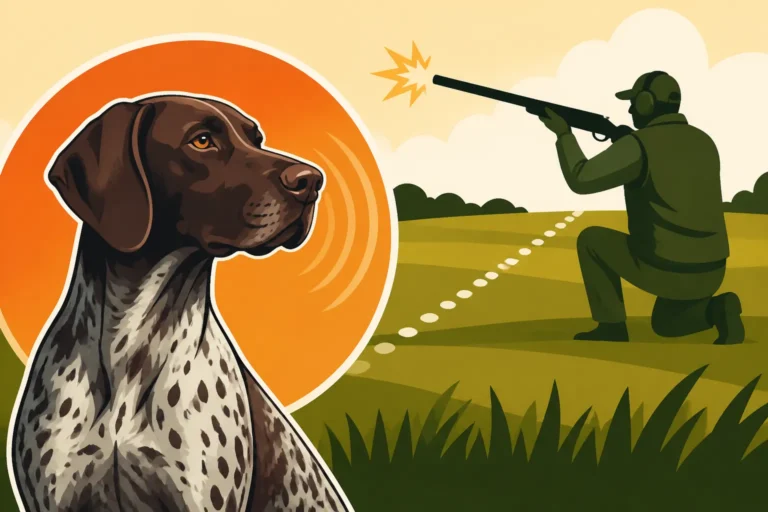
It's tempting to want to see your Shorthair point a bird, but patience here is paramount. Start with inanimate objects, then wing-on-a-string, then controlled planted birds, all while reinforcing the "whoa." Similarly, introducing gunfire too early or too abruptly can create gun shyness, which is a whole other headache. Gun introduction should be a gradual, positive experience, always started at a significant distance from the dog and only after they are comfortable with the environment and the concept of "whoa." Never pair the first gunshots with intense pressure or correction. You can learn more about this careful introduction in guides like Building a Shorthair's Gun Tolerance From a Distance.
Inconsistency in Enforcement and Expectations
Dogs thrive on consistency, and German Shorthaired Pointers, with their keen intelligence, are quick to pick up on inconsistencies in training. If you sometimes let your GSP break "whoa" because you're tired, or you're in a hurry, or a family member isn't adhering to the rules, your dog learns that "whoa" is conditional. They begin to "test the waters," waiting to see if this time they can get away with breaking point or creeping. This creates a deeply unreliable command.
Imagine a scenario: one day you strictly enforce "whoa" with a check cord and praise, but the next, your spouse lets the dog creep forward a few feet before calling them off. Your GSP doesn't understand nuanced human rules; they only understand what gets them a reward or avoids a correction. This mixed messaging leads to confusion and ultimately erodes their trust in the command. Every single time "whoa" is given, it must be enforced. If you can't enforce it, don't give the command. This means all handlers—everyone who interacts with the dog—must be on the same page, using the same cues and expecting the same level of compliance.
Over-Correcting or Under-Correcting
Finding the right balance of correction is a delicate art, especially with a breed as sensitive and intelligent as the German Shorthaired Pointer. Over-correcting can lead to a dog that is fearful, hesitant, or "shuts down" under pressure. A harsh leash pop or an overly strong e-collar stimulation (when used improperly or too early) can make a Shorthair associate "whoa" with pain or fear, rather than a desired behavior. This can result in a dog that loses its natural enthusiasm, becomes soft on point, or even tries to avoid hunting altogether. It’s important to recognize Reading a German Shorthaired Pointer's Stress Signals to avoid these issues.
On the flip side, under-correcting is equally detrimental. If a dog consistently breaks "whoa" and receives no consequence, they learn that the command has no meaning. Their natural drive takes over, and you'll end up with a "runner" or a dog that constantly bumps birds. The key is timely, appropriate correction that clearly communicates what was wrong without instilling fear. This might mean a gentle but firm tug on a check cord or a low-level, properly timed e-collar stimulation that serves as a tap on the shoulder, not a punishment. The goal is to guide and teach, not to intimidate. Understanding your individual dog's temperament is crucial here; a soft Shorthair will need a lighter touch than a bolder, more headstrong one.
Equipment and Environment Blunders
Effective "whoa" training for a German Shorthaired Pointer relies not just on what you teach, but how and where you teach it. The wrong equipment or an unsuitable training environment can hinder progress and ingrain undesirable habits.
Improper Use of Training Equipment
Training equipment, from check cords to e-collars, are tools meant to aid communication and enforce commands. However, they are only as effective as the handler using them. A common mistake is relying on equipment as a crutch rather than an extension of your training. For instance, an e-collar, when introduced correctly, can be an invaluable tool for reinforcing "whoa" at a distance. But if it's used as the primary teaching method, without first building understanding with a check cord in close quarters, it can confuse and even frighten your GSP. The dog learns to avoid the stimulation, not to perform the command. Proper use is about pairing the stimulation with the command and the desired action, gradually reducing reliance on it as the dog understands. Remember, Conditioning a Shorthair to the E-Collar Properly is a process, not a shortcut.
Similarly, a check cord is fundamental for early "whoa" training. It allows you to physically prevent your dog from breaking point. But if the cord is too short, too long, or used with erratic jerks, it becomes ineffective. The point of the check cord is gentle, consistent guidance, a physical boundary that reinforces the verbal command. I've seen handlers use a check cord so aggressively that the dog anticipates discomfort, becoming tense on point rather than relaxed and steady. For effective training, consider picking up a good quality, long check cord from a reputable source like Amazon, something durable that allows your dog freedom of movement while still providing control.
Training in Distracting or Uncontrolled Environments
Another significant blunder is introducing "whoa" training in highly distracting environments too soon. Picture this: you've got a young GSP, you've worked on "whoa" in your quiet backyard, and you think they're ready. So you take them to a public park with squirrels, other dogs, and children, and expect them to hold steady while a bird flushes. It’s a recipe for disaster. The dog, overwhelmed by sensory input, will likely break, and every time they break, that undesirable behavior is reinforced.
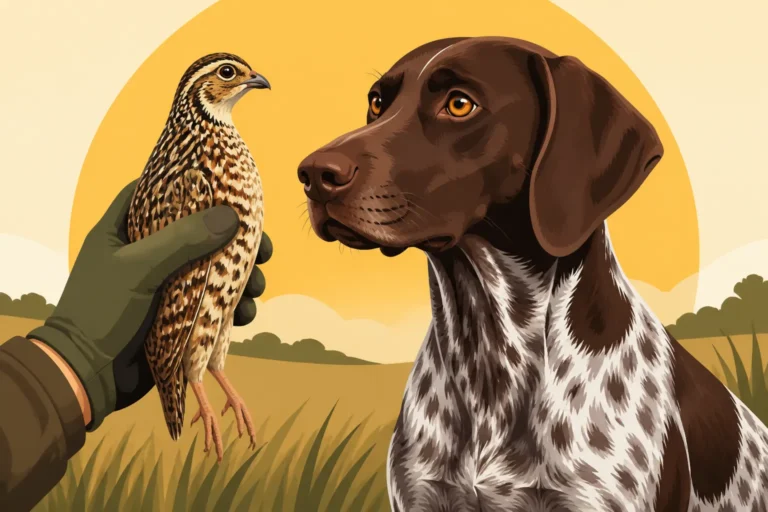
Training should always follow a carefully planned progression from low-distraction environments to progressively higher ones. Start in a quiet room, then your backyard, then a fenced area with minimal distractions. Introduce birds, such as pigeons, in a controlled setting where you can guarantee success, like an open field you've scouted yourself, or better yet, a training pen. Learning Using Pigeons to Start a Shorthair is an excellent way to control the introduction of game. Only once your GSP is rock-solid in these controlled scenarios should you gradually introduce more variables, like other dogs, varying terrain, and eventually, wild birds. Each step builds confidence and understanding, rather than setting them up for failure.
Overlooking the Dog's Temperament and Learning Style
One of the most profound joys of owning a German Shorthaired Pointer is their individuality. While they share core breed traits, each dog is a unique personality with its own temperament and learning style. Failing to acknowledge these differences can be a critical mistake in "whoa" training, turning a promising prospect into a frustrated dog or handler.
Treating Every Shorthair the Same
It’s tempting to follow a generic training manual or assume that what worked for your last GSP will work for your current one. However, this cookie-cutter approach often backfires. Some Shorthairs are naturally "soft," meaning they are highly sensitive to corrections and can become withdrawn or shut down if handled too harshly. For these dogs, a gentle voice, subtle physical cues, and lots of positive reinforcement are far more effective than stern commands or strong physical corrections. Overly harsh treatment can make them timid on point or hesitant to engage. You might find that such a sensitive dog struggles with even the mildest pressure, and their Reading a German Shorthaired Pointer's Stress Signals can be quite subtle.
Then you have the "harder," more headstrong GSPs. These dogs might test boundaries more often and require firmer, more consistent correction to understand what's expected. For them, a light touch might be perceived as a suggestion rather than a command. While still avoiding cruelty, a confident, assertive handler is necessary to guide these dogs without breaking their spirit. Understanding How to Read a Shorthair Pedigree for Hunting Ability can sometimes give you clues about potential temperament, as certain lines might be known for stronger drives or b softer dispositions. It’s crucial to observe your individual dog, learn their unique language, and adapt your methods to suit their personality.
Not Making Training Enjoyable and Rewarding
Training, especially for an active and intelligent breed like the German Shorthaired Pointer, should be a positive and engaging experience. A significant mistake is allowing "whoa" training to become a boring chore or, worse, a negative experience associated with constant correction and no fun. If your Shorthair dreads the training session, they'll be less enthusiastic, less focused, and less likely to retain what they learn. They might even develop an aversion to the training tools or the field itself.
Instead, strive to make training sessions fun, dynamic, and always end on a positive note. Use plenty of high-value treats (think Treats a German Shorthaired Pointer Trains For) and enthusiastic praise when they perform well. Even when a correction is needed, immediately follow up with an opportunity for them to succeed and be rewarded. Short, frequent sessions are far more effective than long, arduous ones that drain your dog's enthusiasm. Introduce variation in your training, incorporating games and short bursts of play, always returning to the "whoa" command with a fresh, positive attitude. Resources like BAXTER & Bella offer structured, positive reinforcement-based training programs that can help you keep things fun and engaging for both you and your GSP, creating a stronger bond and a more willing learner. Remember, building that enthusiasm for the work is part of The Structure a German Shorthaired Pointer Needs Daily.
For instance, after a few successful "whoa" holds on a Teaching a Shorthair Whoa on a Table or Barrel, reward them not just with a treat, but with a quick game of fetch or a short run, reinforcing that "whoa" leads to good things. For dogs that creep on point, which is a common issue discussed in A Shorthair That Creeps Once It Points, finding a way to make holding steady more rewarding than the creep is essential.
Training a German Shorthaired Pointer for "whoa" is a journey of patience, consistency, and deep understanding of your dog. It's about setting them up for success, celebrating their efforts, and adapting your approach to their individual needs.
Common "Whoa" Training Habits: Good vs. Bad
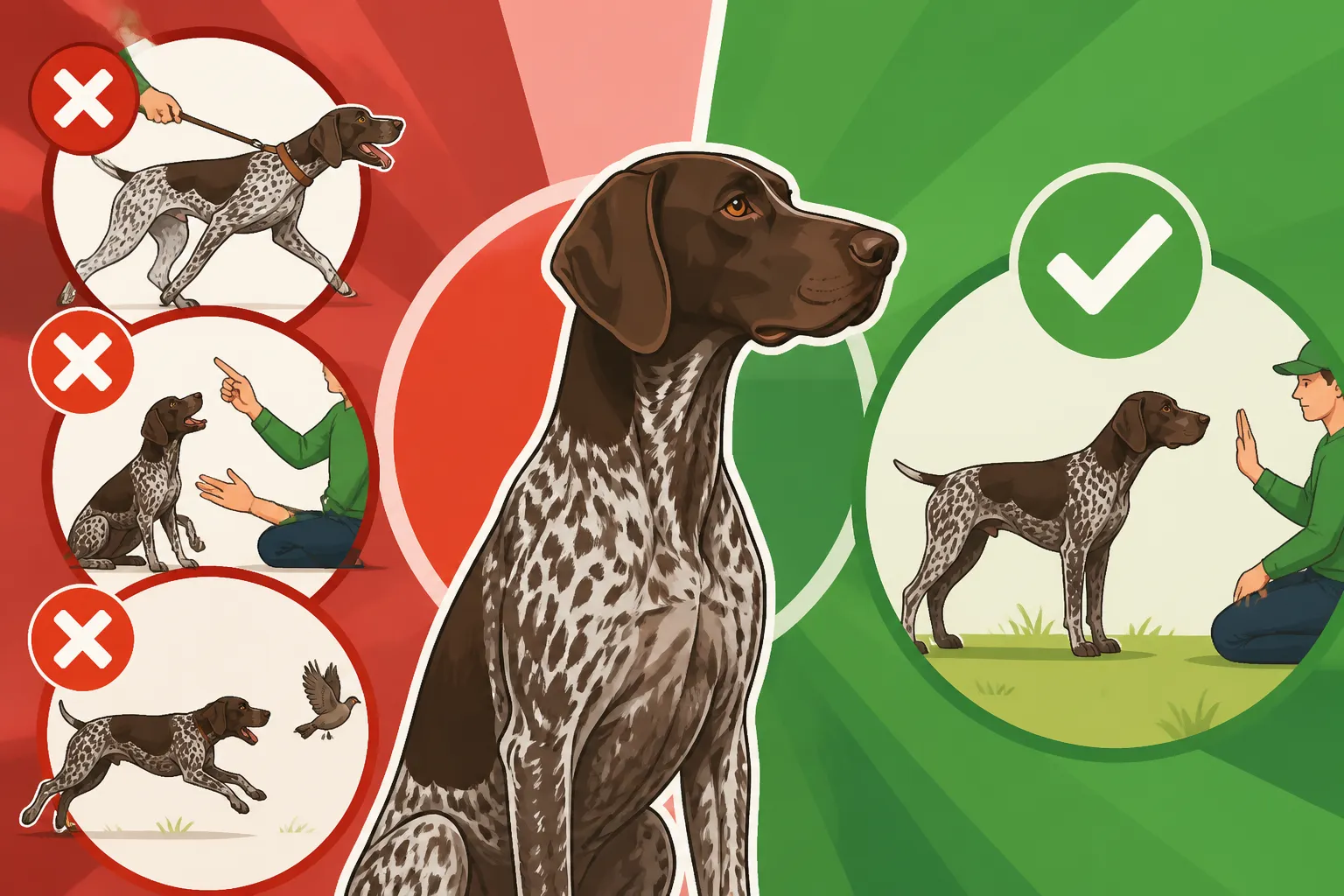
Here's a quick overview of habits that help versus those that hinder:
| Aspect of Training | Good Habits | Common Mistakes |
|---|---|---|
| Pacing & Progression | Gradual introduction, low to high distraction. | Rushing to birds/gunfire, starting in chaotic environments. |
| Consistency | Every handler uses same commands, expectations, and enforcement. | Inconsistent rules, letting dog slide "sometimes." |
| Corrections | Timely, appropriate, clear, and fair. | Overly harsh (fear) or too mild (no understanding). |
| Equipment Use | Tools like check cords/e-collars used to aid training. | Relying solely on equipment, improper or abusive use. |
| Motivation | Training is enjoyable, positive, and heavily rewarding. | Boring, repetitive, or punitive sessions. |
| Dog's Individuality | Adapting methods to the specific GSP's temperament. | One-size-fits-all approach, ignoring sensitivity or drive. |
| Building Blocks | Solid obedience and impulse control before field work. | Jumping straight to field scenarios without basic manners. |
| Handler Mindset | Patient, understanding, and committed. | Frustrated, rushed, or easily giving up. |
Achieving a rock-solid "whoa" with your German Shorthaired Pointer is one of the most rewarding aspects of training, transforming them into a true partner in the field. By understanding and avoiding these common mistakes—rushing the process, being inconsistent, using improper corrections or equipment, and failing to acknowledge your dog's unique personality—you pave the way for a more enjoyable and successful training journey. Remember, every moment spent building a strong foundation, especially for a key command like "whoa," pays dividends for years to come, whether you're working towards a Preparing a Shorthair for the Utility Preparatory Test or simply enjoying a calm walk in the park. Patience, empathy, and consistency are your best friends in shaping a truly steady and reliable Shorthair.
Disclaimer
This article is for general informational purposes only and does not constitute professional advice. Laws, prices and regulations vary by location and change over time. Consult a qualified professional for guidance on your specific situation.