Whether a Shorthair Puppy Needs a Whoa Post
You've just brought home that energetic German Shorthaired Pointer puppy, and your head is probably swimming with all the training advice out there. One term you'll inevitably hear in the bird dog world is "whoa post," and it's natural to wonder if this is something your little bundle of joy needs right from the get-go. Many new GSP owners feel the pressure to start serious training early, but the truth about whoa posts, especially for puppies, is more nuanced than a simple yes or no. This guide will help you understand what a whoa post is, its role in traditional training, and whether it's truly necessary—or even appropriate—for your young shorthair.
Understanding the "Whoa Post" in Bird Dog Training
When you hear "whoa post," it probably conjures images of a dog tied up, standing still. And honestly, that's pretty close to the mark. In the world of bird dog training, the whoa post is a classic tool, but its purpose and application are often misunderstood, especially when it comes to eager, developing puppies. It's less about punishment and more about teaching a specific, rock-solid command.
Traditional Use and Purpose of a Whoa Post
Traditionally, a whoa post is a piece of equipment used to teach a bird dog to stand perfectly still and steady on command, regardless of distractions like flushing birds or gunshots. Imagine being out in the field: your German Shorthaired Pointer locks up on a bird, tail high, nose pointed. You approach, flush the bird, and fire. The "whoa" command means that your dog should remain absolutely stationary, watching the bird fly, and not break point or chase. This level of control is paramount for safety, effective hunting, and ensuring your dog doesn't inadvertently bump birds before you're ready.
The whoa post helps engrain this behavior by physically preventing the dog from moving. A dog is typically placed on a short lead attached to a sturdy post, or sometimes a barrel or platform, making it impossible for them to move forward. The trainer then introduces distractions—perhaps a thrown bumper, a dead bird, or even a blank gun shot—while reinforcing the "whoa" command. The idea is that the physical restraint helps the dog understand the immobility aspect of the command without the confusion of being able to chase. This method has been passed down through generations of trainers, rooted in a time when tools were simpler and patience was the primary currency.
The Mechanics of a Whoa Post Setup
Setting up a whoa post is straightforward, but it requires care to ensure it's effective and safe. Typically, it involves a sturdy, immovable object – often a wooden post driven firmly into the ground, or a specially designed barrel with a strong eye-bolt. A short lead, usually no more than a foot or two long, is then attached from the post to the dog's collar. The collar itself is crucial; a properly fitted training collar, like a slip lead or chain collar, is often used to ensure control without causing harm. The dog is positioned on the post or platform, and the lead prevents any forward motion.
The goal isn't to leave the dog on the post for extended periods or to create discomfort. Instead, it's about short, focused sessions. During these sessions, the trainer might walk around the dog, present a bird wing, or even have someone toss a bumper nearby. Each time the dog attempts to move, the physical restraint of the post and lead reinforces the "whoa" command. Over time, the dog associates the word "whoa" with absolute stillness. This is a progressive process, starting with minimal distractions and gradually increasing them as the dog's understanding and steadiness improve. However, as we'll discuss, this method is usually reserved for a dog that has already grasped some foundational obedience, not typically a tiny puppy. You can find robust check cords and training leads on platforms like Amazon that are suitable for building foundational steadiness without jumping straight to a post.
The Philosophy Behind Steadying Your German Shorthaired Pointer
At its heart, whoa training, whether with a post or another method, is about instilling control and discipline. It's about taking that incredible drive and instinct your German Shorthaired Pointer possesses and channeling it into productive, safe behavior in the field. But the benefits extend far beyond just hunting.
Importance of Steadiness in the Field
For a German Shorthaired Pointer destined for the field, steadiness is non-negotiable. Imagine your GSP, a blur of liver and white, charging into cover and locking up on a pheasant. If that dog then breaks point, flushes the bird prematurely, or chases after the shot without command, the hunt becomes chaotic and frustrating. A steady dog holds its point until you arrive, allows you to flush the bird, remains still for the shot, and only retrieves on your command. This not only makes for a more efficient hunt but also a safer one, especially when hunting with others. You don't want your dog dashing into the line of fire or disappearing into thick cover after a wounded bird before you've given the all-clear.
Steadiness protects the dog, the hunter, and the game. It allows for ethical hunting practices and demonstrates a well-trained, reliable partner. Without it, the GSP's natural prey drive can easily overwhelm its manners, leading to missed opportunities and potential danger. This is why trainers spend so much time on "whoa," ensuring that a German Shorthaired Pointer understands the full implication of standing still even when every fiber of its being screams "go!" If you're looking to dive deeper into the basics of this command, you might find value in reading Whoa and Why Every Shorthair Starts There.
Developing Patience and Control
Beyond the practicalities of hunting, whoa training is a powerful lesson in patience and self-control for your German Shorthaired Pointer. These dogs are intelligent, high-energy animals, and teaching them to override their natural instincts to chase or react immediately is a huge accomplishment. This mental discipline translates into other aspects of their life, making them more well-behaved companions in and out of the house.
Think about it: a dog that can hold a steady point for minutes, ignoring a flapping bird, is a dog that can also wait patiently by the door, resist counter-surfing, or settle down when asked. It teaches them to focus on your command, even when their instincts are screaming otherwise. This mental fortitude is vital for such an active breed. Developing this kind of self-control early on, through appropriate methods, can prevent many common behavioral issues that stem from an excess of energy and a lack of clear boundaries. A well-controlled GSP is a joy to live with, a testament to the fact that their boundless energy can be shaped and guided.
Challenges and Alternatives for Puppy Whoa Training
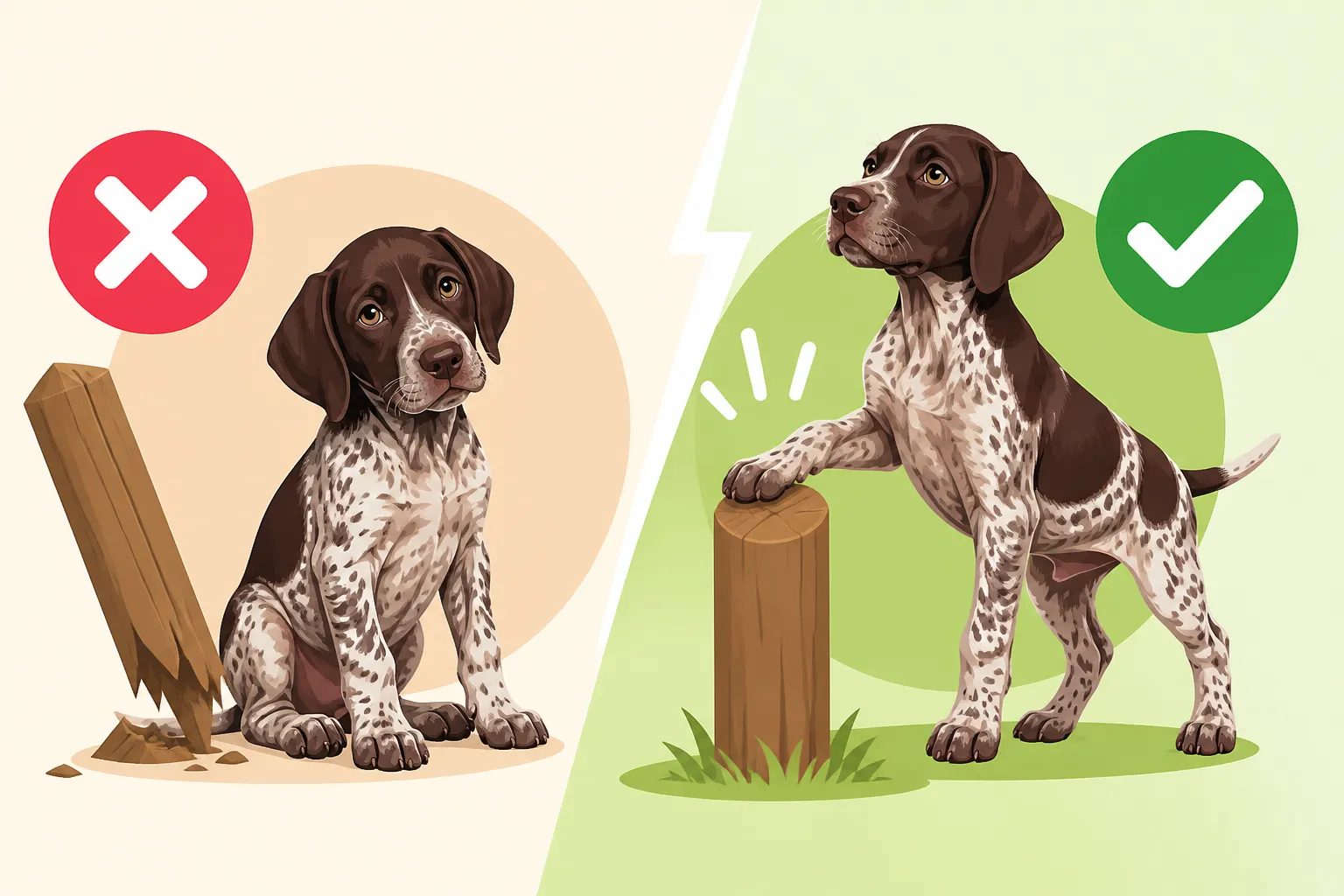
While the whoa post is a time-honored tool, slapping a tiny GSP puppy on one is generally ill-advised. Puppies simply aren't ready for that level of physical and mental constraint. There are better, gentler ways to introduce the concept of steadiness to a young dog.
Puppy Development and Physical Limitations
Puppies, especially young German Shorthaired Pointers, are still growing and developing. Their bones, joints, and ligaments are soft and vulnerable. Placing them on a whoa post too early, or for too long, can put undue stress on their developing bodies. Imagine a squirming, energetic puppy constantly pulling against a fixed restraint; this isn't just uncomfortable, it could potentially lead to injury. Their attention spans are also incredibly short. What might be a productive 10-minute session for an adult dog could be an hour too long for a puppy, leading to frustration and negative associations with training.
Furthermore, a puppy's mental and emotional maturity isn't yet developed enough to truly grasp the complex concept of "whoa" under physical duress. They learn best through positive reinforcement, short engaging sessions, and building confidence. A whoa post can be intimidating and confusing for a young pup, potentially creating fear or resistance to future training rather than eager cooperation. It's crucial to respect their developmental stage and introduce concepts in a way that sets them up for success, not failure or fear. Instead of rushing, focus on building a strong bond and basic obedience. Many issues with shorthairs in their first two years stem from owners pushing too hard, too fast, or not understanding the breed's needs, often leading to them being surrendered as discussed in Why Shorthairs Are Surrendered in Their First Two Years.
Gentle Introduction to Steadiness
Instead of a whoa post, the initial introduction to steadiness for a German Shorthaired Pointer puppy should be built on positive experiences and basic obedience. Start with simple commands like "sit" and "stay." Practice these in low-distraction environments, gradually increasing the duration and introducing minor distractions as your puppy gains confidence. Reward heavily for success. Use their mealtimes: make them sit and wait for their bowl, releasing them with a "free" or "okay" command. This teaches impulse control in a very natural, rewarding way.
Another excellent method is to use a raised platform or a low barrel without tying them. Simply place your puppy on it, give the "whoa" or "stay" command, and gently guide them back if they try to jump off. The raised surface naturally makes them think twice about moving, and you can praise and reward them for staying. This builds the muscle memory of standing still in a designated spot without the pressure of physical restraint. Keep these sessions brief and positive, always ending on a good note. Remember, for a German Shorthaired Pointer puppy, every training moment should feel like a game.
Using a Check Cord and Collar
A check cord is one of the most valuable tools for introducing "whoa" and building overall control with a young German Shorthaired Pointer, long before a whoa post is considered. A check cord is a long, light rope (often 15 to 30 feet) that attaches to your dog's collar. It allows you to give gentle guidance and prevent your dog from moving too far, without being a fixed, immovable restraint.
To introduce "whoa" with a check cord, start by walking your puppy on the cord in an open area. Give the "whoa" command, and at the same time, gently but firmly stop your forward motion and apply a light upward pressure on the check cord if your puppy tries to continue moving. Hold them in place for a few seconds, then praise and release them. Repeat this often, gradually increasing the duration of the "whoa." The beauty of the check cord is that it allows for subtle corrections and release, teaching the dog that they are choosing to be still, guided by your leash pressure. This is a far more interactive and less confrontational approach for a developing puppy. You can find high-quality check cords through various pet supply retailers or online on platforms like Amazon. For a deeper dive, consider looking into Building Whoa on a Shorthair With a Check Cord. Puppy classes can also be a great place to learn how to properly use these tools and establish good habits early, as explored in Puppy Classes Before a Shorthair Starts Field Work.
When a Whoa Post Might Be Introduced (and When Not To)
So, if not for puppies, when is a whoa post appropriate? The consensus among experienced bird dog trainers is that it's a tool for fine-tuning a dog that already understands the basic concept of "whoa" and has built foundational steadiness through other methods. It's not a starting point.
Age and Maturity Considerations
A German Shorthaired Pointer typically isn't ready for a whoa post until they are approaching or have reached full physical and mental maturity. This usually means around 8-12 months of age, and often even older, depending on the individual dog's development. By this point, their skeletal system is more developed, reducing the risk of injury from restraint. More importantly, their brains are mature enough to process the concept more abstractly and understand that "whoa" means absolute stillness, even under pressure.
Introducing a whoa post to a very young puppy—say, under six months—is often counterproductive. It can lead to fear, resistance, and a breakdown in trust between you and your dog. You want your GSP to love training and to see you as a benevolent leader, not a taskmaster who ties them to a post. Focus on building confidence, enthusiasm, and a strong retrieve drive in the early months. Patience now will pay dividends in a happy, cooperative adult dog later. For a general timeline on whoa training, check out The Age a Shorthair Puppy Starts Whoa.
Recognizing a Puppy's Readiness
How do you know when your German Shorthaired Pointer is ready for more advanced steadiness work, possibly including a whoa post? Look for these signs:
- Solid Foundation of Basic Obedience: Your dog consistently responds to "sit," "stay," and "come" in various environments, even with some distractions.
- Good Leash Manners: They walk politely on a leash without pulling excessively.
- Check Cord Proficiency: They understand and respond well to corrections and guidance on a check cord, stopping reliably on "whoa."
- Good Attention Span: They can focus on you for extended periods (5-10 minutes) during training sessions.
- Physical Maturity: They are no longer growing rapidly and have developed good body awareness and coordination.
- High Drive and Enthusiasm for Birds: They are excited by birds or bird-like objects but also show a willingness to be guided by you.
If your GSP puppy isn't consistently demonstrating these traits, stick to the gentler methods. There's no rush. Rushing often leads to skipping crucial steps, and then you're left trying to fix problems that could have been avoided entirely. Many common mistakes that ruin whoa in shorthairs come from not recognizing this readiness. Common Mistakes That Ruin Whoa on a Shorthair offers more insight into these pitfalls.
Avoiding Negative Associations
The biggest risk of misusing a whoa post, especially with a young or unprepared dog, is creating negative associations. If a dog experiences fear, pain, or extreme frustration while on the post, they won't learn "whoa." Instead, they might learn:
- "The post is a scary place."
- "Training is unpleasant."
- "My owner is making me uncomfortable."
- "I hate birds because they lead to this scary post."
This can manifest as gun shyness, bird aversion, or a general reluctance to engage in training. A well-trained bird dog is enthusiastic and confident. A dog that is shut down or fearful because of harsh training methods will never reach its full potential. The goal is to build a positive desire to please, not to force compliance through fear or discomfort. Even when you do introduce a whoa post, the sessions should be short, positive, and end with success, ensuring your dog leaves feeling good about the experience. You want your GSP to be eager to go to the post, not dread it.
Integrating "Whoa" into Everyday Life
While the "whoa" command is critical for hunting, its principles of steadiness and impulse control have immense value for any German Shorthaired Pointer, even if they never set foot in a pheasant field. A well-mannered GSP is a joy to live with, and teaching them to "whoa" can make a significant difference in their daily behavior.
Steadiness Beyond the Field: Safety and Manners for a Family GSP
Think about the safety implications. A solid "whoa" or "stay" can prevent your GSP from bolting out the front door into traffic, running up to an unfamiliar dog, or chasing a squirrel across a busy street. It means they can wait patiently at a curb before crossing, or remain settled while guests enter your home. For a breed with such powerful prey drive and energy, having a reliable stop command is not just a convenience; it's a lifesaver.
For a family dog, "whoa" translates into good manners. It means your dog won't jump on visitors, snatch food from children's hands, or barge through doorways. It teaches them patience and respect for boundaries. This mental engagement and structure are vital for a German Shorthaired Pointer's overall well-being. An under-exercised or under-stimulated GSP can become destructive or anxious, causing damage around the house, as discussed in What an Under Exercised Shorthair Does to a House and The Hours a Shorthair Tolerates an Empty House. A solid foundation in commands like "whoa" provides valuable mental exercise, reinforcing their role as a cooperative member of your household.
Practical Applications at Home
The "whoa" command, or its pet equivalent "stay" or "wait," has countless practical applications around the house. Here are just a few scenarios:
- Doorway Manners: Instead of a mad dash when the doorbell rings, your GSP can "whoa" a few feet from the door until you give the release command. This prevents escapes and calm greetings.
- Mealtime Patience: Have your dog "whoa" before approaching their food bowl. It reinforces impulse control and shows them that good things come to those who wait for your signal.
- Preventing Counter Surfing: Teach "whoa" as a way to say, "Don't jump up on the counter." If they start to go for something, a quick "whoa" can redirect them.
- Grooming and Health Checks: A dog that understands "whoa" can stand still for nail trims, ear cleanings, or when you need to check them over for burrs after a walk. This is particularly useful for a shorthair that gets into all sorts of cover.
- Public Outings: At a park or cafe, a "whoa" or "stay" means your dog can calmly lie down under the table or wait by your side, allowing you to enjoy your outing without constantly managing a restless dog.
By integrating these principles into daily routines, you're not just training a command; you're building a respectful, harmonious relationship with your German Shorthaired Pointer. Whether you're using a simple check cord or practicing verbal cues, consistent application in varied scenarios is key. You can find helpful online resources, such as those offered by BAXTER & Bella, that focus on positive, comprehensive puppy and dog training methods applicable to everyday life.
Consistency is Key
Regardless of the method you choose—check cord, platform, or eventually, a whoa post—consistency is the absolute bedrock of successful training with a German Shorthaired Pointer. These intelligent dogs thrive on routine and clear expectations. If "whoa" means "stop right now" sometimes, but other times it means "maybe slow down a bit," your dog will become confused and the command will lose its power.
Every family member needs to use the same command and enforce it in the same way. Keep training sessions positive, engaging, and frequent. Short, daily bursts of training (5-10 minutes) are far more effective than long, infrequent ones. Always end on a successful note, even if it means doing something very easy to ensure your dog earns praise. Build confidence, make it fun, and be patient. German Shorthaired Pointers are eager to please and incredibly smart; with consistent, fair training, they can master "whoa" to a degree that makes them outstanding companions in any setting, field or home. The Structure a German Shorthaired Pointer Needs Daily gives more insights into their need for routine.
Conclusion
So, does a German Shorthaired Pointer puppy need a whoa post? The short answer is, not really. For puppies, a traditional whoa post is generally too much, too soon. Their developing bodies and minds are simply not ready for the physical restraint and mental pressure that this tool entails. Instead of rushing into advanced field training, the focus for a young German Shorthaired Pointer should be on building a strong foundation of positive reinforcement, basic obedience, and trust.
Methods like using a check cord, practicing "sit" and "stay" on a raised platform, and integrating impulse control into daily routines are far more appropriate and effective for introducing the concept of steadiness to a puppy. As your GSP matures, typically around 8-12 months or older, and demonstrates a solid understanding of "whoa" through these gentler means, then a whoa post might be considered as a specialized tool to refine and proof their steadiness for specific field work. But even then, it should be introduced carefully, positively, and for short durations, ensuring it enhances their training without creating fear or negative associations. Remember, patience and positive experiences are the best foundation for a happy, well-trained German Shorthaired Pointer, whether they're destined for the field or simply to be the most steadfast companion on your couch.
Disclaimer
This article is for general informational purposes only and does not constitute professional advice. Laws, prices and regulations vary by location and change over time. Consult a qualified professional for guidance on your specific situation.