A Sixty Pound Shorthair Around a Toddler
Bringing a German Shorthaired Pointer into a home with a toddler can feel like juggling two tornadoes at once, especially when your otherwise loving, sixty-pound bundle of energy doesn't quite grasp the concept of "gentle" around a tiny human. Many GSP owners find themselves overwhelmed by the sheer exuberance of their dog combined with the unpredictable movements of a small child, fearing accidental bumps or tumbles. This guide is here to walk you through proactive training, management techniques, and understanding both your GSP and your toddler to create a safe, harmonious home for everyone.
Understanding the German Shorthaired Pointer's Nature with Young Children
Let's be real, a German Shorthaired Pointer is a magnificent, powerful, and intensely energetic dog. Their zest for life and incredible athleticism are what we love about them, but these very traits can become challenges when introduced to the delicate world of a toddler. It's not about malice; it's about instinct and sheer physical presence.
High Energy and Exuberance
Imagine a sixty-pound athlete, built for speed and endurance, suddenly confined to a living room with a curious, wobbly, and endlessly fascinating small human. German Shorthaired Pointers thrive on activity. They are bred to run, point, and retrieve all day long. When that immense energy isn't properly channeled, it bubbles over into boisterous play, zoomies, or an inability to settle. A GSP's idea of a good time might involve launching themselves across the yard at top speed, a joyful leap, or a happy paw swat. For an adult, this might be a minor inconvenience, but for a toddler who weighs a fraction of that, it can easily lead to accidental tumbles, scrapes, or even more serious injuries. Their enthusiasm, while well-intended, simply doesn't scale down for tiny people.
The frustration often comes when you know your dog isn't trying to hurt anyone, but their sheer force is undeniable. You might find yourself constantly on edge, ready to intervene the moment your GSP gets a little too excited near your child. This constant vigilance is exhausting and steals some of the joy from owning such a fantastic dog. It's a tricky balance, loving your dog for their spirited nature while simultaneously needing them to dial it back significantly for a toddler's safety.
Prey Drive and Toddler Movement
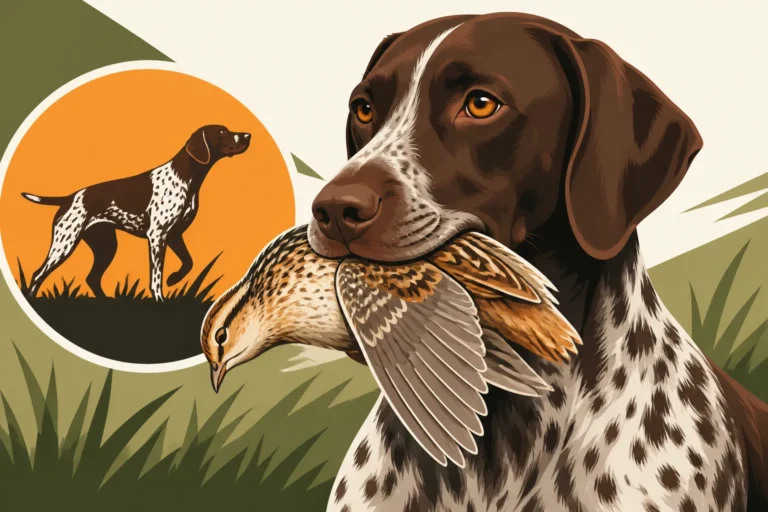
German Shorthaired Pointers have a strong prey drive – it's literally what they were bred for. That quick movement of a pheasant or rabbit in the field is what ignites their focus. Now, consider a toddler. They are often erratic, fast-moving, and can make sudden, high-pitched noises. These behaviors, completely innocent from a child's perspective, can inadvertently trigger a GSP's instinct to chase. A toddler running across the room, perhaps giggling, can look very much like prey to a dog whose instincts are hardwired to pursue.
This isn't about aggression; it's about a deep-seated drive. Your GSP might simply want to "herd" or "catch" the fast-moving toddler, treating them like a playful, if noisy, bunny. However, a sixty-pound dog "herding" a twenty-pound toddler can easily result in the child being knocked down, stepped on, or even nipped in a moment of over-arousal. Understanding this inherent drive is crucial for prevention. It means realizing that a GSP isn't being "bad" when they chase a running child; they are simply acting on instinct. It's our responsibility as owners to manage that environment and teach them appropriate responses, because a toddler cannot differentiate between playful chase and potential injury.
Size and Strength Considerations
Let's talk logistics. A sixty-pound German Shorthaired Pointer is a substantial animal. They have powerful bodies, strong legs, and a solid build that allows them to cover ground tirelessly. Now, picture that next to a toddler, who might weigh anywhere from 20 to 35 pounds and is still developing their balance and coordination. The physical disparity is immense. Even a gentle lean or a casual tail wag from a GSP can send a toddler sprawling. A dog running past too close can be like a freight train.
It's not just about direct impacts, either. A GSP might inadvertently step on a child's foot or hand in their excitement, or bump them with their head while sniffing. These are often purely accidental, but the consequences for a small child can range from a bruise to a broken bone. This is why mere good intentions from the dog are not enough; proactive management and extensive training are absolutely non-negotiable. You cannot expect a powerful dog to instinctively understand the fragility of a toddler, especially when its natural instincts are to be boisterous and energetic. The safety of the child, and frankly, the long-term well-being of the dog in the family, depends on recognizing and managing this size difference.
Essential Training and Management Strategies for Safety
The key to a peaceful multi-species household with a GSP and a toddler lies not in hoping for the best, but in creating a structured, predictable, and safe environment through consistent training and vigilant management.
Foundation Obedience and Impulse Control
Before you even think about letting your GSP and toddler have free reign together, you need rock-solid foundation obedience. Your German Shorthaired Pointer needs to understand and reliably execute commands like "sit," "stay," "down," and especially "leave it," even amidst distractions. Imagine your toddler dropping a favorite toy, or even a piece of food. Your GSP needs to understand that "leave it" means everything that isn't explicitly theirs.
The "place" command is another lifesaver. This teaches your dog to go to a specific spot (a mat, a dog bed, a crate) and stay there until released. It's an invaluable tool for managing exciting situations, like meal times or when the toddler is particularly active. Practicing impulse control exercises, such as waiting for food or not bolting out the door, builds the self-restraint your GSP will need around a toddler's unpredictable movements. Remember, a well-trained dog is a confident dog, and a confident dog is less likely to react negatively out of uncertainty. This isn't just about safety; it's about building a respectful relationship where your GSP understands boundaries and looks to you for direction. If you're starting from scratch or need a refresher, resources like BAXTER & Bella offer excellent online training programs that focus on practical obedience for family dogs, often with a positive reinforcement approach that can be very effective for a sensitive breed like a GSP. A strong foundation here contributes to The Structure a German Shorthaired Pointer Needs Daily.
Creating Safe Spaces and Supervision
This is arguably the most critical aspect of managing a GSP and toddler together: preventing unsupervised interactions. Baby gates are your absolute best friend. Use them to create physical barriers, designating dog-free zones for the toddler or child-free zones for the dog. A GSP's crate, if properly introduced and seen as a safe den, can also be an invaluable tool for providing your dog with a peaceful retreat from the chaos of a busy home. You can read more about Crating a Shorthair That Has Energy to Burn.
The "umbilical cord" method of supervision is highly effective during initial stages. This means you literally keep your dog on a leash, attached to you, when the toddler is awake and active. This prevents accidental bumps, allows you to immediately correct any inappropriate behaviors, and gives you complete control over interactions. Never, ever leave your GSP and toddler alone together, not even for a second. This includes going to the bathroom, answering the door, or stepping away to grab something from another room. One second is all it takes for an accidental injury. Teach your child's older siblings about these rules too; everyone in the household needs to be on the same page.
Socialization Beyond the Toddler
While direct interaction with your toddler is important, don't forget the broader picture of socialization. A well-socialized GSP is generally more confident, less reactive, and better able to handle novel situations, which includes the unique challenges a toddler presents. Ensure your GSP has ample exposure to a variety of people, sounds, sights, and other dogs outside the home, in a controlled and positive manner.
This isn't about throwing your dog into chaotic situations. It's about gentle, positive exposures. For example, inviting calm, dog-savvy friends with older children over (always supervised!) can help your GSP learn appropriate social manners. A well-socialized dog is less likely to be fearful or overly excited by new stimuli, which includes the unpredictable nature of a toddler. If your GSP shows any signs of resource guarding (being possessive of toys, food, or even their space) around objects or locations that the toddler might interact with, this needs immediate professional intervention. You want your dog to see the toddler as part of the family, not a threat to their resources.
Exercise and Mental Stimulation
A tired German Shorthaired Pointer truly is a good German Shorthaired Pointer. These dogs have boundless energy, and if it's not adequately drained through appropriate exercise, they will find their own outlets, which often involves destructive behaviors or a general inability to settle, especially around exciting stimuli like a toddler. You need to commit to providing at least The Two Hours a Day a German Shorthaired Pointer Needs of rigorous physical activity. This isn't just a leisurely walk around the block; this means running, retrieving, hiking, or swimming.
Beyond physical exertion, your GSP also needs mental stimulation. Their intelligent minds crave a challenge. Incorporate puzzle toys, scent games, and regular training sessions to keep them engaged. A quick search on Amazon will show you a wide array of interactive feeders and snuffle mats that can keep a GSP busy for a good chunk of time. Even short, five-minute training bursts throughout the day can make a big difference. A GSP whose physical and mental needs are met is far more likely to be calm and respectful around a toddler, rather than bouncing off the walls. Consider activities like Mental Work That Tires a Shorthair Out to truly exhaust that sharp mind.
Educating the Toddler and Family for Harmonious Living
Achieving harmony isn't just about training your dog; it's equally about educating your child and ensuring consistent rules from all family members. This shared responsibility builds a respectful dynamic.
Teaching Gentle Interactions
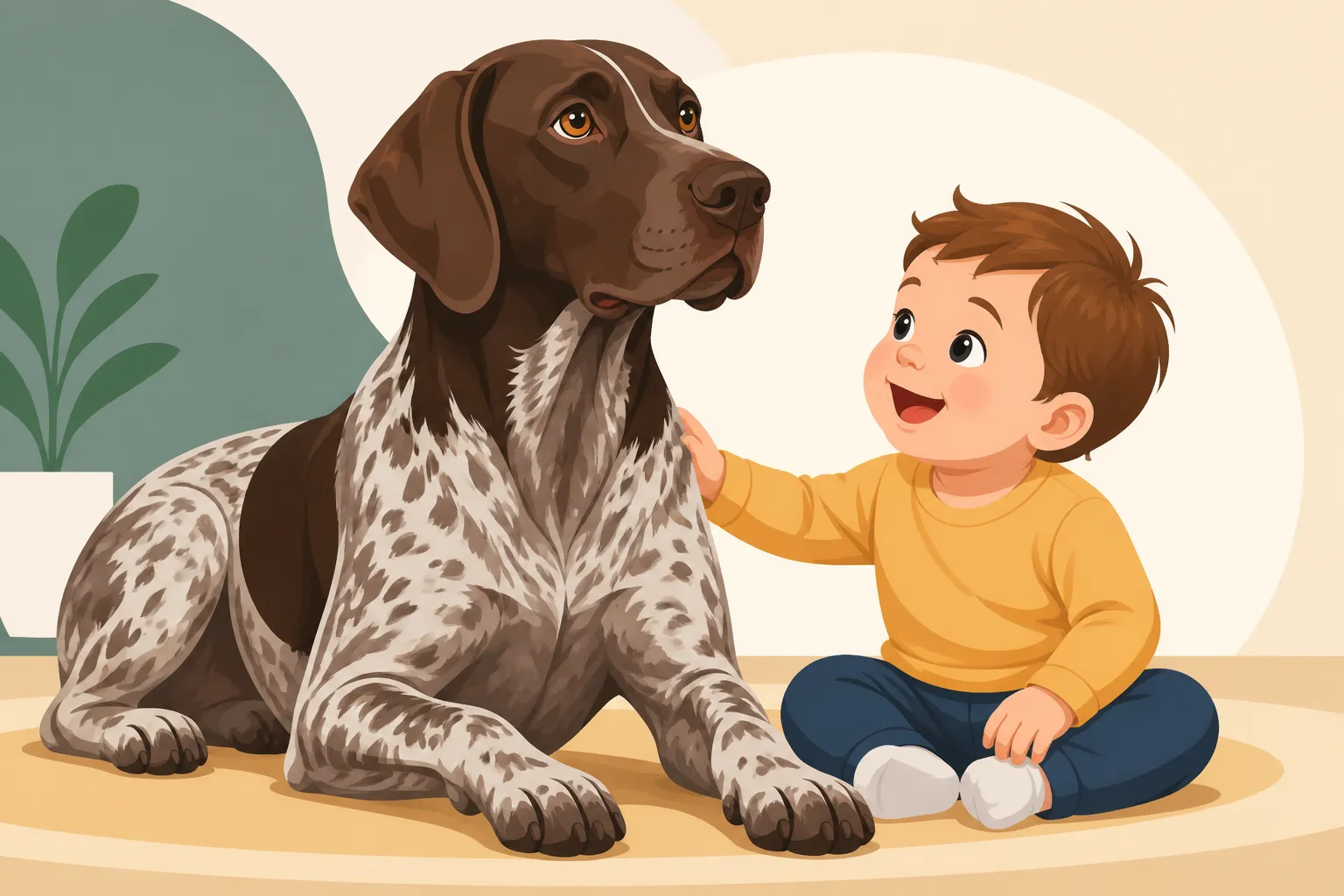
It's never too early to start teaching your toddler how to interact appropriately with the family dog, always with strict supervision. Use simple, clear language: "gentle hands," "soft pets," "no pulling." Demonstrate how to stroke the dog's side or back, avoiding sensitive areas like ears or tail. Teach them that when the dog walks away, they should let them go. This teaches respect for the dog's space and boundaries.
One vital rule for toddlers is "four paws on the floor." Your GSP should never be allowed to jump on the child, even playfully. Every interaction should be calm and controlled. If your dog gets too excited or jumps, immediately separate them. Repetition and consistency are key here, for both the child and the dog. This guidance is also important for What a Child Needs to Know Around a Shorthair. Make sure your child understands that if the dog is sleeping or eating, they should be left undisturbed. This protects both your child from a startled dog and your dog from unwanted intrusions.
Recognizing Dog Body Language
This is paramount for adults in the household. You need to become an expert at reading your GSP's body language to understand when they are uncomfortable, stressed, or signaling that they need space from the toddler. Signs of discomfort can be subtle: a lip lick, a yawn when not tired, "whale eye" (where the whites of their eyes are visible), a stiff body posture, or simply moving away from the child. More overt signs might include a low growl or a slight baring of teeth – these are clear warnings that must be taken seriously.
Never punish your dog for growling or displaying warning signs. A growl is a communication; it's your dog's way of saying "I'm uncomfortable, please stop." If you punish the growl, you remove the warning, leaving your dog with no option but to escalate directly to a bite if they feel threatened. Instead, when you see these signs, immediately intervene by removing either the child or the dog from the situation. Advocate for your dog; give them the space they need. If you're struggling to interpret your dog's signals, consider working with a certified professional behaviorist. This helps prevent situations like A Shorthair That Knocks Children Over Playing and ensures timely intervention. Understanding Reading a German Shorthaired Pointer's Stress Signals can literally save lives.
Consistent Rules for Everyone
Dogs thrive on consistency and predictability. It's crucial that everyone in the household – parents, older children, and even regular visitors – adheres to the same rules regarding the GSP and the toddler. If one person allows the dog on the couch while another doesn't, or if one person allows jumping while another corrects it, it creates confusion for the dog.
For example, if your GSP is not allowed to jump on people, no one should encourage jumping, even when excited to see them. If the dog is not allowed to counter surf or steal food, this rule needs to be enforced universally. Consistent reinforcement of good behavior and immediate, calm correction of inappropriate behavior from everyone helps your GSP understand their boundaries clearly. This includes Teaching a Shorthair Puppy Not to Jump on People. This unified front helps create a secure environment where the dog understands their role and expectations, reducing anxiety and promoting a calm demeanor around the most unpredictable family member, the toddler.
When to Seek Professional Help
While we do our best as owners, there are times when the dynamic between a high-energy German Shorthaired Pointer and a curious toddler requires more than just dedicated home training. Knowing when to call in a professional can prevent serious incidents and ensure the safety of everyone.
Red Flags and Warning Signs
It's absolutely critical to recognize when your GSP's behavior is escalating beyond typical boisterousness or accidental bumps. Any instance of growling, snarling, snapping, or biting (even if it doesn't break the skin) directed at the toddler is an immediate red flag that requires professional intervention. These are not behaviors to be ignored or simply managed with more "training" from an inexperienced owner.
Other warning signs include obsessive behaviors, such as your GSP constantly herding or fixating on the toddler, resource guarding (protecting toys, food, or even specific spots) from the child, or exhibiting extreme fear or anxiety when the toddler is around. Persistent avoidance, hiding, or aggressive posturing also signal a deep underlying issue. If your dog consistently stiffens, shows whale eye, or tries to escape every time the toddler approaches, they are telling you they are extremely uncomfortable and stressed. These are not signs that your dog will "grow out of it" or that they simply need more exercise. These are signs that the relationship is breaking down and could become dangerous.
Consulting a Certified Professional
If you observe any of the red flags mentioned above, do not delay in seeking help from a qualified professional. Look for a Certified Professional Dog Trainer (CPDT-KA) or, even better, a Certified Canine Behavior Consultant (CBCC-KA). These professionals have extensive knowledge and experience in animal behavior and can assess the specific dynamics in your home, identify the root causes of the behavior, and develop a safe, effective intervention plan. Avoid trainers who advocate for harsh, punishment-based methods, as these can suppress symptoms without addressing the underlying emotional state, potentially leading to a more dangerous situation.
A good professional will often start with a comprehensive behavioral assessment, sometimes even coming to your home to observe interactions. They will guide you through practical solutions, help you set up appropriate management strategies, and work on behavior modification techniques for your dog. They can also offer invaluable advice on how to continue educating your child safely. Investing in professional help is an investment in the safety of your family and the long-term well-being of your German Shorthaired Pointer. Online resources like BAXTER & Bella can be a great starting point for foundational training and understanding dog behavior, but for specific aggression or fear issues involving children, an in-person, certified behaviorist is often the best course of action. Remember, you want your GSP to be happy and integrated into the family, and sometimes, a little expert guidance is exactly what's needed to achieve that harmony. This is especially true when considering Whether a German Shorthaired Pointer Suits a Family With Kids. It’s important to acknowledge What Shorthair Owners Wish Someone Had Told Them and get ahead of these challenges.
Key Differences: GSP Play vs. Toddler Safety
| Aspect | German Shorthaired Pointer's Natural Tendency | Toddler's Reality | Safety Implications for Intervention |
|---|---|---|---|
| Energy Level | High, enthusiastic, boundless stamina, loves to run and jump. | Low, fragile, developing balance, easily knocked over. | Direct supervision, immediate separation if GSP is too boisterous. |
| Movement | Fast, agile, powerful, uses body to play and herd. | Erratic, wobbly, unpredictable, sudden starts and stops. | Triggers prey drive; requires "place" or barrier immediately. |
| Sound | Barks, growls in play, happy whines, loud panting. | High-pitched squeals, crying, sudden loud noises. | Can startle dog, or dog's noises can scare toddler; teach dog to be calm. |
| Interaction Style | Mouths, paws, jumps, chases, leans, nudges for attention. | Grabs, pulls, pushes, sits, lies on floor. | Accidental injury (bite, step, knock); teach "gentle" to child, "leave it" to dog. |
| Awareness of Size | Minimal, often doesn't realize own strength/size relative to small objects. | None, believes they can interact freely with dog. | Constant management and active teaching of boundaries for both. |
| Resource Guarding | Can develop over toys, food, space if not trained. | May grab dog's toys or food; drops own food near dog. | Strict rules about dog's items; never allow dog to guard from child. |
Disclaimer
This article is for general informational purposes only and does not constitute professional advice. Laws, prices and regulations vary by location and change over time. Consult a qualified professional for guidance on your specific situation.