A Shorthair That Knocks Children Over Playing
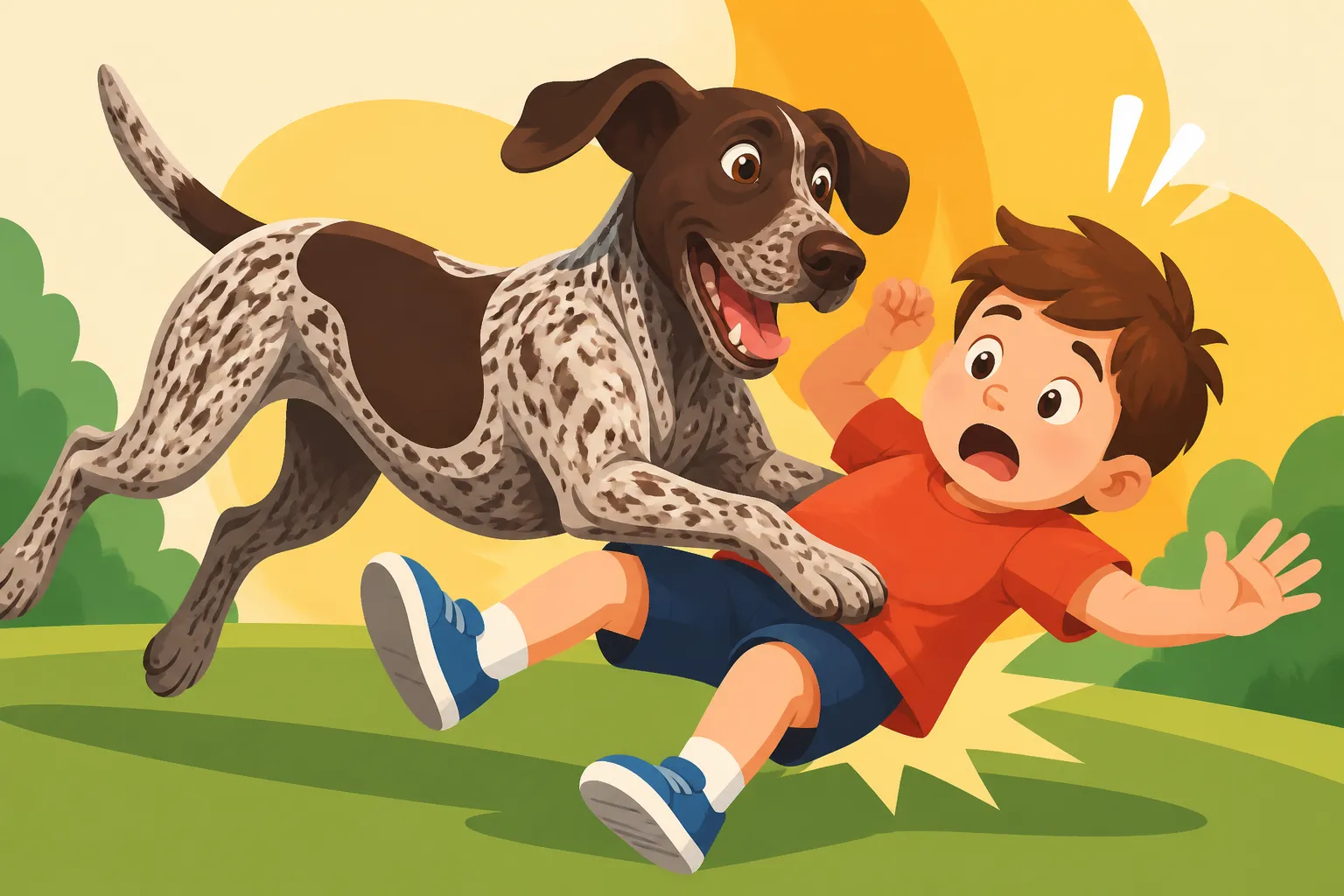
Oh, the sheer enthusiasm of a German Shorthaired Pointer! It's one of their most endearing qualities, isn't it? But when that boundless energy and joyful exuberance translate into a sixty-pound dog accidentally knocking a small child off their feet, it stops being endearing and quickly becomes a source of stress, worry, and sometimes, even minor injuries. If you're tired of holding your breath every time your GSP bounds into the living room where your kids are playing, you're in the right place. This guide is all about understanding why your beloved Shorthair might be doing this and, more importantly, how we can teach them better manners around the littlest members of the family, ensuring safety and harmony for everyone.
Understanding the "Why" Behind the Enthusiasm
It's never a malicious act when a GSP bowls over a child; it's almost always an overflow of pure, unadulterated excitement and a lack of understanding their own physical impact. To address the behavior, we first need to understand its roots in the breed's very nature.
The Shorthair's Natural Exuberance and Breed Traits
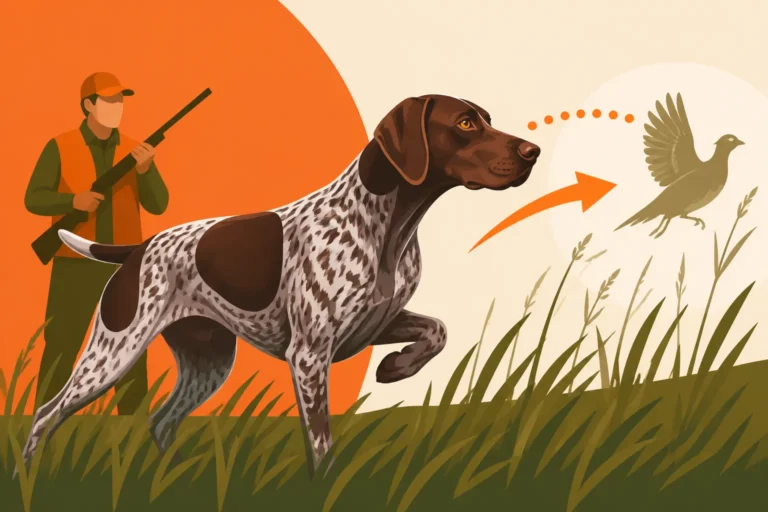
Let's face it, German Shorthaired Pointers are not known for their subtle approach to life. They are powerful, athletic, and utterly driven. Bred to be versatile hunting partners, they have an innate intensity for work and play that few other breeds can match. This translates into a dog that loves to be involved, to interact, and to move. When they see someone, especially someone they adore, it's often a full-body greeting complete with wiggles, jumps, and sometimes, a complete disregard for personal space.
Imagine a highly tuned athlete who’s used to running full tilt through fields and forests, then being asked to navigate a crowded antique shop. They might be graceful in their element, but put them in a novel or confined situation, and they might accidentally bump into a few things. Your Shorthair is built like a finely tuned engine designed for speed and endurance, not necessarily for tiptoeing around tiny humans. Their powerful legs and muscular build mean that even a gentle nudge can send a child sprawling. They often simply aren't aware of the force they exert, nor do they fully grasp how fragile a small child can be compared to, say, an adult hunter in heavy gear. This incredible energy means they truly need outlets; a German Shorthaired Pointer needs a significant amount of exercise, often around The Two Hours a Day a German Shorthaired Pointer Needs, to even begin to settle indoors. Without that release, their internal motor is just constantly revving, making controlled behavior even harder.
Lack of Body Awareness and Impulse Control
Just like human toddlers, puppies and young adult dogs are still learning about their bodies and how to control their impulses. A GSP puppy, full of boundless joy, hasn't yet learned that a playful pounce on a child's shoulder isn't a game everyone enjoys. They might jump up, mouth, or lean with their full weight, all behaviors that would be tolerated (or even encouraged, in the case of playful wrestling) by a littermate or a very patient adult dog, but are completely inappropriate for a human child.
This isn't about dominance; it's about a lack of body awareness and impulse control. They're often so caught up in the moment – the excitement of a new visitor, the thrill of a child running past, the desire for attention – that their brains simply haven't caught up with the "stop and think" mechanism. They haven't learned to modulate their actions. It's a key part of their development, and it's our job as responsible owners to guide them through it. This is why consistent training, even simple commands like "sit" or "down" when someone approaches, is so critical. Early intervention and teaching your Shorthair puppy good manners, such as Teaching a Shorthair Puppy Not to Jump on People, can make a world of difference as they grow into powerful adults.
Children's Behavior and Dog's Reaction
It's easy to blame the dog, but let's be realistic: children, bless their hearts, can be incredibly unpredictable and stimulating from a dog's perspective. Their quick, darting movements, high-pitched squeals, sudden laughter, and even their height (which can put them at eye level for a dog to jump on) can inadvertently trigger a GSP's natural instincts.
For a dog, especially one with a strong prey drive like a Shorthair, a running child might look like an invitation to chase, a game of tag, or even something to herd. The excited squeal of a child could be misinterpreted as an invitation to engage in boisterous play. Children also tend to move in ways that are less predictable than adults, making it harder for a dog to anticipate their actions and adjust their own. Sometimes, a child's innocent attempt to hug or get close can be met with an over-the-top reaction from a GSP who is just too happy to be acknowledged. It’s a delicate dance, and it's essential that both dog and child learn how to interact safely. It's not just about the dog's training, but also about What a Child Needs to Know Around a Shorthair to ensure mutual respect and safety.
Setting Up for Success: Management and Training Strategies
Managing a high-energy German Shorthaired Pointer around children requires a proactive, multi-faceted approach. It's not just about correcting behavior; it's about preventing incidents before they happen and teaching your dog how to behave appropriately.
Creating a Safe Environment and Supervision
The absolute first line of defense is creating a safe, controlled environment. This means active, constant supervision whenever your German Shorthaired Pointer is interacting with children, especially young ones. "Supervision" doesn't mean glancing up from your phone occasionally; it means being fully present and ready to intervene at a moment's notice.
Think of it like this: you wouldn't leave a toddler unsupervised near a hot stove. Similarly, a high-energy dog and a small child need a watchful adult. Physical barriers are your best friends in the early stages. Baby gates are fantastic for separating spaces, allowing your GSP to see and hear the children but preventing direct, uncontrolled contact. Crate training is also invaluable, providing your dog with a safe, quiet retreat where they can decompress away from the bustle of children. This den should be a place where the dog is never disturbed by kids, allowing them to truly relax. A German Shorthaired Pointer With Children and Cats explores more about creating harmonious multi-species households.
If you know kids are coming over and your dog is already over-stimulated, use a leash. Even inside, a leash and collar (or a comfortable harness, depending on what your dog wears best) can give you the immediate control you need to prevent jumping or barging. Tethering your dog to yourself or a sturdy piece of furniture (with enough slack for comfort, but not enough to reach the children) can also be a temporary solution when you need to focus on something else for a moment but still want your dog in the room.
Teaching Calm Greetings and Manners
This is where consistent training really shines. Your GSP needs to learn that calm behavior gets rewarded, especially around children. The "four on the floor" rule is paramount: all four paws must remain on the ground for any interaction or attention.
Here's how you can teach it:
- Start with adults: Before introducing children, practice with adults. When your dog approaches, if they jump, turn your back immediately, completely ignoring them. The moment all four paws are on the ground, turn around and offer calm praise and a treat. Repeat, repeat, repeat.
- "Sit" for everything: Make "sit" the default greeting. Before anyone pets them, before they get a treat, before they go outside – ask for a sit. Reward heavily when they comply. This builds an association: calm, seated behavior earns good things.
- Use a release cue: Teach a "stay" or "wait" command before approaching people, then use a release word like "okay" once they are calm and in position. This builds impulse control.
- Practice with distractions: Start in a quiet environment, then gradually introduce more distractions. Have a friend or older child walk by. Practice outside with people passing.
A structured training program can be incredibly helpful here. Resources like BAXTER & Bella offer comprehensive online puppy and dog training programs that focus on foundational manners, calm greetings, and impulse control, which are all vital for preventing accidental collisions with children. They often use positive reinforcement, which is crucial for sensitive breeds like the GSP. Remember, positive reinforcement helps build a strong, trusting relationship, making your Shorthair more likely to respond reliably even when excited.
Consistent Exercise and Mental Stimulation
An under-exercised German Shorthaired Pointer is a recipe for disaster in any home, but especially one with children. When a GSP doesn't get enough physical and mental stimulation, that pent-up energy has to go somewhere. It often manifests as destructive chewing, digging, barking, and yes, exuberant, uncontrolled interactions with anything that moves – including children. An under-exercised dog is much less likely to respond to commands and much more likely to revert to instinctual, boisterous behaviors. What an Under Exercised Shorthair Does to a House is a great read if you're seeing other behavioral issues pop up.
Aim to provide a good, solid exercise session before peak times when children are most active. A long walk, a strenuous run, or a vigorous game of fetch in a secure yard can help burn off that initial burst of energy, making your Shorthair much calmer and more receptive to training when the kids are around. Remember, "exercise" for a GSP isn't just a leisurely stroll; it needs to be an activity that truly tires them out, engaging both their body and their incredible mind.
In addition to physical activity, mental stimulation is equally important. Puzzle feeders, scent games, and short, engaging training sessions can help tire out their brains. Teaching them new tricks or working on advanced obedience commands also serves this purpose. A tired dog, both physically and mentally, is a good dog. Engaging their natural prey drive and intelligence with games like hide-and-seek or finding hidden treats can also be a wonderful way to provide Mental Work That Tires a Shorthair Out and keep them from finding their own, less desirable, forms of entertainment. The key is to fulfill their needs for purpose and movement on a daily basis. The Structure a German Shorthaired Pointer Needs Daily is essential for their overall well-being and good behavior.
Training Drills for Controlled Interactions
Once you've got the basics down and your GSP is getting plenty of exercise, it's time to put that training into practice with specific drills designed to foster calm interactions with children. These aren't just tricks; they're life skills.
"Station" Training and Boundary Games
Station training, sometimes called "place" or "mat" training, is incredibly effective for managing a high-energy dog in a busy household. The idea is to teach your German Shorthaired Pointer to go to a designated spot (like a dog bed, mat, or even a specific rug) and stay there until released. This provides a clear boundary and gives your dog a "job" when children are active.
Here’s how to start:
- Introduce the mat: With a leash on your dog, walk them to their designated mat. Lure them onto it with a treat. When all four paws are on the mat, mark the behavior (with a clicker or a verbal "yes!") and reward them generously.
- Add a cue: Once they reliably go to the mat when lured, start adding a verbal cue like "place," "mat," or "bed."
- Build duration: Gradually increase the amount of time they have to stay on the mat before getting a reward and being released. Start with a few seconds, then work up to minutes.
- Add distance: Practice walking away from the mat, starting with just a step or two, and slowly increasing the distance.
- Introduce distractions: This is the critical step for child interactions. Once your dog is solid on their mat, introduce very low-level distractions. Have an adult walk calmly past the mat. Reward your dog for staying. Gradually, have an older, calm child do the same. As your dog consistently stays, you can increase the level of distraction (e.g., a child playing quietly, then more actively, but always supervised). If your dog breaks from the mat, calmly lead them back and reset.
The goal is for your GSP to understand that when children are playing, their job is to relax on their mat. This prevents them from being underfoot or accidentally knocking children over.
Leash Management and Controlled Proximity
Even with solid "place" training, there will be times when your GSP needs to be more integrated into the family activity, but still safely. This is where excellent leash manners, even indoors, become invaluable.
Practice walking your GSP on a leash inside the house when children are present. Start with the children sitting or playing quietly. Reward your dog for walking calmly beside you, paying attention to you, and keeping all four paws on the ground. If your dog starts to pull towards a child, gently redirect them and reward them for re-engaging with you.
You can also use a "check cord" or a longer leash during play sessions in a secure area. This allows you to give your dog more freedom of movement while still having a way to immediately stop any undesirable behavior, like a sudden charge or jump, without having to physically grab them. The goal is to teach your Shorthair to maintain polite distance and self-control, even when the environment is stimulating. Teaching your dog Loose Leash Walking a German Shorthaired Pointer isn't just for walks outside; it's a foundational skill for controlled behavior everywhere.
Role-Playing and Desensitization
Dogs don't generalize well, meaning a behavior learned in one context might not transfer to another. So, you need to specifically train for interactions with children. This involves careful desensitization and controlled role-playing.
- Adults first: Have an adult (or a few adults) simulate the unpredictable movements and sounds of children. Jog, skip, crouch, make silly noises, and play with toys. Keep your GSP on a leash at first, rewarding them for remaining calm, sitting, or lying down. If they get too excited, turn away and disengage. Only re-engage when they calm down.
- Introduce older, calm children: Once your dog is doing well with adult role-players, carefully introduce an older, calmer child. Have the child stand still at first, then walk calmly. Reward your dog for staying calm.
- Gradual increase in activity: Slowly, over many sessions, increase the activity level of the children. This could mean a child walking faster, then a gentle jog, then playing with a ball, always with you managing the dog on a leash and rewarding calm behavior.
- Teach "Leave It" around toys: German Shorthaired Pointers can be very toy-driven. Teach a strong "leave it" command for children's toys and any toys they might get over-excited about when children are playing. This prevents resource guarding or accidental grabs that could injure a child.
Remember to keep these sessions short, positive, and always end on a good note. If your dog starts to get overwhelmed or overly excited, it's time to take a break. The idea is to gradually expose them to the stimuli of children while reinforcing calm and polite behavior, building their confidence and impulse control slowly but surely.
When to Seek Professional Help and Resources
Sometimes, despite your best efforts, a particular behavior can feel overwhelming or even dangerous. It's okay to admit you need help; in fact, it's a responsible and loving thing to do for your German Shorthaired Pointer and your family.
Recognizing When You Need Extra Support
There are clear signs that indicate it's time to call in a professional. If you notice any of the following, don't hesitate:
- Escalating intensity: If your GSP's enthusiasm around children isn't just accidental bumping but is becoming more forceful, persistent jumping, or even leaning into the child in a way that seems overly pushy or difficult to control.
- Fear or anxiety: If your dog seems genuinely anxious or fearful around children, exhibiting stress signals like lip-licking, yawning, avoiding eye contact, tail tucked, or attempting to hide. A fearful dog can lash out if pushed too far. Reading a German Shorthaired Pointer's Stress Signals can help you interpret their body language.
- Aggression: This is a red flag. Any growling, snapping, baring teeth, or attempts to bite, even if it doesn't break skin, means you need immediate professional help. This is beyond accidental enthusiasm.
- No improvement: If you've been consistently applying training methods for several weeks or months and see no discernible improvement, or if the problem behavior is actually getting worse, it's time for an expert evaluation.
- Your peace of mind: If you're constantly stressed, worried, or feel like you can't trust your dog around your children, that's reason enough to seek help. A harmonious household is paramount.
Remember, addressing these issues early can prevent them from becoming more ingrained and difficult to change later on.
Finding a Qualified Trainer or Behaviorist
Finding the right professional is key. Look for individuals who use positive reinforcement and fear-free methods. Avoid anyone who suggests harsh corrections, punishment, or intimidating techniques, as these can damage your relationship with your GSP and exacerbate behavioral problems, especially in a sensitive breed.
Here's what to look for:
- Certified Professional Dog Trainer (CPDT-KA): This certification indicates a trainer has passed an exam and has a certain number of hours of experience. They can help with obedience, manners, and common behavioral issues.
- Certified Dog Behavior Consultant (CDBC) or Veterinary Behaviorist (DACVB): For more complex or deeply rooted behavioral issues, especially those involving fear, anxiety, or aggression, a behaviorist is the specialist you need. Veterinary behaviorists are veterinarians who have specialized in animal behavior, making them uniquely qualified to address both medical and behavioral factors.
- Experience with working breeds: Look for someone who has specific experience with German Shorthaired Pointers or other high-energy sporting breeds. They'll better understand the breed's drives and needs.
- In-home consultations: Ideally, a trainer or behaviorist should be willing to come to your home to observe your dog in their natural environment, especially when children are present. This allows them to see the interactions firsthand.
Ask for references, inquire about their methods, and ensure you feel comfortable with their approach. A good professional will involve you in the process and teach you the skills to manage and train your dog effectively.
Tools and Aids for Management
While training is the long-term solution, certain tools can help you manage the situation safely in the interim. These are aids, not substitutes for training, but they can be incredibly useful.
- Long Lines: A long line (15-30 feet) can be used in a secure, open area to practice recall and allow your GSP more freedom while still maintaining a measure of control and the ability to intervene if they get overly excited around people or other dogs.
- Body Harnesses: A well-fitting, front-clip harness can help reduce pulling on walks, giving you more control over your strong Shorthair without putting pressure on their neck. This can make managing them around other people and children outside the home much easier. Explore options and fitting considerations in Whether a Harness or Collar Suits a Shorthair.
- Safety Gates and Crates: As mentioned, these are invaluable for creating physical barriers and safe spaces. You can find a wide variety of sturdy, secure gates and crates on platforms like Amazon, from pressure-mounted options for doorways to wider, free-standing gates for larger openings.
- High-Value Treats and Toys: Keep a stash of your dog's absolute favorite treats and toys on hand. These are essential for rewarding calm behavior around children and for redirecting their attention when needed. Sometimes a quick toss of a favorite, high-value toy can shift their focus away from a child for a crucial moment.
Remember, these tools are meant to facilitate training and safety. Always use them responsibly and as part of a comprehensive training plan. With patience, consistency, and sometimes the help of a professional, you can absolutely teach your exuberant German Shorthaired Pointer to be a calm, gentle, and safe companion for your children.
Disclaimer
This article is for general informational purposes only and does not constitute professional advice. Laws, prices and regulations vary by location and change over time. Consult a qualified professional for guidance on your specific situation.