Whether Crate Time Helps a Clingy Shorthair
Living with a German Shorthaired Pointer means having a loyal, often shadow-like companion, but when that devotion crosses into clinginess, it can be disruptive and even distressing for both dog and owner. Many Shorthair owners find themselves wondering if crate training, often seen as a solution for housebreaking or destructive behaviors, can actually help build independence in an overly attached dog. This guide will explore how strategic crate time can indeed foster a sense of security and self-reliance, giving your GSP the confidence to be comfortably alone.
Understanding the Clingy Shorthair: Why They Stick Like Glue
German Shorthaired Pointers are renowned for their unwavering loyalty and strong desire to be near their human companions. This deep bond is one of the most endearing qualities of the breed, but it can sometimes manifest as excessive clinginess. Understanding the roots of this behavior is the first step toward addressing it effectively.
The GSP's Innate Need for Connection
Shorthairs were bred to be versatile hunting partners, working closely with their handlers in the field, often for hours on end. This history has instilled in them a profound need for companionship and a strong desire to be involved in whatever their people are doing. They thrive on interaction, direction, and being part of the "pack." When you get up to grab a drink, your GSP often feels the urge to follow. If you move from the living room to the kitchen, they're right there. It's not just curiosity; it's a deep-seated instinct to monitor and engage with their primary social group. They want to know where you are, what you're doing, and if they can participate. This isn't inherently bad; it's just a core part of their design. Many owners affectionately call them "Velcro dogs" for this very reason, a testament to their desire for constant physical and emotional proximity. This constant connection can be wonderful, but it does mean they can easily become too dependent.
Recognizing Signs of Over-Attachment vs. Normal Clinginess
There's a fine line between a devoted GSP who enjoys being near you and one who is truly over-attached or suffering from separation anxiety. Normal clinginess might look like your Shorthair always wanting to be in the same room, resting their head on your lap, or following you from room to room. They might whine softly for attention, but they generally settle down if you're busy or step out of sight for a moment. They're capable of relaxing on their own, even if they prefer company.
Over-attachment, however, involves a higher level of distress when you're not accessible. Signs of over-attachment or mild separation anxiety can include frantic greetings even after a short absence, inability to settle when you're not in the same room, persistent whining or barking when left alone, destructive chewing focused on exits, or house-soiling only when you're gone. A GSP that paces anxiously, continually seeks physical contact, or becomes agitated the moment you stand up to leave the room might be experiencing more than just normal devotion. It's crucial to observe these subtle differences to determine if their clinginess requires a more structured approach. You might even notice them exhibiting Signs a Shorthair Is Panicking Rather Than Bored when left alone.
Common Triggers for Excessive Clinginess
Several factors can exacerbate a German Shorthaired Pointer's natural tendency to be close, leading to excessive clinginess. Changes in routine are a big one; if you've recently changed jobs or schedules, or if there's been a new addition to the family, your GSP might feel insecure and stick closer to you for reassurance. A lack of consistent exercise can also contribute. An under-exercised Shorthair has a surplus of physical and mental energy, which can manifest as anxiety and a heightened need for attention. What an Under Exercised Shorthair Does to a House is often a direct result of this pent-up energy.
Past experiences play a role too. Shorthairs from rescue situations, especially those who have experienced abandonment or multiple homes, can develop intense attachment as a coping mechanism, fearing they might be left again. Even subtle cues from owners, such as constantly petting or talking to the dog the moment they seek attention, can inadvertently reinforce clingy behavior. It's a feedback loop: the dog seeks attention, gets it, and learns that constant proximity is the way to ensure that flow of affection. Sometimes, medical issues or pain can also make a dog clingier, as they seek comfort from their person, so always rule out health concerns with your vet if clinginess is a new or sudden behavior.
How Crate Training Can Provide a Secure Space
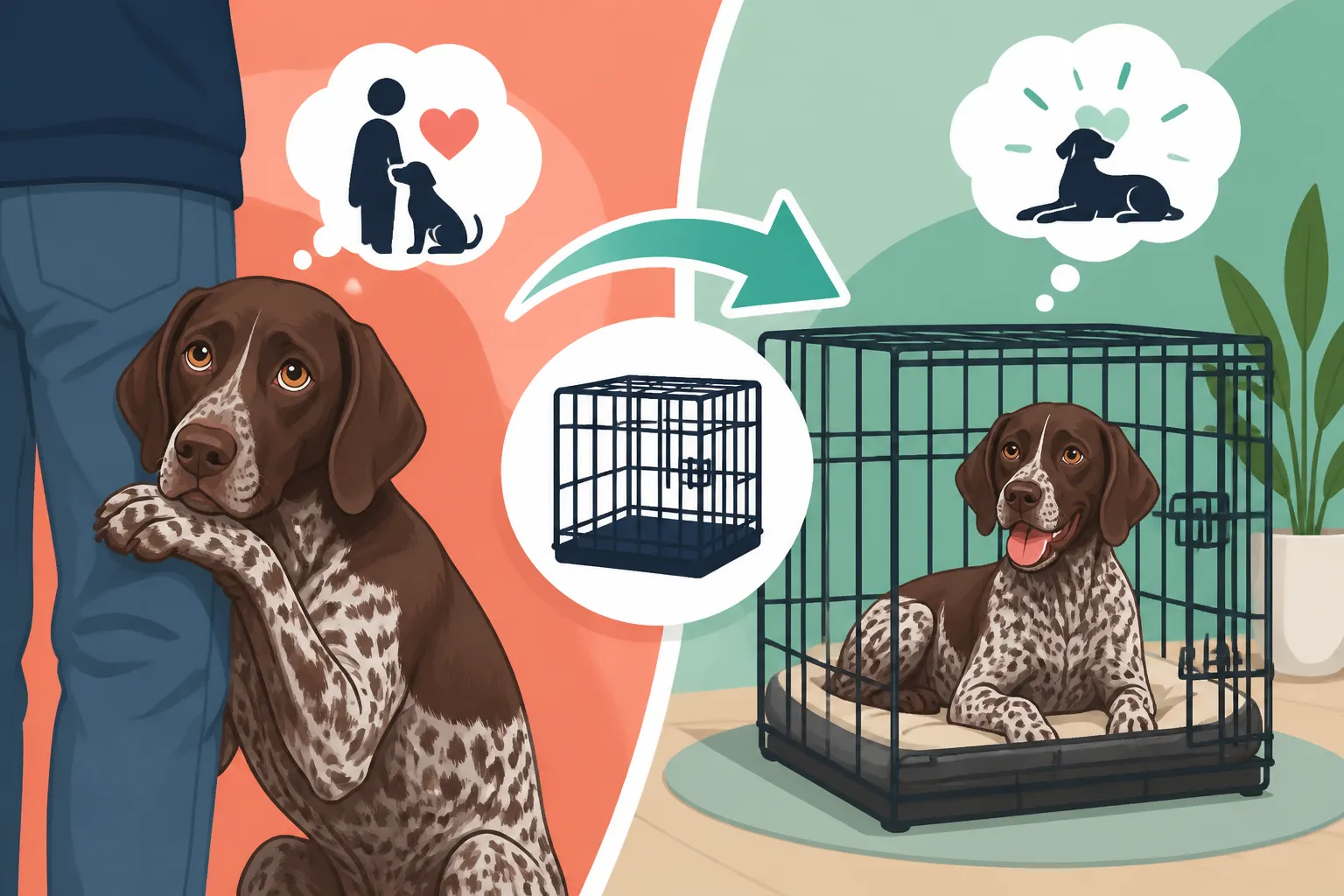
For a clingy German Shorthaired Pointer, the crate isn't just a management tool; it can become a powerful instrument for fostering independence and security. The key is in how it's introduced and utilized, transforming it from a potential place of isolation into a safe, personal retreat.
The Crate as a Den, Not a Jail
The most crucial concept to embrace when using a crate for a clingy GSP is that it must be seen as a positive, safe den, not a punishment or a place of confinement. Dogs, by nature, are den animals. A den offers security, privacy, and a sense of calm. Your GSP's crate should be set up to emulate this feeling. Place it in a quiet, low-traffic area of your home, but initially, it can be helpful to have it in your bedroom or living space where your dog can still feel connected, even if they are physically separated.
Make the crate comfortable with soft bedding, a favorite blanket, and perhaps a piece of your worn clothing for scent familiarity. Never, ever use the crate as a place for time-outs or punishment. If your GSP associates the crate with negative experiences, it will only increase their anxiety and reinforce their clinginess. The goal is for your GSP to want to go into their crate, to view it as their personal sanctuary where they can relax and feel safe, even when you're not right beside them. This positive association is paramount for success.
Gradual Introduction to Crate Time
Introducing a crate to a clingy German Shorthaired Pointer requires patience and a very gradual approach. Rushing the process can set you back significantly. Start by making the crate an inviting place. Leave the door open, toss high-value treats and favorite toys inside. Let your GSP explore it at their own pace. Feed meals inside the crate with the door open, or use a delicious, long-lasting chew or a stuffed Kong toy that they only get when they are in the crate. This builds a strong positive association.
Once they're comfortable entering and staying for short periods with the door open, begin closing the door for a few seconds at a time while they're still eating or chewing. Gradually increase the duration, always staying nearby and opening the door before they show any signs of anxiety. When they are comfortable with short periods (a few minutes) with the door closed and you in the room, start leaving the room for a minute or two, then return before they get distressed. The key is to make these departures and returns non-eventful. No big goodbyes or excited hellos. Resources like the BAXTER & Bella online training program often provide structured steps for crate introduction, which can be invaluable for owners needing guidance through this sensitive process. Remember, slow and steady wins the race when dealing with a dog that struggles with being alone. You want them to think, "Oh, I'm just hanging out in my cool spot," not "Oh no, they're leaving me!"
Using the Crate to Teach Independence
The beauty of the crate, especially for a clingy GSP, is its ability to teach independence in a controlled and safe environment. Once your dog is comfortable in their crate, you can begin to use it strategically to build their confidence in being alone. Start with very short, planned absences. Put your GSP in their crate with a special, high-value treat (like a frozen Kong or a chew they love) right before you leave the house for just 5-10 minutes. Go out, walk around the block, and come back in. Don't make a fuss when you leave or return. The idea is to make these departures so routine and unexciting that your dog learns your absence is not a cause for alarm.
As your GSP gets more comfortable, gradually increase the duration of your absences. Always provide a treat or toy to keep them occupied and associate your departure with something positive. The crate prevents them from engaging in destructive behaviors or pacing anxiously throughout the house, forcing them to settle in their secure space. It gives them a boundary that helps them learn to self-soothe. Over time, these brief, successful moments of solitude in the crate accumulate, teaching your Shorthair that being alone is okay, and that you always come back. This structured solitude is vital for developing mental fortitude and reducing their reliance on your constant presence. Consider also reading Building a Shorthair's Tolerance for Being Alone for more comprehensive strategies.
Integrating Crate Training with Other Independence-Building Strategies
Crate training is a powerful tool, but it's most effective when combined with a holistic approach to building independence in your German Shorthaired Pointer. Addressing clinginess requires a multi-faceted strategy that reinforces confidence and self-reliance in various aspects of their daily life.
Establishing Clear Boundaries and Routines
German Shorthaired Pointers thrive on routine and clear expectations. A lack of structure can contribute to anxiety, making them more clingy as they seek reassurance from you. Establish a consistent daily schedule for feeding, exercise, training, and rest. This predictability helps your GSP understand what to expect, reducing uncertainty and the need to constantly monitor your movements. For example, knowing that after their morning run and breakfast, they have quiet time in their crate, can help them settle.
Beyond schedule, set clear physical boundaries. While it's lovely to have your GSP close, don't allow them to follow you into every single room or demand constant physical contact. Designate specific "place" spots where they can relax independently. This doesn't mean banishing them from your presence, but rather teaching them that they can be calm and content in their own space, even if you're nearby. Practice short durations of "stay" or "place" commands in different rooms. This teaches them that they don't always need to be touching you to feel secure. The Structure a German Shorthaired Pointer Needs Daily is not just about physical activity, but mental and emotional predictability too.
Providing Engaging Enrichment Outside the Crate
A German Shorthaired Pointer with a fulfilled mind and body is less likely to become excessively clingy out of boredom or pent-up energy. Ensure your GSP receives ample physical exercise every day. We're talking about more than just a walk around the block. These dogs need vigorous activity like running, swimming, or retrieving games. How Far a German Shorthaired Pointer Runs in an Hour gives you an idea of their endurance. A tired GSP is a good GSP, and often a less clingy one.
Beyond physical exertion, mental stimulation is critical. Engage their keen intelligence with puzzle toys, scent games, and regular training sessions. These activities challenge their minds, build confidence, and provide an outlet for their energy, making them less reliant on you for entertainment. For example, a snuffle mat or a KONG Wobbler can keep them engaged when you need a moment. Look for durable, engaging toys on platforms like Amazon that can withstand a Shorthair's enthusiasm. Regular training, even short five-minute sessions throughout the day, strengthens your bond in a productive way and gives your dog a job, which they inherently crave.
Desensitization to Departure Cues
Many clingy German Shorthaired Pointers pick up on subtle "departure cues" – the jingle of keys, putting on your shoes, grabbing your purse, or even just walking toward the door. These cues can trigger anxiety and increase clinginess before you even leave. A valuable strategy is to desensitize your GSP to these triggers.
Practice these actions randomly throughout the day, without actually leaving. Jingle your keys, put on your coat, pick up your bag, and then simply sit back down. Repeat this multiple times a day, varying the order and the duration. The goal is to strip these actions of their predictive power, so your dog no longer associates them with your imminent departure. You want them to realize that "shoes on" doesn't always mean you're leaving for hours. When you do leave, keep your departure calm and low-key. Avoid long goodbyes, as these can heighten their anxiety. The more you normalize these actions, the less impact they will have on your GSP's emotional state, making both actual departures and crate time much smoother.
Potential Pitfalls and When to Seek Professional Help
While crate training can be incredibly beneficial for a clingy German Shorthaired Pointer, it's not a magic bullet, and improper use can actually worsen the situation. It's important to be aware of potential pitfalls and know when the problem might be beyond what you can comfortably manage on your own.
Over-Crating and Negative Associations
One of the biggest mistakes owners can make with a clingy GSP is to overuse the crate or introduce it improperly, leading to negative associations. If your Shorthair is left in the crate for excessively long periods (especially without adequate exercise and potty breaks beforehand), or if they are put in the crate immediately after exhibiting clingy behavior as a "punishment," it will quickly become a place of dread, not safety. A crate should never be used to silence a dog that is distressed or barking due to anxiety. This can increase their fear and frustration, making their clinginess and separation issues even worse.
An adult German Shorthaired Pointer should generally not be crated for more than 4-6 hours during the day, assuming they've had sufficient exercise and bathroom breaks. Puppies, of course, have much shorter limits. Too much crate time can lead to behavioral problems like destructive chewing (when out of the crate), house-soiling, and intense longing for human interaction, counteracting the very independence you're trying to build. The crate is a tool for short, structured absences and safe containment, not a substitute for your presence or their need for engagement and exercise.
When Clinginess Signals Deeper Anxiety
Sometimes, what appears as simple clinginess is actually a symptom of more severe separation anxiety. If your German Shorthaired Pointer exhibits extreme distress when you're preparing to leave or after you've gone, crate training alone may not be enough. Signs of severe separation anxiety include:
- Destructive behavior: Chewing at windows, doors, or furniture, often focused on escape routes, resulting in self-injury.
- Persistent vocalization: Non-stop barking, howling, or whining when alone, often audible to neighbors.
- Inappropriate urination or defecation: House-soiling only when left alone, even if otherwise perfectly house-trained.
- Excessive drooling or panting: Even when it's not hot or they haven't exercised.
- Pacing or trembling: Unable to settle down when left alone.
- Escaping: Breaking out of crates or enclosures, potentially causing serious injury.
If your GSP displays these intense behaviors, especially self-injury or frantic escape attempts, it indicates a significant emotional distress that goes beyond simple clinginess. Trying to force a dog with severe separation anxiety into a crate without addressing the underlying emotional issue can be traumatic and harmful. You might notice Signs a Shorthair Is Panicking Rather Than Bored reaching critical levels.
Consulting a Certified Professional Dog Trainer or Behaviorist
If you've diligently tried gradual crate training and independence-building strategies, but your German Shorthaired Pointer's clinginess or anxiety is not improving, or if you suspect they have severe separation anxiety, it's time to bring in professional help. A Certified Professional Dog Trainer (CPDT) or, for more severe cases, a Certified Applied Animal Behaviorist (CAAB) or a Veterinary Behaviorist (Dip. ACVB) can provide an accurate diagnosis and develop a tailored treatment plan.
These professionals can assess your specific situation, observe your dog's behavior, and identify the root causes of their anxiety. They can guide you through more advanced counter-conditioning and desensitization protocols, often combined with environmental management and sometimes even medication (prescribed by a vet) for severe cases. Seeking help from an expert ensures that you're addressing the problem safely and effectively, providing your beloved GSP with the tools they need to feel secure and content, whether you're right by their side or out for a few hours. Don't hesitate to reach out for help; it's a sign of a responsible and caring owner.
| Behavior Trait | Normal Clinginess (Devotion) | Over-Attachment / Separation Anxiety |
|---|---|---|
| When Owner is Present | Follows owner casually, enjoys physical contact, settles when busy. | Follows owner constantly, anxious if out of sight, demands constant attention. |
| When Owner Prepares to Leave | May notice cues but doesn't show significant distress, settles with a treat. | Becomes agitated, paces, whines, tries to block exits, shows signs of panic. |
| When Owner is Gone (Short Time) | May initially lie by door, then settles down, sleeps. | Immediate distress, persistent vocalization, attempts to escape the crate/house. |
| When Owner is Gone (Longer Time) | Rests, plays with toys, awaits return calmly. | Destructive chewing, house-soiling (only when alone), excessive drooling, trembling. |
| Greeting on Return | Happy, excited, but calms down relatively quickly. | Frantic, uncontrollable excitement, prolonged jumping, submissive urination. |
| Response to Crate | Accepts crate as a den, may complain briefly but settles with comfort. | Resists crate entry, panics inside, tries to escape, associates crate with abandonment. |
| Impact on Household | Generally manageable, dog is a loving companion. | Disruptive, damages property, affects neighbor relations, significant distress for dog. |
Crate training, when implemented thoughtfully and patiently, can indeed be a tremendous asset for fostering independence in a clingy German Shorthaired Pointer. By transforming the crate into a secure, positive den and combining this with clear boundaries, ample exercise, mental stimulation, and desensitization to departure cues, you can help your Shorthair develop the confidence to be comfortably alone. Remember, the goal isn't to diminish their loving nature, but to nurture a resilient spirit that allows them to thrive even when you're not within arm's reach.
Disclaimer
This article is for general informational purposes only and does not constitute professional advice. Laws, prices and regulations vary by location and change over time. Consult a qualified professional for guidance on your specific situation.