Handling a German Shorthaired Pointer at Range
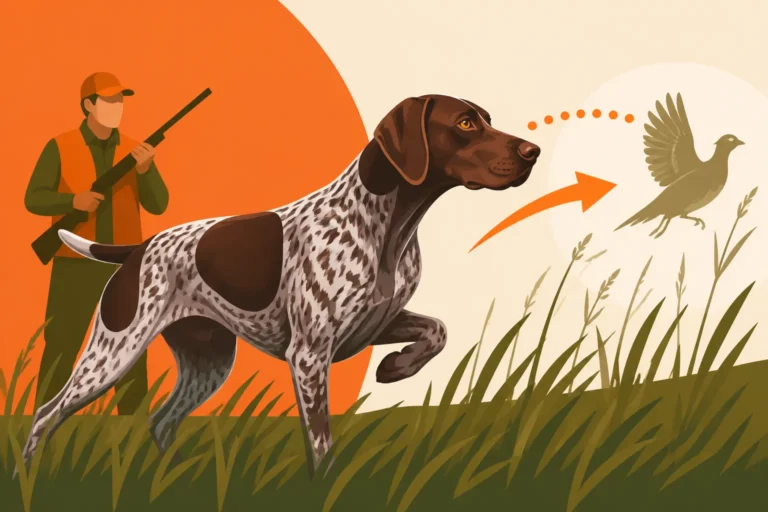
It’s a tale as old as time for German Shorthaired Pointer owners: you’re out in the field, your dog is doing what it was born to do – running, scenting, covering ground – and then suddenly, they’re a speck on the horizon. The heart sinks a little, doesn't it? The frustration of trying to reel in a dog whose instincts tell them to go, especially when they're truly "on," can feel insurmountable. This comprehensive guide will help you understand the GSP's natural tendencies, equip you with the right training tools and techniques, and empower you to confidently handle your German Shorthaired Pointer at range, ensuring both their safety and your peace of mind.
Understanding the German Shorthaired Pointer's Natural Range Instincts
When you own a German Shorthaired Pointer, you're not just getting a pet; you're welcoming a finely tuned athlete and hunter into your life. These dogs were quite literally bred for miles, for covering vast expanses of ground with their incredible noses leading the way. So, when your Shorthair takes off across a field, seemingly deaf to your calls, it's not defiance in their eyes, but often the fulfillment of a deep, genetic imperative.
The Inherent Drive to Hunt and Explore
Imagine a dog engineered over generations to systematically search for game birds across open plains, dense cover, and everything in between. That's your German Shorthaired Pointer. Their drive to hunt, to follow a scent, and to explore every nook and cranny of their environment is not just a preference; it's practically a mission. They have an innate desire to get out there and discover what's waiting. This powerful instinct is what makes them such exceptional hunting companions, but it's also what can make managing their range such a challenge for even the most seasoned owner.
Their nose, an incredible instrument, is constantly working, sifting through a myriad of scents that we humans can’t even begin to process. When they hit a hot scent, it's like a siren call that can drown out everything else. They might be scanning the horizon, but their primary focus is often driven by what their nose is telling them, leading them farther and farther from your immediate vicinity. This can be incredibly frustrating when you're trying to keep them close, but understanding that it's a deep-seated part of who they are can help you approach their training with more empathy and strategic planning.
Why They Might Ignore You When Locked On
It feels personal, doesn't it? You call, you whistle, you might even shout, and your German Shorthaired Pointer just keeps going, tail flagging, nose to the ground. It can look like deliberate disobedience, but when a Shorthair is "locked on" a scent, they often enter a state of intense focus, almost a tunnel vision, where their world shrinks to that one compelling track. The adrenaline rush of being on a bird can override learned commands, especially if those commands haven't been meticulously proofed under extreme distraction.
Think about it from their perspective: they've just hit the strongest pheasant scent of their life, or they've spotted a running covey of quail. Their entire being is screaming "pursue!" In that moment, your voice or whistle might just register as a distant buzz. It’s not that they don't love you or respect your commands; it's that their powerful prey drive and hunting instinct are in full throttle. The challenge for us as owners is to make our commands more compelling, more consistently reinforced, and more deeply ingrained than even the most tantalizing wild scent. This takes immense patience and a systematic approach to training that respects their natural inclinations while still establishing handler control.
The Differences Between Field and Pet Lines
While all German Shorthaired Pointers carry that core hunting instinct, there can be a noticeable difference in range and intensity between dogs from dedicated field lines and those bred primarily for conformation or companionship. Field-bred GSPs are often selected for their incredible drive, stamina, and willingness to cover ground in search of game. Their pedigree might be filled with titles like Field Champion or those from organizations like NAVHDA, indicating generations of dogs chosen for their working abilities. How to Read a Shorthair Pedigree for Hunting Ability
A German Shorthaired Pointer from a strong field line might naturally want to run a wider pattern, check cover farther out, and possess an almost relentless energy level. A pet-line GSP, while still active and intelligent, might have a slightly softer drive or prefer to work closer to their handler, though they certainly won't be lacking in energy! It's crucial to understand your dog's lineage and what those genetics mean for their natural ranging tendencies. Regardless of background, responsible range handling is about working with, not against, your dog's inherent abilities, molding them into a cooperative hunting or exercise partner. Knowing what to expect genetically can set you up for more realistic training goals and help you understand why your particular GSP behaves the way they do in open spaces.
Building a Foundation: Core Obedience and Communication
Before you can effectively manage your German Shorthaired Pointer at long distances, you need an absolutely solid foundation of core obedience and communication. Think of it as installing the essential software before you try to run complex applications. Without these basics mastered, any advanced range work will be a constant battle. This isn't just about teaching commands; it's about building a language and a trust that can withstand the siren call of the open field.
Rock-Solid Recall: Your Most Important Tool
If there's one command that every German Shorthaired Pointer owner absolutely must master, it's a reliable recall. This isn't just about calling your dog back when they're ten feet away in the yard; it's about having them turn on a dime and return to you when they're a hundred yards out, focused on a squirrel, or sniffing something truly intriguing. A solid recall is your dog's lifeline and your peace of mind.
Start teaching recall in a low-distraction environment, like your backyard, using a long line. Every time your dog comes to you, make it the most exciting, rewarding event of their day with high-value treats and enthusiastic praise. Never use recall as a command to scold or do something unpleasant like nail trims. Gradually introduce distractions – a mild noise, a distant person, another dog at a distance – always setting your dog up for success. If they don't respond, don't repeat the command; instead, gently reel them in with the long line, then reward them when they get to you. Consistency is key here. Practice short, frequent recall sessions, making it a game where coming back to you is always the best option. Think about varying your location, too. A recall in the park is different from a recall in tall grass, and even more so from a recall when birds are present. Your recall needs to be more powerful than any distraction, and that comes from relentless, positive reinforcement in increasingly challenging scenarios.
Whistle Commands: Reaching Across the Distance
While your voice is perfectly fine for close-quarter commands, it simply doesn't carry effectively over long distances or through heavy cover. That's where a good whistle comes in. A whistle command cuts through wind, foliage, and the general cacophony of the outdoors, providing a clear, consistent signal that your dog can hear from much farther away. It removes the emotional tone from your voice, which can inadvertently affect your dog's response, and replaces it with an unambiguous instruction.
The most common whistle commands include a series of short toots for recall and a single, longer blast for "stop" or "sit." When you introduce whistle commands, pair them directly with your verbal commands that your dog already knows. For example, give your recall whistle while simultaneously saying "Come!" and then rewarding heavily when they respond. Over time, you'll fade out the verbal cue, and the whistle itself will become the primary signal. Practice these commands frequently, starting close and gradually increasing the distance in various environments. The consistency of the whistle sound, no matter who is blowing it or what emotions are involved, makes it an invaluable tool for controlling a wide-ranging German Shorthaired Pointer. The Whistle Signals a Shorthair Learns First Mastering the whistle early on means you have a reliable way to communicate when your voice just won't cut it.
Hand Signals: Visual Cues for Long Range
In addition to whistle commands, hand signals provide another layer of communication that can be incredibly effective when your German Shorthaired Pointer is working at a distance, especially if they are far enough away that the whistle might be muffled or if they are facing away from you. Hand signals are universal and can be taught alongside your verbal and whistle cues, reinforcing the command through multiple channels. For a GSP, hand signals are particularly useful for casting them left or right to quarter a field, or to send them forward to investigate a promising patch of cover.
To teach hand signals, always pair the visual cue with the verbal command and the whistle initially. For example, when you want your dog to turn right, give your whistle signal for turn, sweep your arm to the right, and say "Right!" When they respond, reward them. The key is to be consistent with your signals – make them clear, distinct, and always the same. Practice in open areas where your dog can see you clearly, gradually increasing the distance. You'll find that in many field situations, particularly if your dog is actively hunting and has its head up, they will look to you for direction. A well-trained hand signal can guide them precisely where you want them to go, making your partnership in the field much more efficient and effective.
Introducing Tools for Range Control
Once your German Shorthaired Pointer has a solid foundation in basic obedience and responds well to recall and whistle commands in moderate distractions, you might find that the sheer power of their drive still sometimes overwhelms those lessons in a truly stimulating environment. This is where specific tools designed for range control come into play. These aren't shortcuts, but rather extensions of your communication, helping you to reinforce commands consistently and ensure your dog's safety and your control, even at a distance.
The Role of a Check Cord in Early Training
Before you even consider more advanced tools, the check cord is an absolute must-have for teaching range control to a German Shorthaired Pointer. This isn't just a long leash; it's a critical teaching aid that allows you to safely extend your control and gently enforce commands from a greater distance than you could with your hand alone. Typically ranging from 15 to 50 feet, a check cord lets your dog experience a bit more freedom while still allowing you to intervene if they ignore a command.
You'll use the check cord to reinforce your recall, stop, and directional commands. If your dog ignores your whistle to "come," a gentle tug on the cord can remind them of the expectation. It allows you to physically guide them into position or prevent them from ranging too far or chasing something inappropriate. Always ensure the check cord is attached to a sturdy, well-fitting collar, and be mindful of entanglement hazards, especially in dense cover. The check cord helps bridge the gap between training in a controlled environment and working off-leash in the real world. It gives your dog the opportunity to make the correct choices, with you there to provide immediate, consistent feedback. It's about teaching, not punishment, and the check cord provides that crucial line of communication before full off-leash freedom is earned.
E-Collar Training: When and How to Use It Responsibly
E-collar training, often referred to as remote collar training, is one of the most effective tools for handling a German Shorthaired Pointer at range, but it's also one of the most misunderstood. Let's be clear: an e-collar is not a shock collar to punish your dog. When used correctly and humanely, it's a communication device that provides consistent, clear, and instant feedback to your dog, even when they're far away. The goal is to use low-level stimulation, barely perceptible, as a tap on the shoulder to remind your dog of a known command, not to inflict pain. E-Collars Built for a Running German Shorthaired Pointer
Introduction to the e-collar must be done slowly and carefully. First, your dog should completely understand the commands on a leash. Then, introduce the e-collar on the lowest possible setting that your dog perceives (often just a tickle or vibration), associating it with a known command like "come" or "sit." The stimulation is always paired with the verbal/whistle command, and released the moment the dog complies. This teaches them that the e-collar signal is simply a cue for a command they already know, not something to fear. For a GSP, this tool can be invaluable for reinforcing recall when they're locked on a scent, correcting a break from point, or directing them to change course when ranging wide. Many reputable brands offer remote training collars, which you can easily find on Amazon or at specialty dog supply stores. Remember, the e-collar is an extension of your voice and leash, not a replacement for good training. Used responsibly, it fosters trust and clarity, allowing your GSP to work with confidence at impressive distances. If you're considering this tool, seek guidance from a professional trainer experienced in positive, low-level e-collar conditioning. Whether an E-Collar Damages a Soft Shorthair
GPS Tracking Collars: Knowing Where They Are
For a German Shorthaired Pointer owner, especially one who hunts or enjoys vast open spaces, a GPS tracking collar isn't just a luxury; it's a safety essential. While you're working diligently on training for range control, the reality is that sometimes, even the best-trained GSP can get caught up in a chase, get disoriented, or simply range wider than expected. That's when a GPS collar becomes an absolute lifesaver. It provides instant, real-time location data, allowing you to know exactly where your dog is, even if they're out of sight or sound.
These collars often come with a handheld device or link to a smartphone app, showing your dog's position on a map. Many also offer features like geofencing, which alerts you if your dog leaves a pre-defined area, or even remote training capabilities that integrate with e-collar functions. The peace of mind that comes with knowing you can locate your dog quickly, whether they've busted a covey too far afield or decided to investigate a promising scent on the property next door, is immeasurable. Losing a dog, especially a driven German Shorthaired Pointer, is a terrifying experience, and a GPS collar is a proactive step to prevent that nightmare. You can find a wide array of options, from simple trackers to advanced systems, on Amazon and other outdoor retailers. Consider the investment not just as a piece of gear, but as an insurance policy for your adventurous companion. GPS Collar Subscription Fees for a Shorthair Owner
Strategic Training for Range and Patterning
Once you have your foundational commands and tools in place, it's time to get strategic about how you actually train your German Shorthaired Pointer to work cooperatively at range. This involves more than just calling them back; it's about teaching them a purposeful hunting pattern and how to adjust their range based on your cues and the environment. This is where the art of handling really comes into play.
Teaching a Shorthair to Quarter in Front of You
Quartering is a fundamental skill for any bird dog, and for a German Shorthaired Pointer, it's how they efficiently cover ground to find scent. Instead of running wildly in a straight line, quartering means the dog works back and forth in a zigzag pattern in front of the handler, covering the ground thoroughly and staying within a reasonable range. This technique ensures that no birds are missed and that the dog is always moving into the wind, carrying scent directly back to them.
To teach quartering, start in a relatively open field with light cover. Begin by walking in a straight line. As your dog starts to drift too far to one side, use a directional whistle command and a corresponding hand signal (sweeping arm) to turn them and send them back across to the other side. As they reach the other side and begin to drift too far, repeat the command and signal to turn them back. You want them to develop a fluid, pendulum-like motion in front of you. Consistency is key, and using your e-collar on a low setting can provide an immediate, subtle reminder if they ignore your turns or start to stretch their range too much. Gradually increase the distance between your turns as your dog understands the pattern. This isn't about rigid marching; it's about encouraging a natural, energetic search pattern that remains responsive to your guidance. Teaching a Shorthair to Quarter in Front of You This strategic movement makes your GSP a more effective hunting partner and keeps them engaged with you.
Shortening a Shorthair That Ranges Too Far
It's a common complaint with German Shorthaired Pointers: they're incredible athletes with endless energy, and sometimes their enthusiasm leads them to range wider than you'd like, potentially missing birds or putting them out of effective communication range. Shortening a wide-ranging GSP requires consistent communication and a strategic approach. The key is to be proactive, not reactive.
Firstly, ensure your recall and "stop" (whoa/sit) commands are impeccable with your whistle and e-collar. If your dog consistently ignores a turn command and keeps going, a firm but fair e-collar correction (again, at a low, attention-getting level, not a punishment level) paired with the whistle can bring them back into line. Another strategy is to deliberately work in tighter cover where a wider range is naturally impractical. This forces them to work closer and focus on the immediate area. When they do check in or naturally shorten their range, reward them heavily. You can also use terrain to your advantage, intentionally walking a line that forces them to cross back and forth, keeping them engaged. Don't let them practice bad habits; if they consistently range too wide, shorten your work sessions, revert to more contained areas, and rebuild the understanding that "in range" means staying responsive to your direction. This isn't about crushing their drive, but channeling it into an effective, cooperative partnership.
Extending Range for a Close-Working Dog
While many GSP owners struggle with a dog that ranges too far, some German Shorthaired Pointers, especially those from certain pet lines or those that are particularly soft-tempered, might tend to work too close. While this can be charming, it's not ideal for efficient bird finding, as they won't cover enough ground to locate game. Extending the range of a close-working GSP requires encouragement and building their confidence to venture out further.
Start by working in very open fields where there's little intimidating cover. Instead of letting them stick to your heels, use soft directional whistles and hand signals to cast them out. You might even walk in a zigzag pattern yourself to encourage them to mimic your movement and cover more ground. Crucially, plant birds for them to find at an extended distance. When they find a bird far out, praise them enthusiastically, reinforcing that finding game at range is a good, rewarding behavior. Don't rush to the bird yourself; let them hold the point and then walk in slowly, giving them time to feel successful in their independent find. Using a remote bird launcher can also be helpful, as you can launch a bird at a distance, encouraging them to chase and retrieve from farther out. Gradually increase the distance of your casts and the location of your planted birds. The goal is to build their confidence in working independently while still maintaining communication and control. Whether a Close Working Shorthair Can Be Opened Up It’s a delicate balance, but fostering that independent hunting spirit is key to a well-rounded bird dog.
Handling Real-World Challenges and Distractions
The true test of your range control training comes when you step out of the practice field and into real-world scenarios. Wild birds, other animals, new environments, and unexpected situations can quickly unravel even the best-laid plans. This section addresses those inevitable challenges and provides strategies for maintaining control when distractions are at their peak.
Recalling a German Shorthaired Pointer That Is Locked On
This is the holy grail of range control: having your German Shorthaired Pointer come when called, even when they are intensely focused, or "locked on," a bird or a hot track. It requires monumental consistency in training and a complete understanding of your e-collar as a communication tool. The instinct to pursue, or to stand staunchly on point, is incredibly strong in a GSP, and overcoming it requires that your command is even stronger.
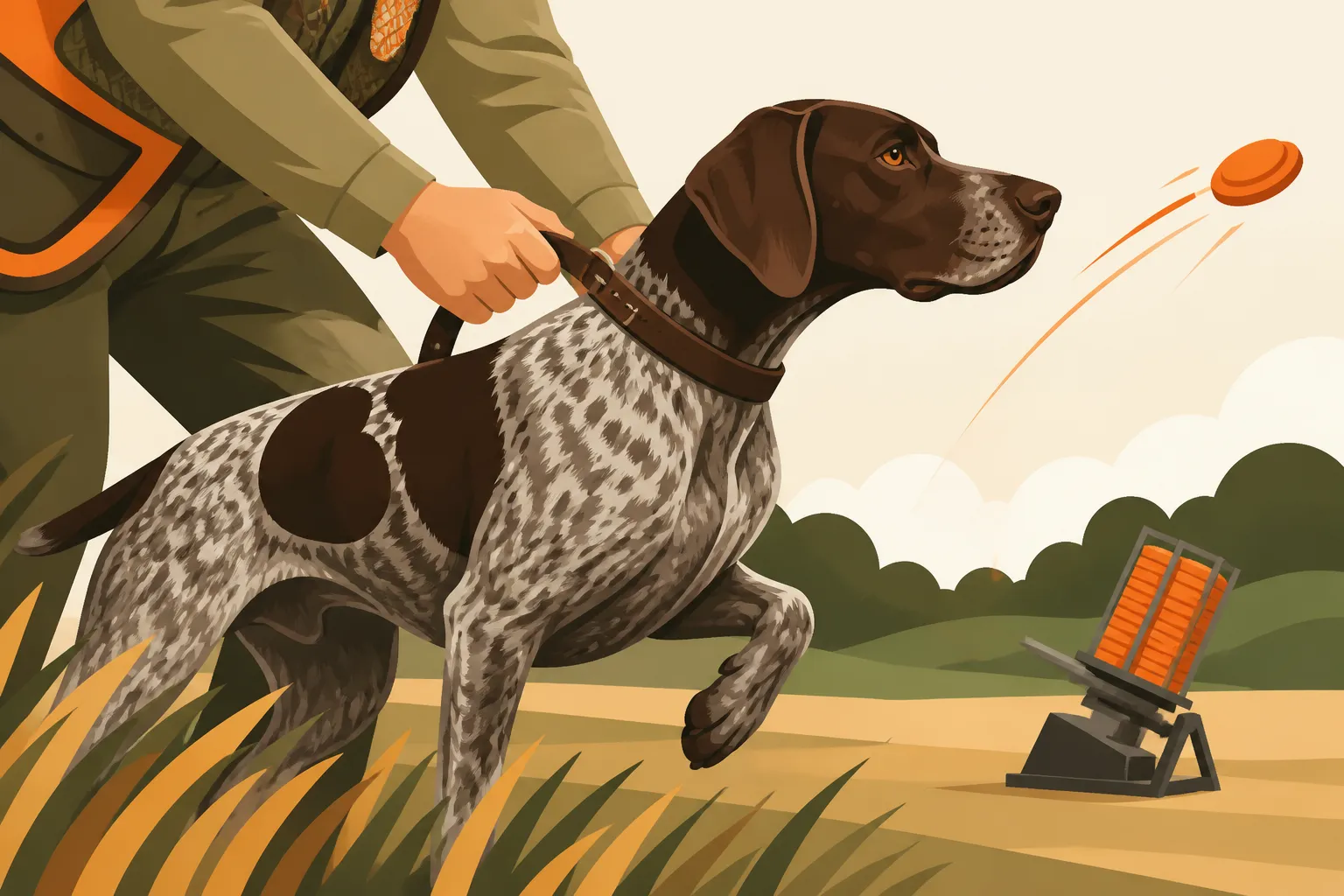
The key is to start proofing this scenario long before you encounter it with wild birds. Use planted birds or retrieve dummies that simulate the real thing. When your dog is approaching or on point, give your whistle recall command. If they hesitate or ignore, immediately apply low-level e-collar stimulation, maintaining it until they break focus and turn towards you. The moment they turn, release the stimulation and praise heavily. This teaches them that the consequence of ignoring the command is the unpleasant, continuous stimulation, and the reward is immediate relief and praise when they comply. Never, ever chase a dog that is ignoring recall; that only teaches them to run faster. Instead, stand your ground, continue your whistle, and use your e-collar. It's about making the right choice their choice for comfort and reward. This takes repetition and unwavering consistency, but achieving this level of control is what separates a good gun dog from a great one. Recall on a German Shorthaired Pointer That Is Locked On
Managing Distractions: Wildlife, Other Dogs, and Scents
The natural world is teeming with distractions, and for a German Shorthaired Pointer, every rustle, every scent, and every fleeting glimpse of movement can be an invitation to explore. Managing these distractions is crucial for maintaining range control and ensuring your dog's safety. This means systematically introducing your dog to increasing levels of distraction during training.
Start by working around neutral, calm dogs on leash, gradually progressing to off-leash work with well-behaved companions. Practice your recall and directional commands in areas with known wildlife presence, such as deer tracks or rabbit scents, but initially without the actual animals present. Teach a solid "leave it" command that applies to anything from a discarded wrapper to a running deer. If your dog shows interest in a distraction, give your "leave it" command, and if they respond, reward them heavily. If they ignore, use your e-collar to reinforce the command, pairing it with the whistle or verbal cue. The goal is not to eliminate their natural instincts, but to teach them that you are the leader, and your commands supersede even the most enticing distractions. This graduated exposure, combined with consistent reinforcement, will build your GSP's ability to maintain focus on you, even amidst the chaos of the outdoors.
Dealing with a German Shorthaired Pointer That Self Hunts
A German Shorthaired Pointer that "self-hunts" is a common problem and a major frustration. This isn't about a dog working its pattern; it's about a dog that takes initiative to hunt for itself, ignoring your direction, ranging out of control, and often busting birds far outside of gun range. This behavior can be dangerous for the dog and unproductive for the hunter. It often stems from a lack of consistent control, or perhaps even inadvertently reinforcing independent hunting by not correcting when the dog ranges too far.
To curb self-hunting, you must re-establish your authority and the expectation of handler-driven control. Go back to basics: utilize a long check cord in all training sessions, even in the field. Every time the dog starts to stretch its range or ignore a turn, use the check cord and your e-collar (paired with whistle) to bring them back in line, immediately. Don't be afraid to shorten their range significantly for a while, even if it feels counter-intuitive. They need to learn that you dictate the pattern and the speed, not their own impulses. This means being utterly consistent: every ignored command, every wide cast, must be met with immediate feedback. You might also want to spend time on "whoa" (steadying on point) to teach them patience and waiting for your command before moving on. The goal is to reshape their understanding so that their incredible drive is channeled through your guidance, making them a cooperative, rather than independent, hunting partner.
Maintaining Control and Advanced Considerations
Once you've put in the hard work to establish range control, the job isn't over. It's an ongoing process of maintenance, refinement, and continuous learning. Advanced handlers learn to anticipate their dog's moves, adjust to conditions, and ensure that their GSP remains a willing and responsive partner throughout its working life.
The Importance of Conditioning and Fitness
You can have the best-trained German Shorthaired Pointer in the world, but if they're not physically conditioned for the demands of working at range, all that training can fall apart. A tired dog, like a tired person, is more prone to making mistakes, ignoring commands, and simply running out of mental and physical stamina. German Shorthaired Pointers are high-energy athletes, and they need to be in peak physical condition to perform their best in the field for extended periods.
This means a consistent exercise regimen that goes beyond a daily walk around the block. Roading your dog (running them alongside a bike or ATV at a controlled pace) is an excellent way to build stamina. Swimming provides a great full-body workout that's easy on the joints. Long, brisk runs off-leash (in a safe, controlled environment, of course) will help build their wind and leg strength. Conditioning a Shorthair Before Opening Day Throughout the off-season, maintain a good level of fitness so that when hunting season rolls around, your dog isn't starting from scratch. A fit dog will maintain focus longer, recover faster, and be less prone to injuries. Remember, proper nutrition also plays a huge role in maintaining their energy levels and overall health. Using Water Work to Wear a Shorthair Out A well-conditioned GSP is not only a happier, healthier dog but also a more responsive and controlled partner in the field.
Reading Your Dog: Subtle Cues and Body Language
True mastery of handling a German Shorthaired Pointer at range isn't just about giving commands; it's about learning to read your dog. German Shorthaired Pointers communicate constantly through their body language, tail position, ear set, and subtle shifts in their gait. Learning to interpret these cues can allow you to anticipate their next move and intervene before they make a mistake, rather than reacting after the fact.
For instance, learning to recognize the slight stiffening of their body, the slight rise in their head, or the subtle change in their nose work that indicates they've caught a faint whiff of game can help you prepare to give a "whoa" command or direct them more precisely. Similarly, understanding the signs of increasing distraction – a head swivel towards a distant deer, a sudden surge of speed that goes beyond their normal pattern – allows you to issue a proactive recall or turn command before they've completely committed to an undesired action. Spend time observing your dog, not just during training, but during every interaction. Learn their tells, their habits, and their individual quirks. This deep understanding of your specific dog is invaluable for effective range handling, allowing for a seamless, almost intuitive partnership where you anticipate their needs and guide them with minimal, timely intervention.
Continuous Training and Reinforcement
Handling a German Shorthaired Pointer at range is never a "one and done" training exercise. It's a lifelong commitment to continuous reinforcement, practice, and refinement. Just like an athlete needs to stay in shape, a German Shorthaired Pointer needs regular mental and physical conditioning to maintain their high level of training. Off-season isn't just for resting; it's for honing skills, practicing commands in new environments, and maintaining that strong bond of communication.
Make training a regular part of your routine, even if it's just short, fun sessions in the park or backyard. Revisit those foundational recall and whistle commands. Introduce new scenarios and distractions. If you use an e-collar, ensure you're regularly refreshing its association with known commands. Keep your dog mentally engaged with new challenges and reinforce that working with you is a rewarding experience. This consistency prevents skills from eroding over time and strengthens your dog's reliability. Consider supplementary training like enrolling in an online program such as BAXTER & Bella for basic obedience or seeking out a local NAVHDA chapter for more advanced field work. The journey of training a German Shorthaired Pointer is a partnership, and like any good relationship, it thrives on ongoing communication, trust, and mutual respect. The Structure a German Shorthaired Pointer Needs Daily
Range Handling Techniques Comparison
Here's a quick overview of some key techniques and tools for handling a German Shorthaired Pointer at range, highlighting their primary use and benefits.
| Technique/Tool | Primary Use | Benefits | Considerations |
|---|---|---|---|
| Solid Recall | Bringing dog back from any distance/distraction | Ultimate safety, control, strengthens bond | Requires consistent, positive reinforcement; fragile if misused |
| Whistle Commands | Communication over distance/wind | Cuts through noise, consistent signal, less emotional | Dog must be conditioned to associate sounds with commands; carries far |
| Hand Signals | Visual cues for turns/directions at range | Effective when dog is far or facing away, quiet communication | Dog must be looking at handler; best for casting/directional cues |
| Check Cord | Early stage reinforcement, extending control | Safe way to enforce commands, prevents mistakes, builds habits | Can snag on brush, limited by length, requires physical proximity |
| E-Collar | Consistent, immediate feedback at distance | Reinforces commands reliably, crucial for high-drive dogs | Requires careful, humane introduction; can be misused, misunderstood |
| GPS Collar | Real-time location tracking | Ensures safety, prevents loss, peace of mind | Battery life, subscription fees for some models, does not train the dog |
| Quartering Training | Efficient ground coverage, systematic search | Maximizes bird finding, keeps dog engaged with handler's pattern | Requires patience and consistency to teach the pattern; can be broken by self-hunting |
Disclaimer
This article is for general informational purposes only and does not constitute professional advice. Laws, prices and regulations vary by location and change over time. Consult a qualified professional for guidance on your specific situation.