The Age a Shorthair Can Start Distance Running
It's incredibly exciting to see your German Shorthaired Pointer puppy grow and develop that boundless energy. You dream of those long runs together, out in the open, covering miles with your athletic companion. But hold on a second – pushing them into serious distance running too soon can have devastating long-term consequences for their delicate growing bodies. This guide will walk you through the proper timeline and methods for safely introducing your Shorthair to distance running, ensuring they stay sound and happy for years of adventures.
Understanding Your Shorthair's Unique Growth Journey
German Shorthaired Pointers are magnificent athletes, built for endurance and speed in the field. But just because they have the drive doesn't mean their bodies are ready for intense, repetitive impact activities like distance running from day one. Their growth isn't just about getting taller; it's a complex process involving bones, muscles, and joints, all developing at their own pace.
The Critical Role of Growth Plates
Think of growth plates as the "soft spots" in your puppy's bones. These are areas of cartilage located near the ends of long bones, like those in their legs, where new bone tissue is produced, allowing the bones to lengthen. They're incredibly important for your Shorthair's development, but they're also quite fragile. Until these growth plates fully close and calcify into solid bone, they are highly susceptible to injury. A hard landing, a sudden twist, or repetitive high-impact activities like prolonged running on hard surfaces can damage these plates.
If a growth plate is injured, it can lead to abnormal bone growth, resulting in angular limb deformities or making your dog more prone to conditions like Hip Dysplasia in a Hard Running German Shorthaired Pointer. It's not just about limping; these issues can cause chronic pain and severely limit their athletic potential later in life. Imagine the frustration of having a dog that wants to run and work, but can't, all because we asked too much of their young bodies.
Key Developmental Milestones for German Shorthaired Pointers
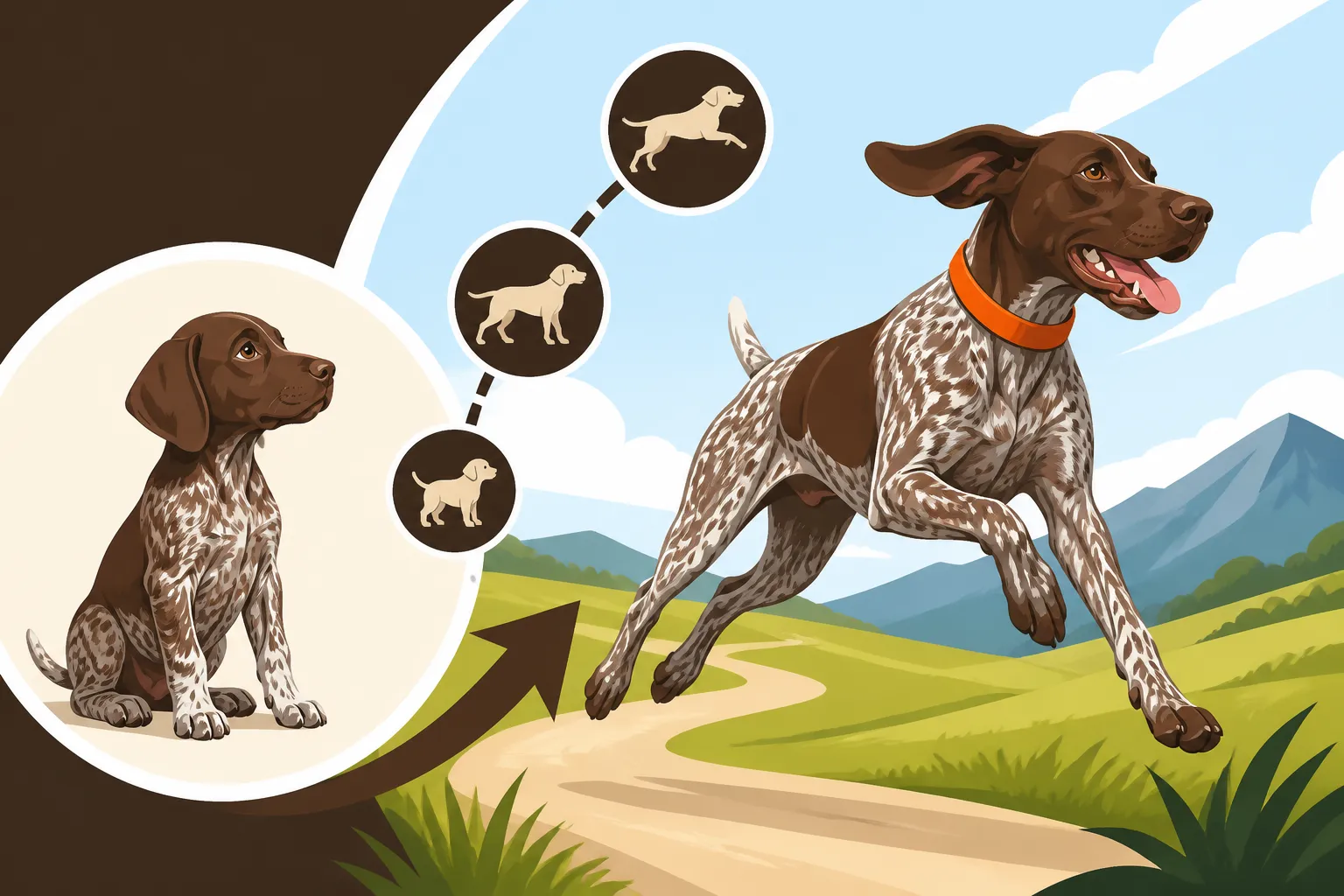
While every German Shorthaired Pointer is an individual, there are general milestones you can expect. Most Shorthairs reach their adult height between 12 to 18 months, but their bones and joints, particularly those crucial growth plates, often don't fully close until they are between 18 and 24 months old. For some of the larger or later-maturing lines, it might even be a little later. This isn't just a physical observation; it's backed by veterinary science and responsible breeding practices.
During this time, their muscles are strengthening, their coordination is improving, and their bodies are solidifying. Pushing them physically before this internal "construction" is complete is like trying to build a skyscraper on a shaky foundation. You might get away with it for a while, but eventually, the structure will suffer. Understanding these milestones is key to ensuring your German Shorthaired Pointer has a long, healthy, and sound career, whether that's in the field or simply enjoying life as an active family companion.
Here’s a general idea of what to expect:
| Age (Approx.) | Physical Development | Recommended Activity Level |
|---|---|---|
| 8-12 Weeks | Rapid growth, very vulnerable growth plates | Short play sessions (5-10 min, 3-4x/day), structured walks, focus on socialization. |
| 3-6 Months | Still growing rapidly, gangly stage, clumsy sometimes | Structured play, short leash walks (15-20 min), exploring safe environments. Avoid jumping, stairs, long runs. |
| 6-12 Months | Reaching adult height, growth plates mostly open | Longer walks (30-45 min), light jogging on soft surfaces for short bursts. Continue avoiding high impact/repetitive stress. |
| 12-18 Months | Filling out, growth plates starting to close | Moderate jogs, trail walking, swimming. Gradually increase duration, but still avoid intense, sustained distance running on hard surfaces. |
| 18-24 Months+ | Growth plates typically closed, body fully mature | Can begin carefully structured distance running and more intense training. Always consult your vet. |
The Risks of Rushing Your German Shorthaired Pointer Into Distance Running
The temptation to hit the trails for miles with your energetic German Shorthaired Pointer puppy is strong. You see their drive, their enthusiasm, and you just want to let them go! But yielding to that temptation too early can inadvertently set them up for a lifetime of discomfort and veterinary visits. It’s not just about what they can do, but what their developing bodies should do.
Joint Damage and Long-Term Health Concerns
The primary concern with early distance running in a breed like the German Shorthaired Pointer is the risk of joint damage. Their growing bodies have open growth plates, as we discussed, which are essentially soft cartilage that hasn't hardened into bone yet. Repetitive pounding on hard surfaces, whether it's pavement, concrete, or even compacted dirt trails, puts immense stress on these vulnerable areas. This stress can lead to inflammation, microfractures, or even premature closure of the growth plates.
When growth plates are damaged, they can heal improperly, leading to irreversible deformities like angular limb deformities, or exacerbating genetic predispositions to conditions like elbow dysplasia. Even without a direct, acute injury, the constant impact can wear down the cartilage in their joints prematurely, paving the way for early-onset arthritis. This means that a dog you envisioned running tirelessly through the fields for How Long a Working German Shorthaired Pointer Stays Sound might be stiff and sore by the time they are five or six, requiring expensive medications, supplements, or even surgery to manage their pain. It's a heartbreaking scenario that responsible dog ownership seeks to avoid.
Another consideration for a breed like the German Shorthaired Pointer is the discussion around when to spay or neuter. Research suggests that the timing of these procedures can also impact joint health, particularly for larger breeds. You might want to explore articles like Whether neutering timing changes a Shorthair's joints to understand this complex interplay further. All these factors contribute to the overall orthopedic health of your dog, and rushing their physical development can tip the scales toward negative outcomes.
Mental and Physical Burnout: More Than Just Physical Harm
Beyond the physical risks, pushing a young German Shorthaired Pointer into intense distance running can also lead to mental and physical burnout. While they are naturally driven, a puppy's attention span isn't built for miles of monotonous running. They need variety, exploration, and the chance to use their incredible noses. Forcing them into long, structured runs can turn what should be an enjoyable activity into a chore, potentially dampening their natural enthusiasm for exercise and outdoor adventures.
Furthermore, a young dog's cardiovascular system and stamina are still developing. Over-exertion can lead to exhaustion, heat stress, and even an increased risk of injury as their muscles fatigue and their form breaks down. They might push themselves to keep up with you, not understanding their own limits, driven by their desire to please. This can be particularly dangerous if you're far from home. A tired, mentally checked-out puppy is more prone to mistakes, less likely to follow commands, and generally less safe. We want to foster a love for activity, not create an aversion to it through overzealous early training.
When and How to Safely Introduce Distance Running to Your Shorthair
So, you've patiently waited, nurtured your growing German Shorthaired Pointer, and now you're wondering, "Is it time?" There's a right way and a wrong way to transition your high-energy companion into a long-distance running partner. It's all about thoughtful timing, gradual progression, and constant awareness of your dog's well-being.
The "Magic Number" for Maturity
While I wish there was a single, definitive age for every German Shorthaired Pointer, the general consensus among veterinarians and experienced handlers is to wait until your Shorthair is at least 18-24 months old. This age range is when most large breed dogs have fully closed their growth plates, meaning their bones are mature and much more resilient to the repetitive impact of sustained running. For some individuals, especially larger males, it might even be closer to two full years.
It’s absolutely crucial to consult your veterinarian before starting any serious distance running regimen. They can assess your individual dog’s physical development, checking their joints and overall health. They might even recommend X-rays to confirm growth plate closure, especially if you plan on intensive athletic pursuits. Don’t just guess; get that professional clearance. This small step can save you immense heartache and expense down the road. If you're wondering about your Shorthair's later years, you might find The Age a German Shorthaired Pointer Is Called Senior a useful read to understand their full lifespan journey.
Gradual Conditioning and Building Endurance
Once you have your vet's go-ahead, the key word is gradual. You wouldn't run a marathon without training, and neither should your German Shorthaired Pointer. Start small, even if they seem like they could go forever.
- Start with Short, Controlled Jogs: Begin with short intervals of jogging interspersed with walking. For example, a 5-minute warm-up walk, followed by 5 minutes of light jogging, then 5 minutes of walking, gradually extending the jogging time as your dog builds stamina. Stick to softer surfaces like dirt trails, grass, or sand whenever possible to reduce impact.
- Increase Duration, Not Speed, First: Focus on building endurance before pushing for speed. Gradually add a few minutes to your total running time each week, rather than trying to increase your pace right away. A good rule of thumb is the 10% rule: don't increase the distance or duration by more than 10% per week.
- Hydration is Key: German Shorthaired Pointers are high-energy, and they can overheat easily, especially with their short coats. Always carry plenty of water for both of you. Take frequent water breaks, even if your dog doesn't seem thirsty. You can find excellent portable dog water bottles and collapsible bowls on Amazon that are perfect for hitting the trails.
- Foot Care: Running on varied terrain can be tough on paws. Regularly check your Shorthair's paw pads for cuts, cracks, or excessive wear. Consider Boots for a Shorthair on Rock and Stubble if you'll be running on particularly abrasive surfaces. Conditioning their pads slowly is also important, which you can read more about in Conditioning a Shorthair Before Opening Day.
- Cool Down: End every run with a cool-down walk. This allows their heart rate to normalize and muscles to stretch, helping prevent stiffness and injury.
Remember, this is a partnership. Your dog isn't a machine, and their body needs time to adapt. For more structured training ideas that can precede or complement running, look into resources from platforms like BAXTER & Bella, which offer online puppy training programs that can help build a strong foundation of obedience and focus before intense physical activities.
Listening to Your Dog's Body Language
Your German Shorthaired Pointer can't tell you in words if something hurts or if they're getting tired, so you need to become fluent in their body language. This is perhaps the most critical aspect of safe distance running.
- Watch for Lagging: If your dog starts to fall behind, seems reluctant to keep pace, or frequently stops, they're likely tired. Don't push them.
- Changes in Gait: Any limping, stiffness, a shortened stride, or favoring a leg is a red flag. Stop immediately and assess the situation. What looks like minor discomfort could be an early sign of a more serious issue.
- Excessive Panting or Drooling: While Shorthairs pant, abnormal levels of panting, difficulty catching their breath, or unusually heavy drooling can indicate overheating. Get them to shade and water immediately.
- Reluctance to Jump or Climb: If they hesitate at obstacles they'd normally clear with ease, it could be a sign of joint pain or muscle fatigue.
- Loss of Interest: If they usually love running but suddenly seem unenthusiastic, something might be off. Pay attention to subtle behavioral changes.
Always prioritize your dog's health and comfort over achieving a certain distance or speed. If you notice any concerning signs, err on the side of caution. Shorten the run, rest for a day or two, or if symptoms persist, schedule a vet visit. Early intervention can prevent minor issues from becoming major problems.
Alternative Activities for Growing German Shorthaired Pointers
While your German Shorthaired Pointer puppy isn't quite ready for those miles of pavement pounding, their incredible energy and intelligence still need an outlet. Denying them activity entirely would be a recipe for a destructive, frustrated dog. The trick is to provide appropriate, low-impact exercise that develops their body and mind without stressing delicate growth plates.
Structured Play and Short Bursts of Energy
Instead of sustained, repetitive running, focus on structured play that involves short bursts of speed, sudden stops, and changes of direction, all on soft surfaces. Think about their natural hunting instincts: a quick sprint to catch a thrown toy, a sudden stop to point, a gentle retrieve. These activities build muscle tone, coordination, and agility in a way that allows their body to recover quickly between efforts.
- Fetch on Grass: A few throws of a soft ball or bumper in your backyard or a local park with good grass cover. Focus on throwing it short distances initially, letting them retrieve, and then resting. Avoid throwing it over uneven ground or making them jump excessively.
- Flirt Poles: A flirt pole is a fantastic tool for channeling prey drive and providing intense, short bursts of exercise without you having to run. It's essentially a pole with a lure attached by a rope, which you can drag along the ground for your Shorthair to chase. This allows for controlled movements and can be incredibly tiring in short sessions.
- Controlled Walks: Leash walks are excellent for mental stimulation and moderate exercise. Vary your routes, let them sniff and explore. The goal isn't distance or speed, but engagement with their environment. These walks are also crucial for building the foundational obedience needed for more advanced training, like The Age a Shorthair Puppy Starts Whoa.
Remember, the goal is quality over quantity. A few short, intense play sessions throughout the day are far better for a growing German Shorthaired Pointer than one long, monotonous, high-impact activity.
Mental Stimulation and Obedience Training
A German Shorthaired Pointer's brain is just as powerful as their legs, and it needs exercise too! Mental stimulation can be incredibly tiring and fulfilling for a young dog, often more so than physical exertion alone. Incorporating regular training and brain games can prevent boredom, which is often the root cause of destructive behaviors in under-exercised Shorthairs.
- Puzzle Feeders and Snuffle Mats: These ingenious toys make your dog "work" for their food or treats, engaging their problem-solving skills and natural foraging instincts. You can find a wide variety of these on Amazon to keep your Shorthair entertained and mentally stimulated.
- Scent Work and Nose Games: With their incredible noses, German Shorthaired Pointers excel at scent work. Hide treats around the house or yard and encourage them to find them. This is a low-impact activity that taps into their innate abilities. You can explore more ideas in Puzzle feeders and scent games for a Shorthair.
- Obedience Training: Enroll in puppy classes or use online resources like those from BAXTER & Bella to teach foundational commands. Daily training sessions, even just 10-15 minutes, not only reinforce good behavior but also provide significant mental exercise. Teaching new tricks, refining existing commands, and practicing recall are all fantastic ways to tire out a Shorthair's brain.
- Socialization: Controlled, positive interactions with other well-behaved dogs and new people are vital for a well-adjusted Shorthair. These social experiences offer mental challenges and build confidence without relying on strenuous physical activity.
Water Work and Soft Surfaces: Low-Impact Favorites
When your German Shorthaired Pointer is old enough for more consistent activity but not yet cleared for long runs, consider alternatives that are gentle on the joints.
- Swimming: This is hands-down one of the best low-impact exercises for dogs of all ages, especially active breeds like Shorthairs. Swimming provides a full-body workout without any concussive forces on the joints. Start slowly, ensure safety with a life vest if needed, and always supervise. Many Shorthairs absolutely adore water. You can learn more about introducing them safely in Using Water Work to Wear a Shorthair Out.
- Trail Walking: Instead of pavement, opt for soft dirt trails, grassy fields, or even sandy beaches (avoiding hot sand, of course). The uneven terrain of trails engages different muscle groups and builds proprioception (awareness of their body in space) without the harsh impact of concrete.
- Hydrotherapy: If your Shorthair is recovering from an injury or has mild joint issues, hydrotherapy (swimming or walking on an underwater treadmill in a controlled setting) can be an excellent way to maintain muscle mass and improve mobility with minimal stress. This is something your vet might recommend, especially if you want your Shorthair to stay active and sound for How Many Seasons a German Shorthaired Pointer Hunts.
By embracing these alternative activities, you can provide your German Shorthaired Pointer with a stimulating and healthy puppyhood, building a solid foundation for a long, active life when they are finally ready for those exhilarating distance runs. Remember, patience now leads to a lifetime of adventures later.
Disclaimer
This article is for general informational purposes only and does not constitute professional advice. Laws, prices and regulations vary by location and change over time. Consult a qualified professional for guidance on your specific situation.