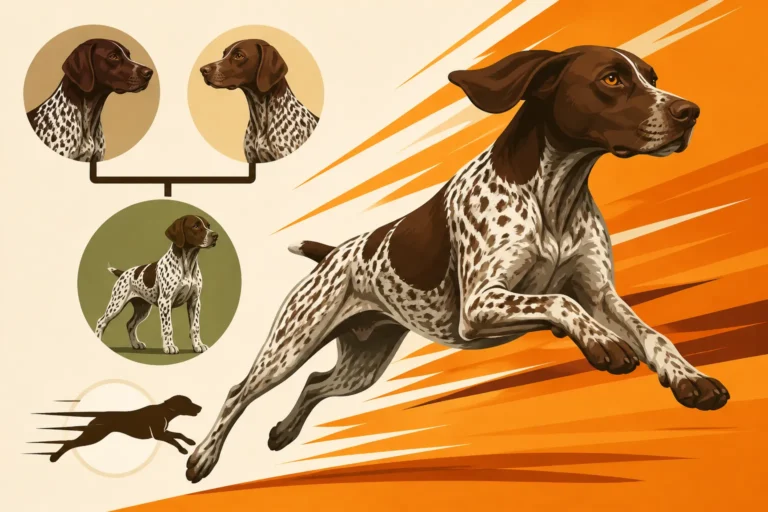
Whether an Undocked German Shorthaired Pointer Can Be Shown
Many German Shorthaired Pointer owners, especially those new to the breed or perhaps coming from different dog sports, often wonder about the specific rules around showing their beloved dogs. A common point of confusion, and sometimes frustration, revolves around tail docking, particularly when their GSP might have been acquired undocked. This comprehensive guide aims to unravel the complexities surrounding showing an undocked German Shorthaired Pointer, diving into breed standards, international rules, ethical considerations, and practical realities, so you can understand what to expect.
The Historical Context of Tail Docking in German Shorthaired Pointers
To truly understand why tail docking is such a contentious topic and why it impacts show eligibility, we need to go back to the roots of the German Shorthaired Pointer itself. These dogs weren't just bred for pretty looks; they were meticulously developed as versatile hunting companions, meant to perform a myriad of tasks in the field.
Origins of Docking for Working Dogs
Tail docking didn't originate from a whimsical aesthetic choice. For centuries, dogs in various working roles, including hunting dogs, terriers, and herding breeds, had their tails docked for practical reasons. Imagine a German Shorthaired Pointer, with its boundless energy and drive, crashing through dense brambles, thorny bushes, and thick cover all day long. An undocked tail, especially one as active and expressive as a GSP's, could easily become a liability. It could get snagged, cut, or even broken, leading to painful injuries, infections, and time out of the field. Docking was seen as a preventative measure, protecting the dog from harm during its intended work. This practice predates modern veterinary medicine and pain management, reflecting a pragmatic approach to keeping working dogs sound and healthy for their jobs.
The Purpose of a Docked Tail in the Field
The specific design of a GSP's tail – strong, flexible, and constantly moving – makes it particularly vulnerable in rough terrain. When a GSP is in full "bird search" mode, its tail is a constant blur, wagging with intense focus as it quarters the field. This vigorous action, combined with the breed's short, thin coat offering minimal protection, meant that a full-length tail was often exposed to significant trauma. Hunters observed that dogs with long tails frequently suffered from "happy tail syndrome," where repeated impacts against hard surfaces (like kennels, walls, or even the ground) or tears from sharp brush would prevent wounds from healing, often leading to chronic pain or even amputation later in life. A properly docked tail, usually about 40% of its natural length, was believed to reduce this risk dramatically while still allowing the dog to use its tail for balance and communication. You can learn more about this specific length in The Forty Percent Tail a Shorthair Is Left With.
When Docking Became a Standard Practice
As the German Shorthaired Pointer breed solidified and moved into formal registries, the working rationale for tail docking was incorporated into the breed standard. A breed standard is essentially a blueprint for the ideal dog of that breed, outlining everything from temperament to coat color to physical conformation. For GSPs, the docked tail became an expected characteristic, a hallmark of the breed's working heritage. This tradition was carried over as the breed gained popularity internationally, including its entry into the American Kennel Club (AKC) in 1930. Breeders and enthusiasts adhered to this standard not just for practical reasons, but also out of a desire to preserve the historical appearance and functionality of the breed. This historical standard is deeply ingrained in the breed's identity, influencing how they are judged and perceived even today.
Navigating the AKC Show Ring with an Undocked German Shorthaired Pointer
If you've got an undocked German Shorthaired Pointer and dream of sashaying into the show ring, you're not alone in wondering about the rules. The American Kennel Club, or AKC, is the primary registry and governing body for dog shows in the United States, and they have very specific guidelines.
The AKC Breed Standard's Stance on Tail Length
The official AKC German Shorthaired Pointer breed standard, which is the detailed description of the ideal GSP, explicitly calls for a docked tail. It describes the tail as being "docked to approximately 40 percent of its natural length." It further specifies that the tail should be "carried up when the dog is at attention; when gaiting it should be carried horizontally." This isn't just a suggestion; it's a fundamental aspect of the breed's conformation as defined by the parent club and accepted by the AKC. For a long time, an undocked tail was considered a serious fault, making it extremely difficult, if not impossible, for a GSP to compete successfully in conformation events. This is largely due to the perception that the dog doesn't fully conform to the established ideal.
Disqualification vs. Preference in Judging
Here's where it gets a little nuanced, and where some of the confusion stems from. Historically, an undocked tail could lead to disqualification or, at the very least, a severe penalty. However, the AKC has adjusted its rules over the years, partly in response to changing ethical views and international regulations. While an undocked tail is not a disqualification in the AKC show ring, it is still considered a "fault." What does "fault" mean in this context? It means that the dog deviates from the ideal breed standard. Judges are instructed to penalize dogs based on the degree to which they deviate from the standard. An undocked tail is a clear, visible deviation.
Practically speaking, this means a judge, when comparing two otherwise equally excellent GSPs, would almost certainly place the dog with the properly docked tail over the undocked one. It's not that the undocked dog cannot win; it's that it faces a significant uphill battle. It would need to be absolutely exceptional in every other aspect of its conformation, movement, and temperament to overcome the fault of an undocked tail. For many judges, adherence to the breed standard, including tail length, is a critical component of what makes a dog a good representative of its breed.
The Reality of Placing with an Undocked GSP
Let's be realistic: if your goal is to win Best in Show or accumulate championship points in the AKC conformation ring, an undocked German Shorthaired Pointer will be at a distinct disadvantage. While technically permitted, the ingrained preference for the docked tail among judges, who are trained to evaluate dogs against the written standard, is powerful. You might find sporadic success in very small, local shows, or with a judge who has a more progressive interpretation, but it's not the norm.
Consider the time, effort, and expense involved in showing. From entry fees to travel, grooming, and handler costs, it's a significant investment. Most owners enter shows with the hope of winning, and facing a consistent disadvantage due to an undocked tail can be disheartening. If your primary interest is simply to enjoy the experience and expose your dog to the show environment, then showing an undocked GSP is certainly possible. However, if competitive success is your aim, it's important to understand the inherent challenges. Many owners find it more rewarding to focus on other activities, like obedience, agility, or scent work, where tail length is irrelevant, and the dog's natural abilities can shine without prejudice. Or perhaps focusing on performance events like those organized by NAVHDA, which evaluates natural hunting ability regardless of tail status.
Global Perspectives: Showing Undocked Shorthairs Beyond the US
While the AKC has a particular stance, the world of dog showing is much larger, and rules vary dramatically from country to country. Understanding these global differences is crucial for breeders, owners, and anyone interested in the wider GSP community.
European Regulations and Bans on Docking
Walk into a dog show in many European countries, and you'll immediately notice a difference: a significant number of breeds that are routinely docked in the US will have their natural tails. This is because many nations, particularly throughout Europe, have either outright banned or severely restricted the practice of cosmetic tail docking. Countries like the United Kingdom, Germany (the breed's country of origin), Sweden, Norway, and Australia, among others, have legislation prohibiting the docking of tails, often with limited exceptions only for veterinary necessity or, in rare cases, for actively working dogs under strict conditions.
These bans reflect a growing emphasis on animal welfare and a shift in public perception, viewing tail docking as an unnecessary surgical procedure rather than a preventive health measure. As a direct consequence, breeds like the German Shorthaired Pointer are increasingly shown with their natural, undocked tails in these regions. This has led to a fascinating divergence in appearance and show ring expectations compared to countries where docking is still common.
How FCI Countries Handle Undocked German Shorthaired Pointers
The Fédération Cynologique Internationale (FCI) is the world governing body of dog breeds, with member countries largely in Europe, Asia, Africa, and South America. For FCI member countries, if a dog's tail is naturally undocked due to the docking ban in its country of origin, it generally must be shown with its natural tail. In fact, showing a docked dog in a country where docking is banned can even lead to disqualification. This creates a fascinating situation for international breeders and exhibitors. A GSP bred and shown in Germany will, by law, have its natural tail. If that same GSP were to be shown in an AKC-sanctioned event in the US, it would technically be at a disadvantage due to its undocked tail, despite conforming perfectly to the legal and ethical standards of its home country.
This highlights the challenge of maintaining a universal breed standard when national laws dictate differing practices. Many FCI breed standards have been updated to describe both the natural and the historically docked tail, ensuring that dogs from countries with docking bans are not penalized. For a German Shorthaired Pointer, this means that while American judges are looking for that 40% length, many European judges are evaluating the natural carriage, set, and proportion of a full tail. It's a completely different visual and structural assessment.
The Impact of International Rules on Breeding Practices
These international rules have a tangible impact on breeding decisions and the global gene pool. Breeders in countries with docking bans are naturally selecting for dogs that not only perform well but also have aesthetically pleasing and functionally sound natural tails. This means considering tail set, thickness, and carriage as important conformation traits, whereas a breeder primarily focused on the AKC show ring might give less emphasis to the natural tail's appearance, knowing it will be docked.
For a breeder trying to cater to both markets, or simply to ensure their lines are acceptable globally, it can be a tricky balance. Some might opt to keep a few undocked puppies for sale to countries where it's mandatory or preferred, or for owners who simply don't wish to dock. The rise of global dog sports and breeding partnerships means that lines with beautiful natural tails are becoming more appreciated, even in countries where docking is still legal. This ongoing conversation around tail docking is definitely shaping the future look and conformation priorities for the German Shorthaired Pointer worldwide.
Ethical Debates and the Shifting Landscape of Breed Standards
The discussion around tail docking isn't just about show rules; it delves deep into ethical considerations and the very definition of what makes a breed standard appropriate in modern times.
Animal Welfare Concerns and Tail Docking
At the heart of the anti-docking movement are animal welfare concerns. Critics argue that tail docking, typically performed on puppies just a few days old, is a painful and unnecessary mutilation. While proponents often claim puppies at this age have underdeveloped nervous systems and experience minimal pain, veterinary science increasingly refutes this, demonstrating that even newborns feel pain acutely. Furthermore, the procedure carries risks of infection, hemorrhage, and chronic pain or nerve issues in the docked stump.
The argument that docking prevents injury in working dogs is also being re-evaluated. While severe tail injuries can occur, particularly in certain breeds working in dense cover, studies show that the overall incidence of tail injuries in undocked dogs is relatively low. Many believe that the potential benefits of preventing a possible future injury do not outweigh the certainty of pain and risk from an elective surgical procedure. This ethical stance is a primary driver behind the bans seen across Europe and other parts of the world. It compels us to consider if tradition alone is sufficient justification when modern understanding of animal well-being has advanced.
Breeder Responsibilities and Choices
For German Shorthaired Pointer breeders, navigating these ethical waters, especially with varied national laws and client preferences, presents a significant challenge. Responsible breeders are often torn between adhering to a long-standing breed standard and responding to modern ethical concerns. In regions where docking is legal, breeders must decide if they will continue the practice. If they do, they typically ensure the procedure is performed by a qualified veterinarian, with appropriate pain management, and within the first few days of a puppy's life.
However, a growing number of breeders, even in countries where it's permitted, are choosing not to dock their puppies' tails, especially if the puppies are destined for pet homes or for countries where docking is banned. This choice often comes with the understanding that these undocked puppies may not be competitive in the traditional AKC conformation ring, but it allows them to align with evolving ethical standards. For a dedicated GSP enthusiast looking for a pup, this means asking careful questions of your breeder about their docking practices and understanding the implications for showing or even just for the dog's future health. Finding a breeder who openly discusses these choices and prioritizes the health and well-being of their dogs, regardless of show ring aspirations, is paramount. You might find great supplies for any GSP, docked or undocked, on platforms like Chewy, ensuring they get the best start in life.
The Future of Docking in Breed Standards
The trend is clear: the landscape of breed standards concerning tail docking is shifting globally. While the AKC still maintains the docked tail in its GSP standard, there's increasing pressure from various animal welfare organizations and a growing public awareness of the issue. It's conceivable that, over time, even the AKC might adapt its standards, perhaps making the undocked tail equally acceptable, or removing the requirement altogether. This wouldn't be unprecedented; some breeds have already seen such changes.
For now, the German Shorthaired Pointer breed standard in the US remains steadfast. However, the ongoing dialogue, the international examples, and the increasing focus on animal welfare mean that breeders and breed clubs are continually re-evaluating these practices. The future might see a more inclusive standard that embraces both docked and undocked tails, allowing for greater diversity and alignment with global ethical norms. It's a slow process, but change does happen, driven by passionate individuals and evolving societal values.
Living with an Undocked German Shorthaired Pointer: Practicalities and Considerations
If you decide to bring an undocked German Shorthaired Pointer into your home, whether for showing, hunting, or just as a beloved pet, there are some practical considerations that are worth thinking through.
Potential for Tail Injuries in the Field
The primary historical argument for docking GSP tails was to prevent injuries in the field, and this remains a valid concern, especially for a dog that truly works. An undocked GSP, with its high-energy, wide-ranging style of hunting, often covers a lot of ground in dense cover like tall grasses, thick brush, and thorny undergrowth. A long, whipping tail can certainly be vulnerable to cuts, scrapes, and fractures. Field Injuries a Hunting German Shorthaired Pointer Comes Home With often include tail tip abrasions or deeper lacerations that can be notoriously difficult to heal due to the constant motion of the tail.
If your undocked GSP is a serious hunter, you'll need to be extra vigilant. Inspecting their tail thoroughly after every outing is crucial. Look for any nicks, scrapes, swelling, or excessive tenderness. Sometimes, small wounds can escalate quickly into infections if not caught early. Some owners of undocked working dogs might use protective tail wraps or specialized dog vests with tail protection, particularly in very harsh terrain, though not all dogs tolerate these well. It's a trade-off between the natural aesthetic and the potential for a preventable injury.
Managing the Undocked Tail in Daily Life
Beyond the field, an undocked GSP's tail can present minor challenges in everyday life. That powerful, enthusiastic wag can be quite a force! Imagine a long, strong tail thumping against coffee tables, clearing items off low shelves, or enthusiastically greeting visitors. It's not uncommon for undocked GSPs to inadvertently cause minor household chaos with their tails, knocking over drinks or lamps.
Furthermore, a long tail can be a pain point for the dog itself. "Happy tail syndrome" isn't exclusive to the field; an overly excited GSP can bang its tail against crate bars, walls, or even car interiors, causing abrasions or splitting the skin at the tip. These injuries can be persistent and difficult to heal because the tail is constantly moving. Owners of undocked GSPs often find themselves needing to be more mindful of their dog's surroundings, ensuring there's enough space for that enthusiastic tail, and perhaps opting for tougher, less breakable home decor. You might find sturdy dog beds and toys on Chewy that can withstand a happy tail wag!
Training and Handling an Undocked GSP
Training an undocked GSP isn't fundamentally different from training a docked one, but there might be subtle nuances. The tail is a key part of a dog's communication, and a full, natural tail offers a wider range of expression. A trainer might be able to read an undocked GSP's mood, focus, or stress levels with more clarity due to the full spectrum of tail movements available. However, this is more about human interpretation than a difference in the dog's behavior.
From a handling perspective, particularly in sports, the length of the tail generally makes no difference. In activities like agility, obedience, or rally, judges are not evaluating tail length or docking status. The dog's performance and adherence to commands are what matter. For hunting dogs, a full tail still provides balance and can be just as effective a rudder as a docked one. Ultimately, the GSP's intelligence, drive, and biddability are its defining training characteristics, not the length of its tail. Owners of undocked GSPs often find a wonderful connection, appreciating the dog's complete form and the full expressiveness of its natural tail as part of its unique personality. Whether docked or undocked, a GSP still needs The Two Hours a Day a German Shorthaired Pointer Needs of exercise and mental stimulation to be a well-adjusted companion.
Strategies for Showing an Undocked German Shorthaired Pointer
So, you're committed to showing your undocked German Shorthaired Pointer. While the path might be challenging in conformation, it's not entirely without options. It requires careful planning and a realistic understanding of where your dog might excel.
Finding Supportive Judges and Circuits
In the AKC conformation world, judges are human, and while they adhere to the breed standard, some may have a more open mind or a less punitive approach to an undocked tail than others. Networking with other GSP owners, especially those who show or have shown undocked dogs, can provide valuable insights. They might be able to share experiences about specific judges who evaluate the overall dog more than a single fault. However, relying on finding such judges is a gamble, and it's not a consistent strategy for championship points.
A more reliable approach might be to explore alternative show circuits or registries that are less rigid on docking. While not available everywhere, some smaller, independent organizations might prioritize overall health, temperament, and functional correctness over cosmetic traditions. Another avenue could be "fun matches" or "owner-handled" classes, which are often more relaxed and provide a good opportunity to get your dog ring experience without the intense pressure of championship points.
Highlighting Other Breed Virtues
If you are determined to show your undocked GSP in the AKC conformation ring, your strategy must focus on presenting an absolutely stellar dog in every other aspect. Your GSP needs to be an exemplary specimen of the breed, demonstrating flawless movement, exquisite structure, correct coat, intelligent expression, and an impeccable temperament. The judge should be so captivated by the dog's overall quality that the undocked tail becomes a minor afterthought, or at least a less impactful fault.
This means putting extra effort into conditioning, presentation, and handling. Your dog needs to be perfectly clean, gait beautifully, stand squarely, and show enthusiasm. A handler who can expertly stack and move the dog, drawing the judge's eye to its strong points and away from the tail, can make a difference. Emphasize the dog's athleticism, its correct head and eyes, its powerful hindquarters, and its confident demeanor. You're essentially asking the judge to see past the tail and appreciate the profound virtues that make the German Shorthaired Pointer such an incredible breed.
The Importance of Presentation and Conditioning
For any dog in the show ring, presentation and conditioning are vital, but for an undocked GSP, they become even more critical. A well-conditioned GSP should be lean, hard, and muscular, reflecting its athletic heritage. Its coat should be clean and gleaming, its nails perfectly trimmed (which you can do easily with supplies from Chewy), and its teeth sparkling. The dog should be alert, happy, and eager to please, exuding confidence and good health.
The handler's role is also key. A skilled handler can showcase the dog's best attributes, stack it beautifully, and move it fluidly around the ring. They know how to maintain the dog's focus and enthusiasm, creating a positive impression on the judge. Even the way a dog is held or posed can subtly influence how its tail is perceived. While an undocked tail will always be an identifiable feature, ensuring every other aspect of your GSP is absolutely top-notch can help mitigate its impact and give your dog the best possible chance to shine. Remember, the journey with a GSP, whether in the show ring or out in the field, is about partnership and celebrating their inherent strengths, as explored in What Versatile Actually Means for a Shorthair.
Disclaimer
This article is for general informational purposes only and does not constitute professional advice. Laws, prices and regulations vary by location and change over time. Consult a qualified professional for guidance on your specific situation.