Whether English Pointer Blood Went Into the Shorthair
Many German Shorthaired Pointer enthusiasts and even seasoned hunters often find themselves pondering the origins of this incredible breed, particularly if the sleek, powerful English Pointer played a direct role in its development. It's a common assumption to link them given their shared pointing prowess and athletic build, but the truth of the German Shorthaired Pointer's lineage is a fascinating story of deliberate, multi-purpose breeding that sets it quite distinctly apart. This guide will delve into the historical records and breeding intentions to clarify the relationship, or lack thereof, between these two magnificent gundogs.
The German Quest for the Ultimate Versatile Hunting Dog
To understand the German Shorthaired Pointer (GSP), we first have to appreciate the unique hunting philosophy that guided its creation. German hunters weren't just looking for a dog that could point birds; they demanded a true all-around athlete capable of performing many tasks across varied terrain.
Early German Pointing Breeds and Their Limitations
Before the GSP became the streamlined, powerhouse companion we know today, German hunters utilized a range of local pointing dogs. These earlier breeds, while certainly effective in their own right, often possessed certain limitations. Many were heavier, slower, and more specialized. They might have been excellent at tracking wounded game or had a strong point, but few could seamlessly transition between pointing, retrieving from land and water, and even tracking furred game, sometimes requiring multiple dogs for a single hunting outing. This wasn't just inconvenient; it was inefficient for hunters who often worked diverse habitats and sought a single, reliable partner. Imagine needing one dog for birds, another for rabbits, and a third for ducks – it simply wasn't practical for many rural German sportsmen.
The Vision of a Multi-Purpose Gundog
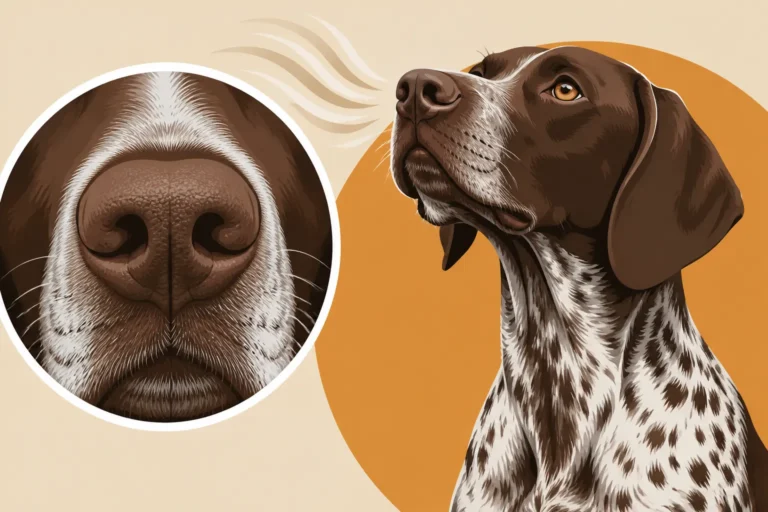
The driving force behind the GSP's development was a desire for ultimate versatility. German breeders had a clear vision: create a single breed that could do it all. They wanted a dog that could hunt before and after the gun, meaning it could find and point game, and then retrieve it once shot, even from icy water. It needed an exceptional nose for tracking, the stamina for long days in the field, and a temperament that made it a calm, intelligent companion in the home. This wasn't about excelling at one task, but performing all hunting tasks to a high degree of competence. They called them "Deutsch Kurzhaar," meaning "German Shorthair," and the name itself hints at their national origin and specific coat. You can learn more about The German Kennels the Shorthair Was Built In and their dedicated approach.
Replacing Specialist Dogs with One All-Rounder
The German Shorthaired Pointer was, in essence, bred to replace a whole team of specialist dogs. Instead of having separate breeds for pointing, retrieving, and tracking, the GSP was meticulously developed to combine these abilities into one animal. This ambition set a high bar, requiring careful selection for specific traits. Early breeding programs focused on consolidating strong pointing instincts with an equally strong desire to retrieve, track, and show good judgment in various hunting scenarios. This "all-in-one" approach is a hallmark of the breed's character even today, distinguishing it from many other pointing breeds that might be more specialized. It truly aimed to be How the Shorthair Was Bred to Replace Four Specialist Dogs.
The True Ancestry: Spanish and Early German Influences
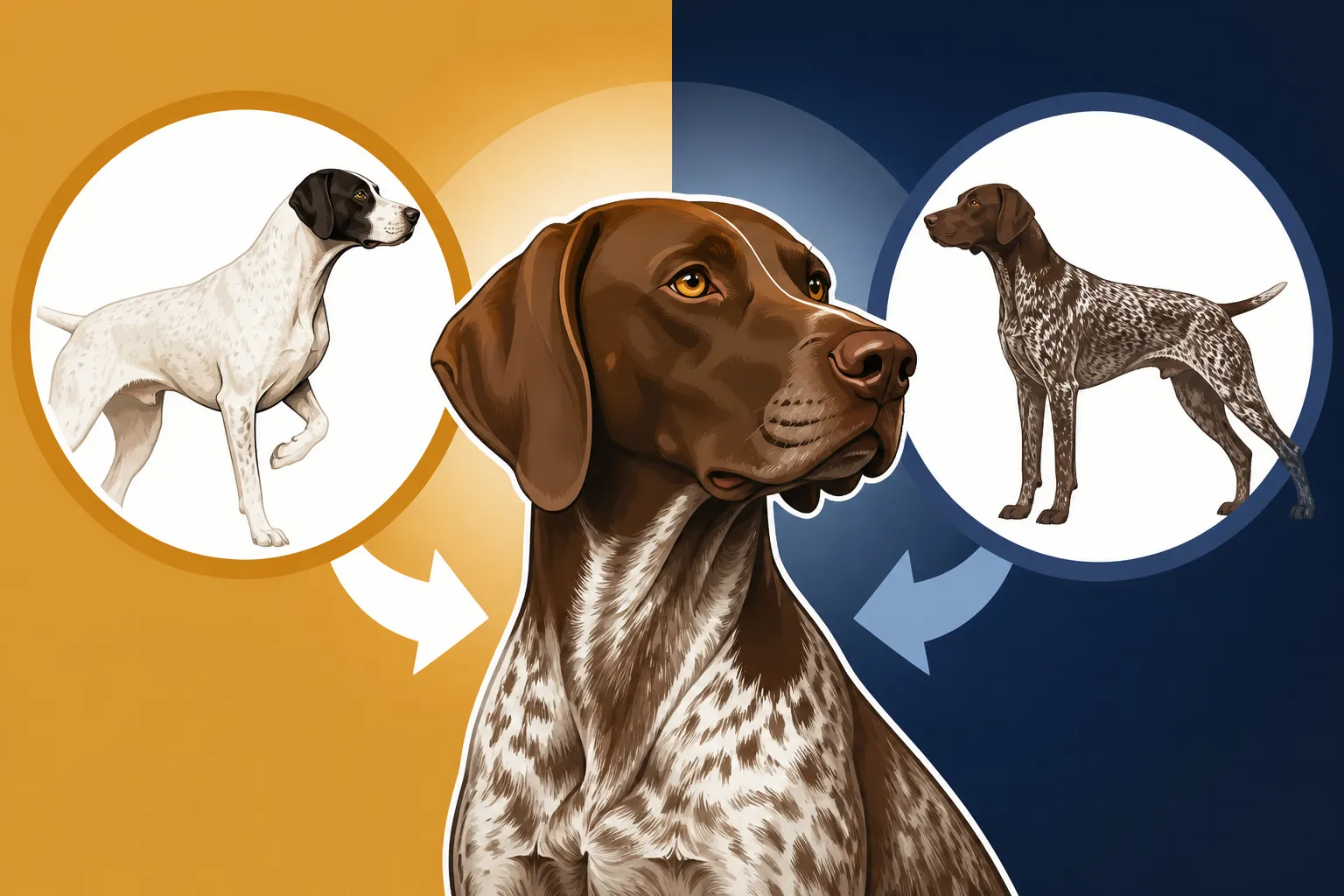
While some might speculate about English Pointer influence, the GSP's foundations lie firmly within the Continental European tradition, drawing heavily from Spanish and older German stock.
The Old Spanish Pointer in a Shorthair's Pedigree
One of the most significant ancestral breeds contributing to the German Shorthaired Pointer was the Old Spanish Pointer. These dogs were known for their strong pointing instinct, a crucial trait that German breeders wanted to embed deeply into their new versatile gundog. The Spanish Pointer brought a natural inclination to locate game and hold it steadfastly, a fundamental building block for any pointing breed. While not as fast or as wide-ranging as later English Pointers, their methodical approach and intense focus on scent made them invaluable for establishing the core pointing ability.
Refining Native German Stock
The Spanish Pointer, while a strong starting point, wasn't the sole ingredient. German breeders meticulously crossed these imported dogs with native German hunting breeds. These local dogs contributed valuable qualities such as hardiness, a desire to retrieve, and adaptability to the diverse German landscapes—from dense forests to open fields and marshes. They also likely brought a more cooperative temperament and tracking ability, essential for the comprehensive gundog German hunters envisioned. This careful blending and selection process over generations aimed to enhance desired traits while minimizing less desirable ones, slowly shaping the foundation of what would become the GSP.
Dissecting the English Pointer Question: Direct Blood or Distant Cousins?
This is where the common misconception often arises. While the English Pointer is a magnificent breed, its direct genetic contribution to the German Shorthaired Pointer is highly debatable, with historical evidence suggesting minimal direct crossing.
The Allure and Misconception of the English Pointer
It's easy to see a modern German Shorthaired Pointer and an English Pointer in action and draw a quick conclusion about shared ancestry. Both are athletic, powerful, and possess that unmistakable intense point. However, appearances can be deceiving, and similar functional traits don't always equate to direct bloodlines. The English Pointer's reputation for speed, elegance, and incredible bird-finding ability in open country was, and still is, legendary. It's not surprising that German breeders would admire these qualities. But their methods of incorporating such traits were often indirect, focusing on functional improvement rather than direct breed cross-breeding with the established English Pointer breed itself.
Divergent Breeding Philosophies
The key to understanding the relationship lies in the distinct breeding philosophies of the two nations. English breeders, for the most part, were focused on creating a specialized bird dog—one that could cover vast expanses of land quickly, locate game, and point it staunchly, allowing hunters on horseback to approach. Their emphasis was on speed, range, and a refined, aristocratic build.
German breeders, on the other hand, prioritized versatility and a closer working relationship with the hunter. They needed a dog that wasn't just a pointing machine but also an enthusiastic retriever, a tenacious tracker, and a family companion. Introducing significant amounts of pure English Pointer blood into their burgeoning versatile breed would have likely diluted these other crucial traits they had worked so hard to establish. It would have been like adding rocket fuel to a highly tuned multi-purpose engine, risking damage to its other carefully balanced functions.
The "English Blood" Conundrum
Historical records indicate that some "English pointing dogs" or "English Hounds" were brought into Germany during the development phase of many Continental pointing breeds, including the GSP. However, it's crucial to distinguish these early, less specialized "English dogs" from the highly refined English Pointer breed as we know it today, which was also still evolving. These earlier imports were likely used to infuse some of the desired pointing intensity and refinement without overriding the comprehensive utility already established. It was more about selectively incorporating traits than directly cross-breeding with the specialized English Pointer. The focus was on refining existing German stock, not on creating a hybrid. This nuanced history helps us understand The German Bird Dog Behind the Modern Shorthair.
Clear Distinctions: German Shorthaired Pointer vs. English Pointer
While they might share a common "pointing dog" label, a closer look reveals significant differences in their physical characteristics, temperament, and historical roles.
Physical Differences Beyond the Point
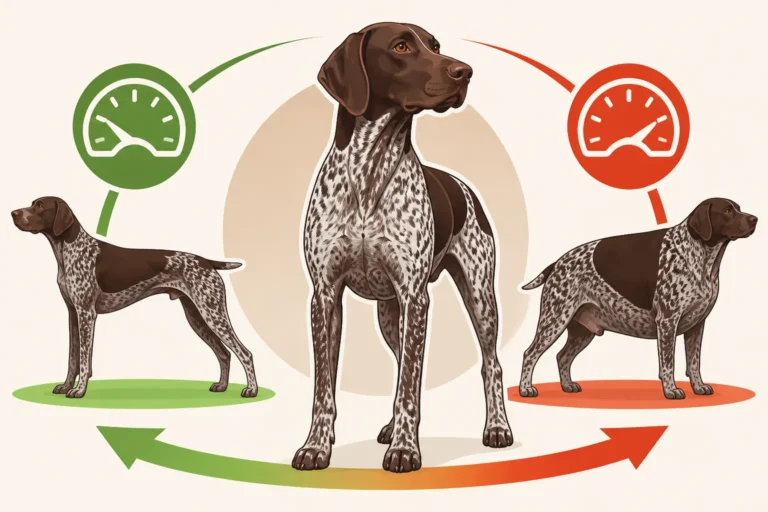
Visually, there are clear distinctions between a German Shorthaired Pointer and an English Pointer. The GSP tends to be more muscular, robust, and slightly heavier-boned, giving it a more powerful, substantial appearance. Its head is often described as more substantial, with a moderate stop and a slightly domed skull. In contrast, the English Pointer is typically more refined, lighter-boned, and built for sheer speed and endurance, often exhibiting a distinctive "dish" face and a more pronounced stop. Their coats are both short, but the GSP's coat is dense and more water-resistant, suitable for crashing through thickets and retrieving from cold water. The Size and Build the Shorthair Standard Asks For highlights these specific GSP traits.
| Feature | German Shorthaired Pointer | English Pointer |
|---|---|---|
| Origin Purpose | Versatile gun dog: point, retrieve (land/water), track | Specialist bird dog: point game birds in open country |
| Build | Muscular, robust, athletic, slightly heavier bone, powerful | Lean, graceful, lighter bone, built for speed and elegance |
| Head Shape | More substantial, moderate stop, often slightly domed skull | Distinctive "dish" face, longer muzzle, pronounced stop |
| Coat | Short, dense, harsh, water-resistant, comes in liver/black | Short, fine, smooth, comes in liver, lemon, orange, black |
| Temperament | Eager to please, highly trainable, "Velcro dog," adaptable | Independent, intense, focused on game, can be more aloof |
| Working Style | Closer working, responsive to handler, strong retriever | Wide-ranging, independent hunter, primary focus on point |
| Tail | Customarily docked to about 40% of its natural length | Natural length (often carried high when working), not docked |
Temperament and Working Style
The temperament and working style are perhaps where the deepest differences lie, reflecting their respective breeding intentions. German Shorthaired Pointers are renowned for their intense desire to please their handler. They are often described as "Velcro dogs" due to their strong attachment to their families and their preference to be involved in all activities. This trait was deliberately fostered to create a close-working, responsive hunting partner that could also be a well-adjusted family dog. The Velcro Side of a German Shorthaired Pointer isn't just a cute nickname; it's a testament to their integrated role in both field and home.
English Pointers, while certainly capable of bonding with their families, were traditionally bred for a more independent working style, covering ground at a gallop far from the hunter, relying on their incredible nose and stamina. Their focus in the field is almost singularly on game, and while intelligent, they might not possess the same inherent drive to please in all aspects as a GSP.
The Gait That Separates Them
Even the way they move tells a story of their distinct breeding. The German Shorthaired Pointer is known for its powerful, ground-covering trot and gallop, showcasing its endurance and strength, designed for pushing through varied cover. The English Pointer, on the other hand, typically exhibits a more elegant, high-headed, almost aristocratic gallop, covering ground with breathtaking speed and grace, especially suited for open country. These subtle differences in gait and movement are recognized by those familiar with both breeds and speak to their specialized historical development, as highlighted in The Gait That Separates a Shorthair From an English Pointer.
Modern Understanding and Continuing Legacies
The breeding efforts that created the German Shorthaired Pointer established a unique and enduring legacy. Today, the breed continues to embody the versatile ideal, distinct from its English counterpart.
The German Shorthaired Pointer Against the English Pointer
When you compare the two breeds directly, it becomes evident that while both excel at pointing, their overall package is quite different. Modern genetic analysis, though often not able to pinpoint exact ancient crosses, generally supports the distinct evolutionary paths of Continental and English pointing breeds. The GSP's genetic footprint points to its specific German origins and the unique blend of foundational European pointing and hound stock, rather than a significant infusion of English Pointer genetics. This genetic independence underscores the success of the German breeders in creating a truly unique breed.
Emphasizing Versatility in Today's GSPs
Breeders of German Shorthaired Pointers continue to prioritize the core values of versatility that defined the breed's creation. They select for dogs that not only have a strong point but also demonstrate a natural retrieving drive, tracking ability, biddability, and a stable temperament suitable for family life. This means seeking dogs that are not just "birdy" but also inherently cooperative. A modern GSP might use a high-performance kibble you can easily find at online retailers like Chewy, because they need that fuel for their intense energy demands, whether they're out in the field or simply running riot in the backyard. Their nutritional needs reflect their active, working heritage, a heritage distinct in its multi-faceted approach to gundog work.
Celebrating a Unique Heritage
The German Shorthaired Pointer stands as a testament to thoughtful, purpose-driven breeding. Its history is a proud narrative of German hunters and breeders who sought to create a single, exceptional dog capable of handling all aspects of the hunt. While they might share some superficial similarities with the English Pointer, particularly their pointing instinct, their ancestral roots, developmental paths, and defining characteristics are distinctly their own. From its origins with The Old Spanish Pointer in a Shorthair's Pedigree to the strategic infusion of speed into the breed's working capacity, as detailed in How Breeders Put Speed Into the Shorthair, the GSP's journey is a rich tapestry of deliberate choices made to forge a truly versatile hunting companion and devoted family member. This commitment to versatility, reflected in their ability to perform Pointing, Retrieving and Tracking in One Shorthair, continues to define the breed and makes it one of the most beloved and capable gundogs in the world today.
Disclaimer
This article is for general informational purposes only and does not constitute professional advice. Laws, prices and regulations vary by location and change over time. Consult a qualified professional for guidance on your specific situation.