How the Shorthair Was Bred to Replace Four Specialist Dogs
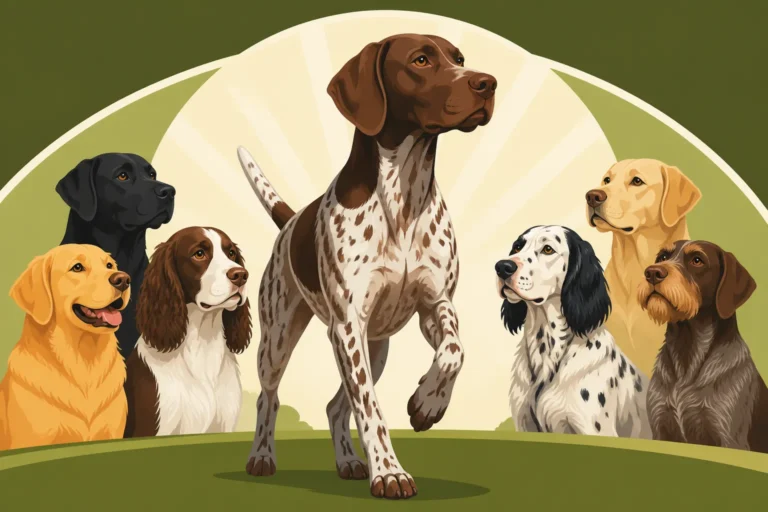
A German Shorthaired Pointer can point birds, retrieve from water, and follow a scent trail, which can make the breed’s history sound like a simple plan to replace four other dogs. The real story is more nuanced: German hunters wanted one versatile partner for several kinds of work. This guide explains what those jobs were, why versatility mattered, and what it does—and does not—mean for a Shorthair today.
Why German hunters wanted one versatile dog
Hunting called for more than finding birds
In the 19th century, hunters in German-speaking regions often needed dogs for a sequence of tasks, not just one specialty. A dog might search for game, locate birds, and hold a point so the hunter could approach. After a shot, it might need to retrieve a bird from a field or water, or follow the scent of wounded game.
A dog that excelled at one task could be valuable, but relying on several specialist dogs meant keeping, training, and handling a larger group. In practical terms, that could make a day in the field more complicated. The appeal of an all-purpose gun dog was straightforward: one capable dog could contribute before and after the shot.
That goal helps explain why the Shorthair is often described as a versatile hunting breed. “Versatile” does not mean every individual dog will perform every job equally well, or that a Shorthair automatically replaces experienced specialists. It describes the broader purpose behind the breed’s development. For a closer look at the term, see What Versatile Actually Means for a Shorthair.
The “four dogs” idea describes jobs, not a fixed historical roster
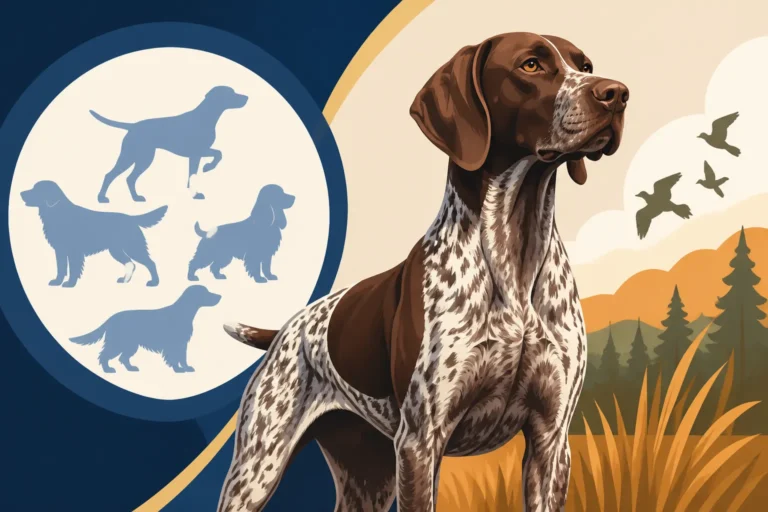
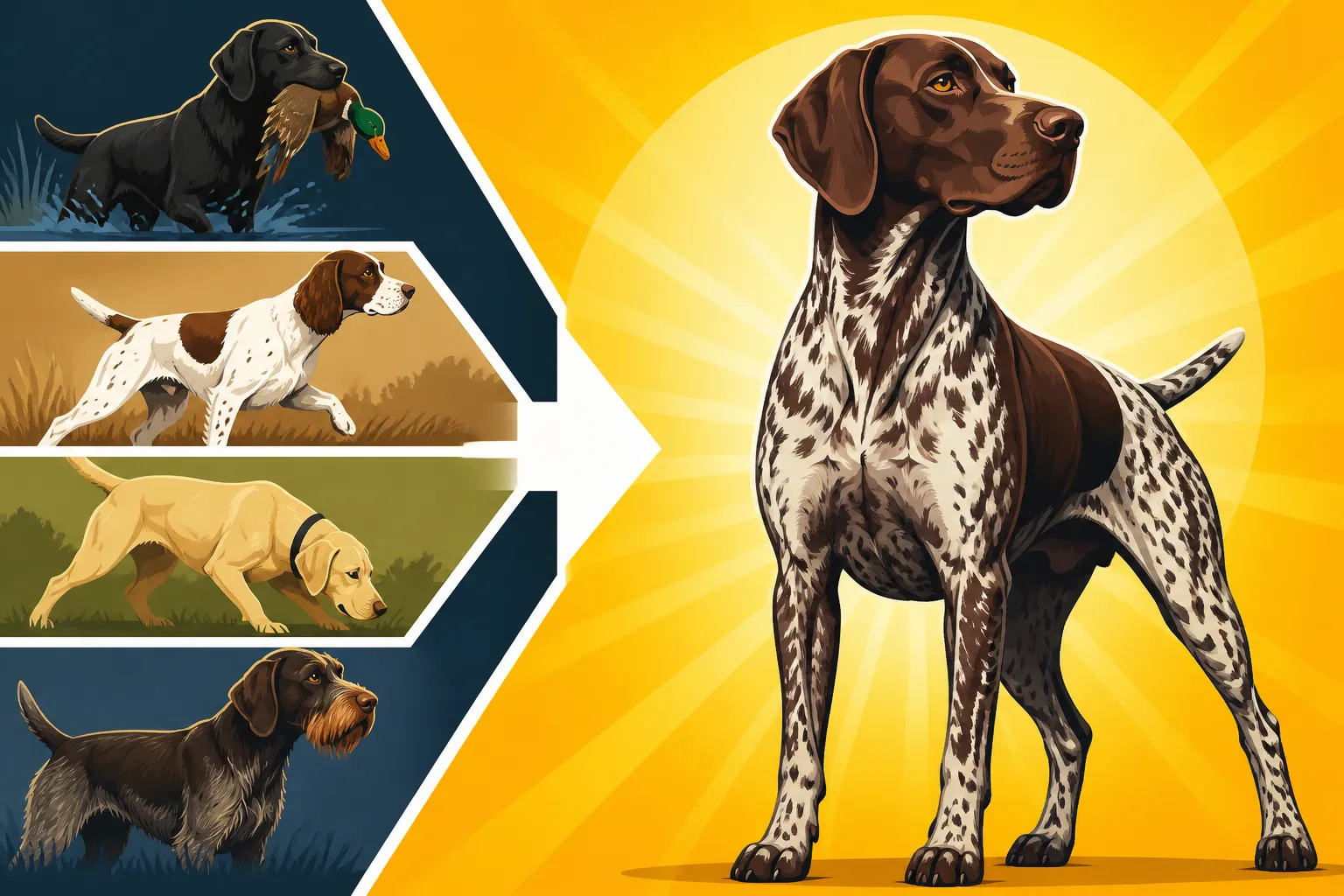
The phrase “four specialist dogs” is best understood as a useful shorthand for different kinds of hunting work, rather than a universally agreed list of four named breeds. Depending on the hunting ground and game, a hunter might need a pointing dog, a retriever, a water-working dog, and a scent hound or tracker.
Those roles can overlap. A retriever may also be expected to work in water, while a tracking dog may search for wounded game after a shot. So the idea is not that German breeders took four precise dog breeds, combined them, and produced an exact substitute for each. It is that they aimed for a single dog with a broad working range.
| Specialist role | Typical task | How the Shorthair’s versatility relates |
|---|---|---|
| Pointing dog | Find game birds and indicate their location | Search and point are central parts of its traditional work |
| Retriever | Bring shot game back to the hunter | Many Shorthairs are trained to retrieve on land and in water |
| Water dog | Work around marshes, ponds, and other wet cover | The breed can be taught to enter water and retrieve from it |
| Scent hound or tracker | Follow the trail of wounded game | A Shorthair may use its nose to track, with ability depending on training and experience |
This mix of jobs is central to Pointing, Retrieving and Tracking in One Shorthair. It also explains why “one dog instead of four” should not be taken literally: the breed was intended to bring several useful abilities together, not to guarantee equal proficiency in every discipline.
How the breed developed toward that goal
German bird dogs and older pointing influence
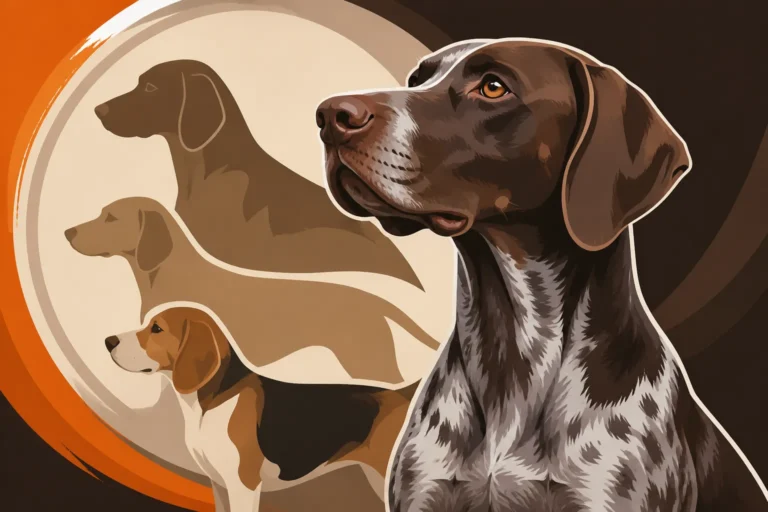
The modern German Shorthaired Pointer did not emerge from one simple cross or one moment in history. It developed through generations of selection, with German bird dogs and older pointing-dog influences contributing to the type hunters wanted. The Old Spanish Pointer is often discussed in accounts of this ancestry, but the breed’s development involved a wider history of dogs and breeding choices.
Hunters wanted a dog that could search effectively, show game, and remain useful beyond the point. That meant selecting for more than appearance. A useful field dog needed a nose, drive, stamina, trainability, and enough steadiness to work with a hunter. Different breeders and regions did not necessarily pursue those traits in exactly the same way.
The older influences are explored in The Old Spanish Pointer in a Shorthair's Pedigree and The German Bird Dog Behind the Modern Shorthair. Those histories help put the breed’s development in context: its foundation was shaped by the practical needs of hunting, rather than by a single, tidy recipe.
Breeding for a balance of traits
A dog designed to do several kinds of work needs a balance of qualities. A strong search and pointing instinct are helpful when locating birds, while willingness to retrieve matters after the shot. A dog expected to work around water needs confidence in that environment, and tracking wounded game calls for concentration and scenting ability.
Those traits do not always develop together automatically. A dog that ranges widely may need careful handling to stay connected with its hunter. A dog that loves birds may need training to retrieve reliably. A dog with natural water confidence may still need gradual, safe introductions to cold or difficult conditions. Versatility is a capacity to develop through breeding and training, not a promise that every skill arrives finished.
The breed’s history includes debate about the contributions of different dogs, including possible English Pointer influence. The topic is covered in Whether English Pointer Blood Went Into the Shorthair. Whatever the precise influence in a given lineage, it is more useful to understand the breeding goal as a working balance than as a checklist of ancestry claims.
What “replacing four specialist dogs” meant in the field
One partner for work before and after the shot
A typical hunt shows why an all-round dog could be useful. The dog searches cover ahead of the hunter, uses scent to locate birds, and points so the hunter can move in. If a bird is shot, the dog may then be asked to retrieve it from cover or water. On another occasion, a hunter may need a dog to follow the scent of wounded game.
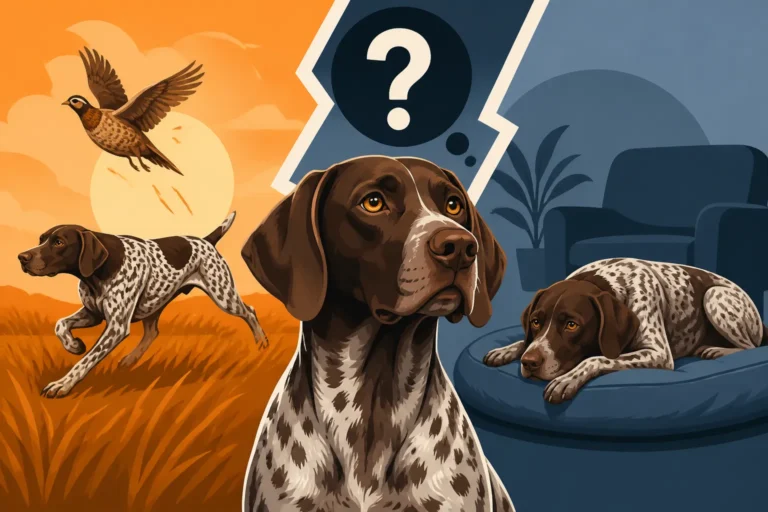
This sequence can make a Shorthair feel like several kinds of hunting dog in one body. But the dog’s role still depends on the situation. The type of game, terrain, weather, local hunting practices, and the dog’s training all matter. A handler pursuing upland birds in dry cover may ask for a different emphasis than someone retrieving waterfowl from a marsh.
That is why a breed’s reputation for versatility should not be confused with a guarantee of finished performance. Owners often need to teach each part of the job deliberately, and some dogs show stronger natural ability in one area than another. The history behind the ambition is explored in Why German Hunters Bred the Shorthair Instead of Four Dogs.
Versatility still depends on training and handling
A Shorthair’s instincts can provide a strong starting point, but field manners and reliable cooperation take practice. A young dog may point naturally yet chase a flushed bird. Another may eagerly retrieve toys but need patient training to bring game all the way back. Water work, steadiness, and tracking each call for their own foundations.
Training also helps keep a versatile dog safe and manageable. A dog working in thick cover may encounter sharp vegetation, uneven ground, or hidden hazards. Before and after outings, owners can check paws, ears, and coat for cuts, seeds, and burrs. A basic field kit—such as a lead, water container, and appropriate protective gear—can make routine outings easier. Retailers such as Chewy are one place owners may look for everyday supplies, but the right equipment depends on the dog, the terrain, and the outing.
For a household that does not hunt, the same instincts may show up in everyday ways: a dog that follows scent, chases moving wildlife, or needs structured retrieving games. Scent activities and carefully managed play can give those tendencies an outlet without pretending that a backyard game is the same as field work. Owners browsing enrichment supplies at Chewy, for example, can focus on toys and activities suited to the dog’s size and chewing habits rather than buying gear simply because the breed has a hunting history.
What the history means for Shorthairs today
Not every Shorthair is the same kind of worker
Modern German Shorthaired Pointers vary in lineage, individual temperament, training, and experience. Some are bred and raised with hunting performance as a central priority. Others may come from lines selected with a stronger emphasis on conformation or companionship, though individual ability cannot be judged by a label alone.
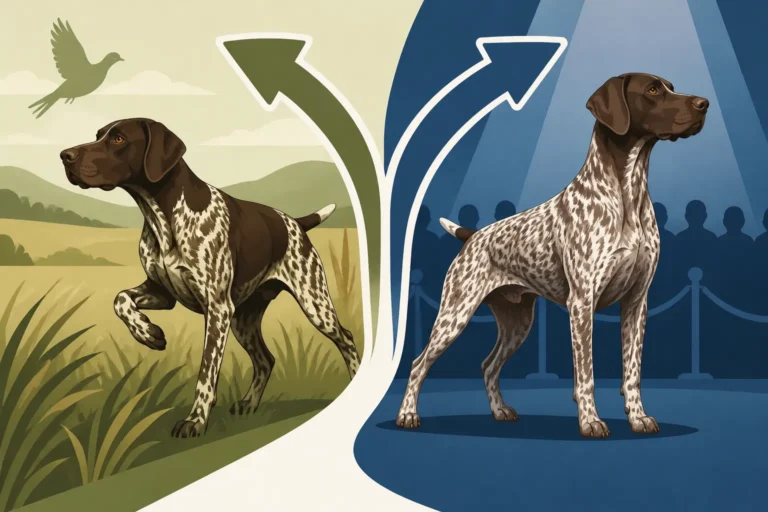
That variation matters if you are choosing a dog for a particular job. Ask breeders or rescue groups about the parents’ actual work and temperament, not just broad claims that a dog is “versatile.” If hunting matters to you, ask what kind of game the line has worked, whether dogs retrieve willingly, how they handle water, and what training they have received. The differences between working and show-oriented lines are discussed in The Split Between Field and Show Shorthairs.
For a non-hunting home, the key question is not whether the dog can replace four specialist dogs. It is whether the household can meet the needs of an energetic, intelligent dog with strong hunting instincts. Daily exercise, training, safe outlets for scent and retrieving behavior, and thoughtful management around wildlife are part of living successfully with the breed.
The practical takeaway for owners
The Shorthair’s history helps explain why a quiet routine with little activity may be a poor fit for many individuals. The breed was shaped to work closely with people across a changing set of tasks. A dog may be affectionate at home, but it can also be persistent, curious, and ready to follow a scent when given the chance.
A useful routine does not have to involve hunting. It can include structured walks, recall practice, scent games, retrieving, and age-appropriate conditioning. If the dog does hunt, build skills gradually and account for hazards such as heat, rough cover, and water conditions. A retailer such as Chewy may help owners find basic training or care supplies, but equipment cannot replace practice, supervision, or a plan tailored to the dog.
Ultimately, “bred to replace four specialist dogs” captures an ambition, not a guarantee. German hunters wanted one dog that could contribute to several stages of a hunt. Today, that history helps explain the Shorthair’s broad abilities—and why those abilities are best understood as potential that develops through careful selection, training, and responsible handling.
Disclaimer
This article is for general informational purposes only and does not constitute professional advice. Laws, prices and regulations vary by location and change over time. Consult a qualified professional for guidance on your specific situation.