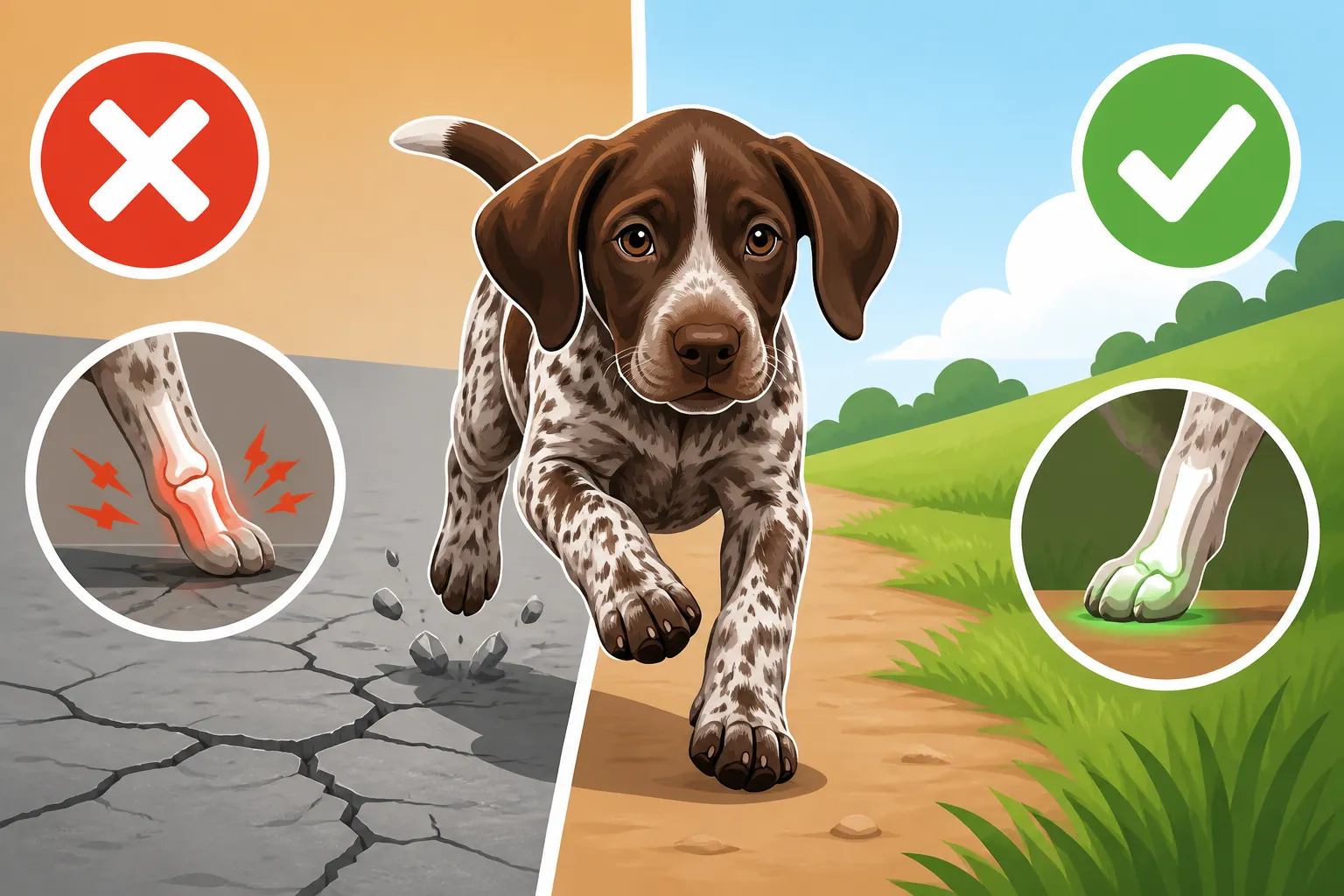
Whether a Shorthair Puppy Should Run on Hard Ground
It’s a common dilemma for German Shorthaired Pointer owners, especially with those bundles of boundless energy we call puppies: you want to give them all the exercise their active little bodies demand, but there’s that nagging concern about doing too much, too soon. You've probably heard whispers or read forums about the dangers of running young dogs on hard surfaces, and you're right to be cautious. Pushing a growing Shorthair puppy on pavement or concrete can absolutely do more harm than good, laying the groundwork for serious joint issues down the road. This guide will walk you through why those hard surfaces are problematic for developing bones and joints, what kinds of activities are safer, and how you can still provide adequate exercise without risking your puppy's long-term health.
The Vulnerability of Growing German Shorthaired Pointer Joints
Our German Shorthaired Pointers are magnificent athletes, built for endurance and speed. But just like any large, fast-growing breed, their skeletal system is incredibly delicate during their first year to eighteen months. It’s a period of rapid development, and how we manage their activity during this time can have profound effects that last a lifetime. You see this concern echoed often when talking about the ideal age for activities like roadwork, something many wonder about with their strong, eager pups. The Age a German Shorthaired Pointer Can Start Roadwork is a frequent topic of discussion among owners.
Understanding Growth Plates and Puppy Development
Think of a puppy's bones not as solid, finished structures, but as works in progress. At the ends of their long bones, they have areas called "growth plates" or "epiphyseal plates." These are softer, cartilaginous areas that haven't yet calcified into hard bone. They are responsible for the bone's lengthening. Imagine them as small, delicate expansion joints in a building under construction. They're designed to grow, not to absorb repeated, high-impact force.
When a German Shorthaired Pointer puppy runs and jumps on hard surfaces like concrete, asphalt, or even packed gravel, the impact isn't adequately absorbed. That force travels straight up into these vulnerable growth plates. Unlike an adult bone, which is dense and resilient, a growth plate can be easily damaged, fractured, or prematurely closed. This can lead to improper bone development, angular limb deformities, or even shortened limbs, which are serious and often require complex veterinary intervention. We're talking about tiny, unseen structures that are crucial for sound development.
The Impact of Premature Stress
The skeletal system of a German Shorthaired Pointer is a marvel of engineering, but it needs time to mature. Over-stressing those delicate growth plates with repetitive, high-impact activities on unforgiving surfaces can have a devastating impact. This isn't just about acute injuries, though those can certainly happen; it's also about the cumulative microtrauma that contributes to debilitating conditions like hip and elbow dysplasia.
A puppy that's constantly jogging or sprinting on pavement is repeatedly jarring those developing joints. This can lead to inflammation, abnormal wear and tear, and subtle damage that may not be immediately obvious. Over time, this stress can interfere with the proper formation of the hip and elbow joints, where the ball and socket need to fit together perfectly. When they don't develop correctly, you get the painful, arthritic joints characteristic of dysplasia. It's truly heartbreaking to see a young, otherwise vibrant GSP struggling with pain due to issues that could have been prevented during puppyhood.
Genetics Versus Environment: A Critical Balance
It's true that conditions like hip and elbow dysplasia have a strong genetic component. Reputable breeders screen their breeding dogs precisely to reduce the likelihood of passing on predispositions to these issues. You'll often hear about OFA and PennHIP evaluations in the GSP community for this reason. However, genetics aren't the whole story. Environmental factors, especially nutrition and exercise during those critical growth months, play a huge role in whether a puppy genetically predisposed to joint issues actually develops them, or how severe they become.
Even a puppy from excellent, health-tested lines can develop joint problems if its growing body is subjected to excessive or inappropriate stress. Conversely, a puppy with a moderate genetic predisposition might grow into a sound adult if its environment is managed carefully. It's a delicate balance, and as owners, we have a significant responsibility to protect our pups during this crucial developmental window. Think of it this way: you can have the best blueprint for a house, but if you rush the construction and use improper techniques, the foundation might still crack.
The Risks of High-Impact Exercise on Hard Surfaces
German Shorthaired Pointers are built to run and hunt, and they possess an incredible drive. It’s easy to look at a four-month-old pup zooming around the yard and assume they’re ready for anything. But their enthusiasm masks an underlying fragility. Their energy levels are certainly high, and managing that energy without damaging them is key. How Much Exercise a Shorthair Puppy Should Get is often less about distance and more about type of activity when they are young.
Common Injuries from Hard Surface Running
When a German Shorthaired Pointer puppy runs repeatedly or performs high-impact maneuvers on hard surfaces, the risk of various injuries skyrockets. This isn't just theory; it's something many vets see regularly.
- Sprains and Strains: The ligaments and tendons supporting the joints are still developing, and they're not as strong or elastic as an adult dog's. A misstep or too much force on a hard surface can easily lead to a sprain (ligament injury) or a strain (muscle or tendon injury). These can be painful, lead to lameness, and require extensive rest and recovery.
- Stress Fractures: Repeated, moderate impact can cause tiny cracks in the bone, known as stress fractures. These are insidious because they might not cause immediate, severe lameness but can worsen over time, leading to more significant breaks.
- Abrasions and Pad Damage: Beyond internal skeletal damage, hard surfaces are incredibly tough on paw pads. Young puppies have softer pads, and prolonged running on concrete can cause painful abrasions, cuts, and blisters. This can sideline a pup and make every step a misery.
- Growth Plate Injuries: As discussed, this is perhaps the most serious risk. A growth plate injury can range from a hairline fracture to a complete separation, leading to permanent lameness, abnormal limb length, or crooked bones, all of which often require expensive and complicated surgeries.
Long-Term Consequences for Joint Health
The immediate injuries are certainly concerning, but the long-term ramifications of early hard-surface running can be even more disheartening. The cumulative stress and microtrauma inflicted during puppyhood can predispose your German Shorthaired Pointer to chronic joint pain and debilitating conditions as they age.
The most common long-term consequence is the premature onset and increased severity of osteoarthritis. This degenerative joint disease is characterized by the breakdown of cartilage and the formation of bone spurs, leading to pain, stiffness, and reduced mobility. While all dogs may develop some degree of arthritis as they age, those with early joint damage will often develop it sooner and experience more severe symptoms. Imagine your active, driven GSP, a breed renowned for its longevity and athleticism, How Long a Working German Shorthaired Pointer Stays Sound, struggling to get up or enjoy a walk at just six or seven years old. It's a stark reminder of why puppyhood care is so critical.
Specific Concerns for a High-Energy Breed
German Shorthaired Pointers are not like every other breed. They are born with an incredible amount of energy and an innate drive to run, explore, and hunt. This is one of their most endearing and challenging traits. But this very enthusiasm makes them more susceptible to injury if not managed carefully. A GSP puppy will often push itself beyond its physical limits, especially if encouraged, driven by its instincts rather than an awareness of its still-developing body.
Their high-octane nature means they can easily overdo it without showing obvious signs of fatigue until it's too late. They are so eager to please and to be involved that they will often ignore discomfort, particularly when the fun is high. This is where we, as responsible owners, need to step in and apply the brakes. It's our job to protect them from themselves during this vulnerable stage. You might notice your GSP puppy's boundless energy and think "this dog needs to run!" but the kind of running and the surface it's on makes all the difference for their future.
Safe Exercise Alternatives for Your Shorthair Puppy
So, how do you manage the formidable energy of a German Shorthaired Pointer puppy without putting their precious joints at risk? The answer lies in choosing appropriate activities and surfaces, prioritizing controlled, low-impact exercise and mental stimulation. It’s about quality over quantity, especially during their intense growth phase. Many owners also find that focusing on core training principles and ensuring a proper diet are crucial. The Growth Year of a German Shorthaired Pointer Puppy goes hand in hand with how you manage their exercise regimen.
Soft Surfaces and Controlled Play
The absolute best surfaces for your German Shorthaired Pointer puppy to exercise on are natural, yielding ones. Think soft grass, dirt trails, sand, or even freshly tilled earth. These surfaces provide cushioning and allow for better impact absorption, significantly reducing the strain on developing joints and growth plates.
- Free Play in a Secure Yard: Allow your puppy to play fetch, chase toys, and run around freely in a securely fenced yard with a grass or dirt surface. Keep sessions shorter but frequent throughout the day. Supervise to prevent excessive, uncontrolled jumping or rough play with older, heavier dogs.
- Nature Walks: Short, leisurely walks on soft trails in parks or forests are fantastic. Let them sniff and explore. The uneven terrain helps build balance and strengthens supporting muscles without the harsh impact of pavement. This kind of exploration also builds confidence and enriches their world.
- Puppy Socialization Classes: Enroll your GSP in puppy classes that emphasize appropriate play with other puppies of similar size and age, usually on matted or grassy indoor/outdoor areas. These are controlled environments designed for healthy interaction.
Remember, the key is controlled play. Avoid long, forced runs or repetitive, high-impact activities like constantly jumping off elevated surfaces, even on soft ground. Think about how much a German Shorthaired Pointer puppy should weigh at four months and correlate that to the stress being placed on their joints; a rapidly gaining puppy needs extra care. What a Shorthair Puppy Should Weigh at Four Months can give you an idea of their size, but even well-sized pups are vulnerable.
Introducing Water Work Safely
Swimming is one of the best low-impact exercises for dogs of all ages, and it's particularly excellent for German Shorthaired Pointer puppies once they've been properly introduced and are confident in the water. The buoyancy of water completely removes the impact on their joints while still providing a fantastic cardiovascular and muscular workout.
- Gentle Introduction: Start with shallow water in a quiet, safe pond or a kiddie pool. Never force a puppy into the water. Make it a positive experience with toys and treats.
- Supervision is Key: Always supervise your puppy closely when they are swimming, especially until they are strong and confident.
- Appropriate Temperature: Ensure the water isn't too cold, especially for a young pup, as GSPs have a short coat and can get chilled.
- Short Sessions: Keep swimming sessions brief initially, gradually increasing duration as their stamina improves. Even a short 10-15 minute swim can be incredibly tiring and beneficial.
This kind of exercise builds strong muscles around the joints, which provides natural support and stability, without any of the jarring force of land-based running.
Mental Stimulation and Training
Sometimes, the best way to tire out a high-energy German Shorthaired Pointer puppy isn't with physical exertion, but with mental work. A tired mind can be just as effective as a tired body, and it carries zero risk of joint damage.
- Obedience Training: Daily, short training sessions for basic commands (sit, stay, come, down, leave it) are incredibly stimulating. Use positive reinforcement and keep it fun. This also builds a strong bond between you and your puppy.
- Puzzle Toys and Feeder Games: Invest in puzzle feeders or interactive toys that make your puppy work to get their kibble or treats. This taps into their natural problem-solving abilities and satisfies their intellectual hunger. Many excellent options are available from retailers like Chewy or on Amazon.
- Scent Games: German Shorthaired Pointers have incredible noses. Hide treats around the house or yard and encourage your puppy to find them. This is a natural instinctual outlet that is both mentally engaging and physically gentle.
- Socialization: Controlled exposure to new sights, sounds, people, and friendly dogs (on appropriate surfaces) is vital for a well-adjusted GSP. This experience tires them out mentally as they process new information.
Varying their activities, incorporating plenty of rest, and maintaining a high-quality diet are all part of a holistic approach to raising a sound German Shorthaired Pointer puppy. Consider quality puppy food formulated for large breeds, which helps manage growth rate. Brands like Ollie can provide excellent nutrition tailored to their needs.
Here's a quick comparison of safe vs. risky activities for your GSP puppy:
| Activity Type | Safe Surfaces/Conditions | Risky Surfaces/Conditions | Potential Benefits | Potential Risks |
|---|---|---|---|---|
| Free Play | Grass, dirt, sand, carpeted rooms | Concrete, asphalt, hard wood floors | Muscle development, socialization, fun | Growth plate injuries, sprains, pad damage |
| Walking | Soft trails, fields, backyard | Pavement, long road walks | Controlled exercise, leash training, exploration | Joint stress, hip/elbow issues, pad wear |
| Swimming | Calm ponds, pools, shallow lakes | Cold water, strong currents, unsupervised | Full body workout, low impact, heat relief | Hypothermia, drowning, ear infections (if not dried) |
| Obedience Training | Any non-slippery indoor/outdoor space | None | Mental stimulation, bond building, manners | None (physical risk) |
| Scent Games/Puzzles | Indoors, soft outdoor areas | None | Mental enrichment, problem-solving, calm activity | None (physical risk) |
| Running (Forced) | Avoid for puppies | Any hard surface, long distances | Improved stamina (for adults) | Severe joint damage, growth plate fractures, arthritis |
| Jumping (Repetitive) | Avoid for puppies | Any surface | None (for puppies) | Growth plate injuries, spinal stress |
Recognizing Signs of Joint Stress and When to Consult Your Vet
Even with the best intentions and careful management, it's crucial to be vigilant for any signs that your German Shorthaired Pointer puppy might be experiencing joint stress or discomfort. They are stoic dogs and might not always cry out in pain, especially if they're still keen to play. Being attuned to subtle changes in their behavior or movement can make all the difference in catching an issue early and preventing it from escalating.
Subtle Clues of Pain or Discomfort
Your GSP puppy communicates in many ways, and changes in their usual routine or demeanor can be telling. Don's dismiss these as "just puppy antics" or "growing pains" without careful observation.
- Reluctance to Play or Move: A sudden decrease in their usual enthusiasm for play, or a noticeable hesitation before jumping, climbing stairs, or running. If your normally bouncy GSP puppy seems a bit subdued or prefers to lie down more often, pay attention.
- Limping or Shifting Lameness: This is often the most obvious sign. It might be subtle at first – just a slight favoring of one leg, or a "head bob" when they walk. Sometimes lameness can shift from one leg to another, known as "shifting lameness," which can be a sign of growth-related issues.
- Stiffness After Rest: Does your puppy struggle to get up after a nap? Do they seem stiff in the mornings? This can indicate joint inflammation or discomfort.
- Changes in Gait: Observe them walking or running. Are they moving differently? Are their movements less fluid or more guarded? They might carry their tail lower or their back might seem hunched.
- Sensitivity to Touch: If your puppy flinches, whines, or pulls away when you touch or manipulate a specific leg or joint, it's a clear red flag.
- Licking or Chewing at a Joint: Excessive licking, chewing, or grooming of a particular area can indicate pain or irritation underneath the skin.
- Behavioral Changes: Pain can manifest as irritability, grumpiness, or even a sudden snap if a painful area is touched unexpectedly. Conversely, some puppies might become more withdrawn or clingy.
These signs, especially when they persist or worsen, are not normal for a healthy, growing puppy and warrant professional attention. The Shifting Lameness in a Six Month Shorthair is one specific example of a confusing symptom that needs investigation.
When to Seek Professional Veterinary Advice
It can be hard to know if a little stumble or a moment of stiffness is just a clumsy puppy or something more serious. When in doubt, it's always best to err on the side of caution and consult your veterinarian. They have the expertise to properly assess your puppy's condition.
You should definitely contact your vet if you observe:
- Persistent Limping: Any lameness that lasts for more than 24 hours, even if it's mild.
- Sudden, Severe Lameness: If your puppy suddenly can't put weight on a leg or cries out in pain.
- Swelling or Heat Around a Joint: These are clear signs of inflammation or injury.
- Any of the "Subtle Clues" listed above that don't resolve quickly or seem to be getting worse.
- Your puppy seems to be in general discomfort or has a fever in addition to lameness.
Your vet will conduct a thorough physical examination, observing your puppy's gait and gently palpating their joints. They might recommend diagnostic imaging, such as X-rays, to get a clear picture of the bones and growth plates. Early diagnosis and intervention are critical for the best possible outcome, preventing minor issues from becoming major, lifelong problems.
Proactive Care for Long-Term Joint Health
Beyond avoiding hard surfaces and excessive impact, there are other proactive steps you can take to support your German Shorthaired Pointer's long-term joint health. It's an investment in their future comfort and athleticism.
- Balanced Nutrition: Feed a high-quality, large-breed puppy food specifically formulated to support slow, steady growth. Avoid foods that promote too-rapid growth, as this puts extra strain on developing joints. Discuss appropriate brands and feeding guidelines with your vet. Many excellent options are available from reputable pet supply retailers like Chewy.
- Weight Management: Keep your GSP puppy at a healthy, lean weight. Excess weight puts immense stress on all joints, accelerating wear and tear. You should be able to easily feel their ribs but not see them prominently.
- Joint Supplements: While not a magic bullet, certain joint supplements, like those containing glucosamine, chondroitin, and omega-3 fatty acids, can be beneficial for joint health. These are often recommended proactively for large breeds or those with early signs of joint issues. Discuss with your vet if and when these are appropriate for your specific puppy. Products from brands found on Amazon can offer a range of these supplements, but always check with your vet first.
- Regular Veterinary Check-ups: Maintain a consistent schedule of vet visits to monitor your puppy's growth and overall health. Your vet can spot subtle issues you might miss and offer tailored advice.
By being mindful of your German Shorthaired Pointer puppy's developmental needs and making conscious choices about their exercise, you're setting them up for a lifetime of healthy activity. Remember, their puppyhood is fleeting, but the foundation you build during this time will support them for The Twelve to Fourteen Years a German Shorthaired Pointer Gets.
Disclaimer
This article is for general informational purposes only and does not constitute professional advice. Laws, prices and regulations vary by location and change over time. Consult a qualified professional for guidance on your specific situation.