The Bite a German Shorthaired Pointer Should Have
One of the often-overlooked yet incredibly important aspects of a German Shorthaired Pointer's health and functionality is their bite. As GSP owners, we spend so much time admiring their athleticism and keen hunting instincts, but sometimes forget about the fundamental structure that allows them to perform. A malformed bite isn't just a cosmetic issue; it can lead to lifelong pain, difficulty eating, and even hinder their ability to retrieve game effectively. This guide is going to break down exactly what the ideal German Shorthaired Pointer bite looks like, why it matters, what common issues to watch out for, and how to manage them, ensuring your GSP can live a comfortable, functional life.
Understanding the German Shorthaired Pointer Bite Standard
The structure of a German Shorthaired Pointer's mouth, specifically how their teeth align, is far more than just a detail found in breed standards. For a dog that was meticulously developed to be a versatile hunting companion, their bite is integral to their very purpose. It affects everything from how comfortably they eat their food to how effectively they can pick up and carry a retrieved bird.
Why Bite Matters for the GSP
Imagine your Shorthair gently picking up a pheasant without damaging its delicate feathers or skin. This isn't just about training; it's profoundly about the mechanics of their jaw and the precision of their bite. The German Shorthaired Pointer was bred to be a soft-mouthed retriever, meaning they should be able to hold game firmly enough to carry it back, but without crushing or harming it. A proper bite allows the teeth to align perfectly, distributing pressure evenly across the prey. If their teeth don't meet correctly, they might struggle to grasp objects, or worse, inadvertently cause injury to the bird they're meant to retrieve, which, for a serious hunter, defeats a primary purpose of the breed. Beyond hunting, a correct bite is crucial for general well-being, influencing everything from chewing kibble efficiently to preventing abnormal wear on their teeth over time.
Breed clubs, such as the German Shorthaired Pointer Club of America, specifically outline the importance of a proper bite in their breed standard, emphasizing its role in the breed's working ability. This isn't just an arbitrary preference; it's rooted in centuries of selective breeding aimed at creating the ultimate versatile hunting dog. The German Kennels the Shorthair Was Built In certainly considered this functional aspect critical.
The Ideal Scissor Bite
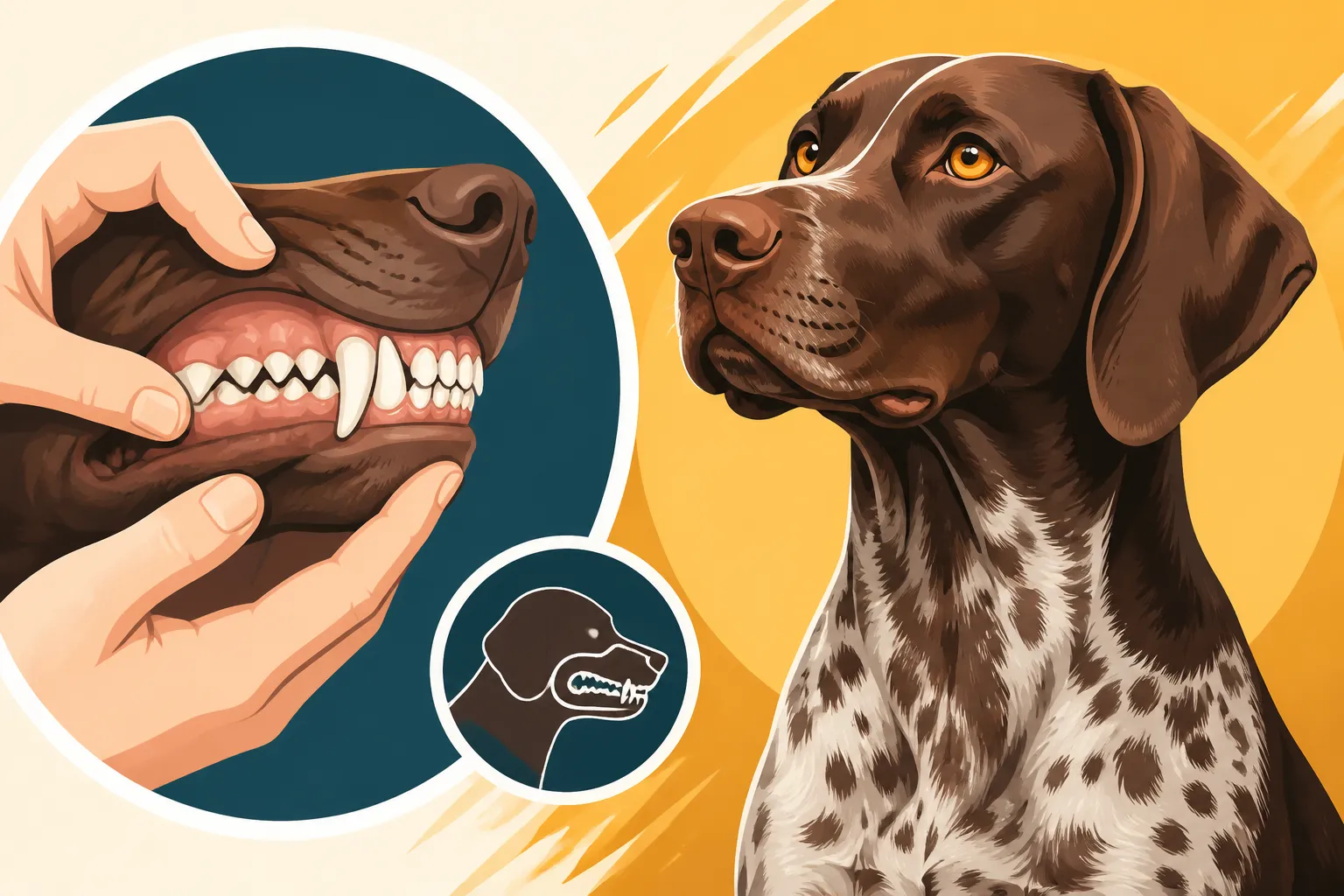
So, what exactly is the ideal bite? For German Shorthaired Pointers, and many other breeds, it's called a "scissor bite." Picture this: when your GSP closes their mouth, their upper incisors (the small front teeth) should just barely overlap the lower incisors, like a pair of scissors closing. The lower incisors should snuggly fit right behind the upper ones, making precise contact.
It’s not just about the front teeth, though. The larger premolars and molars further back in the mouth also need to interlock correctly. This perfect alignment creates a strong, efficient chewing surface, ensuring that food is properly ground down for digestion and that any object picked up—like a training dummy or a retrieved bird—can be held securely and comfortably. Think of it as a well-engineered mechanism; every part fits and functions in harmony. This tight, clean closure is essential for the breed's versatility and health.
How to Check Your Shorthair's Bite
Checking your German Shorthaired Pointer's bite doesn't require a vet degree, but it does take a gentle touch and a bit of patience. Ideally, you want to do this when your dog is relaxed and comfortable with you handling their mouth.
- Start with their lips: Gently lift your dog's upper lips to expose their front teeth, the incisors. With their mouth closed, you should be able to see the upper incisors overlapping the lower ones. The lower incisors should fit closely behind the upper ones.
- Open their mouth briefly: Gently encourage them to open their mouth slightly. You can do this by placing your thumbs behind their upper canines and your fingers on their lower jaw. As they open, observe how their premolars and molars meet. They should interlock like gears, with the points of the upper teeth fitting into the spaces of the lower teeth, and vice-versa.
- Feel for comfort: While checking, watch your dog's reaction. Are they comfortable? Do they show any signs of pain or discomfort when you manipulate their jaw or examine their teeth? Any hesitation or sensitivity could indicate an underlying issue.
Regularly checking your GSP's bite, especially as a puppy and throughout their growth, can help you identify potential issues early on. If you're ever unsure, don't hesitate to ask your veterinarian to give it a once-over during a routine check-up. They can provide a professional assessment and advise you on any concerns. The Vet Schedule a Working Shorthair Should Keep would certainly include these routine checks.
Common Bite Faults in German Shorthaired Pointers
While the scissor bite is the gold standard for German Shorthaired Pointers, sometimes nature throws a curveball, and a dog can develop a bite that deviates from this ideal. These bite faults aren't just cosmetic; they can have real, tangible impacts on a dog's health, comfort, and ability to perform their duties as a versatile hunting companion. Understanding what these faults are is the first step in recognizing and potentially managing them.
The Undershot Bite (Reverse Scissor)
An undershot bite is essentially the opposite of a scissor bite, often referred to as a "reverse scissor" or prognathism. In this scenario, when your GSP's mouth is closed, their lower jaw extends beyond the upper jaw, causing the lower incisors to protrude in front of the upper incisors. Visually, it can give the dog a somewhat "bulldog" appearance, although in GSPs, it's usually less pronounced than in true brachycephalic breeds.
The implications of an undershot bite can be significant. Functionally, it can make it harder for your Shorthair to grasp objects cleanly, whether it's a training dummy or a bird. Their front teeth don't meet to form a clean grip, which can be frustrating for the dog and less effective for retrieving. More seriously, an undershot bite can lead to dental problems. The upper and lower teeth might rub against each other abnormally, causing excessive wear, or the lower canines might impinge on the roof of the mouth, creating painful sores or even fistulas over time. It's not just a flaw; it's a potential source of chronic discomfort for your dog.
The Overshot Bite
The overshot bite, also known as an overbite or brachygnathism, is another common dental fault. Here, the upper jaw extends significantly beyond the lower jaw, creating a gap between the upper and lower incisors when the mouth is closed. You might hear it colloquially called "parrot mouth." This can range from a slight overlap that's barely noticeable to a severe condition where the lower jaw is considerably recessed.
For a German Shorthaired Pointer, an overshot bite presents its own set of challenges. Similar to an undershot bite, it hinders the ability to grasp and hold objects effectively, especially smaller items. The lower incisors might not even touch the upper palate, making it difficult to scoop up food or grip firmly. From a health perspective, the most common problem is that the lower canine teeth can strike the roof of the mouth or the upper gums, causing irritation, pain, and potentially serious injury. This constant rubbing or poking can lead to chronic inflammation, infections, and even perforations of the palate. Imagine that constant discomfort every time your dog closes their mouth or tries to chew something.
Level Bites and Wry Mouths
Beyond overshot and undershot, there are other bite faults that can affect German Shorthaired Pointers, though some are less common or more severe.
A level bite occurs when the upper and lower incisors meet precisely edge-to-edge, without any overlap. While it might seem "even," it's not ideal for a working dog. The problem with a level bite is accelerated wear and tear on the incisors. Instead of a scissor-like action that allows for grinding and shearing, the teeth are constantly bumping and grinding directly against each other. Over time, this can lead to the teeth wearing down prematurely, becoming blunt, and potentially causing sensitivity or pain. For a hunting dog, this can affect their ability to hold game without slippage.
A wry mouth, or mandibular prognathism with deviation, is a more severe and often visually striking fault. This occurs when one side of the jaw grows longer than the other, resulting in a twisted or asymmetrical appearance. One side of the jaw is recessed or protrudes more than the other, causing a dramatic misalignment of the teeth. A wry mouth is usually apparent even to the casual observer. The functional and health implications are profound: severe difficulty eating, chronic pain, dental disease, and often extensive veterinary intervention to manage the condition. It's a debilitating condition that can severely impact a GSP's quality of life and is a strong disqualification in the breed standard.
These bite faults underscore why a proper bite is not just about looks, but about the fundamental health, comfort, and capability of your German Shorthaired Pointer.
Health Implications and Management of Bite Issues
When a German Shorthaired Pointer has a bite that deviates from the ideal scissor alignment, it's not just a flaw that impacts their show ring prospects; it creates very real health challenges. These issues can range from mild annoyances to severe, chronic pain that significantly affects a dog's quality of life. Understanding these implications is key to responsible ownership and early intervention.
Dental Health Challenges
The most immediate and pervasive consequence of an incorrect bite is the array of dental health problems it can trigger. Think about it: if teeth aren't meeting correctly, they're either grinding where they shouldn't, leaving gaps where food can accumulate, or impinging on soft tissues.
- Excessive Wear: With a level bite, or even a mild overshot/undershot bite where teeth rub against each other improperly, the enamel wears down much faster than it should. This can expose the sensitive dentin and pulp of the tooth, leading to pain, sensitivity to hot or cold, and an increased risk of infection. Over time, teeth can become significantly shortened or blunted.
- Tartar Buildup and Periodontal Disease: When teeth don't align perfectly, certain areas of the mouth might not get the natural cleaning action that chewing provides. This creates prime spots for plaque and tartar to accumulate, which then leads to gingivitis (gum inflammation) and eventually periodontal disease. This is a painful condition where the supporting structures of the teeth are destroyed, potentially leading to tooth loss.
- Gum Irritation and Trauma: In cases of overshot or undershot bites, teeth can constantly rub against or poke into the gums or the roof of the mouth. This can cause chronic irritation, open sores, and even fistulas (abnormal connections) that can become infected. Imagine having a sharp tooth digging into your cheek every time you close your mouth—it's incredibly uncomfortable. Dental Disease in a Middle Aged German Shorthaired Pointer is a common concern anyway, but a poor bite can exacerbate it significantly.
- Broken or Fractured Teeth: Misaligned teeth can put undue stress on individual teeth. For instance, a lower canine consistently hitting an upper tooth in an overshot jaw can eventually lead to fracture of either tooth. This is not only painful but also opens the door to infection if the pulp cavity is exposed.
These dental issues often mean more frequent trips to the vet for professional dental cleanings, extractions, or even specialized orthodontic work, all of which can be costly and stressful for your GSP.
When to Consult a Vet Dentist
It's easy to dismiss a slight bite abnormality, especially if your GSP seems to be eating and playing normally. However, certain signs should prompt you to seek professional veterinary dental advice sooner rather than later. Don't wait until your dog is in obvious pain.
Look out for these indicators:
- Difficulty Eating: Is your GSP dropping food, favoring one side of their mouth, or suddenly taking longer to eat? Are they avoiding hard kibble or chews that they once loved?
- Pain Signals: Excessive drooling, pawing at the mouth, reluctance to let you examine their mouth, or a sudden change in temperament (becoming withdrawn or irritable) can all be signs of oral pain.
- Visible Sores or Injuries: Any red, inflamed spots on the gums, palate, or tongue, or actual puncture wounds where teeth are impinging, require immediate attention.
- Excessive Wear or Discoloration: If you notice certain teeth looking significantly shorter, blunter, or discolored (which can indicate nerve damage), it's time for a vet visit.
- Bad Breath: While often attributed to general dental disease, a particularly foul odor can sometimes stem from deep infections related to specific bite issues.
A regular veterinarian can assess the situation, but for complex bite issues, a board-certified veterinary dentist is often the best choice. They have specialized tools and expertise to perform detailed oral exams, take dental X-rays, and recommend advanced treatments such as orthodontic braces, crown reductions, or extractions to alleviate pain and improve function. Sometimes, addressing Retained Baby Teeth in a Shorthair Puppy early on can prevent or lessen some of these later bite problems.
Breeding Considerations for Bite Faults
For those involved in breeding German Shorthaired Pointers, the bite is a critical consideration. The breed standard clearly specifies the ideal scissor bite, and significant deviations are considered faults, sometimes even disqualifications in the show ring. But beyond aesthetics, breeding for correct bite is about responsible genetics and preserving the health and functionality of the line.
A dog with a severe bite fault should ideally not be bred. This is because bite structure has a genetic component, and breeding affected individuals increases the likelihood of passing these problems on to future generations. Even mild bite faults can, over generations, contribute to more pronounced issues. Reputable breeders often have their puppies' bites checked by a vet and will not breed dogs with significant issues. They understand that What Testing Adds to a German Shorthaired Pointer Litter includes assessing physical traits like bite, which directly impacts the health and longevity of their puppies. Preserving the integrity of the breed means prioritizing health and function over other traits, especially when it comes to something as fundamental as the ability to eat and retrieve comfortably.
Living with a German Shorthaired Pointer with a Non-Standard Bite
Discovering your German Shorthaired Pointer has a non-standard bite can be concerning, but it's not the end of the world. Many GSPs with minor bite faults live long, happy, and functional lives. The key is understanding the potential impact and being proactive in managing any challenges that arise. It’s all about adjusting to their specific needs and ensuring their comfort.
Impact on Daily Life and Training
A non-standard bite, whether it's overshot, undershot, or a level bite, can subtly (or not-so-subtly) affect various aspects of your GSP's daily routine and training.
- Eating Habits: This is often the first place you'll notice an impact. Dogs with significant overbites or underbites might struggle to pick up small pieces of kibble, leading to messy eating or needing special bowls. They might chew less efficiently, causing larger pieces of food to be swallowed whole, which can sometimes lead to digestive upset. They might also develop preferences for softer foods, which could be an indicator of discomfort.
- Retrieving Challenges: For a breed like the German Shorthaired Pointer, whose very essence is tied to retrieving, a compromised bite can be particularly frustrating. A dog with an improper bite might have difficulty gripping a bird or dummy firmly, leading to dropped retrieves or a harder mouth than desired because they're struggling to hold on. They might try to compensate by using more jaw pressure, which can damage game. This doesn't mean they can't retrieve, but their technique might be less refined, and their handlers need to be aware of this limitation. Force Fetch and a German Shorthaired Pointer's Retrieve might be a different experience with an atypical bite.
- Toy Selection: Certain toys might become uncomfortable or even dangerous. Hard chew toys could exacerbate dental wear or cause pain if teeth are misaligned. You might find your GSP prefers softer, more pliable toys that don't put stress on their jaw or teeth.
- General Comfort: Chronic irritation from impinging teeth can make a dog generally less comfortable. They might be less enthusiastic about chewing, more sensitive around their mouth, or simply seem a bit "off" due to low-grade pain. Watching for these subtle signs is important.
Understanding these potential impacts allows you to make adjustments and provide a better quality of life for your companion.
Specialized Care and Products
When your GSP has a non-standard bite, you become their advocate in finding solutions to keep them comfortable and healthy. This often involves a tailored approach to their care.
- Dietary Adjustments: If your GSP struggles with hard kibble, consider soaking it in warm water or broth before feeding to soften it. You might also explore softer, canned food options, or even a fresh food diet if budget allows. Look for kibble with smaller kibble sizes that are easier to scoop up and chew. Online retailers like Chewy offer a wide range of specialized diets and dental care products that cater to various needs, making it easier to find suitable options.
- Dental Chews and Toys: Avoid extremely hard bones or plastic chews that can cause further tooth wear or damage. Instead, opt for softer, pliable rubber toys designed for dental health. There are also dental chews specifically formulated to clean teeth with a softer texture. Again, Chewy can be a great resource for finding these gentler, yet effective, dental solutions. Chews Safe for a Teething German Shorthaired Pointer can also be adapted for adult dogs with sensitive mouths.
- Regular Veterinary Check-ups: More frequent dental checks with your veterinarian are crucial. They can monitor for excessive wear, gum irritation, or developing periodontal disease. Early detection means less invasive and less costly interventions. These check-ups might include routine dental cleanings to manage tartar buildup, especially in areas that aren't naturally cleaned by chewing.
- Pain Management: If your GSP is experiencing chronic pain or inflammation from their bite, your vet might prescribe anti-inflammatory medications or recommend other therapies to improve their comfort. In some severe cases, orthodontic intervention or selective extractions by a veterinary dentist might be recommended to alleviate pain and prevent further damage.
Love and Adaption
Ultimately, a non-standard bite doesn't define your German Shorthaired Pointer. They are still the same energetic, loving, and loyal companions you fell in love with. Your role is to adapt and provide them with the best possible life, regardless of their dental quirks.
Focus on their overall quality of life. If they can eat comfortably, play without pain, and enjoy their daily activities, a minor bite fault should not be a cause for constant worry. Celebrate their unique personality and capabilities. They might not be a show ring champion, or perhaps they won't excel at retrieving precisely, but their value as a family member and companion remains immeasurable. Many German Shorthaired Pointers with less-than-perfect bites still make fantastic hunting partners, provided their owners understand their limitations and adapt their training and expectations accordingly. With patience, observation, and proactive care, a GSP with a bite fault can thrive.
| Bite Type | Description | Functional Impact (GSP) | Health Implications | Breeding Suitability |
|---|---|---|---|---|
| Scissor Bite | Upper incisors slightly overlap and touch lower incisors. Molars interlock. | Optimal for grasping, holding, and retrieving game. | Excellent dental health, minimal wear if cared for. | Ideal; desired breed standard. |
| Undershot Bite | Lower jaw extends beyond upper; lower incisors protrude. | Difficulty grasping objects cleanly, less precise hold. | Abnormal tooth wear, potential for lower canines to traumatize upper palate/gums. | Fault; generally not recommended for breeding. |
| Overshot Bite | Upper jaw extends beyond lower; gap between incisors. | Difficulty scooping food, poor grip on retrieved items. | Lower canines may impinge on upper palate/gums, leading to pain, sores, infection. | Fault; generally not recommended for breeding. |
| Level Bite | Upper and lower incisors meet edge-to-edge. | Adequate grip, but less efficient shearing action. | Accelerated wear of incisors, potential for early dental sensitivity or loss. | Fault; not ideal for breeding. |
| Wry Mouth | One side of jaw grows disproportionately, causing twist/asymmetry. | Severe difficulty eating, grasping; profound discomfort. | Chronic pain, severe dental disease, trauma to soft tissues, impaired digestion. | Severe fault; strongly discouraged from breeding. |
Disclaimer
This article is for general informational purposes only and does not constitute professional advice. Laws, prices and regulations vary by location and change over time. Consult a qualified professional for guidance on your specific situation.