How Subaortic Stenosis Kills a Young Shorthair
It’s a heartbreaking reality for many German Shorthaired Pointer owners: the sudden, unexplained collapse or even death of a seemingly healthy young dog. This devastating scenario often points to a silent killer lurking within their genetics – Subaortic Stenosis (SAS). This guide is here to shed light on this serious cardiac condition, helping you understand what it is, how it progresses, and what you can do to protect your beloved Shorthair from its often-fatal grip.
What Exactly Is Subaortic Stenosis in German Shorthaired Pointers?
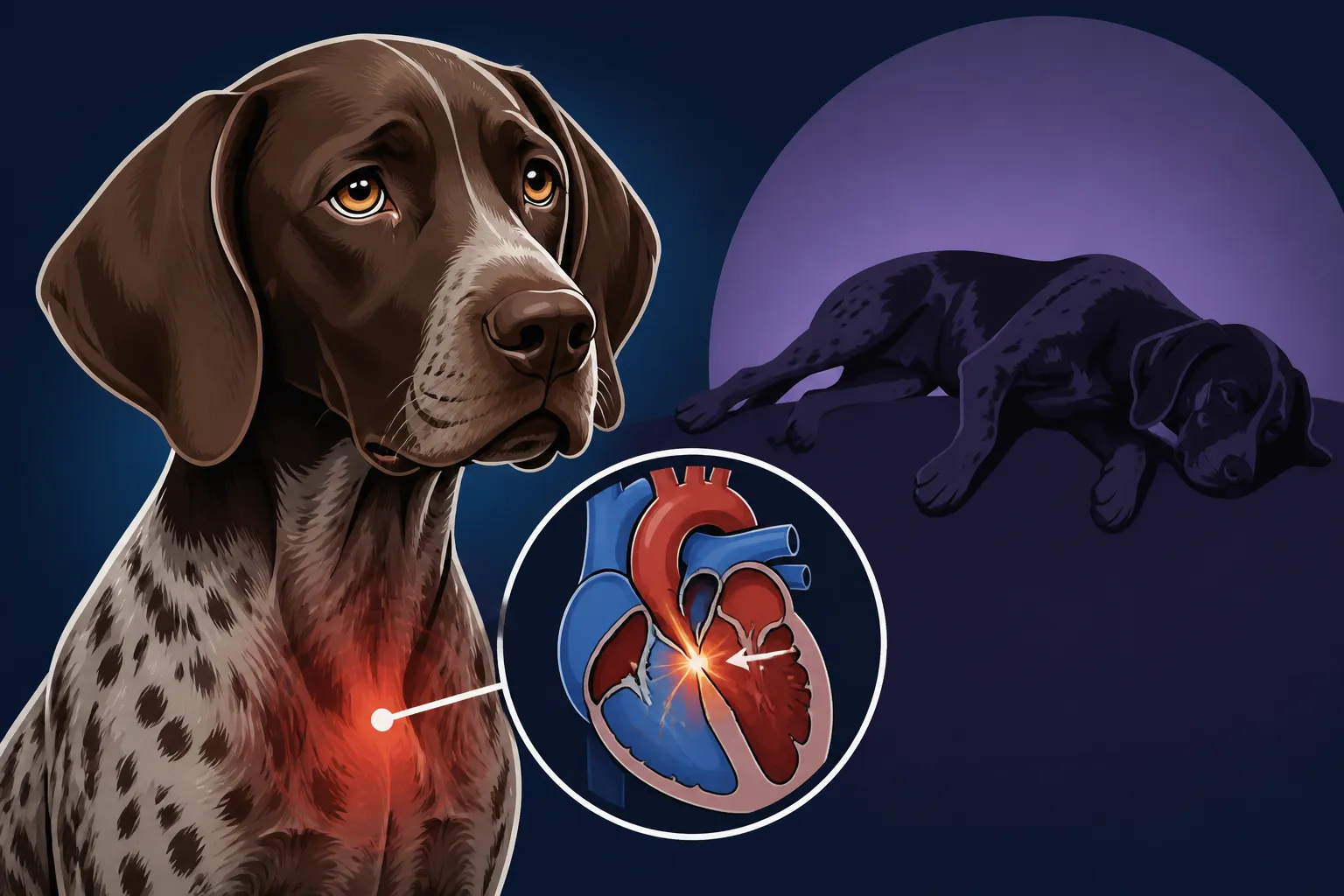
Subaortic Stenosis, or SAS, is a congenital heart defect that German Shorthaired Pointers, among several other large breeds, are unfortunately predisposed to. Congenital means it's present at birth, a flaw in the heart's development that sets the stage for future problems. Essentially, SAS is a narrowing (stenosis) of the outflow tract from the left ventricle, just below the aortic valve (subaortic). Think of it like a bottleneck in the main artery leaving the heart, the aorta, which is responsible for pumping oxygen-rich blood to the rest of the body.
This narrowing creates an obstruction, forcing the left ventricle to work much harder to push blood through the constricted opening. Over time, this excessive workload causes the muscle of the left ventricle to thicken (hypertrophy), much like any muscle that's constantly exercised. While this might sound like a strong heart, it’s actually detrimental. The thickened muscle isn't as efficient at filling with blood, nor does it necessarily increase the heart's pumping power in a healthy way. Instead, it can lead to electrical instability within the heart, setting the stage for irregular heart rhythms, and ultimately, heart failure or sudden death. The severity of the obstruction can vary greatly from mild to severe, and this dictates the prognosis for the affected dog.
The Genetic Component Behind Shorthair SAS
One of the most frustrating aspects of Subaortic Stenosis in German Shorthaired Pointers is its strong genetic link. It's not something your dog "catches" or develops due to diet or environment; it's passed down through generations. Researchers have identified that SAS inheritance in many breeds, including GSPs, is complex, but generally follows an autosomal dominant pattern with incomplete penetrance. This means that a dog only needs to inherit one copy of the affected gene to be at risk of developing the condition, but not every dog with the gene will necessarily show severe clinical signs.
This genetic predisposition means responsible breeding practices are absolutely critical. Breeders should be diligently screening their breeding stock for SAS, a practice that helps prevent passing this devastating condition onto future generations. Without proper screening, dogs can unknowingly pass on the genetic blueprint for SAS, perpetuating the problem within the breed. It's why inquiring about a puppy's parents' cardiac health, especially their echocardiogram results, is so vital. This inherited trait underscores the importance of choosing a reputable breeder who prioritizes health testing, including cardiac clearances, for their breeding animals.
How the Narrowing Impacts Blood Flow and Heart Function
To truly grasp how critical SAS is, let's dive a little deeper into the mechanics of what happens inside your Shorthair's heart. Imagine the left ventricle as the powerhouse, forcefully contracting to send blood out to the body. In a healthy heart, this blood flows smoothly through the aortic valve into the aorta. With SAS, there's a fibromuscular ring of tissue just below the valve, or sometimes a diffuse thickening, that narrows this pathway. This obstruction means the left ventricle has to generate much higher pressure to overcome the resistance and eject blood.
This continuous struggle leads to hypertrophy of the left ventricular muscle. While initially compensatory, allowing the heart to maintain output, this thickening eventually becomes maladaptive. The thickened walls become stiff, reducing the ventricle's ability to relax and fill properly with blood. This decreased filling means less blood is available to be pumped out with each beat, decreasing the heart's overall efficiency. Moreover, the coronary arteries that supply blood to the heart muscle itself can become compromised due to the increased wall thickness and pressure, leading to areas of reduced oxygen supply (ischemia). This combination of increased workload, decreased filling, and potential ischemia can precipitate dangerous arrhythmias, heart failure, or the dreaded sudden death that often leaves owners bewildered and heartbroken.
The Hidden Dangers: How SAS Can Lead to Sudden Collapse and Death
The insidious nature of Subaortic Stenosis is that it often gives little warning before striking. Many young German Shorthaired Pointers affected by severe SAS appear completely normal and healthy, living vibrant, active lives until a sudden, catastrophic event occurs. This lack of obvious symptoms is precisely what makes SAS such a dangerous and often fatal condition in our beloved high-energy companions.
The Lack of Obvious Warning Signs
For many dogs with SAS, especially those with moderate to severe forms, there might be no outwardly visible symptoms during their puppyhood or even into their early adult years. This can be incredibly misleading. A GSP puppy, full of boundless energy, might play, run, and explore with seemingly no limitations. Owners often report that their dogs were robust, enjoyed long walks, retrieving sessions, and regular activity right up until the incident. This perceived normalcy can make the sudden collapse or death even more shocking and devastating.
However, in some cases, owners might notice subtle signs that, in hindsight, point to a problem. These can include a mild decrease in exercise tolerance compared to littermates or other GSPs, although this is hard to gauge in such an active breed. Some might display slight lethargy after intense activity, or occasionally cough, though these are often dismissed as minor or attributed to other common puppy ailments. Because these signs are so vague and easily overlooked, regular veterinary check-ups that include careful auscultation (listening to the heart) are absolutely paramount, particularly for breeds known to be at risk like our Shorthairs. This is where a trained ear might pick up a heart murmur, the first tangible clue. You might also want to look into topics like "The Heart Murmur a German Shorthaired Pointer Puppy Can Carry" for more insights.
The Mechanism of Sudden Cardiac Death
The most devastating outcome of severe SAS is sudden cardiac death. This usually occurs during or shortly after periods of intense physical exertion, such as a vigorous run in the field, an extended game of fetch, or even an exciting training session. The exact mechanism of sudden death is multifactorial, but it primarily involves life-threatening cardiac arrhythmias. When the left ventricle is working overtime against the narrowed outflow tract, the heart muscle becomes stressed, thickened, and can develop areas of reduced blood flow (ischemia). These stressed and ischemic areas are prone to electrical instability.
During intense exercise, the heart rate increases dramatically, and the demand for blood flow through the narrowed aorta surges. The already compromised heart struggles to meet this demand, further stressing the muscle. This combination can trigger severe ventricular arrhythmias, such as ventricular fibrillation, where the heart muscle quivers ineffectively instead of pumping blood. When this happens, blood flow to the brain and other vital organs instantly ceases, leading to immediate collapse and death. It's a swift, brutal end that leaves no time for intervention, explaining why so many GSPs succumb without prior illness.
Factors Increasing Risk in Active Shorthairs
German Shorthaired Pointers are inherently high-energy, driven dogs. They are bred to run, to hunt, and to maintain intense physical activity for extended periods. This very nature, unfortunately, amplifies the risk associated with SAS. A sedentary dog with mild to moderate SAS might live a relatively normal lifespan because its heart is rarely pushed to its maximum. However, a GSP, true to its working heritage, is constantly challenging its cardiovascular system.
Consider a young GSP eagerly chasing pheasants through dense cover or retrieving ducks from frigid waters. These activities demand peak cardiac performance. The heart rate soars, blood pressure increases, and the left ventricle is forced to pump harder and faster against the subaortic obstruction. This sustained, high-intensity workload pushes the already compromised heart to its breaking point, making the onset of life-threatening arrhythmias far more likely. This is why it's crucial to understand "Whether a Shorthair With SAS Should Be Exercised" and manage their activity levels if they are diagnosed. The combination of an inherited heart defect and an athletic, high-drive temperament creates a particularly dangerous scenario for our beloved Shorthairs, making vigilance and early detection even more critical.
Detecting and Living With Subaortic Stenosis in Your Shorthair
While the thought of SAS is frightening, there are definitive steps you can take as an owner or prospective owner to detect and manage this condition. Early diagnosis is key, not necessarily for a cure, but for understanding the prognosis and making informed decisions about your Shorthair's care and lifestyle.
The Importance of Early Cardiac Screening
The very first line of defense against SAS is comprehensive cardiac screening, particularly for German Shorthaired Pointer puppies and breeding stock. The initial step is a thorough physical examination by your veterinarian, which always includes listening to the heart (auscultation). A distinct heart murmur, often described as a harsh, "ejection-type" murmur, is the primary indicator of SAS. This murmur is typically loudest over the left heart base.
If a murmur is detected, especially in a GSP puppy, the next crucial step is a referral to a veterinary cardiologist for an echocardiogram. An echocardiogram, often referred to simply as an "echo," is a non-invasive ultrasound of the heart that allows the cardiologist to visualize the heart's structures, assess blood flow, and directly measure the degree of narrowing below the aortic valve. It can identify the fibromuscular ring, measure the velocity of blood flow through the obstruction, and evaluate the degree of left ventricular hypertrophy. This specialized imaging is the gold standard for diagnosing SAS and determining its severity. Reputable breeders will often have "The Cardiologist Exam a Breeding Shorthair Needs" for their dogs to ensure they are not passing on this condition. You can also learn more about "Echocardiograms for a German Shorthaired Pointer" through additional resources.
Diagnostic Tools for Subaortic Stenosis
When your vet suspects SAS, they'll likely recommend a series of tests to confirm the diagnosis and determine the severity. Here's a quick rundown of what those entail:
| Diagnostic Tool | What It Does | Why It's Important for SAS |
|---|---|---|
| Auscultation | Listening to the heart with a stethoscope. | Detects a characteristic heart murmur, often the first sign of SAS. |
| Electrocardiogram (ECG) | Records the electrical activity of the heart. | Can identify arrhythmias (irregular heartbeats) that are common complications of SAS, but not diagnostic on its own. |
| X-rays | Provides images of the chest cavity. | Shows the overall size and shape of the heart, and can indicate signs of heart failure or pulmonary edema in advanced cases. |
| Echocardiogram (Cardiac Ultrasound) | Uses sound waves to create real-time images of the heart's structures and blood flow. | The definitive diagnostic tool. Directly visualizes the subaortic narrowing, measures blood flow velocity, and assesses ventricular wall thickness. Crucial for grading severity. |
The echocardiogram is truly invaluable. A veterinary cardiologist will use specific measurements, like the peak velocity of blood flow across the obstruction, to classify the severity of SAS as mild, moderate, or severe. This classification is vital for prognosis and guiding management strategies. For instance, a mild case might require minimal intervention, while a severe case carries a much graver outlook, often with a significantly reduced lifespan, sometimes even before "The Twelve to Fourteen Years a German Shorthaired Pointer Gets" can be realized.
Management and Prognosis for Affected Shorthairs
Unfortunately, there is no cure for Subaortic Stenosis. Once the fibromuscular ring forms, it cannot be reversed. Treatment focuses on managing symptoms, slowing progression, and reducing the risk of sudden death. The approach depends heavily on the severity of the condition.
- Mild SAS: Dogs with mild SAS may live a normal lifespan with minimal or no medical intervention. Regular monitoring with follow-up echocardiograms is typically recommended to ensure the condition doesn't worsen.
- Moderate to Severe SAS: For these dogs, medication is often prescribed. Beta-blockers (like atenolol or propranolol) are commonly used to reduce the heart's workload, decrease heart rate, and help control arrhythmias. This eases the strain on the left ventricle and may help prevent sudden cardiac death. However, even with medication, dogs with severe SAS often have a guarded to poor prognosis, with many succumbing to the disease within their first few years of life, far short of "The Median Age a German Shorthaired Pointer Reaches."
Lifestyle modifications are also crucial. Limiting intense exercise is often necessary to prevent over-straining the heart. This can be particularly challenging for an active breed like the German Shorthaired Pointer, but it’s a vital step to prolong their life and improve their quality of life. For some dogs, a specialized diet might be recommended to support heart health. Surgical options are generally not successful for true SAS, as the underlying fibromuscular tissue is difficult to completely remove without damaging the aortic valve, and the recurrence rate can be high. However, balloon valvuloplasty is sometimes considered for very specific types of aortic stenosis, though less commonly for the subvalvular form.
Living with a German Shorthaired Pointer diagnosed with SAS can be emotionally taxing. It requires constant vigilance and close collaboration with your veterinary cardiologist. The financial aspect of ongoing diagnostics, medications, and specialized care can also be considerable, making pet insurance, like a policy from Healthy Paws, a wise consideration for any Shorthair owner, especially when facing long-term health challenges. Healthy Paws offers plans that can help cover unexpected vet bills, alleviating some of the financial stress during such difficult times. It's a testament to our bond with these dogs that we seek every possible way to give them the best life, even when facing such a formidable opponent.
Disclaimer
The information provided in this article is for general informational purposes only and is not a substitute for professional veterinary advice. Always consult with a qualified veterinarian or veterinary cardiologist for any health concerns or before making any decisions about your German Shorthaired Pointer's medical care.