Removing a Mast Cell Tumor From a German Shorthaired Pointer
Finding an unexpected lump on your beloved German Shorthaired Pointer is a moment that can send any owner's heart straight into their stomach. The immediate worry, the questions racing through your mind about what it could be and what comes next, are completely valid and understandable. This comprehensive guide is here to walk you through the process of diagnosing and, specifically, removing a mast cell tumor from your GSP, providing clarity and support during a potentially stressful time.
Understanding Mast Cell Tumors in German Shorthaired Pointers
Mast cell tumors are unfortunately one of the most common skin cancers found in dogs, and German Shorthaired Pointers, while generally robust, aren't exempt. It's a diagnosis no one wants to hear, but understanding what you're dealing with is the first crucial step toward effective management.
What Exactly is a Mast Cell Tumor?
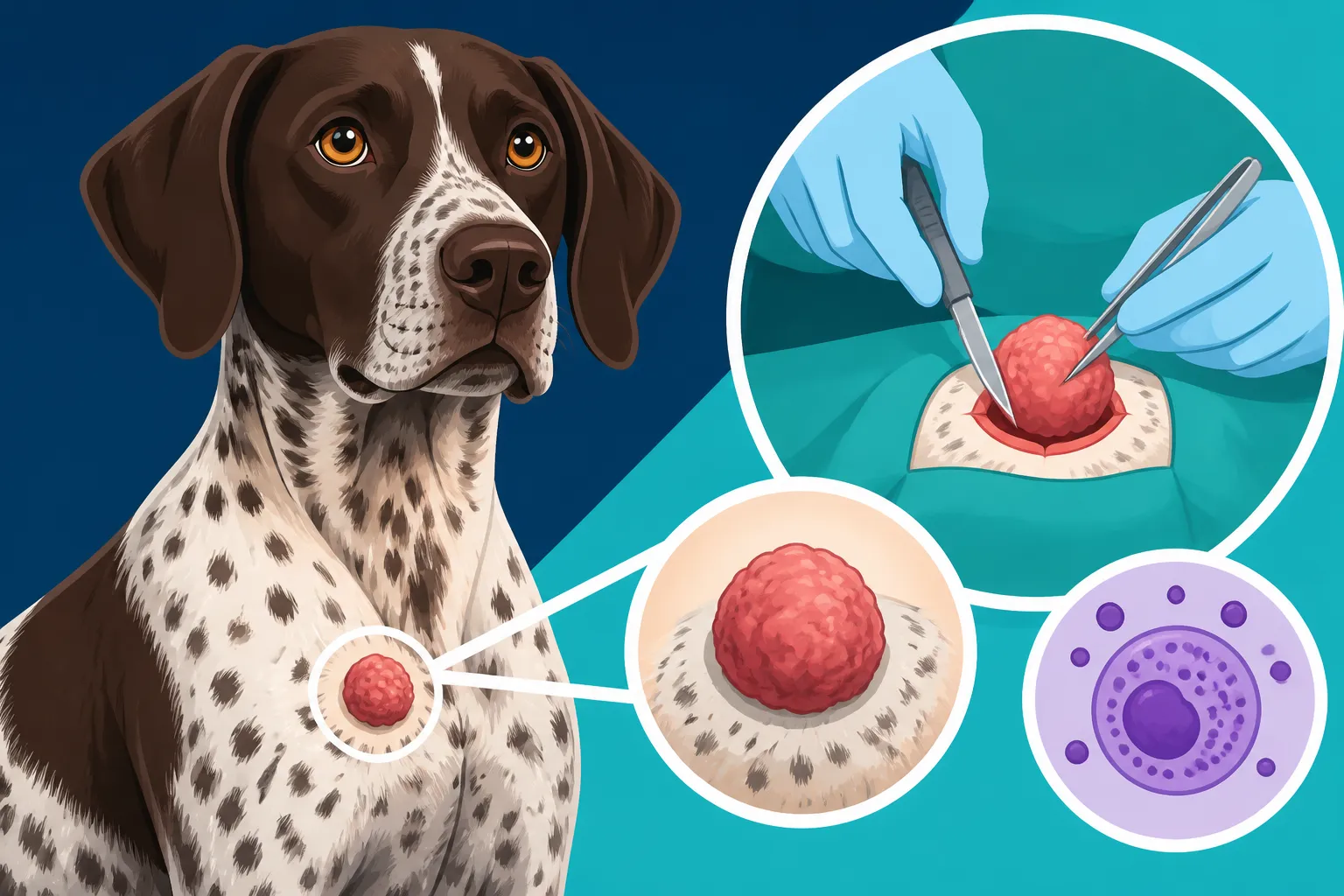
Let's break it down simply: mast cells are a type of white blood cell that play a significant role in your dog's immune system, particularly in allergic and inflammatory responses. They're found throughout the body, especially in areas like the skin, respiratory tract, and gastrointestinal tract. When these cells grow abnormally and in an uncontrolled manner, they form a mast cell tumor. These tumors can range from benign (non-cancerous) to highly aggressive and malignant (cancerous), which is why every suspicious lump warrants a thorough investigation.
For German Shorthaired Pointers, these tumors commonly appear on the skin, but they can also develop internally, affecting organs like the spleen, lymph nodes, or bone marrow. The appearance can be incredibly varied, making visual identification tricky. Some might look like a raised, red, hairless bump, while others might feel like a soft, squishy lump under the skin, or even mimic an insect bite. They can grow quickly, shrink, and then reappear, a phenomenon known as Darier's sign, which is a classic, though not exclusive, indicator of a mast cell tumor. Recognizing the nuances of these growths is critical, and it often requires more than just a quick glance. Many owners notice a new growth while petting their dog or during routine grooming, and that prompt attention can make all the difference. For more general information on these types of growths, you might want to read our article on Lumps Worth Removing on a German Shorthaired Pointer.
Identifying Suspicious Lumps on Your Shorthair
The reality is, our GSPs are energetic, curious, and often find themselves in situations that can lead to bumps and scrapes. It's easy to dismiss a new lump as just another minor injury. However, with mast cell tumors, early detection significantly impacts the prognosis. You should always be vigilant when petting your German Shorthaired Pointer, feeling for any new bumps, masses, or changes in existing ones. Pay particular attention to areas like the limbs, trunk, and scrotum, as these are common sites for mast cell tumors. You might find it helpful to specifically learn more about Mast Cell Tumors and Where They Appear on a Shorthair.
If you discover a lump, don't panic, but don't ignore it either. Look for signs that might suggest it's more than a benign fatty lump (lipoma) or an abscess. Is it changing in size rapidly? Is the skin over it red, ulcerated, or itchy? Is your dog bothering it more than usual? Even if it seems small and harmless, any new growth warrants a visit to your veterinarian. They are the experts who can properly assess the situation. Remember, the sooner you get it checked out, the better the chances are for a straightforward and successful treatment. This proactive approach is part of keeping your active companion healthy throughout The Twelve to Fourteen Years a German Shorthaired Pointer Gets.
The Diagnostic Journey: From Suspicion to Confirmation
Once you've spotted a suspicious lump, the journey from "what if" to "what now" begins with your vet. They have a series of diagnostic tools at their disposal to identify exactly what kind of growth you're dealing with.
Initial Veterinary Examination and Fine Needle Aspirate (FNA)
Your first stop will be your veterinarian, who will perform a thorough physical examination, feeling the lump, assessing its size, consistency, and mobility. They'll also check nearby lymph nodes, as these can sometimes indicate spread. The most common first diagnostic step for a suspicious lump is a Fine Needle Aspirate (FNA). This procedure is typically quick, minimally invasive, and can often be done during your regular appointment without sedation. Your vet will use a very fine needle to collect a sample of cells directly from the lump. These cells are then spread onto a slide and examined under a microscope, usually by a veterinary pathologist.
The FNA results can be incredibly informative. For mast cell tumors, the pathologist often sees distinctive mast cells, which are granular and relatively easy to identify. However, it's important to understand the limitations. Sometimes, an FNA might not collect enough diagnostic cells, or the cells collected might not be truly representative of the entire tumor, leading to an inconclusive result. In such cases, your vet might recommend repeating the FNA or moving on to a more definitive diagnostic step. Still, an FNA is an invaluable tool for getting a quick initial read on a lump, and it can often guide the next steps. For specifics on this process, you can read our article on When a Lump on a Shorthair Needs a Needle Aspirate.
Biopsy and Staging: Getting the Full Picture
If the FNA is inconclusive, or if mast cells are identified and there's a strong suspicion of malignancy, a biopsy becomes the next critical step. A biopsy involves surgically removing a small piece of the tumor, or sometimes the entire tumor if it's small enough, for more detailed pathological analysis. This procedure typically requires sedation or general anesthesia, as a larger tissue sample is needed. The pathologist can then determine the grade of the mast cell tumor (how aggressive it appears under the microscope) and confirm the diagnosis with certainty. The grade is one of the most important factors in determining prognosis and treatment.
Beyond the biopsy, "staging" is essential, especially for higher-grade or more aggressive tumors. Staging involves determining if the cancer has spread from its original site. This might include further tests like abdominal ultrasounds to check internal organs (like the spleen and liver), aspirates of nearby lymph nodes, and bone marrow aspirates. Blood work is also typically run to assess your GSP's overall health and rule out other issues. The information gathered from the biopsy and staging tests will give your veterinary team a comprehensive picture of the tumor's behavior and extent, which is absolutely vital for formulating the most effective treatment plan. Knowing this full picture is crucial given that The Cancers That Turn Up Most in German Shorthaired Pointers can be diverse.
Surgical Removal: The Primary Treatment for Mast Cell Tumors
For most skin-based mast cell tumors in German Shorthaired Pointers, surgical removal is the gold standard of treatment. The goal isn't just to remove the visible lump, but to take out a significant amount of surrounding healthy tissue to ensure all cancerous cells are gone.
Preparing for Surgery: What to Expect
Once the decision for surgery has been made, your veterinary team will guide you through the preparation process. This usually involves pre-surgical bloodwork to ensure your GSP's organs are functioning well enough to safely undergo anesthesia. They might also recommend chest X-rays to check for any signs of metastatic disease in the lungs. For a German Shorthaired Pointer, particularly an active one, fitness levels are generally high, but underlying health conditions can still arise. Every GSP is an individual, and a tailored pre-surgical assessment is key. Given the lean build of many GSPs, special consideration may be given to Anesthesia Risk in a Lean German Shorthaired Pointer.
It's also a good time to discuss financial aspects with your vet. Surgical removal, especially if wide margins are required, can be a significant expense. This is where pet insurance can be a real lifesaver. Many owners find policies from providers like Healthy Paws invaluable for covering unexpected veterinary costs, particularly for serious conditions like cancer. Understanding your coverage beforehand can alleviate a huge burden during a stressful time.
The Surgical Procedure and Achieving Clean Margins
The actual surgical procedure for a mast cell tumor is more extensive than simply cutting out the lump. Veterinary surgeons aim for what are called "wide surgical margins." This means removing not just the tumor itself, but a substantial border of healthy-looking tissue (typically 2-3 cm laterally and at least one fascial plane deep) all around it. The reason for this aggressive approach is that mast cell tumors, even when they appear localized, often have microscopic extensions of cancerous cells beyond what's visible to the naked eye. The goal is to get "clean margins," meaning the pathologist finds no cancer cells at the edges of the removed tissue when examined under a microscope.
Achieving these wide margins can be challenging, especially for tumors located in areas with limited extra skin, like on a limb or near a joint. German Shorthaired Pointers, with their relatively tight skin over much of their bodies, can present specific challenges in closing these larger defects. Sometimes, reconstructive techniques, such as skin flaps or grafts, may be necessary to close the wound, adding complexity and cost to the procedure. Your surgeon will discuss these possibilities with you upfront. The surgeon's skill and experience in oncology are crucial here to give your GSP the best chance at a complete removal.
Post-Operative Care and Recovery
Once the surgery is complete, your GSP will need careful post-operative care to ensure a smooth recovery. This typically involves pain management with prescribed medications, sometimes including anti-inflammatory drugs and antibiotics to prevent infection. You'll need to keep the incision site clean and dry, and prevent your dog from licking or chewing at the sutures, usually with the help of an Elizabethan collar (the dreaded "cone of shame") or a recovery suit. Restricting activity is also vital; no running, jumping, or roughhousing for several weeks to allow the incision to heal properly. For a high-energy German Shorthaired Pointer, this can be particularly challenging, requiring creative solutions to keep them calm and entertained.
Regular follow-up appointments with your vet will be necessary to monitor the incision's healing and to remove sutures if they aren't dissolvable. This is also the time when your vet will discuss the biopsy results, including the tumor's grade and whether clean margins were achieved. If margins are not clean, further treatment options, such as a second surgery or adjuvant therapies, will need to be considered. Remember to keep good records of all vet visits, medications, and any changes you observe in your GSP. Having pet insurance like Healthy Paws can really help manage the financial aspect of multiple follow-ups and any further treatments needed, ensuring your focus stays on your GSP's recovery. You can consider how such costs stack up against typical The Vet Bills a Hunting German Shorthaired Pointer Earns.
Beyond Surgery: Additional Treatments and Prognosis
While surgical removal is the cornerstone, for some mast cell tumors, especially those that are higher grade or incompletely removed, additional therapies might be recommended to maximize the chances of a good outcome.
Adjuvant Therapies: When and Why
"Adjuvant therapies" are treatments given in addition to the primary treatment (surgery) to prevent recurrence or metastasis (spread). For mast cell tumors, these often include chemotherapy or radiation therapy.
- Chemotherapy: This might be recommended if the tumor is high-grade, has spread to lymph nodes, or if clean surgical margins couldn't be achieved. The goal of chemotherapy is to kill any remaining cancer cells in the body or to slow the growth of metastatic disease. While the word "chemotherapy" sounds daunting, canine chemotherapy protocols are generally designed to be much gentler than those for humans, with a focus on quality of life. Side effects are often mild and manageable. For more about the associated costs and processes, see Chemotherapy Costs for a German Shorthaired Pointer.
- Radiation Therapy: This option is typically considered when surgical removal with adequate margins isn't possible, or when margins are incomplete. Radiation therapy uses high-energy beams to target and destroy cancer cells in a specific area. It's often highly effective in controlling local disease.
- Targeted Therapies: Newer oral medications, known as tyrosine kinase inhibitors (e.g., Palladia, Kinavet), are sometimes used, particularly for inoperable tumors or those with specific genetic mutations. These drugs target the pathways that allow mast cell tumors to grow and spread.
Your veterinary oncologist will assess your GSP's specific tumor, overall health, and staging results to determine if any of these adjuvant therapies are necessary and which ones would be most beneficial. It's a highly individualized decision, always made with your dog's best interest and quality of life at heart. This proactive management can significantly impact the long-term health of your companion.
Long-Term Outlook and Monitoring
The prognosis for a German Shorthaired Pointer with a mast cell tumor varies widely depending on several factors, including the tumor's grade, its location, whether it was completely removed, and if it had already spread. Low-grade tumors that are completely excised often have an excellent prognosis with surgery alone. High-grade tumors, or those with incomplete margins or evidence of spread, carry a more guarded prognosis and typically require more aggressive follow-up treatments.
Regardless of the initial outcome, vigilant long-term monitoring is crucial. Your GSP will need regular veterinary check-ups to examine the surgical site, palpate for new lumps, and check regional lymph nodes. Your vet might recommend periodic re-staging tests, especially for higher-grade tumors, to catch any recurrence or metastasis early. It's a commitment, but it's an investment in your GSP's health. Continue to perform your own "lump checks" at home regularly. Maintaining open communication with your veterinary team and being proactive with follow-up care is essential. Don't forget that pet insurance, like a comprehensive plan from Healthy Paws, can continue to provide financial support for these ongoing monitoring appointments and any potential future treatments, giving you peace of mind.
Mast Cell Tumor Staging and Treatment Overview
To give you a clearer picture, here's a general overview of mast cell tumor staging and typical treatment approaches. Always remember that specific recommendations will come from your veterinary oncologist based on your dog's unique situation.
| Stage | Description | Common Treatment | General Prognosis (with treatment) |
|---|---|---|---|
| I | Single tumor, confined to the skin, no lymph node involvement. | Wide surgical excision. | Good to excellent. |
| II | Single tumor, confined to the skin, with regional lymph node involvement. | Wide surgical excision + chemotherapy/radiation. | Fair to good. |
| III | Multiple cutaneous tumors OR a large, infiltrative skin tumor, with or without lymph node involvement. | Aggressive surgical excision (if possible) + chemotherapy/radiation. | Guarded. |
| IV | Any tumor with distant metastasis (e.g., to spleen, liver, bone marrow, distant lymph nodes). | Chemotherapy, palliative radiation, targeted therapies. | Poor. |
This table is a simplification, but it illustrates how diagnosis and staging directly influence the intensity and type of treatment your GSP may need.
Disclaimer
The information provided in this guide is intended for general educational purposes only and should not be considered a substitute for professional veterinary advice, diagnosis, or treatment. Always seek the advice of your veterinarian or other qualified animal health provider with any questions you may have regarding a medical condition or treatment plan for your German Shorthaired Pointer.