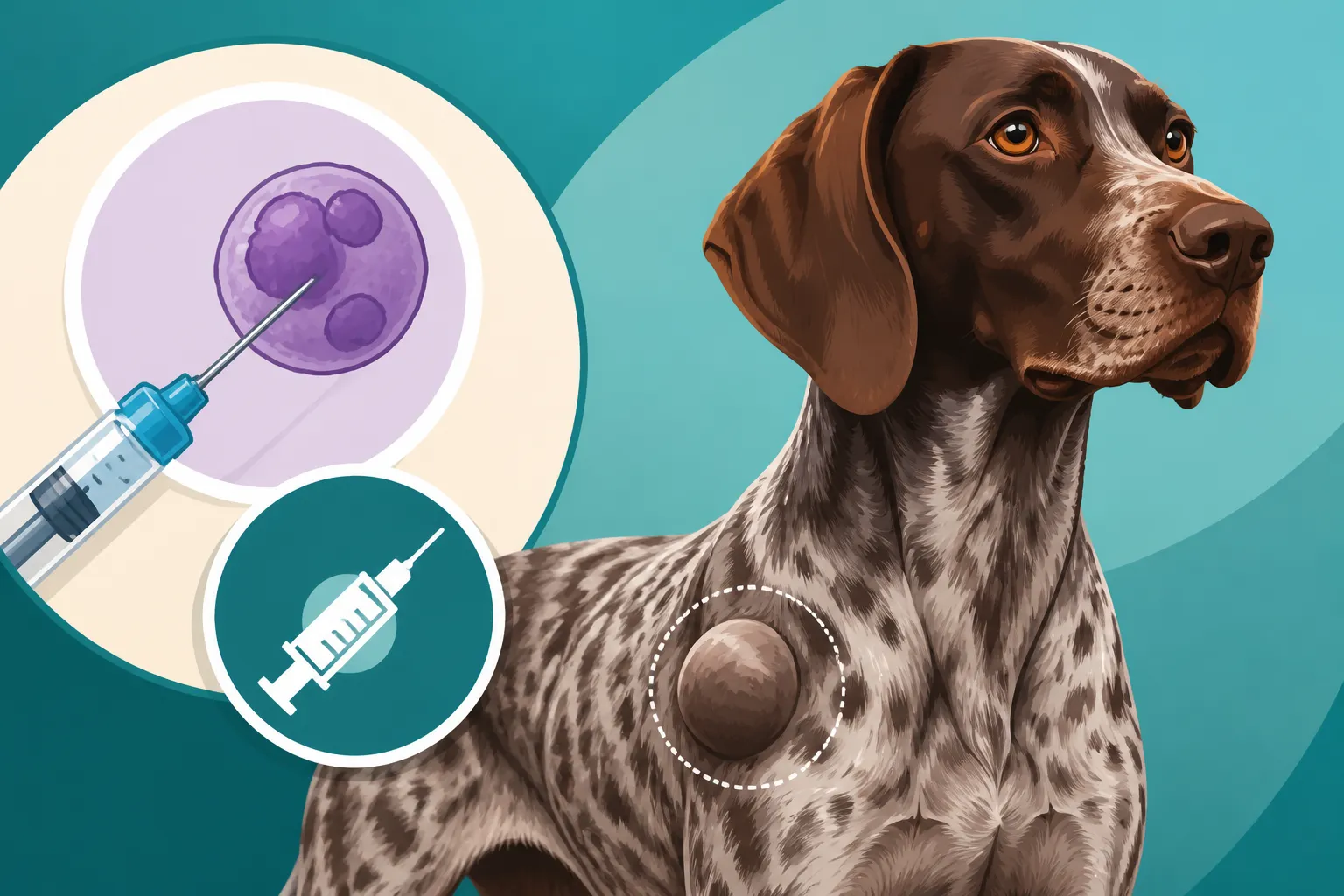
When a Lump on a Shorthair Needs a Needle Aspirate
Finding an unexpected lump on your beloved German Shorthaired Pointer can send a wave of fear through even the most seasoned dog owner. One moment you're giving them a loving scratch, and the next, your fingers brush against something unfamiliar beneath their sleek, short coat. This guide will walk you through what to do when you discover a lump, helping you understand when it's just a harmless bump and when it's time to call the vet for a diagnostic fine needle aspirate.
The Initial Discovery: Finding a Lump on Your Shorthair
That heart-stopping moment when you first feel a lump on your dog is something no pet parent ever wants to experience. German Shorthaired Pointers have such a lean, athletic build, and their short coat means that any new bump or mass tends to be much more noticeable than on a long-haired breed. This can make the discovery even more jarring, as there's less fur to hide anything amiss.
The Immediate Panic and What to Do First
It's completely natural to panic a little when you find a lump. Your mind immediately jumps to the worst-case scenarios, and the worry can be overwhelming. But take a deep breath. Not every lump is a death sentence, far from it. Many are benign and easily managed. The most important thing you can do in that initial moment is not to let the fear take over, but to approach the situation calmly and analytically.
First, try to get a good feel for the lump. Note its exact location – is it on their chest, a leg, their flank, or perhaps around a joint? Next, pay attention to its size and shape. Is it small, like a pea, or larger, like a grape or even a golf ball? How does it feel? Is it soft and squishy, or hard and firm? Can you move it easily under the skin, or does it seem fixed and attached to deeper tissues? Is it red, warm to the touch, or does it have any discharge? All of these observations, even if you can’t make sense of them yourself, will be incredibly valuable information for your veterinarian. Don't press too hard or try to "pop" it; just gentle exploration is enough.
Common Areas Where Lumps Appear on GSPs
Given their active nature and the environments they often explore, German Shorthaired Pointers are prone to various bumps and scrapes, which can sometimes result in lumps. You might find them in common areas like the chest, especially around the sternum or ribs, along their flanks, or on their legs and joints. Because their coat is so short, things like insect bites, splinters, or minor skin infections can quickly manifest as noticeable swellings.
Sometimes, lumps might appear in less obvious places, such as in their armpits, groin, or even around their mouth or eyelids. These areas can be particularly concerning because they might be indicative of swollen lymph nodes or other more serious issues. Often, an owner might notice a lump while running their hands over their dog after a vigorous hunt, looking for ticks or checking for Field Injuries a Hunting German Shorthaired Pointer Comes Home With. It's during these routine checks that many lumps are first discovered, simply because GSPs are so lean that there's not a lot of extra padding to obscure things.
Understanding Different Types of Lumps
When it comes to lumps and bumps, there's a whole menagerie of possibilities, some entirely harmless and others requiring swift action. It's truly impossible for an owner to tell the difference just by touch, which is why veterinary examination is always crucial. But having a general idea of what could be behind that new lump can help you prepare for your vet visit and understand their recommendations.
Benign Lumps You Might Encounter
The good news is that many lumps found on dogs, including German Shorthaired Pointers, turn out to be benign. One of the most common types is a lipoma. These are essentially fatty tumors, very common in middle-aged to older dogs, though they can appear at any age. Lipomas are typically soft to the touch, feel somewhat squishy, and are usually movable under the skin. They're often found on the trunk and upper legs. While generally harmless, they can grow quite large and, depending on their location, might interfere with movement or become irritated. Your vet might recommend monitoring them or, if they're problematic, surgical removal.
Another common type are cysts, such as sebaceous cysts or follicular cysts. These are essentially blocked ducts or glands in the skin, filled with a cheesy or watery material. They often feel firm or slightly rubbery and can sometimes rupture, releasing their contents and potentially leading to a localized infection. They might appear anywhere, but often in areas with hair follicles. Additionally, warts or skin tags are benign skin growths that can feel like small lumps, especially in older dogs. They're usually harmless but can be irritating if they catch on things. Finally, abscesses are pockets of infection, typically filled with pus. They are usually hot, painful, and firm, often developing rapidly after a bite, scratch, or other injury. These generally require veterinary attention for drainage and antibiotics.
More Concerning Lumps and What They Could Be
While many lumps are benign, some warrant closer investigation due to their potential for malignancy. The most notoriously tricky lump in dogs, including GSPs, is the mast cell tumor. These can appear anywhere on the body, both on or under the skin, and they are masters of disguise. A mast cell tumor can feel soft and squishy like a lipoma, or firm and fixed. It can be small, large, red, normal skin-colored, or ulcerated. Because their appearance is so variable and their behavior unpredictable (some are benign, some are highly aggressive), every lump suspected of being a mast cell tumor warrants a diagnostic workup. You might have heard of them, as they are one of the common types of The Cancers That Turn Up Most in German Shorthaired Pointers.
Histiocytomas are interesting lumps. These benign skin tumors are quite common in young dogs, often appearing suddenly on the head, ears, or limbs. They usually look like a hairless, red, button-like mass. While alarming in appearance, they typically resolve on their own within a few months. However, because they can look like more serious growths, a vet often recommends checking them. Other concerning lumps include soft tissue sarcomas, which are typically firm, often fixed to underlying tissues, and can grow aggressively locally. Lymphoma, while often affecting lymph nodes, can sometimes present as a firm lump in the skin. Finally, melanomas are dark-pigmented tumors, which can be benign or malignant. While less common on the general body of a GSP, they are particularly concerning when found in the mouth or on the nail beds. It is crucial to have any suspicious dark lump evaluated quickly.
When to Schedule a Vet Visit: Red Flags for Lumps
It’s always a good idea to have any new lump checked by a veterinarian. They have the expertise to assess the lump, ask the right questions, and recommend the best course of action. However, there are definitely some situations that warrant a much more urgent visit.
Signs That Warrant Immediate Attention
If you notice any of the following characteristics with a lump on your German Shorthaired Pointer, don't delay – get them to the vet as soon as possible, ideally within 24-48 hours. These are often considered "red flags" that could indicate something more serious is at play:
- Rapid growth: A lump that appears suddenly and grows quickly in size over days or weeks is always concerning. Malignant tumors tend to grow faster than benign ones.
- Changes in color, texture, or shape: If a lump becomes redder, darker, starts to bleed, develops an irregular shape, or changes from soft to hard, it needs immediate attention.
- Pain, redness, heat, or discharge: These signs suggest inflammation, infection (like an abscess), or potentially a rapidly growing tumor that is causing tissue damage. Discharge, especially pus or blood, is a definite warning sign.
- Lumps that are firm and fixed to underlying tissue: Benign fatty tumors (lipomas) are typically movable. Lumps that feel hard and are difficult to move, suggesting they're attached to muscle or bone, are more suspicious for malignant growths like sarcomas.
- Lumps affecting movement or bodily functions: A lump near a joint that causes lameness, or one near the eye that affects vision, or even one in the groin that makes urination difficult, needs prompt evaluation.
- Multiple new lumps appearing quickly: While multiple benign lipomas can occur, a sudden proliferation of new, varied lumps could be a sign of systemic disease or aggressive tumor spread.
Remember, time can be a critical factor in diagnosing and treating certain types of cancer, so don't hesitate to reach out to your vet if you see these signs. Pet insurance providers like Healthy Paws often highlight the importance of early diagnosis to manage potential long-term costs and improve outcomes, so getting it checked out swiftly is good for your dog and potentially your wallet.
Observing and Monitoring Less Urgent Lumps
Not every lump requires a frantic dash to the emergency vet. Sometimes, after an initial assessment, your veterinarian might advise a "wait and watch" approach for certain types of lumps. This is typically reserved for small, soft, and freely movable lumps that don't seem to be bothering your GSP, and which the vet believes are likely benign, such as a lipoma.
If your vet suggests monitoring, it's really important that you do so diligently. I always recommend creating a "lump map" for your dog. You can draw a simple outline of your GSP and mark the location of each lump. Take clear, well-lit photos of the lump with a ruler or coin nearby for scale. Note the date you first noticed it, its approximate size, and any characteristics you observe. Then, re-evaluate the lump weekly or monthly, as advised by your vet, noting any changes. If you see any change – growth, redness, change in texture – it's time to call the vet again. Even seemingly benign lumps should be mentioned during your dog's regular annual check-ups, even if they haven't changed much. Early detection is key, and being proactive can make a huge difference in the outcome if something does turn out to be problematic.
The Needle Aspirate: What It Is and Why It's Done
So, you've found a lump, you've assessed it, and you've made an appointment with your vet. Chances are, one of the first diagnostic tools they'll reach for is a fine needle aspirate, or FNA. It's a quick, relatively non-invasive procedure that can provide crucial information about what that lump might be.
How a Fine Needle Aspirate FNA is Performed
A fine needle aspirate is surprisingly straightforward. Your German Shorthaired Pointer usually won't need any sedation unless they are particularly anxious or the lump is in a very sensitive area. The vet will typically clean the skin over the lump with an alcohol wipe. Then, they'll take a very thin needle, similar to what's used for vaccinations, attached to a small syringe. They'll insert the needle into the lump and move it back and forth several times in different directions to collect a sample of cells. This 'jiggling' motion helps dislodge cells from the mass into the needle.
Once enough cells are collected, the needle is withdrawn. The contents of the needle are then expelled onto a microscope slide, smeared thinly, and stained. This entire process usually takes less than a minute. Most dogs tolerate it very well, often barely reacting. Some might feel a slight pinch, but it's typically much less traumatic than a blood draw. Afterwards, your GSP might have a tiny dot or bruise where the needle went in, but serious complications are rare. It's a fantastic first-line diagnostic because it's so quick, relatively painless, and offers immediate insights.
The Information a Needle Aspirate Provides
The beauty of a fine needle aspirate lies in its ability to differentiate between various types of masses based on the cells collected. Once the slides are prepared, your veterinarian, or more often, a veterinary pathologist, will examine them under a microscope. They'll be looking for specific cell types that can tell them a lot.
For example, if they see mostly fat cells, it's a strong indicator of a lipoma. If they find a high concentration of inflammatory cells, it might suggest an abscess or a reaction to an insect bite. The presence of mast cells (which are immune cells) could point to a mast cell tumor, while abnormal, rapidly dividing cells might signal a malignant tumor like a carcinoma or sarcoma. An FNA can also reveal fluid-filled cysts.
However, it's important to understand the limitations. A needle aspirate is a screening tool, not always the definitive answer. Sometimes, the sample collected might not contain enough diagnostic cells, or the cells might be too damaged to interpret. Certain tumors, like some sarcomas, don't exfoliate cells well, meaning the needle might not pick up representative cells. Also, while an FNA can suggest malignancy, it often can't provide a tumor grade, which is crucial for prognosis and treatment planning, especially for something like a mast cell tumor. If the results are inconclusive or raise further suspicion, your vet will likely recommend further diagnostics, such as a biopsy.
Beyond the Aspirate: Next Steps and Other Diagnostics
Even after a fine needle aspirate, the journey to a full diagnosis might not be over. Depending on what the FNA reveals, or perhaps doesn't reveal, your veterinarian may recommend additional tests to get a clearer picture of the lump.
When a Biopsy Is the Next Logical Step
A biopsy is often the next logical step when an FNA is inconclusive, or when there's strong suspicion of malignancy but the FNA didn't yield enough information for a definitive diagnosis or proper grading. For instance, with mast cell tumors, an FNA can confirm the presence of mast cells, but often cannot tell you how aggressive the tumor is (its "grade"). This grading is crucial for deciding on treatment, as mentioned in discussions about Removing a Mast Cell Tumor From a German Shorthaired Pointer. A biopsy allows the pathologist to examine the architecture of the tissue, not just individual cells, which provides much more comprehensive information.
There are different types of biopsies:
- Punch Biopsy: A small, cylindrical piece of tissue is removed using a specialized tool, often requiring local anesthetic and a few stitches.
- Incisional Biopsy: A wedge of the tumor is surgically removed for diagnosis, leaving the main mass intact until a treatment plan is determined.
- Excisional Biopsy: The entire lump is surgically removed, with a margin of healthy tissue around it. This serves both diagnostic and therapeutic purposes if the tumor is small and easily accessible.
Biopsies usually require sedation or general anesthesia, as it's a more invasive procedure than an FNA. The tissue sample is then sent to a veterinary pathology lab, where specialists meticulously examine it. The results of a biopsy provide a definitive diagnosis, determine if the tumor is benign or malignant, and if malignant, can often provide a grade and stage, all of which are vital for guiding treatment decisions and prognosis.
Imaging and Other Tests for Internal Lumps
Sometimes, the lump isn't just on the surface. If your vet suspects an internal mass, or if there's concern about the spread of a confirmed malignant tumor, imaging techniques become invaluable.
- X-rays (Radiographs): These can help identify large masses within the chest or abdomen, look for signs of bone involvement, or check for metastatic spread to the lungs.
- Ultrasound: This non-invasive imaging technique uses sound waves to create real-time images of internal organs and masses. It's excellent for evaluating soft tissue structures, determining if a mass is solid or fluid-filled, and assessing its relationship to surrounding organs. It's often used to look for masses in the spleen, liver, kidneys, or lymph nodes.
- Computed Tomography (CT) Scans: For more complex cases or when precise anatomical detail is needed, a CT scan provides highly detailed cross-sectional images. It's particularly useful for surgical planning, assessing tumor margins, or detecting subtle metastases.
- Blood work: While not directly diagnosing a lump, blood tests such as a complete blood count (CBC) and biochemistry panel can provide a snapshot of your GSP's overall health, check for signs of inflammation or infection, and assess organ function, which is critical before anesthesia or starting certain treatments.
These additional tests help your vet create a comprehensive picture of your German Shorthaired Pointer's health and the nature of the lump, ensuring the most accurate diagnosis and the most effective treatment plan. Remember, your vet is your partner in your dog's health, and together, you'll navigate these steps. Having a good pet insurance plan, like one from Healthy Paws, can also provide significant peace of mind when these more advanced diagnostics are needed, as they can quickly add up.
Understanding the Prognosis and Treatment Options
Once you have a definitive diagnosis, the next step is to understand the prognosis and discuss treatment options with your vet. This can be a really emotional time, but knowing what to expect and what choices you have can help you feel more in control.
Discussing Outcomes for Different Lump Diagnoses
The prognosis for a lump varies wildly depending on its nature. For benign lumps like lipomas or most cysts, the prognosis is excellent. If they aren't causing any problems, they might simply be monitored. If they're large or irritating, surgical removal is usually curative. Abscesses, once drained and treated with antibiotics, also typically resolve completely.
However, if the lump is malignant, the prognosis becomes more complex. For a low-grade mast cell tumor that is completely removed with wide margins, the prognosis can still be very good. But for high-grade tumors or those that have already spread, the outlook is more guarded, and aggressive treatment might be necessary. Similarly, for other cancers like soft tissue sarcomas or lymphomas, the prognosis depends heavily on the type, location, stage, and how quickly it's diagnosed and treated. It’s important to have an open and honest conversation with your vet about the expected lifespan and quality of life, especially when considering The Twelve to Fourteen Years a German Shorthaired Pointer Gets typically. They can give you the most accurate, up-to-date information based on the specific pathology report and your dog's individual health status.
Treatment Strategies for Benign and Malignant Lumps
Treatment strategies are as varied as the lumps themselves. For many benign lumps, especially if they are small and not bothering your GSP, the approach might be simply watchful waiting. Your vet might suggest re-checking the lump at regular intervals, often every few months, to ensure it doesn't change. If a benign lump grows large, causes discomfort, or is in an awkward location, surgical removal is often recommended. This is usually a straightforward procedure with a good recovery.
For malignant lumps, treatment often becomes more involved. The cornerstone of treatment for many solid tumors is surgical removal, often with wide margins to ensure all cancerous cells are excised. For aggressive tumors, this might be followed by chemotherapy or radiation therapy to target any remaining cancer cells or to prevent recurrence. Sometimes, a combination of these therapies is used. For systemic cancers like lymphoma, chemotherapy is typically the primary treatment. Supportive care, including pain management and nutritional support, is also a critical part of the treatment plan, especially for a working breed like a GSP that thrives on activity. Your vet will discuss all available options, including their potential side effects, costs, and the impact on your GSP's quality of life, allowing you to make an informed decision that's best for your furry companion.
Preventive Care and Long-Term Monitoring
While you can't prevent every lump from appearing, there are certainly steps you can take to stay on top of your German Shorthaired Pointer's health and ensure any new lumps are caught early. This proactive approach can make a world of difference in outcomes.
Regular Home Checks for New Lumps
Making a habit of regularly checking your German Shorthaired Pointer for lumps is one of the most powerful tools you have. Because their coat is so short and sleek, it's relatively easy to feel their entire body. I suggest doing a thorough "pat-down" once a week, perhaps when you're giving them extra snuggles or after a bath. Systematically run your hands over their head, neck, chest, flanks, legs, under their armpits and in their groin, and along their tail. Pay close attention to any changes in texture or new bumps.
This routine not only familiarizes you with what your GSP's body normally feels like, making new lumps easier to detect, but it's also a wonderful bonding experience. During these checks, you might also notice other things like The Skin Tumors Shorthairs Get Younger Than Most or signs of irritation from burrs or ticks that have worked their way into the short coat. Catching anything unusual early gives your vet the best chance to diagnose and treat it effectively.
The Role of Annual Veterinary Examinations
No matter how diligent you are with home checks, annual (or even twice-yearly for senior dogs) veterinary examinations are absolutely indispensable. Your veterinarian has the training and expertise to feel for subtle lumps that you might miss, especially those in tricky locations or internal ones. During a routine exam, they will perform a comprehensive physical, palpating lymph nodes, abdomen, and all accessible areas.
These regular check-ups are also the perfect opportunity to discuss any lumps you have noticed, even if they seem benign and haven't changed much. Your vet can reassess them, decide if an FNA is warranted, or simply log them into your dog's medical record for future reference. Beyond lump detection, these visits are crucial for overall health monitoring, vaccinations, parasite prevention, and discussing any changes in behavior or activity, like The Age a German Shorthaired Pointer Slows in the Field. They are your best defense against both common ailments and more serious conditions, providing a professional safety net for your GSP's long-term health.
Disclaimer
This article is intended for informational purposes only and does not constitute medical advice. Always consult with a qualified veterinarian for any health concerns or before making any decisions about your German Shorthaired Pointer's care.