Reading a German Shorthaired Pointer’s Eye Certificate
The stack of paperwork that comes with a well-bred German Shorthaired Pointer can feel overwhelming, full of acronyms and medical jargon that might as well be hieroglyphics. Among these critical documents, the eye certificate stands out, offering a snapshot of your dog's ocular health. But for many, simply looking at a "normal" stamp isn't enough; understanding what that certificate truly means, and what it covers, is paramount for responsible ownership and breeding decisions. This guide will walk you through the specifics of reading a GSP's eye certificate, helping you decipher its vital information.
Understanding the Purpose of Canine Eye Examinations
Bringing home a German Shorthaired Pointer, especially one destined for the field or a breeding program, means investing in their long-term health. A crucial part of this investment is ensuring their eyes are sound. It's not just about what they can see today, but about preventing future heartache and understanding potential hereditary conditions. Many common eye issues in dogs are inherited, and identifying them early through certified eye exams helps responsible breeders make informed decisions to protect the breed.
The Value of Regular Ocular Screenings for GSPs
For a German Shorthaired Pointer, vision is everything. From tracking game through dense cover to retrieving ducks from icy water, their eyes are constantly at work. A dog with compromised vision might struggle in the field, putting themselves and their handler at risk. Beyond performance, imagine the daily frustration and reduced quality of life for a beloved companion unable to navigate their environment safely or enjoy simple play because of failing eyesight. This is why regular ocular screenings, performed by a board-certified veterinary ophthalmologist, are so incredibly valuable. These exams provide a baseline, catch subtle changes that might otherwise go unnoticed, and offer peace of mind that you're doing everything you can to safeguard your GSP's keen sight. It's a proactive step that reflects a deep commitment to your dog's well-being, acknowledging that their active lifestyle demands peak physical condition, including sharp vision.
The Role of OFA and CAER in Certification
When you hear about eye certificates for purebred dogs, you'll almost certainly come across the Orthopedic Foundation for Animals (OFA) and its Companion Animal Eye Registry (CAER). The OFA is a widely recognized health organization that collects and disseminates health information on various canine conditions, including eye diseases. The CAER program, specifically, is how OFA processes and registers the results of these specialized eye exams. A board-certified veterinary ophthalmologist conducts a thorough examination, often referred to as an "ACVO exam" (American College of Veterinary Ophthalmologists), and then submits their findings to OFA's CAER. This centralized database helps track hereditary eye diseases across breeds, giving breeders and prospective puppy owners a transparent look at a dog's ocular history. Think of it as a quality control system, ensuring that eye health information is systematically recorded and made accessible, moving beyond simple vet notes to a standardized, universally recognized certification. This process is how you get a verifiable "clear" or "affected" status that holds weight within the breeding community.
Decoding the Companion Animal Eye Registry (CAER) Form
When you finally get your hands on that eye certificate, it can look a bit like a foreign language. But once you break it down, each section serves a clear purpose, offering crucial insights into your GSP's eye health. Don't let the technical terms intimidate you; we're going to demystify it together.
Understanding the Exam Sections and Terminology
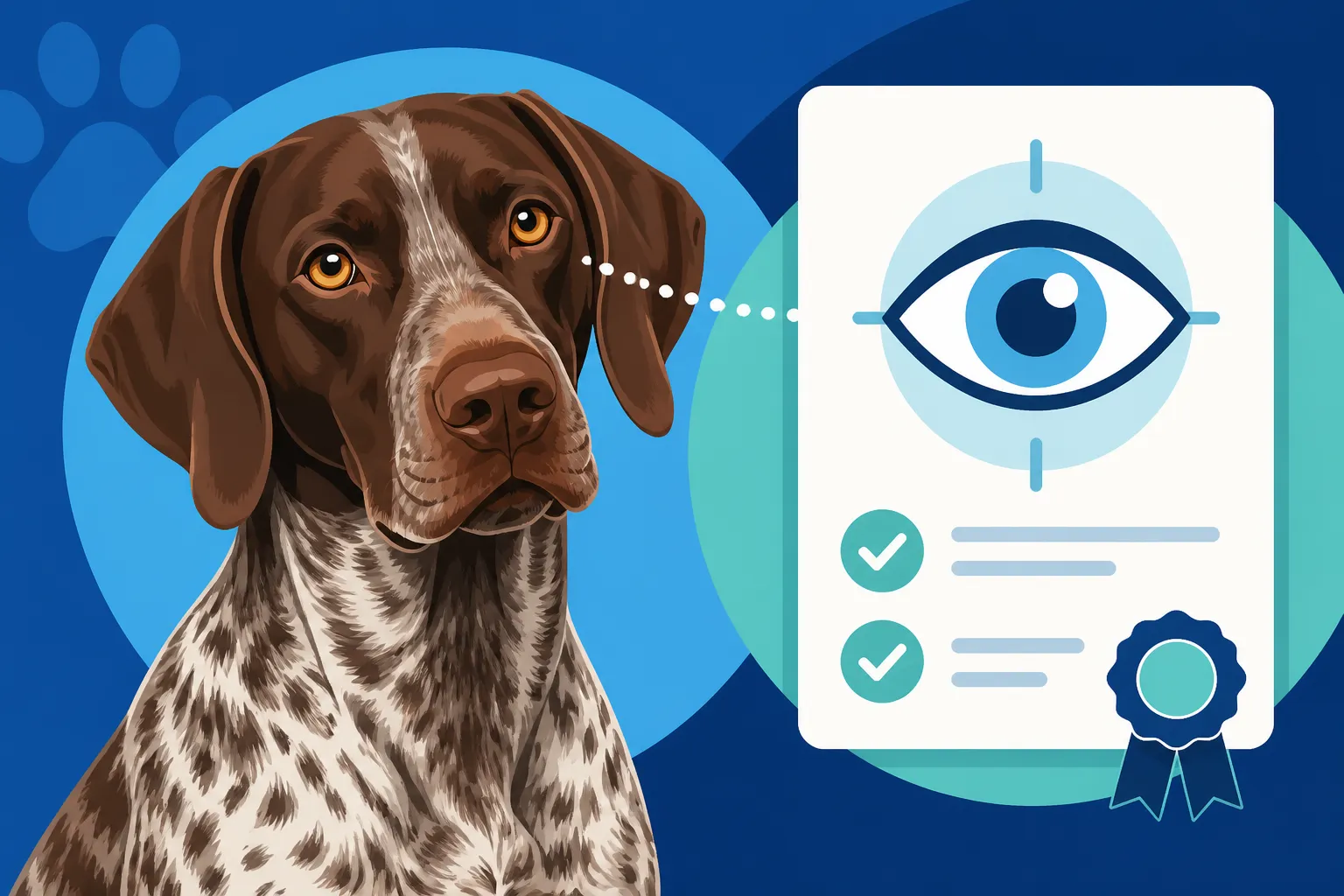
The CAER form itself is a standardized document designed by the ACVO for consistency across examinations. It typically includes sections for identifying the dog (breed, name, registration numbers, microchip), the owner, the examining ophthalmologist, and most importantly, the findings of the actual eye exam.
You'll see a diagram of an eye, often with various structures labeled. The ophthalmologist systematically examines different parts of the eye, from the outer lids and eyelashes to the retina at the very back. For each structure, they'll note whether it appears "normal" or if there are any "abnormalities." These abnormalities are often accompanied by specific codes or abbreviations. For instance, you might see "RD" for Retinal Dysplasia, "PPM" for Persistent Pupillary Membranes, or "CAT" for Cataracts. Understanding these abbreviations is key. It's not just about a blanket "normal" or "abnormal" statement; it's about pinpointing exactly what was found and where. Remember, some conditions are congenital (present at birth) while others are adult-onset. The certificate is a snapshot taken on the day of the exam. For a puppy, it might not reveal conditions that typically manifest later in life, which is why annual re-examinations are so important. If you’re ever unsure about a specific term on a certificate you're reviewing, don't hesitate to ask the breeder or your veterinarian for clarification.
Interpreting the Findings and Grades
The most critical part of the CAER form is the summary of findings and the overall classification. After the detailed examination of structures, the ophthalmologist will typically check boxes indicating the dog's overall status. These might include:
- Normal: This is the ideal outcome, meaning no signs of hereditary eye disease were found on the day of the examination.
- Affected: This indicates that the dog does have one or more hereditary eye conditions. The specific condition(s) will be listed, often with a severity grade (e.g., mild, moderate, severe).
- Breeder Option: This classification is a bit more nuanced. It means that while a condition was noted, it might not be considered a significant, vision-impairing hereditary disease, or its hereditary nature is uncertain. The ophthalmologist might offer specific notes or recommendations for breeding based on the condition.
It’s important to pay close attention to any specific conditions listed, even if the overall grade is "normal" for breeding. For example, a minor condition like a small Persistent Pupillary Membrane might be noted but deemed insignificant for the dog's vision or breeding suitability. However, other findings, even "mild" ones, could still indicate a genetic predisposition that future generations could inherit. The certificate often provides space for detailed comments from the ophthalmologist, which can offer valuable context and explain any specific observations beyond just the checkboxes. It's here that you might find advice on monitoring certain conditions or information that helps clarify the significance of a finding. Remember, a single "normal" finding on one certificate doesn't guarantee a dog will remain free of all eye diseases for life; it simply reflects their status at that particular examination. This is especially true for conditions like Progressive Retinal Atrophy (PRA), which can have a later onset.
Navigating the Practitioner's Notes and Recommendations
Beyond the checkboxes and abbreviations, the "Practitioner's Notes" section on a CAER form is where the real nuance often lies. This is the ophthalmologist's space to elaborate on any findings, provide context, and offer specific recommendations. For example, if a dog has a small, non-hereditary cataract from an injury, the ophthalmologist might note "Traumatic Cataract – Non-hereditary" in this section, clarifying that while a cataract exists, it's not a genetic concern for breeding. This distinction is incredibly important. You might also find details about findings that fall under the "Breeder Option" category, explaining why it's considered such, and what the potential implications are.
Sometimes, the notes might suggest follow-up exams or further diagnostic testing, such as a DNA test for specific conditions like Cone Degeneration and the Shorthair DNA Test for It. These recommendations are not to be taken lightly. They are expert advice aimed at ensuring the best possible health outcomes for the individual dog and for responsible breeding practices. Always read these notes carefully, and if anything is unclear, contact the examining ophthalmologist's office for clarification. This open communication is key to fully utilizing the information provided on the certificate and making truly informed decisions for your GSP's future.
Common Eye Conditions Found in German Shorthaired Pointers
German Shorthaired Pointers are generally robust dogs, but like all breeds, they have predispositions to certain health issues, including some hereditary eye conditions. Knowing what to look for and understanding the potential impact of these conditions is crucial for any GSP owner.
Cataracts and Progressive Retinal Atrophy (PRA)
Cataracts are a fairly well-known eye condition, where the lens of the eye becomes cloudy, obstructing the passage of light and leading to impaired vision. In GSPs, cataracts can be congenital (present from birth) or develop later in life. Hereditary cataracts are a concern for breeders, and the CAER exam aims to identify these. Depending on their size and location, cataracts can range from barely noticeable to causing significant vision loss, sometimes requiring surgical removal. It's not uncommon to see a GSP develop mild cataracts as they age, much like humans experience, but early-onset or rapidly progressing cataracts are more indicative of a genetic component.
Progressive Retinal Atrophy (PRA) is another serious inherited eye disease that affects the retina, the light-sensitive tissue at the back of the eye. PRA is a group of degenerative diseases that cause the photoreceptor cells in the retina (rods and cones) to deteriorate over time. Initially, dogs might experience Night Vision Loss in an Older Shorthair, gradually leading to complete blindness. There's no cure for PRA, but genetic testing is available for several forms of the disease, allowing breeders to make informed decisions and prevent passing on affected genes. If you're considering a GSP puppy, ask about PRA clearances and genetic testing results for the parents. Understanding the genetic status can save a lot of heartbreak down the line, although the onset can vary. For instance, some forms of PRA, like cone degeneration, might lead to Day Blindness in a German Shorthaired Pointer Puppy quite early in life, causing particular challenges in bright outdoor settings.
Entropion, Ectropion, and Distichiasis
These three conditions relate to the eyelids and eyelashes, and while they might not seem as serious as cataracts or PRA, they can cause significant discomfort and secondary problems for your GSP.
Entropion is a condition where the eyelid rolls inward, causing the eyelashes or hair on the skin to rub against the cornea (the clear front surface of the eye). Imagine having a constant eyelash in your eye—it's incredibly irritating. This rubbing can lead to chronic irritation, corneal ulcers, pain, and even vision impairment if left untreated. GSPs with entropion often show signs like excessive tearing, squinting, and pawing at their eyes.
Ectropion, on the other hand, is when the eyelid rolls outward, exposing the delicate conjunctiva (the pink membrane lining the inside of the eyelid) to the environment. This "droopy" eyelid can make the eye more susceptible to dryness, irritation from dust and debris, and recurrent infections. While it might look less immediately painful than entropion, the constant exposure can still cause significant issues. Some breeds naturally have a looser lower lid, but in GSPs, pronounced ectropion can be problematic, especially for a dog spending time in dusty fields or windy conditions. Dogs might have one or both conditions, and sometimes it's a mix. If you notice Rolled In Lids on a German Shorthaired Pointer, it's time for a vet visit.
Distichiasis refers to the presence of extra eyelashes (distichia) that grow from abnormal locations on the eyelid margin, often emerging from the oil glands within the eyelid itself, rather than from the normal lash follicles. These extra lashes can be soft and harmless, or they can be stiff and rub against the cornea, causing irritation, tearing, and potential corneal damage similar to entropion. Diagnosis usually involves a careful examination by an ophthalmologist, sometimes requiring magnification, to identify these errant hairs. Treatment for symptomatic distichiasis often involves surgical removal or cryosurgery (freezing) of the offending follicles to prevent regrowth. These eyelid and eyelash issues, while often treatable with surgery, can be uncomfortable and expensive to manage, highlighting why breeders screen for them.
Glaucoma and Other Less Common Issues
Glaucoma is another serious eye condition that can affect German Shorthaired Pointers, though it's generally less common than some other issues. This disease is characterized by an increase in intraocular pressure (pressure inside the eye), which, if left unchecked, damages the optic nerve and leads to irreversible blindness. Glaucoma can be primary (inherited) or secondary (caused by another eye disease or injury). Early signs might include a dilated pupil, a cloudy or blue appearance to the cornea, redness of the eye, and pain, which can manifest as squinting or rubbing the eye. It's a medical emergency, and rapid treatment is critical to try and preserve vision.
Beyond these, a CAER exam can also detect other, less common conditions. These might include Persistent Pupillary Membranes (PPMs), which are remnants of fetal blood vessels that didn't fully regress, sometimes causing vision impairment. A Prolapsed Third Eyelid on a Young Shorthair, also known as "cherry eye," while not always listed on a CAER form unless it's present at the time of examination, can also occur. While not typically considered hereditary in GSPs, any abnormality of the third eyelid warrants veterinary attention. Sometimes, conditions like corneal dystrophy, where the cornea becomes cloudy, can be noted, or even early signs of Cloudy Eyes in a Shorthair Past Ten which could indicate nuclear sclerosis, a normal aging change, or something more serious. The thoroughness of the ACVO exam means they're looking for everything, from the obvious to the subtle.
Understanding the "Breeding Recommendation"
The ultimate goal of a CAER eye certificate, particularly for breeders, is to provide guidance on whether a dog is suitable for passing on its genes. This "breeding recommendation" is based on the ophthalmologist's assessment of hereditary eye diseases.
"Clear" vs. "Affected" vs. "Carrier" Status
When you look at the final section of a CAER form, you'll see a specific breeding recommendation, typically categorized as "Clear," "Affected," or sometimes implicitly, a "Carrier" status if genetic testing is also available.
A dog deemed "Clear" (or "Normal" for breeding) means that the examining ACVO ophthalmologist found no evidence of any hereditary eye disease on the day of the examination. This is the gold standard for breeding stock, indicating that the dog is unlikely to pass on known genetic eye conditions that were detectable at the time. However, it’s crucial to understand that "Clear" is a snapshot. Some conditions have a late onset, meaning a dog could be clear at two years old but develop a hereditary condition at six. This is why many breeders perform annual eye exams on their breeding dogs for as long as they are part of a breeding program.
An "Affected" status means that a hereditary eye disease was indeed identified in the dog. This could be anything from cataracts to retinal dysplasia or glaucoma. A dog with an "Affected" status should generally not be bred, as they are likely to pass on the genetic predisposition to their offspring. Responsible breeders will remove such dogs from their breeding program to prevent perpetuating these conditions within the breed line. The specific disease and its severity will be detailed in the notes section, providing clarity on the diagnosis.
The term "Carrier" typically applies to conditions for which a specific DNA test is available. For example, for certain forms of PRA or cone degeneration, a dog might carry one copy of the gene for the disease but not actually be affected themselves. They are phenotypically normal (appear healthy) but can pass the gene to their puppies. While not "Affected," breeding two carriers together is a recipe for producing "Affected" puppies, as each puppy would have a 25% chance of inheriting two copies of the problematic gene. Therefore, even carriers require careful consideration in a breeding program, often being bred only to "Clear" mates to avoid producing affected offspring. This is where Breeding Two Cone Degeneration Carrier Shorthairs becomes a serious discussion.
Implications for Breeding Decisions and the Breed Standard
The breeding recommendation on a CAER certificate carries significant weight for responsible German Shorthaired Pointer breeders. When a dog receives a "Clear" rating, it adds confidence to their breeding value, demonstrating a commitment to health. Breeders often showcase these certificates proudly, and prospective puppy buyers should always ask to see them. This transparency helps ensure that you're getting a puppy from parents who have been screened for common hereditary eye diseases, minimizing the risk of future health issues for your new companion. If you're looking for a working dog, clear eyes are non-negotiable.
Conversely, an "Affected" status is a clear signal not to breed that particular dog. While it can be heartbreaking for a breeder to remove a beloved dog from their program, it's an ethical imperative. Breeding an affected dog knowingly can perpetuate suffering and diminish the overall health of the German Shorthaired Pointer breed. Sometimes, a "Breeder Option" might prompt a nuanced decision. For minor, non-progressive conditions, an ophthalmologist might approve breeding with caution, perhaps recommending that the dog only be bred to a mate with multiple generations of clear eye certifications. However, any finding that poses a risk to vision or quality of life should strongly caution against breeding. Adherence to these recommendations helps maintain the integrity and health of the breed, ensuring that the next generation of GSPs is as healthy and capable as possible.
When a Certificate Expires and the Need for Annual Exams
One common misconception is that an eye certificate, once issued, is valid for a dog's entire life. This is absolutely not the case. The CAER certificate explicitly states that it is a certification of the dog's ocular health on the date of examination. Many hereditary eye conditions, particularly those that are progressive, can develop or become evident later in a dog's life. This is why these certificates effectively "expire" annually.
For breeding animals, the standard practice is to have an The ACVO Eye Exam a Shorthair Needs Each Year performed and a new certificate issued before each breeding. This ensures that the most current information about the dog's eye health is available. For pet GSPs, while annual certification might not be necessary, a regular eye check-up with your general veterinarian, and possibly a referral to a veterinary ophthalmologist if any concerns arise, is still highly recommended. Conditions like The Skin Tumors Shorthairs Get Younger Than Most or other general health issues might manifest with secondary eye symptoms, so a comprehensive annual exam is part of a good preventative health program. Ignoring annual exams could mean missing the early signs of a developing issue, making treatment more difficult or less effective down the line. Remember, preventative care is often less costly and stressful than reactive treatment.
What to Do If Your GSP Has an Eye Condition
Receiving news that your German Shorthaired Pointer has an eye condition can be incredibly distressing. It's natural to feel overwhelmed, but remember, many conditions are manageable, and early intervention is key.
Consulting with a Veterinary Ophthalmologist
If your GSP's eye certificate indicates an abnormality or your regular veterinarian identifies a concern, the very first step is to consult with a board-certified veterinary ophthalmologist. These specialists have advanced training and equipment specifically for diagnosing and treating canine eye diseases. They can provide a definitive diagnosis, explain the prognosis, and outline all available treatment options. It’s important not to panic or rely solely on internet searches, as every case is unique.
When you go for this consultation, bring all relevant paperwork, including the CAER certificate, any previous vet records, and a list of any symptoms you've observed (e.g., squinting, excessive tearing, redness, changes in vision, Signs a German Shorthaired Pointer's Day Vision Is Failing). The ophthalmologist will perform a thorough examination, which may include specialized tests like tonometry (to measure eye pressure for glaucoma), electroretinography (ERG) for retinal function, or ultrasound of the eye. They will explain everything in detail, often showing you images or diagrams to help you understand your dog's specific condition. Don't be afraid to ask questions, no matter how small they seem. You are your GSP's best advocate, and understanding their condition fully empowers you to make the best decisions for their care.
Management and Treatment Options for Eye Conditions
The management and treatment options for your GSP's eye condition will vary dramatically depending on the specific diagnosis, its severity, and whether it's progressive.
For some conditions, like mild forms of distichiasis or certain eyelid abnormalities, surgical intervention might be a one-time fix. For conditions like entropion or ectropion, surgery to correct the eyelid position is often very successful at resolving discomfort and preventing corneal damage. In cases of cataracts that are significantly impacting vision, surgical removal and replacement with an artificial lens can restore sight, though it's a specialized and costly procedure.
Other conditions, such as glaucoma, require lifelong medical management with eye drops to control intraocular pressure. This can be a daily commitment, and while it doesn't cure the disease, it can help preserve remaining vision and manage pain. Unfortunately, for diseases like Progressive Retinal Atrophy (PRA), there is currently no cure, and management focuses on supporting the dog as their vision deteriorates, ensuring their safety and comfort. This might involve creating a consistent home environment, using scent cues, and teaching new verbal commands to help them navigate. Even for non-hereditary issues like Eye Injuries a Shorthair Gets Running Heavy Cover, prompt veterinary care is crucial to prevent infection and permanent damage. Whatever the diagnosis, adhering strictly to the ophthalmologist's recommendations is paramount for the best possible outcome for your GSP.
| Eye Condition | Brief Description | Typical GSP Relevance | Treatment/Management |
|---|---|---|---|
| Cataracts | Clouding of the lens, impairing vision. | Can be inherited, congenital, or age-related. | Surgery (lens replacement) for significant cases; monitoring for mild cases. |
| Progressive Retinal Atrophy (PRA) | Degeneration of retinal cells, leading to eventual blindness. | Inherited in many breeds, including GSPs. Early detection via genetic tests. | No cure; support for adapting to blindness. Genetic testing for breeding. |
| Cone Degeneration | A specific form of PRA affecting cone photoreceptors, leading to day blindness. | Genetically tested in GSPs. Leads to difficulty seeing in bright light. | No cure; supportive care for visual impairment in daylight. Genetic testing. |
| Entropion | Eyelid rolls inward, causing lashes to rub cornea. | Can be inherited; causes pain, ulcers. | Surgical correction. |
| Ectropion | Eyelid rolls outward, exposing conjunctiva. | Less common as a severe issue in GSPs, but can cause dryness/infection. | Surgical correction if severe; lubricating drops. |
| Distichiasis | Extra eyelashes growing from abnormal spots, irritating cornea. | Can be inherited; causes irritation, corneal damage. | Surgical removal or cryosurgery of offending lashes. |
| Glaucoma | Increased intraocular pressure, damaging optic nerve, leading to blindness. | Can be primary (inherited) or secondary (due to injury/disease). A medical emergency. | Emergency eye drops to reduce pressure; surgery in some cases. |
| Persistent Pupillary Membranes (PPMs) | Remnants of fetal blood vessels in the eye. | Often benign, but can sometimes obstruct vision or cause complications. | Usually no treatment unless vision is impaired; monitoring. |
Financial Considerations and Pet Insurance
Let's be real, specialized veterinary care, especially for eye conditions, can be incredibly expensive. This is a common and understandable frustration for pet owners. Diagnostic tests, specialized equipment, medications, and potential surgeries can quickly add up to thousands of dollars. For instance, cataract surgery can easily run into the multi-thousand-dollar range per eye, and lifelong glaucoma management with daily eye drops isn't cheap either.
This is where planning ahead with pet insurance can make a huge difference. Many GSP owners, especially those with active dogs prone to Field Injuries a Hunting German Shorthaired Pointer Comes Home With, find that a comprehensive pet insurance policy is a lifesaver. Companies like Healthy Paws offer robust coverage that can help offset the costs of these unexpected veterinary bills. When choosing a policy, make sure to understand what's covered for hereditary and congenital conditions, as some plans have waiting periods or exclusions. For example, if an eye condition is diagnosed before your policy starts or during a waiting period, it might be considered a pre-existing condition and not be covered. Always read the fine print! Having a good insurance policy, such as one from Healthy Paws, can remove a significant financial burden, allowing you to focus on getting your GSP the best possible care without added stress. Even if you don't have insurance, discussing payment plans with your vet, or looking into financial aid programs, can help. The health of your GSP is priceless, but the reality is that their care comes with a price tag, and being prepared is vital.
Beyond the Certificate: Ongoing Eye Health
An eye certificate is a valuable tool, but it's just one part of ensuring your GSP maintains excellent vision throughout their life. Proactive care, vigilance, and regular veterinary attention go a long way.
Daily Eye Health Checks at Home
Even with a "clear" certificate, you are your GSP's first line of defense against eye issues. Incorporating a quick daily eye check into your routine can help you spot problems early. It only takes a minute! Gently look at your GSP's eyes. They should be clear, bright, and free of excessive discharge. The whites of their eyes (sclera) should be white, not red or yellow. The pupils should be the same size. Look for any squinting, pawing at the face, cloudiness, redness, or swelling around the eyelids. For an active German Shorthaired Pointer, especially one running through brush, foreign objects like grass awns or burrs can easily get lodged in or around the eye, causing irritation or injury.
Checking their eyelids for any rolling inward (entropion) or outward (ectropion) is also a good habit. You can gently pull down the lower lid to inspect the conjunctiva; it should be a healthy pink, not bright red or pale. If you notice any changes in their behavior, such as bumping into furniture, hesitating on stairs, or being disoriented in familiar surroundings, these could be subtle signs of vision impairment. Catching these changes early can make a huge difference in successful treatment and prognosis.
Recognizing Warning Signs of Eye Problems
Knowing the subtle and not-so-subtle signs of eye trouble can empower you to act quickly. German Shorthaired Pointers are stoic dogs and might not always vocalize discomfort, so observing their behavior is critical. Beyond the visual cues we discussed, pay attention to any changes in how your dog uses their eyes or interacts with their environment.
- Excessive Tearing or Discharge: A clear, watery discharge can be normal, especially after a run, but thick, colored (yellow, green), or excessive watery discharge often indicates infection or irritation.
- Redness: Redness in the white of the eye or around the eyelids can signal inflammation, allergy, or infection.
- Swelling: Any swelling of the eyelids or around the eye should prompt immediate veterinary attention.
- Squinting or Holding Eye Shut: This is a clear sign of pain or irritation.
- Cloudiness or Change in Eye Color: A blue haze, milky appearance, or any change in the iris color can indicate various serious conditions from corneal issues to glaucoma or cataracts. For an older GSP, some cloudiness, like Cloudy Eyes in a Shorthair Past Ten can be a normal aging change, but it should still be evaluated by a vet to rule out more serious issues.
- Paw-rubbing or Bumping Face: Persistent rubbing or pawing at the eyes or face suggests discomfort or pain.
- Changes in Pupil Size: Pupils that are unequal in size or do not respond normally to light can indicate neurological or eye disease.
- Reluctance to Go Outside or navigate in Certain Light: If your GSP suddenly avoids bright sunshine, it might be a sign of How a Day Blind Shorthair Behaves in Bright Sun or other light-sensitive conditions.
If you observe any of these signs, don't wait. Contact your veterinarian promptly. Early diagnosis and treatment are often critical for preserving vision and preventing further complications.
Proactive Care and Prevention Strategies
While you can't prevent all genetic eye conditions, there's a lot you can do to support your GSP's overall eye health. Start by choosing a puppy from a reputable breeder who performs all recommended health clearances, including annual CAER eye exams on their breeding stock. This reduces the risk of inheriting known genetic eye diseases.
Beyond genetics, daily care plays a huge role. Keep your GSP's face clean, especially after romping in the field, to prevent debris or irritants from causing problems. If your GSP is swimming regularly, especially in ponds or lakes, gently rinse their eyes with sterile saline solution afterward to flush out any potential bacteria or irritants. For dogs working in dense cover, consider eye protection, like specific dog goggles, to prevent physical injury. While not always practical for hunting, they can be useful in certain training scenarios or heavy brush. Ensuring your GSP has a balanced, high-quality diet that includes omega-3 fatty acids can also support overall eye health, as these nutrients are beneficial for retinal function. Regular check-ups as part of The Vet Schedule a Working Shorthair Should Keep will allow your vet to spot any developing issues early. Finally, if your GSP ever needs medication for an eye condition, like eye drops, be diligent with their administration. Consistency is key to managing chronic conditions and maximizing their effectiveness.
Disclaimer
The information provided in this guide is intended for informational purposes only and does not constitute veterinary medical advice. Always consult with a qualified veterinarian or veterinary ophthalmologist for any health concerns or before making any decisions about your German Shorthaired Pointer's medical care.