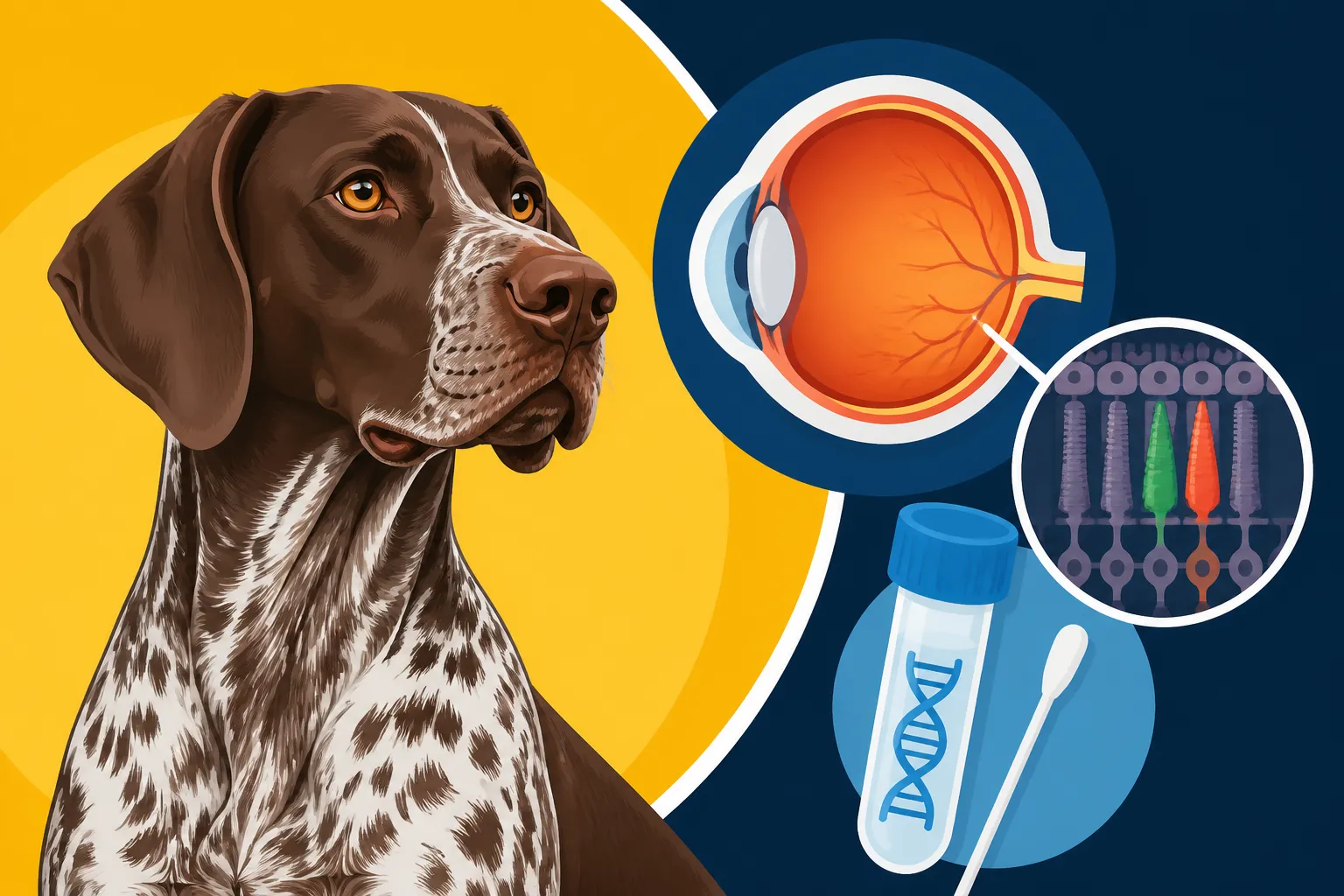
Cone Degeneration and the Shorthair DNA Test for It
It’s truly heartbreaking to watch your vibrant German Shorthaired Pointer, a dog bred for boundless energy and keen senses, struggle with something as fundamental as vision. When you start noticing your shorthair bumping into things in a brightly lit room or hesitant to retrieve in full daylight, it’s natural to feel a knot of worry tighten in your stomach. This guide is here to walk you through understanding cone degeneration in German Shorthaired Pointers and how modern DNA testing can offer clarity and guide responsible care and breeding decisions.
What is Cone Degeneration and How Does It Affect German Shorthaired Pointers?
German Shorthaired Pointers are incredible athletes, known for their sharp eyes and even sharper minds in the field. So, when their vision starts to falter, especially in specific conditions, it can be incredibly confusing and distressing for their owners. Cone degeneration is a primary retinal disease that specifically impacts the cone photoreceptor cells in the eye, which are responsible for vision in bright light and color perception. Unlike some other eye conditions that affect night vision or peripheral sight, cone degeneration makes sunny days and well-lit environments a challenge.
The Role of Cones in Canine Vision
To really grasp what's happening, let's talk a little about how your GSP sees the world. Inside their eyes, on the retina, there are millions of specialized cells called photoreceptors. These come in two main types: rods and cones. Rods are superstars in low light, giving your dog excellent night vision, which is a huge advantage when they’re moving through brush at dusk. Cones, on the other hand, are the cells that kick in during brighter conditions, allowing for detailed vision and, to some extent, color differentiation. While dogs don't perceive the full spectrum of colors like humans do, their cones are still vital for navigating their environment confidently when the sun is high or the lights are on.
When a German Shorthaired Pointer suffers from cone degeneration, these crucial cone cells start to break down and die off. This isn't a sudden event; it's a progressive disease. As more and more cones degenerate, the dog’s ability to see clearly in bright light diminishes significantly. It's like trying to see through a fog when the sun is shining directly at you, making even familiar surroundings disorienting. This loss of day vision, often referred to as hemeralopia, is the hallmark symptom, leaving your otherwise healthy dog struggling with daily activities that most dogs take for granted.
Symptoms and Progression of Cone Degeneration
The first signs of cone degeneration in a German Shorthaired Pointer typically appear relatively early in life, often between 8 to 12 weeks of age, sometimes even up to a year. This is why many owners might mistake initial clumsiness or hesitation for typical puppy antics at first. However, if you observe your young GSP becoming noticeably hesitant or bumping into objects when transitioning from a dim area to a bright, sunny yard, or if they struggle to find their toys in a brightly lit room, these are definite red flags.
As the condition progresses, you might notice your GSP’s pupils becoming abnormally dilated, even in bright light, as their eyes try to let in more light to compensate for the failing cones. This isn't just a minor inconvenience; it can severely impact their ability to perform tasks requiring good daylight vision. Imagine a hunting dog that excels at tracking scent but can't confidently navigate open fields during a sunny afternoon hunt because they can't see the ground clearly or perceive obstacles. This struggle can be frustrating for both dog and owner, leading to decreased confidence and potentially even anxiety in bright environments. It’s critical to understand that this isn’t a pain-related issue, but purely a visual one, and your dog isn't being stubborn – they genuinely can't see well. You might want to refer to Signs a German Shorthaired Pointer's Day Vision Is Failing for a more detailed look at what to watch for.
Impact on a German Shorthaired Pointer's Daily Life
The daily impact of cone degeneration on a German Shorthaired Pointer can be profound. For a breed that thrives on activity, exploration, and field work, losing effective daylight vision can be devastating. A GSP that once loved to chase frisbees in the park on a sunny afternoon might now refuse to venture out, preferring the shade or indoors. They may become less enthusiastic about games of fetch or retrieving birds if it means navigating blinding sunlight. This isn't just about hunting performance; it's about their overall quality of life as a companion animal.
Simple things like going for a walk on a sunny street or playing in a well-lit dog park become challenging. Your dog might cling closer to you, relying on your presence and their other senses to guide them. It can lead to a decrease in their usual joyful exuberance and an increase in cautious, sometimes anxious, behavior in conditions where their vision is compromised. Owners often report seeing their dogs freeze at the threshold of a brightly lit area, or move much slower and more deliberately. It’s easy to feel helpless when your dog is facing such a fundamental challenge, but understanding the condition is the first step toward providing them with the best possible support and environment. If you're seeing these behaviors, you might also find insight in How a Day Blind Shorthair Behaves in Bright Sun.
Identifying the Genetic Cause: The Shorthair DNA Test for Cone Degeneration
For years, diagnosing cone degeneration relied heavily on clinical signs and specialized veterinary ophthalmology exams, which could be inconclusive in early stages or require expensive, invasive procedures. However, thanks to incredible advancements in canine genetics, we now have a powerful tool: a specific DNA test for cone degeneration in German Shorthaired Pointers. This test doesn't just confirm the condition; it identifies the genetic mutation responsible for it, providing definitive answers and invaluable information for current and future care.
Understanding the DNA Test for CNGA3
The genetic basis for cone degeneration in German Shorthaired Pointers has been identified as a specific mutation in the CNGA3 gene. This gene is vital for the proper function of the cone photoreceptor cells. When a GSP inherits two copies of this mutated gene, the cones don't develop or function correctly, leading to their eventual degeneration and the characteristic day blindness. The good news is that this is a straightforward recessive genetic condition, which means the test can accurately determine if a dog is clear (no copies of the mutation), a carrier (one copy of the mutation), or affected (two copies of the mutation).
The DNA test is a simple, non-invasive procedure, usually performed using a cheek swab or a small blood sample. This sample is then sent to a specialized veterinary genetics laboratory, such as those offered by services like Embark or OptiGen, who are recognized for their comprehensive genetic panels for various breeds. The ease of testing means breeders can confidently screen their breeding stock, and pet owners can get peace of mind or prepare for a potential diagnosis. This proactive approach significantly reduces uncertainty and empowers owners and breeders to make informed decisions for their dogs' health. For more on the specifics, check out The Gene Behind Cone Degeneration in Shorthairs.
Interpreting Test Results: Clear, Carrier, or Affected
When you receive the results of your GSP’s cone degeneration DNA test, they will fall into one of three categories, each with distinct implications:
- Clear (or Normal): This result means your German Shorthaired Pointer does not have any copies of the CNGA3 mutation. They are genetically free of cone degeneration and cannot pass the disease on to their offspring. This is the ideal result for any breeding animal, ensuring they contribute healthy genetics to the next generation.
- Carrier: A GSP that is a carrier has inherited one copy of the CNGA3 mutation, but also one normal copy. Because cone degeneration is a recessive condition, carriers themselves are typically healthy and will not develop day blindness. They carry the gene silently, meaning they can pass the mutation on to approximately 50% of their offspring. This is crucial information for breeders, as breeding two carriers together can result in affected puppies.
- Affected: This result indicates that your German Shorthaired Pointer has inherited two copies of the CNGA3 mutation – one from each parent. Dogs with this result will develop cone degeneration and exhibit symptoms of day blindness, usually starting in puppyhood. For these dogs, the test confirms the cause of their vision impairment, allowing owners to focus on supportive care and environmental adaptations.
Understanding these results is foundational to both managing an affected dog and making responsible breeding choices. It empowers you to navigate the future with knowledge rather than speculation.
Here's a quick summary table of what these results mean:
| Result Category | Genetic Makeup | Will the Dog Be Affected? | Can the Dog Pass the Gene? | Breeding Implications |
|---|---|---|---|---|
| Clear | Two normal gene copies | No | No | Can be bred to any dog without producing affected offspring. |
| Carrier | One normal, one mutated | No (typically) | Yes (50% chance per pup) | Should only be bred to a Clear dog to avoid affected pups. |
| Affected | Two mutated gene copies | Yes | Yes (100% chance per pup) | Should not be used for breeding. |
When and How to Test Your Shorthair
The beauty of the DNA test is its simplicity and accuracy. Ideally, German Shorthaired Pointer breeders should test all potential breeding animals before they are bred. This proactive step helps them ensure they are not inadvertently producing affected puppies. For breeders, testing is a foundational part of responsible breeding practices, often alongside other health clearances like OFA for hips and elbows, and cardiac evaluations.
For pet owners, if you’ve purchased a puppy and are starting to notice early signs of day blindness, getting your dog tested can provide a definitive diagnosis. It removes the guesswork and allows you to confirm if cone degeneration is indeed the cause, rather than another eye condition. You can often obtain a testing kit directly from a reputable veterinary genetics lab or through your veterinarian. The process typically involves a simple cheek swab collection that you can often do at home, then mailing it back to the lab. Results usually take a few weeks. The cost is relatively low, especially when considering the peace of mind and the valuable information it provides. It's truly an investment in your dog's future, and knowing whether your dog is clear, a carrier, or affected can help you plan for their health care, potentially even with insurance providers like Healthy Paws if you're considering coverage for unexpected health issues. More information on this can be found at Ordering a Cone Degeneration Test on a Shorthair Puppy.
Living with a Cone Degeneration Affected German Shorthaired Pointer
Receiving an "affected" diagnosis for cone degeneration can be tough, especially for a breed like the German Shorthaired Pointer that thrives on visual input and outdoor adventures. It’s natural to feel a mix of sadness, frustration, and worry for your beloved companion. However, it's crucial to remember that this condition, while impacting daylight vision, doesn't diminish your dog's spirit, intelligence, or capacity for love. With a few thoughtful adaptations and a deep understanding of their needs, an affected GSP can still live a full, happy, and enriching life.
Adapting Your Home for a Vision-Impaired Dog
Creating a safe and navigable home environment is paramount for a GSP with cone degeneration. Since their primary struggle is in bright light, focus on managing light levels indoors and ensuring consistency. During the day, you might find that slightly dimming rooms or drawing curtains can make a significant difference in their comfort and ability to navigate. Avoid sudden changes in lighting conditions.
Beyond light, consistency is key. Try to keep furniture and object placement consistent. Dogs with visual impairment develop a mental map of their surroundings, and sudden changes can be very disorienting and lead to unnecessary bumps or falls. Consider using tactile markers, like different textured mats, to signal doorways or steps. For outdoor access, ensure pathways are clear of obstacles, and consider a consistent routine for potty breaks. Their sense of smell and hearing become even more critical, so allow them to explore with these senses. It's amazing how well they adapt, learning to rely more heavily on their other senses once their vision is compromised.
Maintaining Activity and Mental Stimulation
Just because your GSP's day vision is affected doesn't mean their need for physical and mental exercise disappears. German Shorthaired Pointers are high-energy dogs, and maintaining their activity levels is vital for their well-being. Focus on activities that don't heavily rely on sharp daylight vision. Early mornings or late evenings, when the light is softer, can be perfect for walks, retrieves, or off-leash play in a safe, familiar, fenced area. In these conditions, their rod-dominated night vision will serve them well.
Introduce scent work and puzzle toys to engage their powerful noses and minds. Hide-and-seek with treats, or specialized snuffle mats, can provide hours of engaging mental stimulation. Water retrieves can also be excellent, as the feel of the water and the splash of the retrieved object offer different sensory cues. Using verbal cues and consistent commands becomes even more important. Teach them specific words for "step up," "slow down," "wait," or "obstacle" to help them navigate. Remember, their minds are still sharp, and they crave a job to do. Keeping them active helps manage their inherent energy and prevents them from becoming bored or anxious.
When to Consult a Veterinary Ophthalmologist
While the DNA test provides a definitive diagnosis of cone degeneration, regular check-ups with a veterinary ophthalmologist are still incredibly valuable. These specialists can monitor the progression of the condition, ensure there are no secondary issues developing, and offer guidance on pain management if any complications arise (though primary cone degeneration itself isn't painful). They can also rule out other eye conditions that might have similar symptoms or co-exist, ensuring your dog receives the most accurate and comprehensive care.
A veterinary ophthalmologist can also provide personalized advice on environmental adaptations, diet, and general eye health maintenance. For instance, they might suggest specific sunglasses for dogs (called Doggles) for very bright days to reduce glare and discomfort, though this varies from dog to dog. While there is currently no cure for cone degeneration, managing its impact and ensuring your GSP's comfort and quality of life is paramount. Consider discussing the long-term management costs with your vet and exploring options for pet insurance, as many providers, including Healthy Paws, offer plans that can help with veterinary expenses, though genetic conditions might have specific clauses depending on when the policy was enacted. Regular consultations are a key part of your The Vet Schedule a Working Shorthair Should Keep and ensuring their overall health.
Breeding Responsibly: Preventing Cone Degeneration in German Shorthaired Pointers
The knowledge gained from the CNGA3 DNA test is invaluable, not just for individual dog owners, but for the German Shorthaired Pointer breed as a whole. Understanding the genetics of cone degeneration empowers responsible breeders to make informed choices that can reduce, and eventually eliminate, the incidence of this debilitating condition in future generations. This isn't just about avoiding "bad" genes; it's about preserving the health and legacy of a magnificent breed.
Genetics 101: Autosomal Recessive Inheritance
Cone degeneration in GSPs follows an autosomal recessive inheritance pattern. What this means in simple terms is that for a dog to actually be affected by the disease and show symptoms, it must inherit two copies of the mutated gene – one from its mother and one from its father.
- If a dog inherits one mutated gene and one normal gene, it will be a "carrier." Carriers typically show no symptoms themselves because the single normal gene provides enough proper function for their cones. However, they can pass the mutated gene on to their offspring.
- If two carriers are bred together, statistically, each puppy in the litter has a 25% chance of being affected, a 50% chance of being a carrier, and a 25% chance of being clear. This is why testing is so critical, especially for breeding dogs. Without testing, breeders might unknowingly pair two carriers, leading to heartache for puppy buyers. Understanding this basic genetic principle is the cornerstone of preventing the spread of such conditions. For a deeper dive, review Breeding Two Cone Degeneration Carrier Shorthairs.
Breeding Strategies to Avoid Affected Puppies
With the CNGA3 DNA test readily available, responsible breeding strategies become much clearer. The primary goal is to avoid producing affected puppies. This can be achieved through careful selection of breeding pairs:
- Clear x Clear: The safest breeding combination. All puppies will be clear and will not develop cone degeneration or be carriers. This is the ideal scenario for maintaining a healthy line.
- Clear x Carrier: This pairing will produce approximately 50% clear puppies and 50% carrier puppies. None of the puppies will be affected by the disease. While carriers are produced, they are perfectly healthy as pets. If one of these carrier offspring is later considered for breeding, it too would need to be tested and paired only with a clear dog. This strategy allows breeders to maintain diversity in their lines while carefully managing the gene.
- Clear x Affected: Similar to Clear x Carrier, this pairing would produce 100% carrier puppies. While no puppies would be affected, all would be carriers, meaning this is not a recommended pairing if other options exist, as it increases the carrier load in the population.
What is absolutely to be avoided is breeding two carriers together, or a carrier with an affected dog, as these pairings guarantee the production of affected puppies. The test empowers breeders to make responsible choices that safeguard the health of the German Shorthaired Pointer breed. You can also explore Whether a Carrier Shorthair Ever Loses Its Sight to understand why carriers are often symptom-free.
The Ethical Breeder's Role in Health Testing
An ethical German Shorthaired Pointer breeder understands that their responsibility extends far beyond producing pretty puppies. It encompasses preserving the health, temperament, and working ability of the breed. This means being transparent about health testing, including the CNGA3 DNA test, and using the results to make informed breeding decisions.
Reputable breeders will openly provide the health testing results for their breeding stock, often listing them on databases like the Orthopedic Foundation for Animals (OFA) or through direct documentation. They won't shy away from discussing carrier status, but rather explain how they manage it responsibly within their breeding program. They understand that while a carrier dog itself is healthy, breeding it carelessly can lead to significant problems down the line. Ethical breeders invest time and resources into understanding canine genetics, consulting with veterinary specialists, and diligently working to minimize the incidence of inherited diseases. This dedication helps ensure that families adopting a GSP puppy can do so with confidence in their new companion's health and future well-being. Look for breeders who openly share their GSPs' OFA and eye results, as detailed in Reading a German Shorthaired Pointer's Eye Certificate.
Beyond Cone Degeneration: Other GSP Eye Health Concerns
While cone degeneration is a specific and impactful condition, it’s just one piece of the larger puzzle of German Shorthaired Pointer eye health. Our GSPs are prone to a few other ocular issues, some inherited, others acquired, that every owner should be aware of. Staying informed and proactive about your GSP’s overall eye health is crucial for their comfort, happiness, and ability to engage in the activities they love.
Other Inherited Eye Conditions in GSPs
Beyond cone degeneration, German Shorthaired Pointers can be susceptible to a handful of other inherited eye conditions. Progressive Retinal Atrophy (PRA) is another significant concern, which is a group of genetic diseases that cause the gradual degeneration of the retina, eventually leading to blindness. Unlike cone degeneration which affects day vision, many forms of PRA first affect night vision (rod cells) before progressing to complete blindness. Thankfully, DNA tests are available for some specific forms of PRA found in other breeds, and research continues for GSPs.
Another condition to be aware of is entropion, where the eyelid rolls inward, causing the eyelashes to rub against the cornea. This can be incredibly painful and lead to corneal ulcers and infections. While often evident in puppies, it can sometimes manifest later. There are also cataracts, which are opacities in the lens of the eye that impair vision. While cataracts can be age-related, some forms are inherited and can appear earlier in life. While these are distinct from cone degeneration, they underscore the importance of comprehensive eye health screening in breeding dogs and vigilance in pet owners.
Routine Eye Care and Check-ups
Just like their people, German Shorthaired Pointers benefit from routine eye care and regular check-ups with a veterinarian. Even if your GSP comes from health-tested parents and seems perfectly healthy, accidents and other issues can arise. Regularly inspecting your dog’s eyes at home is a simple yet effective practice. Look for signs of redness, discharge, excessive tearing, cloudiness, or any changes in pupil size or reactivity. Keep the area around their eyes clean, gently wiping away any debris with a soft, damp cloth.
During your GSP's annual veterinary visits, always ask your vet to perform a thorough eye examination. They can spot subtle changes or early signs of issues that might be missed at home. Early detection of many eye conditions, whether inherited or acquired, can often lead to more successful treatment outcomes and better preservation of your dog’s vision and comfort. This diligent approach is simply part of being a responsible German Shorthaired Pointer owner, ensuring their keen eyesight remains as sharp as their drive.
The Importance of a Comprehensive Eye Exam
While DNA tests are invaluable for diagnosing specific genetic conditions like cone degeneration, they don't cover every potential eye problem. This is where a comprehensive eye exam by a board-certified veterinary ophthalmologist becomes critically important, especially for breeding dogs. The American College of Veterinary Ophthalmologists (ACVO) recommends annual eye examinations for breeding animals to screen for hereditary eye diseases that may not yet have a specific DNA test or to identify conditions that are not genetic in origin.
These exams involve more than just a quick look. The ophthalmologist will typically examine the eyelids, conjunctiva, cornea, anterior chamber, iris, lens, and retina, often using specialized equipment and dilating drops to get a clear view of the deeper structures of the eye. This thorough assessment can detect a wide range of issues, from subtle structural abnormalities to early signs of diseases like PRA, glaucoma, or cataracts. The information gathered from these exams, combined with DNA test results, provides the most complete picture of a German Shorthaired Pointer's eye health, helping breeders make the most responsible decisions and giving pet owners peace of mind.
Disclaimer
The information provided in this article is for general informational purposes only and is not a substitute for professional veterinary advice. Always consult with a qualified veterinarian or veterinary specialist for any health concerns or before making any decisions related to your German Shorthaired Pointer's health or treatment plan.