Whether a German Shorthaired Pointer Tears Both Knees
It's every active dog owner's worst nightmare: seeing your beloved German Shorthaired Pointer suddenly favoring a leg, or worse, going lame. The fear of a torn cruciate ligament (ACL) is particularly acute for those of us with these high-energy, athletic companions. But what if it's not just one knee? Many GSP owners, in their darkest moments, worry about the dreaded possibility of their dog tearing both knees, and today, we're going to dive deep into just how common, and how challenging, this situation can be.
Understanding Cruciate Ligament Injuries in German Shorthaired Pointers
When we talk about a "torn knee" in a dog, we're almost always referring to a rupture of the cranial cruciate ligament (CCL), often called the anterior cruciate ligament (ACL) in humans. This isn't just a minor sprain; it's a significant injury that can severely impact your German Shorthaired Pointer's ability to run, jump, and enjoy their active life. For a breed like the GSP, whose entire purpose and joy revolves around explosive movement, a torn CCL can feel utterly devastating.
What is a Cranial Cruciate Ligament (ACL) Tear?
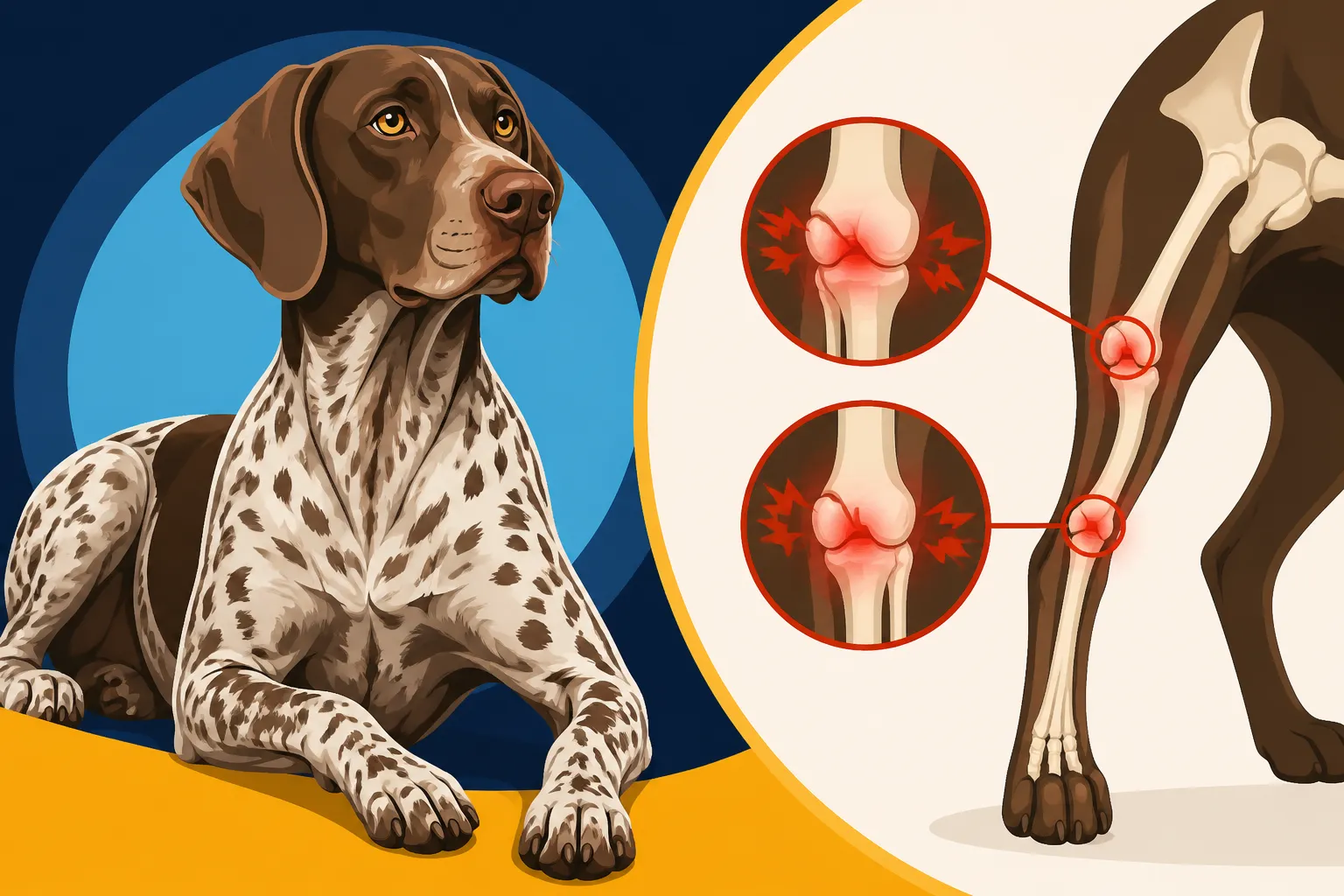
The cranial cruciate ligament is a vital band of fibrous tissue located inside the knee joint of your German Shorthaired Pointer, connecting the femur (thigh bone) to the tibia (shin bone). Its primary job is to prevent the tibia from sliding forward relative to the femur, as well as to limit excessive internal rotation of the joint. Think of it as one of the main stabilizing ropes holding a tent pole upright. When this "rope" tears, the knee joint becomes unstable, leading to pain, inflammation, and abnormal movement.
For a German Shorthaired Pointer, whose daily life often involves sudden stops, sharp turns, powerful leaps, and vigorous retrieves, the CCL is under immense stress. Unlike in humans where an ACL tear often results from acute trauma, in dogs, especially larger, active breeds, it's frequently a degenerative process. This means the ligament weakens over time, micro-tears accumulate, and then a seemingly innocuous movement can cause the final, full rupture. This gradual degradation can be incredibly frustrating for owners who feel like their dog "just woke up" with a limp, not understanding the underlying wear and tear that might have been happening silently.
Why German Shorthaired Pointers Are Prone to Knee Issues
German Shorthaired Pointers are exceptional athletes, known for their incredible speed, stamina, and agility in the field. This very athleticism, however, coupled with certain genetic and conformational predispositions, makes them particularly susceptible to CCL injuries. Their powerful hindquarters and explosive drive, while perfect for chasing pheasants across a stubble field, also put immense strain on their knee joints.
Firstly, their inherent drive and "never quit" attitude can sometimes lead them to push through discomfort, potentially exacerbating minor issues before they're noticed. A GSP isn't likely to slow down just because their knee feels a little off; they'll often continue to work or play until a full tear occurs. Secondly, breed conformation plays a role. Some GSPs may have a steeper tibial plateau angle (TPA) in their knee joint. This angle naturally causes the tibia to thrust forward under weight-bearing, putting constant stress on the CCL. Over time, this mechanical disadvantage can lead to weakening and eventual rupture. Finally, genetics can certainly be a factor, with certain lines showing a higher incidence of CCL tears. Responsible breeders often screen their dogs for orthopedic issues, but it's not always a clear-cut genetic inheritance. Weight is another huge contributor; even a few extra pounds on an already active German Shorthaired Pointer can significantly increase the load on their knees, accelerating the degenerative process.
The Risk of Tearing Both Knees Sequentially or Simultaneously
This is where the real dread sets in for many GSP owners. It's one thing to deal with an injury on one side, but the prospect of both knees being compromised can feel overwhelming. Unfortunately, it's a very real concern for breeds predisposed to CCL tears, including our beloved German Shorthaired Pointers. The biomechanics of how dogs compensate for one injury often pave the way for another.
Contralateral CCL Rupture: The Other Knee
It's a disheartening statistic, but if your German Shorthaired Pointer has torn one cranial cruciate ligament, there's a significant chance — often cited as 40-60% within a year or two — that they will tear the CCL in their other knee. This is known as a contralateral CCL rupture. The reason for this high incidence isn't a mystery; it's rooted in how dogs move and adapt after an injury.
When one knee is injured, the dog naturally shifts more weight and strain to the "good" leg to compensate for the instability and pain in the injured one. This increased load on the previously healthy knee means it is now subjected to much greater forces than it was designed for, especially during the powerful, athletic bursts that are characteristic of a GSP. If the ligaments in that "good" knee are already undergoing the same slow, degenerative process as the first, this added stress acts like the final straw, pushing it towards rupture. It's a cruel irony that in trying to protect the injured leg, we inadvertently put the other one at severe risk. Owners often report that the second knee gives out just as they've begun to feel relief and progress with the first.
Factors Increasing the Risk of Bilateral Tears
Several factors can increase the likelihood of your German Shorthaired Pointer experiencing bilateral (both knees) CCL tears. Understanding these can help you be proactive, though sometimes, despite our best efforts, it's simply out of our control.
Firstly, as mentioned, genetics and underlying joint conformation play a huge role. If your GSP comes from lines where bilateral tears are common, their risk is inherently higher. Discussing orthopedic history with your breeder is critical. Secondly, weight management cannot be stressed enough. An overweight GSP carries an excessive burden on all its joints, exponentially increasing the stress on the CCLs. Keeping your dog lean and at a healthy weight, especially if one knee has already been injured, is paramount. Thirdly, activity level and type of exercise matter. While GSPs need a lot of exercise, uncontrolled, high-impact activities on slippery surfaces can be riskier than sustained, moderate exercise on varied terrain. Even when rehabilitating one knee, it's easy for a GSP to overdo it on the "good" leg. Lastly, the presence of other underlying orthopedic issues like patellar luxation or hip dysplasia can alter gait and put uneven stress on the knees, contributing to the risk. Early diagnosis and intervention for the first tear, including a detailed discussion with your vet about the health of the other knee, are crucial. Some veterinarians might even discuss a prophylactic procedure on the "good" knee in certain high-risk situations, though this is a significant decision. Pet insurance providers like Healthy Paws can be a lifesaver when dealing with such complex and expensive issues, potentially covering a large portion of the veterinary costs for multiple surgeries and rehabilitation.
Recognizing the Signs and Getting a Diagnosis
Spotting a torn cruciate can sometimes be tricky with a stoic breed like the German Shorthaired Pointer, who often tries to tough it out. However, knowing what to look for can significantly shorten the time between injury and diagnosis, which can be crucial for successful treatment and preventing further damage.
Symptoms of a Torn Cruciate in a German Shorthaired Pointer
The signs of a torn CCL in your German Shorthaired Pointer can vary depending on whether the tear is partial or complete, and how long the injury has been present. Typically, owners will notice a sudden onset of lameness, especially after activity. Your GSP might:
- Hold up the affected leg or avoid putting weight on it entirely. This is often the most obvious sign, particularly immediately after the injury.
- "Toe-touch" lameness, where they put just the tip of their paw down, trying to avoid full weight bearing. This often progresses to a full weight-bearing limp as they try to use the leg more.
- Difficulty standing up from a lying position or reluctance to jump into the car or onto furniture.
- Swelling around the knee joint, though this can be subtle and hard to detect under their short coat.
- Muscle atrophy in the thigh of the affected leg over time, as they use it less. You might notice one leg looks thinner than the other.
- A "clicking" sound when the knee moves, which can indicate meniscal damage (a common secondary injury with CCL tears).
- Changes in their typical energetic gait. They might seem more hesitant, less eager to run, or simply "off" during their usual routines. Owners know their dogs best, and sometimes a subtle shift in enthusiasm for their favorite activities, like retrieving, can be the first clue. You might even notice subtle lameness after a long day afield, before it becomes a constant problem.
Veterinary Diagnosis and Imaging
If you suspect a CCL tear, a prompt visit to your veterinarian is essential. During the examination, your vet will carefully palpate the knee joint, looking for signs of instability, pain, and swelling. The cornerstone of diagnosing a CCL tear is often the cranial drawer test and the tibial compression test.
- Cranial Drawer Test: In this test, the vet attempts to slide the tibia forward relative to the femur while stabilizing the thigh. If the CCL is torn, the tibia will move abnormally forward, much like a drawer opening. This test can be challenging on a tense or very muscular German Shorthaired Pointer, and sometimes sedation is required for an accurate assessment.
- Tibial Compression Test: Here, the vet flexes the ankle (hock) joint, which causes the gastrocnemius muscle to pull on the tibia. If the CCL is ruptured, this will also result in an abnormal forward movement of the tibia.
- X-rays (Radiographs): While X-rays don't show the ligament itself, they are invaluable for assessing secondary changes, such as arthritis, joint effusion (fluid buildup), and the aforementioned tibial plateau angle. They can also rule out other orthopedic issues or fractures.
- Arthroscopy or MRI: In some complex cases, or when a partial tear is suspected that doesn't show obvious instability on physical exam, advanced imaging like an MRI or direct visualization via arthroscopy (a minimally invasive surgical procedure) might be recommended to confirm the diagnosis and assess other intra-articular damage, such as to the menisci. Getting a definitive diagnosis is the first step toward effective treatment, and understanding the full extent of the damage allows for the best possible plan for your German Shorthaired Pointer's recovery, especially when facing the possibility of tears in both knees.
Treatment Options and Recovery for Bilateral Tears
Dealing with one torn knee is a significant undertaking, but managing bilateral CCL tears presents unique challenges in terms of timing, surgery, and rehabilitation. The goal is always to restore function and comfort to your active German Shorthaired Pointer, allowing them to return to their beloved activities as safely as possible.
Surgical Approaches for GSP Knees
For active breeds like German Shorthaired Pointers, surgical intervention is almost always recommended for a torn CCL. Without surgery, the knee remains unstable, leading to progressive arthritis, chronic pain, and a very high likelihood of the other knee failing. There are several highly effective surgical techniques, each with its own advantages, and your veterinary surgeon will recommend the best one based on your dog's size, age, activity level, and the surgeon's expertise.
The most common and effective surgeries for GSPs include:
- Tibial Plateau Leveling Osteotomy (TPLO): This is one of the most frequently performed and successful procedures, especially for larger, active dogs. It involves making a cut in the tibia and rotating the tibial plateau (the top surface of the shin bone) to change the angle at which it meets the femur. This effectively neutralizes the cranial tibial thrust, eliminating the need for the CCL and creating a stable joint without relying on the ligament itself. TPLO offers excellent long-term stability and a good return to high-level activity.
- Tibial Tuberosity Advancement (TTA): Similar to TPLO, TTA also aims to neutralize the forces causing instability. It involves advancing the tibial tuberosity (the front part of the shin bone where the quadriceps muscle attaches) to change the angle of the patellar ligament. This reduces the cranial tibial thrust and stabilizes the joint. TTA can be a good option for certain cases and offers a robust recovery.
- Lateral Fabellar Suture (Extracapsular Repair): This is a traditional technique, often chosen for smaller, less active dogs, or when budget is a primary concern. It involves placing a strong suture material outside the joint to mimic the function of the torn CCL. While it can provide stability, it may not be as robust or long-lasting for a high-energy German Shorthaired Pointer compared to osteotomy-based procedures, especially if they are expected to return to demanding field work.
When facing bilateral tears, surgeons typically recommend addressing one knee at a time, allowing for full recovery and rehabilitation of the first leg before tackling the second. This prevents having two painful, non-weight-bearing legs simultaneously, which would be incredibly difficult for both the dog and the owner to manage. Generally, the more severely affected knee is operated on first, or the one that's causing the most immediate lameness. Recovery from the first surgery takes several months, and only then is the second surgery considered.
The Road to Recovery: Physical Therapy and Management
Surgery is only half the battle; the post-operative recovery and rehabilitation are equally, if not more, critical for a successful outcome. This is a long and dedicated process, especially for a high-drive German Shorthaired Pointer who might find confinement challenging.
Immediately after surgery, strict rest and controlled activity are paramount. This usually means leash walks only, no running, jumping, or playing, often for 8-12 weeks. Your vet will provide a detailed post-operative plan, including:
- Pain Management: Medications will be prescribed to manage pain and inflammation, which is vital for your GSP's comfort and willingness to use the leg.
- Cold Compresses/Icing: Applied to the surgical site to reduce swelling and pain, particularly in the initial days.
- Physical Therapy (Rehabilitation): This is non-negotiable for GSPs recovering from CCL surgery. It often begins with passive range of motion exercises, gentle massages, and weight-shifting exercises, gradually progressing to controlled leash walks, incline walking, underwater treadmill therapy, and eventually, more dynamic exercises. Professional canine physical therapists, often certified, can guide you through this process. They understand the nuances of muscle atrophy, scar tissue, and how to safely build strength back. You can find clinics specializing in rehabilitation, like those often supported by insurance plans from companies such as Healthy Paws, which can significantly ease the financial burden of these essential services.
- Weight Management: Continued vigilance over your GSP's weight is crucial throughout recovery and for the rest of their life. Any extra pounds will stress the healing joint and increase the risk for future issues.
- Monitoring: Regular follow-up appointments with your surgeon are necessary to assess healing and ensure proper progression. X-rays will often be taken to confirm bone healing after TPLO or TTA.
The entire rehabilitation process for a single knee can take 4-6 months, and for a full return to high-level activity, it might be 9-12 months. If both knees are involved, you're looking at an even longer, more dedicated journey. Patience, consistency, and a strong partnership with your veterinary team and rehabilitation specialists are the keys to helping your German Shorthaired Pointer regain their full potential.
Prevention and Long-Term Management
While we can't completely eliminate the risk of CCL tears in our athletic German Shorthaired Pointers, especially with genetic predispositions, there's certainly a lot we can do to minimize the risk and support their joint health throughout their lives. Being proactive is always better than being reactive.
Proactive Measures to Protect Your GSP's Knees
Thinking ahead about your German Shorthaired Pointer's joint health can make a huge difference, particularly given their high-energy nature and potential for bilateral issues. It's about combining responsible care with smart activity management.
- Maintain an Ideal Body Weight: This is perhaps the single most critical factor you can control. Even a few extra pounds put enormous stress on joints. A lean German Shorthaired Pointer is a healthy German Shorthaired Pointer. Regularly assess your dog's body condition score – you should be able to easily feel their ribs without seeing them prominently, and they should have a clear waist when viewed from above and the side. Adjust their diet and exercise as needed, especially if they are getting older or less active. This is not just for preventing initial tears, but profoundly important in preventing a second tear once one knee has been compromised.
- Controlled Exercise, Especially for Puppies: While GSPs need ample exercise, it should be appropriate for their age and physical development. Avoid excessive, high-impact activities like repetitive jumping or sudden stops and starts, especially on slippery surfaces or during their rapid growth phases. Controlled runs, swimming, and long walks on varied, soft terrain are often better than uncontrolled romps at the dog park where quick pivots and collisions are common. Young German Shorthaired Pointers are still growing, and too much stress on developing joints can contribute to long-term problems, including issues like Hip Dysplasia in a Hard Running German Shorthaired Pointer.
- Balanced Nutrition: Ensure your GSP is on a high-quality, balanced diet that supports joint health. Some dog foods are fortified with joint-supporting ingredients, but discuss specific needs with your vet.
- Warm-ups and Cool-downs: Just like human athletes, GSPs benefit from a proper warm-up before intense exercise and a cool-down afterward. A brisk walk before a hard run can prepare their muscles and joints.
- Regular Veterinary Check-ups: Routine exams allow your vet to assess your GSP's overall health, including their gait and joint mobility. Early detection of subtle lameness or instability can lead to earlier intervention, potentially preventing a full rupture or mitigating the severity of future arthritis. Catching a partial tear early, for instance, might allow for non-surgical management or a less invasive surgical option. Your vet can also advise on appropriate conditioning, discussing things like Whether a Shorthair Puppy Can Start Roadwork at certain ages.
- Environmental Adjustments: If your GSP has previously injured a knee or is recovering, consider adding non-slip mats or rugs to slick floors in your home to prevent slips and falls that could re-injure the knee or stress the good one.
Supporting Joint Health Throughout Their Lifespan
Even with the best preventative care, some German Shorthaired Pointers will still experience joint issues. The key then becomes proactive long-term management to maintain comfort, mobility, and quality of life.
- Joint Supplements: Many owners find success with joint supplements containing ingredients like glucosamine, chondroitin, MSM, and Omega-3 fatty acids. These can help support cartilage health and reduce inflammation. Brands like Dasuquin, Cosequin, or even specific veterinary formulas are popular. While supplements aren't a cure-all, they can be a valuable part of a comprehensive joint health plan, especially for a breed prone to these issues. Discuss options with your vet to find the best supplement regimen for your specific GSP. For more information on supportive care, you might want to read about Joint Supplements for a Hunting German Shorthaired Pointer.
- Regular, Moderate Exercise: After recovery from any injury, continue with consistent, controlled exercise. Swimming is an excellent low-impact option that builds muscle without stressing joints. Short, frequent walks can be better than one long, strenuous outing.
- Weight Management (Again!): Seriously, it bears repeating. It's truly the cornerstone of long-term joint health.
- Physical Therapy/Maintenance: For dogs with chronic joint issues or a history of bilateral tears, ongoing physical therapy exercises at home or periodic professional sessions can be beneficial. This might include therapeutic exercises, hydrotherapy, or even acupuncture, to keep muscles strong and joints mobile.
- Anti-inflammatory Medications: As your GSP ages, or if arthritis develops, your vet may prescribe non-steroidal anti-inflammatory drugs (NSAIDs) to manage pain and inflammation. These can greatly improve comfort and mobility, allowing your dog to stay active.
- Consider Pet Insurance: Having pet insurance from providers like Healthy Paws, particularly one that covers orthopedic conditions, can be incredibly valuable. The cost of diagnosing and treating one, let alone two, torn cruciates, including surgery and rehabilitation, can run into many thousands of dollars. Early enrollment means these conditions, if not pre-existing, can be covered, offering peace of mind and access to the best available care without financial strain. You can learn more about how it helps by looking into Whether a Policy Covers a Shorthair's Hunting Injuries.
- Adapting as They Age: Understand that even the most energetic German Shorthaired Pointer will eventually slow down. Be mindful of The Age a German Shorthaired Pointer Slows in the Field and adjust expectations and activities accordingly. Your goal is to maximize their comfort and joy in every stage of their life.
Preventing a second CCL tear often comes down to rigorous adherence to post-operative care for the first, meticulous weight control, and a commitment to ongoing joint support. It's a journey, but with dedicated care, your GSP can still lead a full and happy life, even after battling bilateral knee issues.
Understanding Surgical Options for Cruciate Ligament Tears
| Surgical Option | Description | Ideal Candidate for GSP | Recovery Time (Estimated) | Cost Range (Estimated) |
|---|---|---|---|---|
| Tibial Plateau Leveling Osteotomy (TPLO) | Tibia is cut and rotated to neutralize cranial tibial thrust, stabilizing the joint without the ligament. | Highly active, large breeds; preferred for GSPs returning to demanding activity. | 4-6 months (full return to activity 9-12 months) | $3,500 – $6,000+ per knee (excluding rehab) |
| Tibial Tuberosity Advancement (TTA) | Tibial tuberosity advanced to change patellar ligament angle, reducing cranial tibial thrust. | Active, medium to large breeds; good for certain GSP anatomies. | 4-6 months (full return to activity 9-12 months) | $3,000 – $5,500+ per knee (excluding rehab) |
| Lateral Fabellar Suture (LFS) / Extracapsular Repair | Strong suture material placed outside the joint to mimic CCL function. | Smaller, less active dogs; sometimes used for GSPs with budget constraints. | 3-5 months (full return to activity 6-9 months) | $1,800 – $3,500+ per knee (may require revision in active GSPs) |
Note: Cost ranges are estimates and can vary significantly based on geographic location, veterinary practice, surgeon's experience, complexity of the case, and included post-operative care. Rehabilitation costs are typically additional.
Disclaimer
The information provided in this article is for general informational purposes only and is not intended as a substitute for professional veterinary advice, diagnosis, or treatment. Always seek the advice of your qualified veterinarian with any questions you may have regarding a medical condition or treatment plan for your German Shorthaired Pointer. Never disregard professional veterinary advice or delay in seeking it because of something you have read here.