Whether a Policy Covers a Shorthair’s Hunting Injuries
It's a common worry for any German Shorthaired Pointer owner who loves to see their dog work: what happens when that boundless energy and drive lead to an unexpected injury in the field? The cost of veterinary care can be staggering, and trying to navigate whether your pet insurance policy will actually cover those hunting-related mishaps can add a layer of stress you just don't need. This guide will help you understand the nuances of pet insurance coverage for your active hunting GSP, detailing what to look for, what questions to ask, and how to best protect your four-legged hunting partner and your wallet.
Understanding the Unique Risks of a Hunting German Shorthaired Pointer
Owning a German Shorthaired Pointer means embracing their incredible athleticism and their innate desire to hunt. These dogs live for the field, but that intense activity comes with a higher risk of injury than for a more sedentary companion. It's not just about the occasional scraped paw; these dogs push themselves hard, and sometimes, things go wrong.
Common Hunting Injuries in GSPs
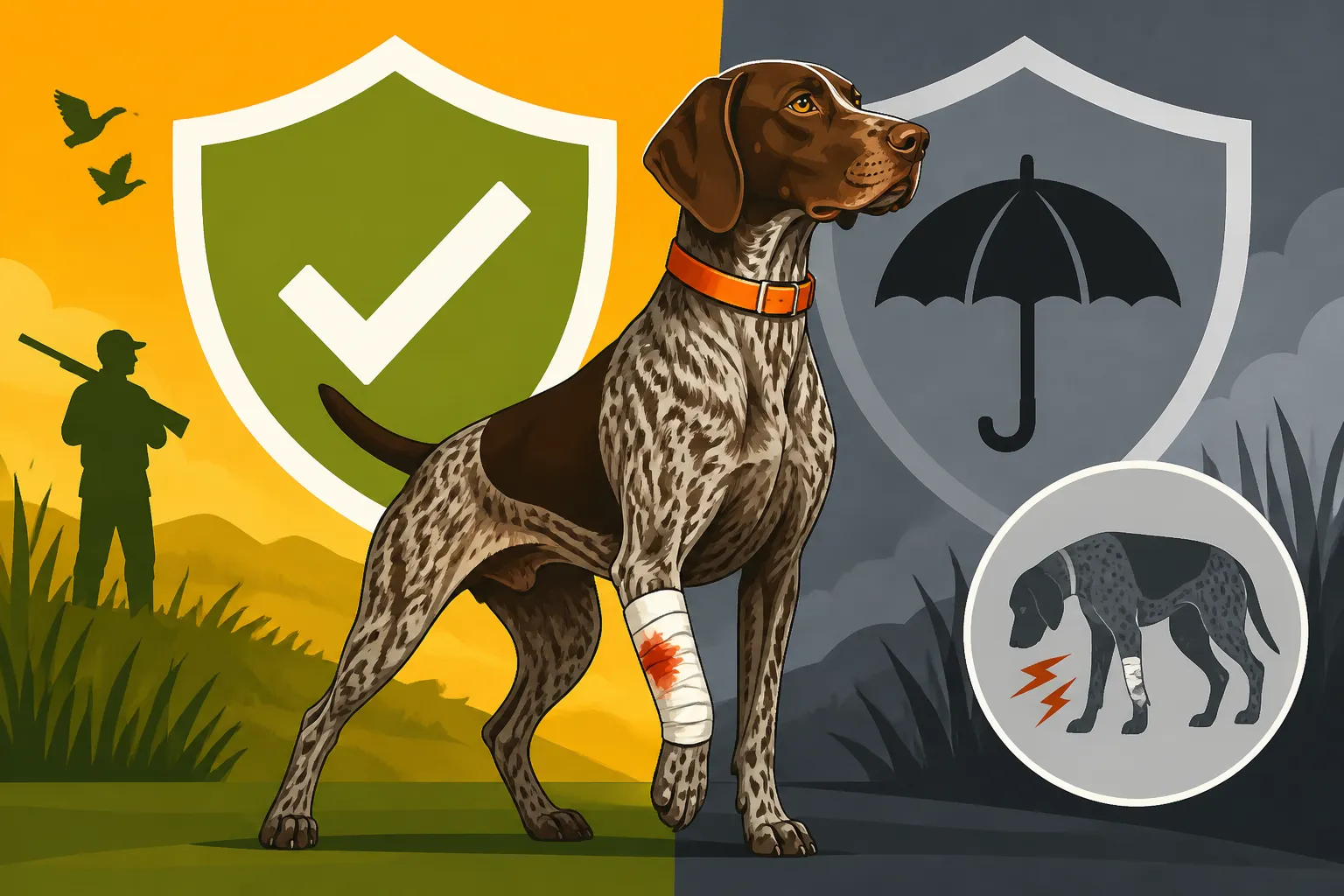
When your GSP is tearing through heavy cover, crashing through icy water, or bounding over rocky terrain, they're exposed to a myriad of potential hazards. We've all seen them come back with a few new scratches, but sometimes it's more serious. Lacerations from barbed wire fences, punctures from sharp sticks, or deep cuts from hidden glass can happen in an instant. Imagine your dog, in full stride, suddenly yelping from a deep cut on a front leg, bleeding profusely. These aren't minor incidents; they often require immediate veterinary attention, sometimes stitches, or even surgery.
Beyond cuts, blunt force trauma is also a significant risk. A misstep while navigating uneven ground can lead to a Torn Cruciates in a Field Bred German Shorthaired Pointer, a debilitating injury that requires complex surgery and months of rehabilitation. We also worry about things like Foxtails and Grass Awns in a Hunting Shorthair getting lodged in ears, noses, or even migrating under the skin, causing abscesses and infections that are incredibly painful and often require sedation and removal. Overuse injuries, like strained muscles or tendonitis, can also creep up over a long season, sidelining your dog and leading to ongoing vet visits.
The Financial Impact of Field Accidents
Let's be brutally honest: emergency veterinary care for a hunting injury is rarely cheap. A simple field cut that needs cleaning and a few stitches can easily run into several hundred dollars. If your dog suffers a more severe injury, like a torn cruciate ligament, you could be looking at costs that quickly climb into the thousands for surgery, medication, and post-operative physical therapy. What about the terrifying prospect of bloat, a condition German Shorthaired Pointers are susceptible to, especially after strenuous activity like hunting? Catching bloat in a German Shorthaired Pointer After a Hunt, an emergency gastropexy, and subsequent hospitalization can mean bills in the realm of several thousand dollars.
These are not just numbers on a page; they represent real financial strain on families. Without adequate preparation, a single serious hunting injury could force difficult decisions about your dog's care or put a significant dent in your savings. This is precisely why understanding your pet insurance coverage is so vital. It's about being able to say "yes" to the best possible care for your dedicated hunting partner without hesitation, knowing you have a financial safety net.
Deciphering Pet Insurance Policies: What's Covered and What's Not
Pet insurance can feel like a labyrinth of terms and conditions, especially when you're trying to figure out if it will actually protect your hunting dog. The key is to look beyond the flashy advertisements and dig into the nitty-gritty of the policy details.
Accident-Only vs. Comprehensive Plans
When you're shopping for pet insurance, you'll generally encounter two main types of plans: accident-only and comprehensive.
-
Accident-Only Plans: These policies are typically more affordable, as they solely cover injuries resulting from unexpected accidents. For a hunting dog owner primarily concerned with sudden field injuries, this might seem like a good starting point. If your GSP gets a Cut Pads on a German Shorthaired Pointer After a Long Day or a snake bite, an accident-only policy should cover the eligible veterinary costs for treatment. However, it won't cover illnesses, chronic conditions like allergies, or hereditary issues such as hip dysplasia, unless that hereditary condition is the result of an accident. While it provides a basic safety net against the immediate trauma of hunting, it leaves you exposed to a host of other potential health issues.
-
Comprehensive Plans: These policies offer a much broader scope of coverage, typically encompassing both accidents and illnesses. This means that in addition to covering hunting injuries, they'll also help with costs for things like ear infections, skin conditions, cancer treatments, and many hereditary conditions (provided they're not pre-existing). For a German Shorthaired Pointer, given their breed-specific health concerns like thyroid issues or certain cancers that turn up most in German Shorthaired Pointers, a comprehensive plan often provides more peace of mind. While the monthly premiums are higher, the wider coverage can save you significantly in the long run, especially as your dog ages and develops more health needs.
The Dreaded "Exclusions" Clause
Every insurance policy has exclusions – things it simply won't cover. This is where hunting dog owners need to be particularly diligent. Common exclusions across many pet insurance providers include:
-
Pre-existing Conditions: This is a big one. If your GSP had a diagnosed injury or illness before you enrolled them in a policy or before your waiting period ended, that specific condition (and often related conditions) will likely be excluded. For instance, if your dog had knee instability before you got insured, a future torn cruciate might not be covered, even if it happened while hunting. This is why it's so important to get insurance when your GSP is young and healthy.
-
Routine/Preventative Care: Most standard pet insurance policies do not cover routine wellness exams, vaccinations, spaying/neutering, or flea/tick prevention. Some providers offer optional "wellness add-on" plans for these, but they are separate from injury/illness coverage.
-
Elective Procedures: Cosmetic surgeries, tail docking (beyond the typical puppy stage), and dewclaw removal (unless medically necessary) are generally not covered.
-
Experimental Treatments: If a veterinary treatment is considered experimental or not widely accepted by the veterinary community, it might be excluded.
-
Specific Activities: This is the critical point for hunting dog owners. While most standard policies cover "accidental injury," some niche policies or specific clauses might exclude injuries sustained during professional racing, fighting, or sometimes, even working activities if not clearly specified as covered. It's rare for common hunting activities to be explicitly excluded by major providers for breeds like GSPs, but it is absolutely imperative to confirm this directly with the insurer. Always ask, "Are injuries sustained during hunting, field trials, or other sporting dog activities covered under this policy?" Get it in writing if you can, or at least document the conversation.
Specific Policy Considerations for Hunting Dog Owners
Beyond the general exclusions, there are specific aspects of pet insurance policies that require extra scrutiny for GSP owners who spend time in the field. Your dog isn't just a pet; they're a working athlete, and their insurance needs reflect that.
Coverage for Field-Related Injuries
This is the make-or-break section for many of us. Does the policy truly understand and cover the specific accidents that can occur while your German Shorthaired Pointer is doing what they love?
-
Accidental Injury Definition: Most policies will cover "accidental injuries," which generally includes things like lacerations, broken bones, or sprains. However, the devil is in the details. Some policies might have subtle language that could be interpreted differently. You want to ensure that "accidental injury" broadly encompasses the types of mishaps common to hunting dogs. For instance, if your GSP is bitten by another animal (like a raccoon or coyote) during a hunt, or suffers a snake bite, is that unequivocally covered under the accidental injury clause? Many reputable providers like Healthy Paws are quite clear on covering these common outdoor mishaps, but it’s still wise to confirm.
-
Ingested Foreign Objects: Hunting dogs, especially young ones, can ingest all sorts of things in the field – feathers, parts of game, or even random debris. If your GSP ends up needing surgery for a blocked intestine, will the policy cover it? This is generally categorized under accidental ingestion, which most comprehensive plans cover.
-
Trauma from Falls or Collisions: A GSP can trip, fall into a ditch, or collide with a tree or another dog while running at top speed. Injuries from such events, like fractures or dislocations, should typically fall under accidental injury. Again, confirm the breadth of this coverage. For example, if your dog experiences a Shoulder and Toe Injuries in a Running Shorthair after a hard fall, you need to know that your policy has your back.
Understanding Deductibles, Reimbursement Rates, and Annual Limits
These three factors directly impact your out-of-pocket expenses when your GSP gets injured. It’s not enough to know if something is covered; you need to know how much you’ll still be responsible for.
-
Deductible: This is the amount you pay out of pocket before your insurance coverage kicks in. You might choose a lower deductible for higher monthly premiums, or a higher deductible to reduce your monthly costs. For a hunting dog that might have multiple minor incidents throughout its career, a lower deductible could mean you hit it more frequently and start getting reimbursements sooner. However, if you're only worried about catastrophic events, a higher deductible can save you money on monthly premiums.
-
Reimbursement Rate: This is the percentage of eligible vet costs that your insurance company will pay after your deductible is met. Common reimbursement rates are 70%, 80%, or 90%. If your vet bill is $1,000, and you have an 80% reimbursement rate, the insurer pays $800, and you pay $200 (after your deductible). For significant injuries, even a 70% reimbursement can mean hundreds or thousands of dollars in savings, but 90% clearly offers the most financial relief.
-
Annual Limit: This is the maximum amount your policy will pay out in a given policy year. Some policies offer unlimited annual benefits, while others have limits ranging from a few thousand dollars to $20,000 or more. For an active hunting GSP, especially considering the potential for multiple injuries or one very expensive one, an unlimited or high annual limit is highly recommended. You can quickly reach a $5,000 limit with a single complex surgery like a What a Shorthair's Knee Surgery Runs After a Field Injury.
Here’s a simplified table comparing how these factors might play out for a common hunting injury:
| Scenario | Total Vet Bill | Deductible Chosen | Reimbursement Rate | Annual Limit | Your Out-of-Pocket | Insurer Payout |
|---|---|---|---|---|---|---|
| Minor Laceration | $600 | $250 | 80% | Unlimited | $250 (Deductible) + $70 (20% of remaining $350) = $320 | $280 |
| Torn Cruciate (Surgery) | $4,500 | $500 | 90% | Unlimited | $500 (Deductible) + $400 (10% of remaining $4,000) = $900 | $3,600 |
| Foxtail Removal (Sedated) | $800 | $250 | 80% | Unlimited | $250 (Deductible) + $110 (20% of remaining $550) = $360 | $440 |
| Bloat Surgery | $6,000 | $1,000 | 70% | Unlimited | $1,000 (Deductible) + $1,500 (30% of remaining $5,000) = $2,500 | $3,500 |
Note: This table is for illustrative purposes only. Actual costs and policy terms vary widely.
Navigating Providers: Finding the Right Fit for Your Shorthair
Choosing a pet insurance provider can feel overwhelming with so many options out there. It's not just about the cheapest premium; it's about finding a company that truly understands the needs of an active, hunting German Shorthaired Pointer and will be there when you need them most.
Researching Pet Insurance Companies
When you start your research, you'll find a wide array of companies. Some are well-established, while others are newer to the market. It's crucial to compare not just the cost, but also their reputation for claims processing, customer service, and policy flexibility. Read reviews, check their financial stability, and look for transparency in their policy documents.
Many GSP owners find value in providers known for their comprehensive coverage, especially for accidents and ongoing conditions. Companies like Healthy Paws are often recommended for their unlimited annual benefits, which can be a huge relief if your highly active German Shorthaired Pointer faces a severe or chronic issue. They tend to have straightforward policies, though it’s always on you to read the fine print.
When you're looking at different options, pay close attention to the waiting periods for accidents and illnesses. Some providers have very short waiting periods for accidents (often just a few days), while others may have longer ones. For orthopedic conditions like hip or knee issues, there might be extended waiting periods, sometimes up to six months or a year. This is particularly important for active breeds prone to such injuries. The earlier you get coverage, the better.
Tailoring Your Plan to Your German Shorthaired Pointer's Lifestyle
Your GSP isn't just any dog; they're a German Shorthaired Pointer! Their insurance needs should reflect their high energy, strong hunting drive, and potential for specific breed health issues.
-
Age and Health: Enroll your GSP when they're a puppy, if possible. This helps you avoid the dreaded "pre-existing condition" exclusion. As your dog ages, monthly premiums tend to increase, and more conditions might be excluded. However, even if you have an older GSP, it's still worth investigating accident-only plans or comprehensive plans with higher deductibles to protect against future incidents. Remember that even a relatively healthy 8-year-old GSP can still suffer a Field Injuries a Hunting German Shorthaired Pointer Comes Home With that racks up a huge bill.
-
Activity Level: If your German Shorthaired Pointer is truly a field dog, hunting several times a week during season and maintaining a high level of fitness year-round, you'll want robust coverage for accidents. Don't skimp on a policy that might have lower annual limits if your dog is constantly exposed to the risks of hunting. Even if you get your dog's regular supplies from a place like Chewy, which might also offer pet insurance options or direct you to partners, always ensure the specifics of the policy align with your dog's active life.
-
Breed-Specific Concerns: German Shorthaired Pointers can be prone to certain conditions such as Hip Dysplasia in a Hard Running German Shorthaired Pointer, bloat, and some cancers. While insurance won't cover pre-existing conditions, a comprehensive plan started early can cover these if they develop later. Even supporting your dog's overall health with high-quality nutrition, perhaps from a brand like Ollie that focuses on fresh, whole ingredients, can help minimize general illness-related vet visits, making your insurance even more valuable for covering those unpredictable, high-cost accidents.
-
Your Budget: Be realistic about what you can afford for monthly premiums and deductibles. There's a balance to strike between comprehensive coverage and your financial comfort. Review your options annually, as your dog's needs and your financial situation may change.
Maximizing Your Insurance Benefits and Preventing Injuries
Having a robust pet insurance policy is a smart move, but it's only one part of being a responsible German Shorthaired Pointer owner. You also need to know how to effectively use your policy and, perhaps more importantly, how to minimize the chances of your beloved dog getting injured in the first place.
The Importance of Timely Claims and Documentation
Once your GSP has an injury and you've taken them to the vet, the next step is initiating your insurance claim. This process is usually straightforward, but a little preparation goes a long way.
-
Keep Meticulous Records: Always ask your vet for detailed invoices and medical records for any visit, especially for an injury. These documents are crucial for your insurance claim. They should clearly state the diagnosis, the treatments provided, and the costs associated with each item. A good practice is to have a dedicated folder or digital file for all your GSP's vet records. When you're constantly monitoring your dog and giving your German Shorthaired Pointer the once over after a hunt, you'll know exactly what's new and what to document immediately.
-
Submit Claims Promptly: Don't delay in submitting your claims. Most insurance companies have a window within which you need to submit, often 90 days to a year from the date of treatment. Submitting quickly helps you get reimbursed faster and avoids missing deadlines. Many providers offer easy online portals or app-based submissions, streamlining the process.
-
Communicate with Your Vet: Make sure your vet understands that you have pet insurance. While they won't submit the claim for you directly (most pet insurance works on a reimbursement model where you pay the vet and then get reimbursed), they can ensure that their documentation is thorough and supports your claim. Sometimes, insurance companies might require additional information from your vet, so a good working relationship is beneficial.
Proactive Steps to Minimize Hunting Risks
While insurance is essential for when things go wrong, preventing injuries altogether is always the best strategy. Your German Shorthaired Pointer's incredible drive means they might push themselves past their limits if not managed carefully.
-
Proper Conditioning: A GSP that is physically fit is less prone to injury. Regular exercise year-round, not just during hunting season, helps build strong muscles, ligaments, and tendons. Consider Conditioning a Shorthair Before Opening Day with activities like roading or controlled retrieves to build stamina and prevent strains or sprains in the field. A dog that is overweight or out of shape is far more susceptible to injury.
-
Appropriate Gear: Invest in good quality protective gear for your hunting dog. A blaze orange vest can increase visibility and help prevent accidental shootings, while also offering some protection against brush and minor scrapes. For rough terrain, dog boots can protect their pads from cuts, thorns, and excessive wear, preventing painful A Shorthair's Pads Splitting Halfway Through the Season. Always check your dog over after a hunt, paying close attention to their paws, ears, and coat for any foreign objects or minor injuries.
-
Smart Hunting Practices: Be mindful of the conditions. Avoid hunting in extreme heat, which can lead to Heat Exhaustion in an Early Season Shorthair. Be cautious of dense, thorny cover that can cause severe lacerations. Familiarize yourself with common hazards in your hunting areas, such as barbed wire fences, abandoned farm equipment, or dangerous bodies of water. Provide plenty of fresh water throughout the day, as dehydration can affect performance and increase injury risk.
-
Training and Control: A well-trained German Shorthaired Pointer that responds reliably to commands like "whoa" and "recall" is safer in the field. Good control allows you to direct your dog away from immediate dangers or call them back if they're heading into a risky situation. Recall on a German Shorthaired Pointer That Is Locked On is not just for politeness; it can be a lifesaver.
By combining careful planning with a robust pet insurance policy, you can ensure that your German Shorthaired Pointer enjoys a long, healthy, and happy life in the field, knowing you're prepared for whatever adventures come your way.
Disclaimer
This article is for general informational purposes only and does not constitute professional advice. Laws, prices and regulations vary by location and change over time. Consult a qualified professional for guidance on your specific situation.