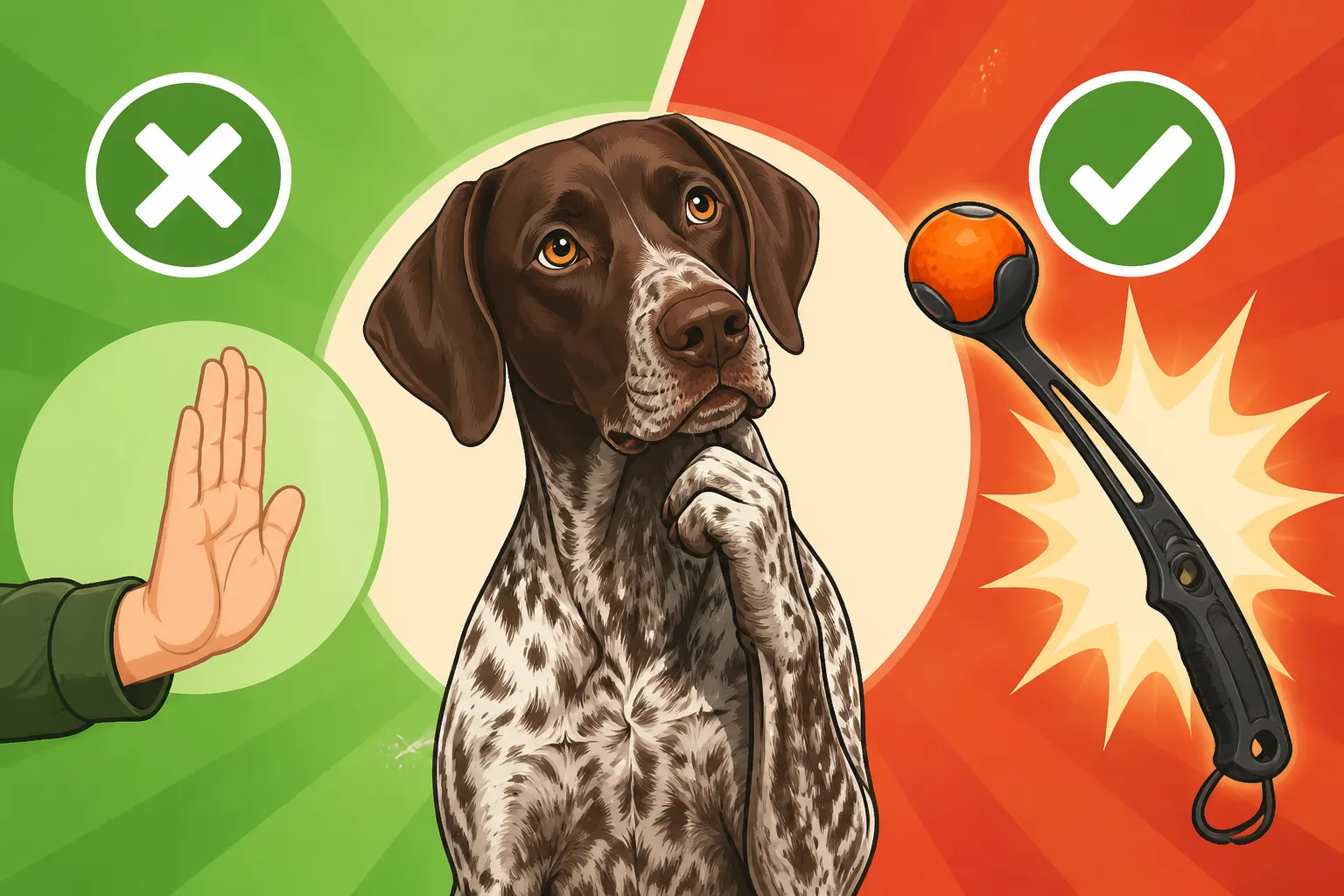
Whether a Launcher Is Worth Buying for a Shorthair
Oh, the bird launcher! That piece of equipment often sits in the back of a Shorthair owner's mind, a tantalizing glimpse into what "pro" training might look like. You see the videos, watch the expert handlers, and wonder if this fancy contraption is truly worth the investment for your energetic German Shorthaired Pointer. It's a common dilemma – you want the best for your hunting companion, but also don't want to buy another piece of gear that just collects dust. This guide is here to break down whether a bird launcher is a worthwhile purchase for you and your GSP, exploring the practicalities, benefits, and drawbacks with a healthy dose of realism.
The Basics: What is a Bird Launcher and Why Consider One?
A bird launcher, at its core, is a training tool designed to simulate the unpredictable flush of game birds in a controlled environment. For German Shorthaired Pointers, a breed practically born with a pointing instinct and an insatiable desire to retrieve, the ability to practice these fundamental skills consistently is paramount. Traditional training often involves manually throwing birds or bumpers, which, while effective, can introduce human variables – inconsistent throws, scent contamination, or even just plain old fatigue on your part. A launcher aims to eliminate these inconsistencies, providing a more reliable and stimulating training experience.
Understanding Different Types of Launchers
When you start looking into launchers, you'll quickly realize there isn't just one kind. They range from simple, manual devices to sophisticated remote-controlled systems, each with its own set of features and price tag. Understanding these differences is crucial for deciding if one fits your training philosophy and budget.
Manual Launchers: These are typically spring-loaded devices that you load with a bird or bumper and then manually trigger with a pull cord. They're usually more affordable and require you to be relatively close to the launcher to operate it. Think of them as an upgrade from a hand-thrown retrieve, offering a more consistent trajectory and a bit more distance. They are great for solo training sessions where you want to focus on a particular skill like a steady retrieve, without the bird landing precisely where you threw it every time.
Remote-Controlled Launchers: Ah, now we're getting into the advanced stuff! These launchers use a radio remote to trigger the launch from a distance, often several hundred yards away. This allows you to position yourself with your GSP and simulate real hunting scenarios without being seen by the dog near the "flush" point. They can hold anything from small quail to larger pheasants or even canvas retrieving bumpers. Many systems also include a "beeper" function to help you locate the launcher in tall cover and a "remote sound" feature to simulate gunshots or other field noises. This level of control is invaluable for teaching your Shorthair to stay steady to wing and shot, and to mark the fall of a bird even when you're not right next to the source of the launch.
Bird vs. Bumper Launchers: Some launchers are specifically designed for live birds, offering a safe and effective way to present real game. Others are designed for bumpers, which are fantastic for repetitive drills and building a strong retrieve without the added expense and handling of live game. Many remote systems are versatile enough to handle both. For a German Shorthaired Pointer, training with both can be incredibly beneficial. Live birds introduce scent, movement, and the unpredictable nature of actual hunting, while bumpers allow for controlled repetition without concern for losing a valuable bird or stressing a young dog.
The "Why" Behind the Investment: Training Goals
So, why would you even consider dropping your hard-earned cash on one of these? The "why" usually boils down to wanting to elevate specific aspects of your German Shorthaired Pointer's training, making them a more polished and reliable hunting companion, or simply a better-behaved companion in high-drive situations.
One of the biggest benefits is the ability to teach steadiness to wing and shot. A Shorthair's natural instinct is to chase a flushing bird. Teaching them to "whoa" and remain calm until released is a foundational skill, crucial for safety and effective hunting. With a remote launcher, you can set the bird or bumper, position your dog, trigger the launch, and then fire a blank pistol or shotgun without breaking your dog's concentration on you. This process helps solidify the understanding that they don't get the bird until you give the command. It provides a level of realism that simply throwing a bird can't match because your dog isn't seeing you throw it.
Launchers also significantly improve marking ability. When a bird flushes or falls, a good hunting dog needs to mark its location precisely. With multiple launchers, you can set up complex scenarios, teaching your Shorthair to mark multiple falls or to remember the location of a bird that landed far away. This is especially helpful for improving their ability to remember and retrieve multiple birds that might fall during a volley of shots. Without a launcher, replicating these scenarios with consistency is incredibly difficult, often requiring multiple human helpers.
Furthermore, these tools are excellent for developing a strong, reliable retrieve. By launching bumpers or birds to various distances and locations, you can drill in the concept of a "finished" retrieve where the dog brings the item directly back to hand. This controlled repetition builds muscle memory and reinforces positive retrieving habits, ensuring your GSP isn't dropping birds short or playing keep-away, which can be a real frustration in the field. These rigorous training sessions might even make you think about your dog's diet and if they're getting enough quality fuel. Brands like Ollie focus on fresh, human-grade ingredients that could be excellent for supporting a high-energy German Shorthaired Pointer's needs during intensive training periods.
The Pros and Cons of Launcher Ownership for Shorthairs
Like any significant investment in your dog's training, buying a launcher comes with both distinct advantages and potential drawbacks. It's not a magic bullet, and understanding both sides is key to making an informed decision.
Advantages: Elevating Your Shorthair's Training
Let's be honest, having a launcher feels pretty cool. But beyond the gadget factor, they offer tangible benefits that can genuinely transform your German Shorthaired Pointer's field performance and overall obedience.
Firstly, consistency is king. As mentioned, human throws are inherently inconsistent. A launcher, properly set, will launch a bird or bumper with predictable force and trajectory every single time. This consistency is vital for a dog learning a new skill. Imagine trying to teach a child to hit a baseball if every pitch came from a different angle and speed. It's the same for your dog. Consistent launches allow your Shorthair to develop better marking skills, learn to gauge distances, and build confidence in their retrieve.
Secondly, they provide unmatched realism for steadiness. A dog that knows you're about to throw a bird might anticipate the throw rather than truly holding steady for the flush and shot. With a remote launcher, you can be standing 50 yards away from the launcher with your dog, just as you would be in the field. When that bird flushes unexpectedly (from the dog's perspective), it's a far more authentic test of their steadiness. This scenario is incredibly effective for proofing your dog in real-world conditions. You can stand calmly, give your "whoa" command, and reward them for holding tight even when their instincts are screaming "CHASE!". This is a critical step for preventing your dog from Steadying a Shorthair that chases the flush.
Thirdly, efficiency and solo training. If you're like many GSP owners, you do a lot of your training by yourself. Trying to throw birds, fire a gun, and manage your dog all at once can be a logistical nightmare. A remote launcher allows you to manage the "flush" and the "shot" from your dog's side, freeing you up to focus entirely on their behavior and commands. This means more effective training sessions, even when you don't have a training partner available. This efficiency can greatly reduce the number of What Birds Cost to Train One Shorthair if you're able to maximize each bird's use.
Finally, launchers are excellent for building confidence and drive. For a young or shy GSP, controlled, successful retrieves from a launcher can build immense confidence. You can start with easy launches and gradually increase difficulty, ensuring your dog has a positive experience every time. For a dog that might be "bumping" birds rather than holding a solid point, a well-timed launch can help solidify the understanding that holding steady brings the reward. This is a common issue and a launcher can certainly help if you have A Shorthair That Bumps Birds Instead of Pointing.
| Feature | Manual Launcher | Remote Launcher |
|---|---|---|
| Cost | Generally lower | Significantly higher, especially multi-unit systems |
| Operation | Requires physical proximity to trigger | Triggered from a distance via remote control |
| Realism | Good for consistent throws, limited flush simulation | Excellent for simulating unpredictable flushes, gun shots |
| Solo Training | Possible, but limits handler's position/focus | Highly effective, allows handler to be with dog |
| Versatility | Often single bird/bumper type | Can launch various birds/bumpers, sometimes multiple at once |
| Steadiness Drill | Limited, dog often sees handler trigger | Superior, truly tests dog's steadiness to unseen flush |
| Setup Time | Quicker, simpler | More involved due to battery, remote pairing, placement |
Disadvantages: The Commitment and Potential Pitfalls
As wonderful as launchers can be, they aren't without their downsides. It's important to go into this purchase with your eyes wide open, recognizing that it's an investment not just of money, but also of time and effort.
The most obvious disadvantage is the cost. Good quality remote launchers, especially multi-unit systems, can be quite expensive. It's not just the initial purchase price, but also the ongoing costs of batteries, maintenance, and replacement parts. You might think, "Well, I save money on a professional trainer," but remember that a trainer brings expertise that a machine can't replicate. While you can save on What a Pro Trainer Charges to Start a Shorthair on Birds by doing some work yourself, you still need to know how to use the launcher effectively.
Next, there's the learning curve and technical issues. Operating a remote launcher effectively requires a certain level of technical savvy. You'll need to learn how to pair receivers, troubleshoot connectivity issues, manage battery life, and maintain the mechanical components. Setting up multiple launchers for complex drills can take a fair bit of time and practice. There's nothing more frustrating than having your dog perfectly poised, ready for a crucial drill, only for the launcher to malfunction.
Then there's the risk of over-reliance or improper use. A launcher is a tool, not a substitute for good fundamental training. If used incorrectly, it can actually create problems. For example, if you consistently launch birds too close or always launch the same type of bird, your Shorthair might become accustomed to only flushing that specific way, or might not develop a strong natural point on varied game. There's also the danger of creating a "gun-shy" dog if the gun report is introduced too close or too suddenly without proper desensitization, even with a launcher involved. This is why a solid understanding of Introducing the Gun Without Ruining a Shorthair is paramount.
Finally, consider the portability and setup time. While some launchers are relatively lightweight, a full remote system with multiple units, especially if you're carrying live birds, can be bulky and time-consuming to set up and tear down. If your training grounds are far from your vehicle or involve difficult terrain, this can become a significant hurdle. These are the kinds of things that can wear on you after a long season, or even lead to Field Injuries a Hunting German Shorthaired Pointer Comes Home With if you're not careful loading up gear.
Practical Considerations Before You Buy
Before you hit "add to cart," take a moment to honestly assess whether a bird launcher is truly the right next step for you and your German Shorthaired Pointer. It's about more than just the equipment; it's about your readiness, your dog's readiness, and your environment.
Your Shorthair's Training Stage and Temperament
A launcher is not usually the first piece of equipment you buy for a brand-new German Shorthaired Pointer puppy. There are foundational skills that need to be in place first. Think about where your GSP is in their training journey.
Puppyhood and Early Basics: For a young pup, the focus should be on basic obedience, proper socialization, and building natural retrieve drive with simpler items like bumpers or soft toys. You'll be working on things like The Age a Shorthair Puppy Starts Whoa with a check cord and basic retrieves, often just by hand. Introducing a loud, unpredictable launcher too early could overwhelm a sensitive pup and potentially create fear. While a launcher can certainly aid in developing specific skills later, it's not a substitute for hands-on, positive reinforcement-based puppy training. Think about the basics like walking nicely on a leash (maybe with gear from Chewy) and responding to their name before adding complex equipment.
Adolescent GSP: Building Foundation Skills: This is often the sweet spot for introducing a launcher, once your Shorthair has a solid grasp of "whoa," "sit," and a reliable retrieve. At this stage, a launcher can be invaluable for refining their steadiness and marking. You can introduce it gradually, starting with quiet launches of bumpers, then adding gunshots at a distance, and finally moving to live birds. It helps bridge the gap between simple drills and actual hunting scenarios. If you're working on Teaching a Shorthair Whoa on a Table or Barrel, a launcher can be the next logical step to proof that steadiness with a moving target.
Finished or Experienced Hunting Dog: Refinement and Proofing: Even a seasoned hunting dog can benefit from launcher work. It's excellent for fine-tuning their steadiness, working on multiple marks, or addressing specific issues like creeping or breaking point. You can use it to maintain their skills in the off-season, ensuring they stay sharp for opening day. It's also a fantastic tool for proofing your dog's obedience under distractions, ensuring they perform reliably regardless of the environment. If you're preparing for something like Preparing a Shorthair for the Utility Preparatory Test, a launcher setup becomes almost indispensable for replicating test conditions.
Consider your GSP's individual temperament. A bold, confident dog might take to a launcher quickly, while a more sensitive or soft dog might require a very gradual introduction. Patience is key.
Your Time, Budget, and Training Environment
Let's be real: owning a German Shorthaired Pointer is a lifestyle, and it demands time and resources. A launcher adds to that.
Time Commitment: Do you have the time to set up, operate, and maintain a launcher system? It's not a "set it and forget it" tool. Each training session will involve transporting the equipment, setting it up, loading it, conducting drills, and then packing it all away. If you only have 15 minutes a day, the setup and takedown might eat into most of your actual training time. If you're willing to dedicate longer, focused sessions, then a launcher becomes more viable.
Financial Investment: Beyond the initial purchase price, consider the recurring costs. Batteries for remote systems can add up. If you're launching live birds, there's the cost and availability of pigeons, quail, or chukar. This can be a significant addition to The First Year Bills on a German Shorthaired Pointer or Running a German Shorthaired Pointer for a Year. You also need to factor in potential repair costs – things break in the field, and parts can be expensive. Think about how a service like Healthy Paws could help mitigate unforeseen vet bills if a training accident were to occur, but remember that routine equipment maintenance is on you.
Training Environment: Where will you use this launcher? Do you have access to open fields or suitable training grounds where you can safely launch birds or bumpers without disturbing others or losing your equipment? If you're training in a small urban park, a remote launcher is probably overkill and impractical. If you have access to larger plots of land, perhaps with varying cover, then a launcher can be utilized to its full potential, allowing you to simulate different hunting scenarios. The amount of gear you need to haul also impacts your environment choices; if you're driving a long way to train, you'll need a vehicle that can accommodate your GSP, the launcher, and all the associated equipment.
Alternatives to Launchers and When They Might Suffice
It's completely okay if a bird launcher isn't in the cards for you right now. Many fantastic hunting dogs have been trained without ever seeing one. There are plenty of effective, and often more accessible, alternatives that can help you achieve similar training goals with your German Shorthaired Pointer.
Low-Tech and No-Tech Training Aids
Sometimes, the simplest tools are the most powerful, especially when combined with consistent effort and a clear understanding of what you're trying to teach.
Manual Bird/Bumper Throws: This is the bedrock of retrieve training. Using hand-thrown bumpers or even dead birds (like frozen pigeons or quail, often found at specialty pet stores or ordered online via sites like Chewy) allows you to build strong retrieve drive and basic marking skills. You can still work on steadiness by having a helper throw birds while you hold your dog on a Check Cords and Whistles a Shorthair Owner Buys. The key here is consistency in your throws and patience in waiting for your dog to fully understand the commands before progressing. This is how many GSPs get their The First Live Bird for a German Shorthaired Pointer experience.
Check Cords and Whoa Posts: These are absolutely essential for teaching steadiness and are far less expensive than a launcher. A long check cord allows you to control your dog's movement, preventing them from breaking point or chasing a flush prematurely. A whoa post (a simple stake in the ground) can be used to tether your dog for short periods, reinforcing the "whoa" command in a controlled manner. These tools are fundamental for developing the discipline required for successful field work. If your Shorthair struggles with A Shorthair That Creeps Once It Points, a check cord and dedicated whoa work can make a world of difference.
Live Birds with Human Helpers: Nothing quite replicates the real thing like live birds. Instead of a launcher, you can work with training partners who can release birds on command. This method offers excellent realism and allows for dynamic training scenarios. While it requires coordinating with others, it can be incredibly effective for proofing steadiness, teaching your GSP to honor another dog's point, and getting them accustomed to the sights, sounds, and smells of actual game. Look for local hunting clubs or training groups where you can collaborate. Sometimes, a shared cost of birds and training time with others makes this a more affordable and social option than investing in individual equipment.
Scent Work and Blind Retrieves: Even without a launcher, you can develop your Shorthair's exceptional nose and retrieving skills through scent work and blind retrieves. Hide bumpers or dead birds in cover and send your dog to find them based on your commands and wind direction. This builds their confidence in using their nose and teaches them to take hand signals to navigate to a "blind" (unseen) fall. These are crucial skills for finding crippled birds or retrieving in dense cover, and require no special mechanical equipment.
Seeking Professional Guidance
Perhaps the most impactful "alternative" to buying a launcher yourself is to invest in professional training. An experienced gun dog trainer will already have all the necessary equipment, including various launchers, birds, and specialized training grounds.
Leveraging Expert Knowledge and Equipment: A good trainer understands how to use these tools effectively, how to troubleshoot problems, and how to tailor training to your GSP's individual needs. They can introduce your dog to launchers in a controlled, progressive manner, preventing common mistakes and building a strong foundation. This can save you money in the long run by avoiding costly equipment purchases you might not use correctly, and by potentially accelerating your dog's training. It might even save you vet bills from self-inflicted injuries due to improper training methods. If you're worried about The Vet Bills a Hunting German Shorthaired Pointer Earns, proper training can help prevent some common field mishaps.
Board and Train Programs: If you lack the time or ideal environment, a board and train program with a reputable gun dog trainer can be an excellent option. Your Shorthair lives with the trainer for a period, receiving intensive, consistent training using all the appropriate tools, including launchers. When your dog comes home, you'll receive instruction on how to maintain their newly acquired skills. This is often an investment, but for many, it's a worthwhile one.
Group Training Classes: Many hunting dog clubs offer group training sessions where trainers provide instruction and often bring their own equipment, including launchers. This allows you to expose your GSP to launcher work without the upfront cost of buying one. It's also a fantastic way to learn from experienced handlers and get your dog accustomed to working around other dogs. Being part of a group also helps with the social aspect, and seeing how others handle their dogs can be incredibly educational. Plus, it's a great place to pick up tips on everything from Feeding a German Shorthaired Pointer That Runs All Day to managing common behavioral quirks.
Ultimately, the decision of whether a launcher is worth buying for your German Shorthaired Pointer comes down to a careful balance of your training goals, your available resources, and your commitment. They are powerful tools, but like any tool, their effectiveness lies in the hands of the user.
Disclaimer
This article is for general informational purposes only and does not constitute professional advice. Laws, prices and regulations vary by location and change over time. Consult a qualified professional for guidance on your specific situation.