Check Cords and Whistles a Shorthair Owner Buys
That unmistakable German Shorthaired Pointer drive—the way they lock onto a scent and simply go—is what we love about them. But let's be honest, it can also lead to heart-stopping moments when they disappear over a ridge, seemingly deaf to our frantic calls. Achieving reliable off-leash control is a journey, and this guide is here to demystify two of the most critical tools in that process: the check cord and the whistle, helping you forge a safer, more responsive partnership with your energetic companion.
The Indispensable Check Cord for German Shorthaired Pointer Training
For many German Shorthaired Pointer owners, the check cord is more than just a piece of rope; it's a lifeline. It bridges the gap between a leashed dog and a truly off-leash, reliable companion. We all dream of our Shorthair quartering beautifully in the field, staying within gun range, and stopping on a dime with a single command. The reality, especially with a young, enthusiastic GSP, is often a dog who has a different idea of "range" and "coming when called." This is where the check cord shines, offering a non-confrontational way to communicate boundaries and expectations.
Why a Check Cord is Not Just a Long Leash
It's easy to look at a check cord and think, "Oh, it's just a really long leash." But that misunderstanding can lead to frustrating training sessions. A regular leash is for walking close to you, keeping your dog contained and safe in immediate proximity. A check cord, however, is designed for teaching, for extending your physical presence and control over a greater distance, allowing your German Shorthaired Pointer to experience more freedom while still being accountable to your commands. It's about giving them just enough rope to make a "mistake" and then gently guiding them back to the correct behavior, all without them ever feeling truly "loose" and out of control.
Imagine you're working on building a solid "whoa" command, which is absolutely fundamental for any bird dog. Whoa and Why Every Shorthair Starts There A young Shorthair might start out strong, but as soon as they get a whiff of a bird, that instinct kicks in, and they want to creep or break point. With a check cord, you can allow them to feel that tension, give the "whoa" command, and then gently step on the cord or give a subtle tug to reinforce the command, preventing them from charging. This isn't punishment; it's clear, consistent communication. You're showing them exactly what "whoa" means, even when their instincts are screaming otherwise. Without the cord, you'd be chasing them, yelling, and likely eroding any trust or understanding you've built.
Using a Check Cord for Ranging and Recall
One of the biggest challenges with a German Shorthaired Pointer is their natural desire to range. They were bred to cover ground quickly, methodically sweeping for birds. This can be fantastic in the field, but less so in an open park or when you need them to stay closer. The check cord becomes your invisible fence, a way to gently define the acceptable boundaries of their hunt. If your Shorthair starts to push too far, you can give your recall command—or a whistle signal, which we'll get into later—and then apply subtle pressure with the cord if they hesitate. The goal is for them to turn before they feel the full tension of the cord, internalizing that turning back to you is always the right choice. Recall on a German Shorthaired Pointer That Is Locked On
This gradual layering of distance and accountability is crucial. You start with a shorter cord, then move to a longer one as their understanding grows. This process minimizes confrontation and builds confidence. Think of it like a safety net: your Shorthair gets to explore and make choices, but you always have the ability to intervene and guide them back on track. It allows them to learn from their environment without getting completely lost in it. When your dog finally masters staying within appropriate range and coming back instantly, it’s a beautiful thing, and the check cord often plays a starring role in that success story.
Choosing the Right Check Cord for Your Shorthair's Needs
Picking out a check cord isn't just grabbing the first rope you see. The right cord can make training smoother, more effective, and safer for both you and your German Shorthaired Pointer. With their powerful build and intense drive, a flimsy cord simply won't cut it. You need something that can withstand their bursts of speed and the elements, while still being comfortable for you to handle.
Materials and Length: What to Look For
When it comes to check cord materials, you generally have a few good options, each with its own pros and cons for a spirited German Shorthaired Pointer:
- Cotton or Braided Nylon: These are soft on the hands, offer good grip, and are less likely to tangle severely. Cotton can absorb water and get heavy, which isn't ideal for wet conditions, but it's often preferred for its feel. Braided nylon is a good all-around choice, durable and less prone to waterlogging than cotton.
- Polypropylene: This material is lightweight, doesn't absorb water, and is easy to clean. It can be a bit stiffer and sometimes slicker to hold, especially when wet, but it's very popular for field work because of its weather resistance.
- Bungee or Elastic Cords: While some trainers use these for specific pressure-and-release training, they are generally not recommended as primary check cords for GSPs, especially for long-distance control. The elasticity can give a false sense of control and make corrections inconsistent or even jarring if it snaps back unexpectedly. Stick to non-elastic options for consistent communication.
Here's a quick comparison of popular check cord materials:
| Feature | Cotton/Braided Nylon | Polypropylene |
|---|---|---|
| Feel in Hand | Softer, better grip, less likely to chafe | Stiffer, can be slicker when wet |
| Water Absorption | Absorbs water, gets heavy, takes longer to dry | Doesn't absorb water, stays light, dries quickly |
| Tangle Resistance | Good, less prone to knotting | Can tangle more easily, sometimes kinks |
| Durability | Good, but can fray over time | Very durable, resistant to rot and mildew |
| Visibility | Often comes in natural or bright colors | Available in bright, high-visibility colors |
| Best Use | General training, close work, less wet environments | Field work, wet conditions, long-range training |
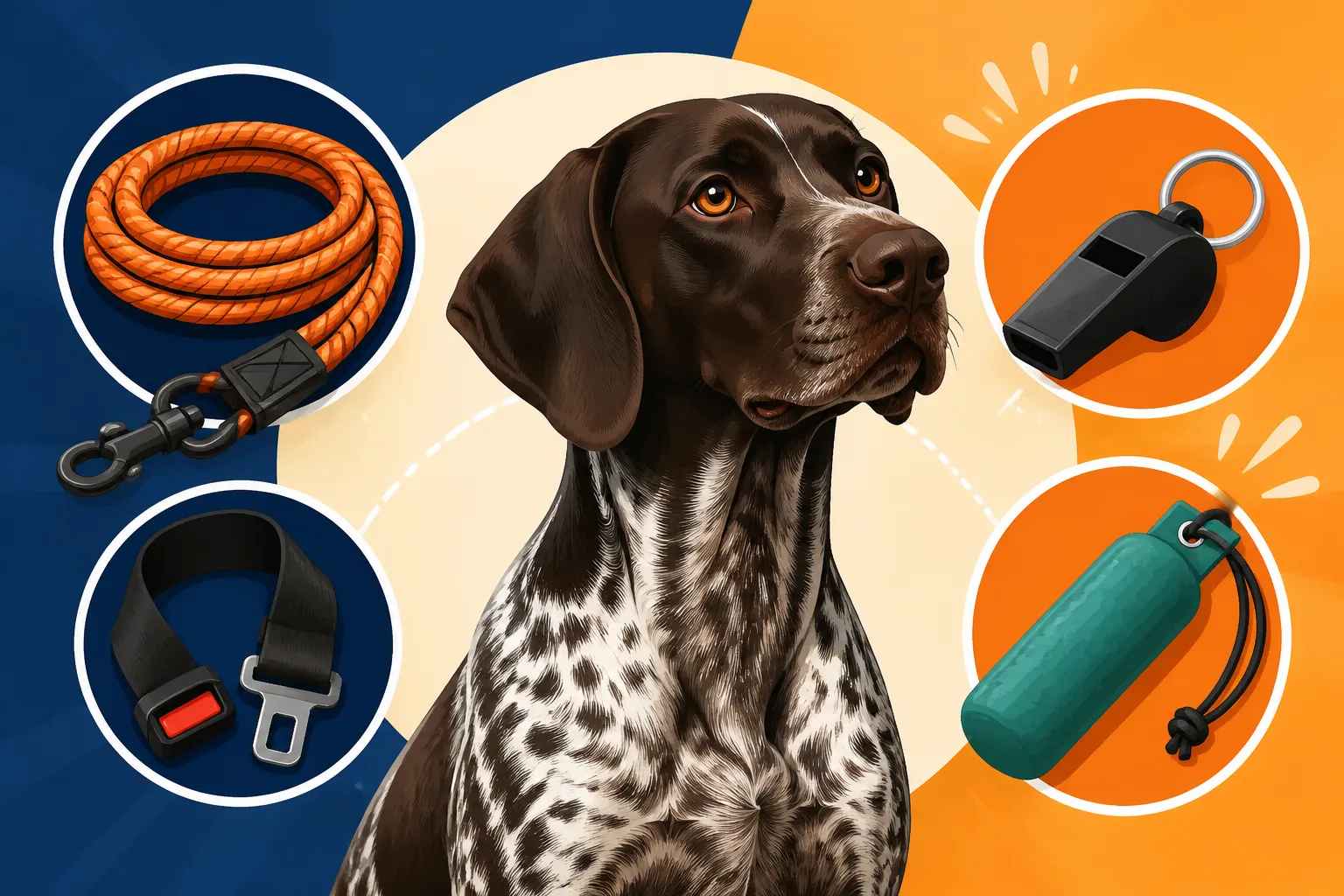
The length of the check cord is equally important. For puppies just learning to stay near you, a 10-15 foot cord might be a great start. As they grow and their range expands, you'll want to move to 20-30 feet, and eventually, for serious field work, 50 feet or even more. The idea is to have enough length to allow your Shorthair to roam and investigate, but still be able to step on the cord if they go too far, or to provide a gentle "check" when they ignore a command. A brightly colored cord, like orange or neon yellow, is a smart choice to ensure you can easily spot it in tall grass or brush, especially when your dog is ranging out.
Proper Handling and Safety Considerations
Using a check cord effectively isn't just about having the right tool; it's about using it correctly and safely. Always attach the check cord to a sturdy, well-fitting flat buckle collar or a martingale collar. Avoid attaching it to a front-clip harness, which can twist, or a head halter, which isn't designed for the force a GSP can exert. You want the correction to come from their neck, mimicking the feel of a regular leash.
When you're out training, resist the urge to constantly hold the cord. The beauty of a check cord is that it can drag behind your dog, giving them the feeling of being off-leash while you retain control. You can step on it if they charge something inappropriate or ignore a command. When you do need to use it for guidance, hold it with an open hand, allowing it to slip if necessary, to prevent rope burns or injury to yourself or your dog. Never wrap the cord around your hand or wrist, as a sudden lunge from a powerful German Shorthaired Pointer can cause serious injury.
Regularly inspect your check cord for wear and tear, especially if you're using it in rugged terrain. Frayed spots can lead to breakage at critical moments. When not in use, coil it neatly to prevent tangles that can be a real headache, especially when you're eager to get out into the field. You can find robust and dependable check cords at pet supply stores or online retailers like Chewy, which often have a good selection of various lengths and materials suitable for an active GSP.
The Indispensable Whistle: Why Every GSP Needs One
If you've ever tried to call your German Shorthaired Pointer back from a distant point, or worse, from the chase of a deer scent, you know how quickly your voice can become just background noise. Their focus is intense, their hearing acute for the rustle of a pheasant, but your yelling? Not so much. This is where the whistle becomes not just helpful, but truly indispensable. It cuts through distractions, carries further than your voice, and offers a consistent, unmistakable command that your Shorthair can learn to rely on.
Whistle Commands vs. Voice Commands: The Clarity Advantage
The biggest advantage of a whistle over voice commands is its consistency. Your voice changes based on your mood, the weather, how far away you are, and frankly, how frustrated you might be getting. "COME!" can sound different every time you shout it. A whistle blast, however, is always the same. It's a pure, consistent tone that your German Shorthaired Pointer can learn to associate with a specific action, free from the emotional baggage often attached to human speech. This clarity is paramount for a dog whose primary job is often performed at a distance, where subtle changes in human tone are impossible to decipher.
Moreover, a whistle carries significantly further than the human voice, especially against wind, through dense cover, or over the sounds of a busy field. Imagine your dog quarters out to 100 yards, catches a scent, and locks on. A Shorthair That Points Butterflies and Birds Alike Your voice might not reach them, but a sharp, clear whistle certainly will. This makes it a safety tool as much as a training one, ensuring you can call your dog back from dangerous situations—like a road or another animal—even when they are far away and deeply engrossed.
Types of Whistles and Basic Commands
There are generally two main types of dog whistles:
- Pea Whistles: These have a small pea inside that vibrates to produce a trilling sound. They are loud and distinctive, making them good for cutting through noise. However, the sound can vary slightly, and they can sometimes freeze up in very cold, wet weather.
- Pealess Whistles: These produce a consistent, clear tone without a pea. They are reliable in all weather conditions, and many trainers prefer them for their pure, unwavering sound. They often come in various frequencies, some of which are thought to be more audible to dogs over long distances. Some pealess whistles even allow for adjustable frequencies.
The key to successful whistle training is to pick a set of simple, distinct signals and stick to them religiously. Here are some basic, universally recognized commands:
- Recall (Come): A series of rapid short blasts (e.g., pip-pip-pip) is commonly used.
- Stop/Sit/Whoa: A single, sustained blast (e.g., PIIIIIP) or two sharp blasts (e.g., pip-pip) can be effective.
- Directional/Turn: Some trainers use different combinations of short and long blasts to indicate turns, though these are more advanced commands.
It's vital to pair these whistle commands with an action and reward. Start in a quiet environment, blow the whistle signal for "come," and immediately reward your German Shorthaired Pointer when they respond, even if they're still on a check cord. Make it the most exciting sound they hear. Remember, consistency is king. Every time you blow the recall whistle, your dog must come to you, even if you have to gently guide them with the check cord. The Whistle Signals a Shorthair Learns First Over time, the whistle alone will become a powerful communication tool.
Integrating Cords and Whistles into Your Training Routine
Mastering the check cord and whistle isn't about using them as crutches; it's about integrating them seamlessly into your training routine to build a truly responsive and reliable German Shorthaired Pointer. These tools empower you to communicate effectively, reinforce commands, and prevent bad habits from forming, all while allowing your Shorthair to explore and utilize their natural abilities.
Starting with the Basics: Puppy Steps
Even a young German Shorthaired Pointer puppy can begin to learn the basics. Start with the check cord in a familiar, low-distraction environment. Attach a lightweight 10-15 foot cord to their collar and let them drag it. This gets them used to the feel without you actively controlling it. Your first goal is to make the "come" command, whether verbal or whistle-based, the most positive experience possible.
Every time you give the recall signal, immediately reward your puppy when they turn towards you, even if you have to reel them in gently with the cord. You want to build a rock-solid association: whistle equals good things, whistle equals coming to you. Keep sessions short and fun. For whistle introduction, use it right before feeding time or before a favorite game. Blow the "come" signal, and then immediately present their food bowl or throw a toy. This positive reinforcement, often enhanced by high-value treats (perhaps some bits of their favorite food, like those from Ollie, if you use a fresh food delivery service), will create a strong, lasting impression.
As your puppy grows, the check cord becomes invaluable for teaching "whoa" or "stay." The Age a Shorthair Puppy Starts Whoa Let them move a short distance, give the "whoa" command, and step on the cord to halt their forward motion. Don't pull them back; just stop them. Reward them for staying. This careful, consistent application of the check cord builds muscle memory and understanding without forcing them into compliance.
Advanced Applications in the Field
Once your German Shorthaired Pointer has a solid grasp of basic commands on a check cord, you can begin to transition to more advanced field applications. For instance, using a longer check cord (30-50 feet) while working on quartering patterns helps guide your Shorthair to cover the field efficiently. Keeping a Shorthair in Front on Big Country If they swing too wide, a whistle command combined with a slight check on the cord can bring them back into your desired range. This proactive guidance prevents them from developing the habit of "self-hunting" too far out.
The whistle's role becomes even more critical when introducing your GSP to birds. As they lock on point, a sustained "whoa" whistle can help steady them, preventing them from breaking point prematurely. This is especially important when you start steadying them to wing and shot. The check cord can be there as a backup, just in case their excitement overwhelms their training, but the goal is for the whistle to be the primary command.
Even for seasoned hunting dogs, the check cord and whistle remain vital tools. A quick glance over your well-conditioned German Shorthaired Pointer during a hunt might reveal a minor injury or some exhaustion; having pet insurance like Healthy Paws, which covers accidents and illnesses, can be a great asset for peace of mind in these active situations. The check cord helps manage potential field injuries or fatigue, keeping a dog that's not feeling 100% closer, while the whistle maintains communication even if they're struggling a bit. It’s all about maintaining control and clear communication in dynamic, often distracting, environments.
Overcoming Common Challenges
One common frustration is when a German Shorthaired Pointer seems to "forget" commands when distractions are high. This is where both the check cord and whistle truly prove their worth. If your dog is ignoring your verbal "come" or "whoa" because they're fixated on a squirrel or another dog, a sharp whistle command, immediately followed by a gentle tug or step on the check cord, reinforces that the command must be obeyed. This isn't about punishment; it's about ensuring consistency. You're teaching them that the command means the same thing, regardless of what else is happening.
Another challenge is a GSP that pulls too hard on a check cord. If your dog is constantly dragging you, it's a sign you might be moving too fast or that they need more foundation work on loose-leash walking or heeling. The check cord is for extension and gentle guidance, not for a constant battle of strength. Practice short bursts of recall and whoa, making sure the dog complies before they have a chance to build up momentum.
Remember, training is a continuous process. There will be good days and bad days. The key is patience, consistency, and making every interaction with your check cord and whistle a positive, clear learning experience for your German Shorthaired Pointer. These tools, used correctly, don't restrict your dog; they unlock the freedom of reliable communication and a deeper bond between you.
Disclaimer
This article is for general informational purposes only and does not constitute professional advice. Laws, prices and regulations vary by location and change over time. Consult a qualified professional for guidance on your specific situation.